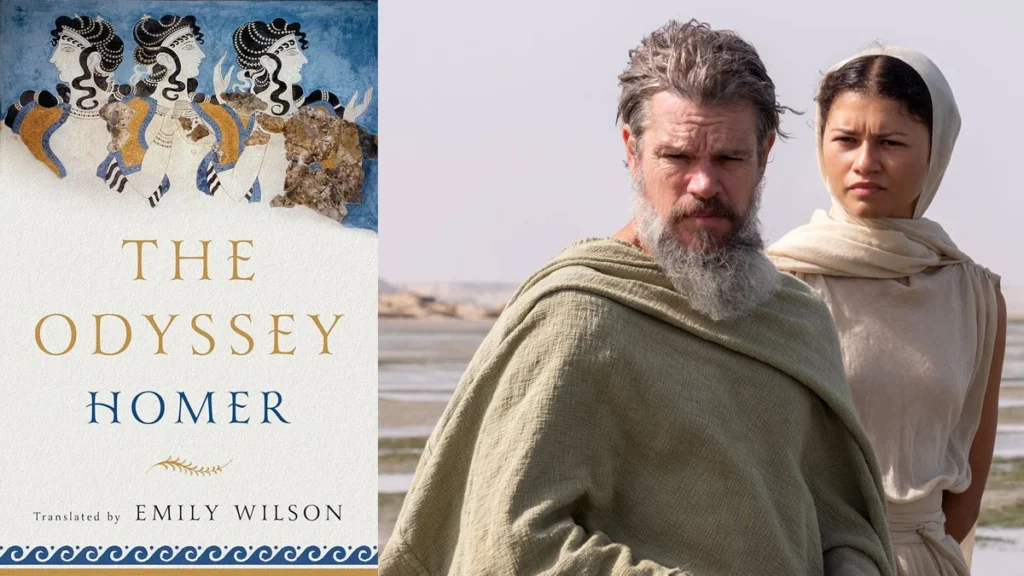

The announcement of Christopher Nolan’s forthcoming cinematic adaptation of Homer’s monumental epic poem, The Odyssey, has ignited a widespread resurgence of interest in one of Western literature’s foundational texts. Scheduled for release on July 17th, this ambitious project from a director renowned for his intricate narratives and visually stunning productions invariably prompts audiences to revisit the source material. In anticipation of Nolan’s interpretation, literary scholars and enthusiasts alike are directing attention towards the definitive modern translation that has redefined accessibility for contemporary readers: Emily Wilson’s 2017 rendition of The Odyssey. Her work stands out for its clarity, scholarly precision, and vibrant readability, offering an unparalleled entry point into the ancient Greek narrative comprising 12,109 lines, traditionally organized into 24 "books."
The Enduring Legacy of Homer’s The Odyssey
Homer’s The Odyssey is far more than a mere adventure story; it is a cornerstone of Western civilization, deeply influencing literature, philosophy, and art for millennia. Composed in ancient Greece, likely around the 8th century BCE, the epic poem recounts the arduous ten-year journey of the hero Odysseus, king of Ithaca, as he strives to return home following the fall of Troy. His voyage is fraught with supernatural encounters, mythological creatures, divine interventions, and profound human struggles, while back in Ithaca, his wife Penelope fends off persistent suitors vying for his throne and her hand.
The poem explores universal themes that resonate across cultures and centuries: nostos (homecoming), identity, the nature of heroism, cunning versus brute force, loyalty, suffering, and the human condition’s fragility in the face of fate and the gods. Its rich tapestry of characters, from the loyal Penelope and the maturing Telemachus to the formidable Cyclops Polyphemus and the enchanting siren-like figures, has captivated generations. The Odyssey‘s narrative structure, often employing flashbacks and shifts in perspective, was remarkably sophisticated for its time, demonstrating a storytelling mastery that continues to inspire. Its enduring presence in educational curricula and popular culture attests to its timeless appeal and its foundational role in shaping Western thought and narrative traditions.
A New Era of Accessibility: Emily Wilson’s Groundbreaking Translation
For centuries, The Odyssey has been translated into English numerous times, each version reflecting the linguistic and cultural sensibilities of its era. However, Emily Wilson’s 2017 translation marked a significant paradigm shift. As the first English translation of Homer’s epic by a woman, it garnered immediate attention, but its impact extends far beyond this demographic milestone. Wilson, a professor of Classical Studies at the University of Pennsylvania, approached the text with a radical commitment to readability and directness, consciously eschewing the archaic, ornate language that had characterized many previous scholarly translations.
In her introduction, Wilson articulates her core philosophy: "The notion that Homeric epic must be rendered in grand, ornate, rhetorically elevated English has been with us since the time of Alexander Pope. It is past time, I believe, to reject this assumption." This declaration signaled her intent to strip away layers of linguistic affectation, allowing the inherent power and immediacy of Homer’s narrative to shine through. She chose to render the poem in unrhymed iambic pentameter, a meter familiar to English speakers from Shakespeare, which provides a natural, flowing rhythm that is both elevated and accessible.
The critical reception to Wilson’s Odyssey was overwhelmingly positive, with reviewers praising its "freshness," "vividness," and "energy." It quickly became a bestseller, demonstrating a broad appeal beyond academic circles. Sales figures, while not always publicly disclosed in detail for specific translations, indicate a substantial uptake, reinvigorating interest in classics among general readers. Her work has been credited with making Homer’s characters feel more human and relatable, particularly figures like Odysseus, Penelope, and Calypso, who emerge with greater psychological depth and contemporary relevance.
A prime example of Wilson’s distinctive style and its impact can be found in Book 5, "From the Goddess to the Storm," during the pivotal exchange between Odysseus and the nymph Calypso. Here, Calypso, having grudgingly agreed to release Odysseus from her seven-year captivity, expresses her resentment with a sharp, relatable sarcasm:
"The goddess-queen began. ‘Odysseus,
son of Laertes, blessed by Zeus-your plans
are always changing. Do you really want
to go back to that home you love so much?
Well then, good-bye! But if you understood
how glutted you will be with suffering
before you reach your home, you would stay here
with me and be immortal-though you might
still wish to see that wife you always pine for.
And anyway, I know my body is
better than hers is. I am taller too.
Mortals can never rival the immortals in beauty.’"
Odysseus, ever the pragmatist and tactician, responds with calculated deference, acknowledging her divine superiority while securing his freedom:
"So Odysseus, with tact,
said ‘Do not be enraged at me, great goddess.
You are quite right. I know my modest wife
Penelope could never match your beauty.’"
This exchange, rendered by Wilson, highlights the emotional undercurrents and power dynamics with a directness that makes the ancient narrative feel remarkably modern and immediate. It showcases her ability to capture both the epic scope and the intimate human drama within the poem.
Christopher Nolan’s Vision: Bringing an Epic to the Big Screen
Christopher Nolan’s decision to adapt The Odyssey for the silver screen is a monumental undertaking, promising a cinematic experience commensurate with the epic’s grandeur. Nolan is celebrated for his intellectually stimulating, often non-linear narratives, meticulous practical effects, and profound exploration of complex philosophical themes, as seen in films like Inception, Interstellar, Dunkirk, and his Oscar-winning Oppenheimer. His distinct directorial style suggests an interpretation of The Odyssey that will likely delve into its psychological depths, temporal complexities, and the nature of memory and identity.
While specific plot details and the full scope of his vision remain largely under wraps, the casting announcements provide intriguing clues. Matt Damon, a frequent collaborator with Nolan, is slated to portray Odysseus, a role demanding both physical prowess and nuanced emotional performance. Charlize Theron has been cast as Calypso, a choice that aligns perfectly with Wilson’s portrayal of the goddess as a formidable, albeit emotionally vulnerable, figure. The prospect of Theron embodying Calypso’s "true bad bitch" energy, as suggested by the original article, promises a compelling and assertive divine presence on screen.
Nolan’s track record indicates that his Odyssey will not be a straightforward mythological retelling. Given his penchant for structural innovation, it is plausible that he will experiment with the poem’s non-linear chronology, perhaps interweaving Odysseus’s journey with events back in Ithaca in a novel way. The fantastical elements—sirens, Cyclops, Scylla and Charybdis—will undoubtedly be rendered with cutting-edge visual effects, but Nolan’s emphasis on realism and practical effects suggests a grounded approach to even the most mythical sequences. While specific budget figures for The Odyssey have not been officially disclosed, Christopher Nolan’s productions typically command budgets in excess of $150 million, reflecting the grand scale and technical ambition characteristic of his work. This financial commitment underscores the studio’s confidence in Nolan’s ability to translate such a challenging and revered text into a blockbuster phenomenon.
The "Culture War" Conundrum: Interpretation and Identity
The impending release of Nolan’s film and the renewed spotlight on Wilson’s translation have, perhaps predictably, stirred a "culture war" around the ancient text. As noted in the original article, Emily Wilson herself finds this backlash "quite baffling." In an interview with Vulture, she elaborated on her observations, suggesting that this discourse often emanates from individuals who, paradoxically, "don’t care about the poem, yet when it comes to this culture-war internet discourse, they perform anger about it and a protectiveness of it."
Wilson posits that this reaction is deeply rooted in an "idea of a totally stable notion of greatness and masculinity." For some, the traditional, often archaic, interpretations of ancient literature become intertwined with their personal identity, particularly concerning gender and racial perceptions. "My identity as a man taps into this tradition, and the tradition has always been this way, and my imagined idea about ancient literature confirms that," she explains, highlighting how "anything that challenges that interpretation of what ancient history is threatens their identity in terms of their gender and racial identities."
This phenomenon reflects broader societal debates about tradition versus modernity, authenticity versus adaptation, and the evolving nature of scholarship. Translation itself is an act of interpretation, and every translator makes choices that reflect their understanding of the source text and their target audience. Wilson’s deliberate choice to make The Odyssey more accessible and to present its characters with a contemporary psychological realism challenges long-held, sometimes rigid, perceptions of the epic. The "culture war" thus becomes less about the poem itself and more about anxieties surrounding cultural change and the perceived erosion of established norms. This resistance often overlooks the historical reality that ancient texts have always been subject to reinterpretation, translation, and adaptation across different eras and cultures.
The Interplay of Mediums: Book vs. Film
The convergence of Emily Wilson’s acclaimed translation and Christopher Nolan’s cinematic vision offers a unique opportunity to explore the interplay between two distinct mediums: literature and film. Each possesses inherent strengths and limitations, and together they can enrich the audience’s understanding and appreciation of The Odyssey.
The book, particularly Wilson’s accessible version, provides direct engagement with the linguistic artistry and narrative flow of Homer. Readers can immerse themselves in the translator’s carefully chosen words, allowing their own imaginations to construct the vivid landscapes, the monstrous creatures, and the emotional states of the characters. The pace of reading is self-determined, allowing for contemplation and a deeper dive into the nuances of character and theme. It is here that the subtle ironies, the poetic rhythms, and the profound philosophical questions embedded in the text can be most intimately experienced.
Conversely, cinema offers a powerful, immersive visual and auditory experience. Nolan’s film will translate the written word into a tangible reality, bringing the mythical settings and creatures to life with unprecedented scale and detail. The performances of actors like Matt Damon and Charlize Theron will lend new interpretations and emotional resonance to Odysseus and Calypso, offering specific, memorable portrayals that can shape public perception. Film has the capacity to reach vast audiences who might not otherwise engage with a 12,000-line epic poem, acting as a gateway to the original text. While the "flow of the language" might be altered or simplified in adaptation, the cinematic experience can create an emotional immediacy and visual grandeur that complements the literary journey. The prospect of seeing Charlize Theron embody Calypso’s fierce independence and emotional complexity on screen, for example, offers a dynamic visual interpretation that can profoundly impact how modern audiences perceive the goddess.
Ultimately, the book and the film are not in competition but rather in conversation. Nolan’s adaptation has the potential to drive countless viewers back to Wilson’s translation, prompting them to explore the source material with fresh eyes, armed with the visual context and character interpretations gleaned from the screen. This synergy ensures that The Odyssey, in all its ancient splendor, remains a vibrant and relevant narrative in the 21st century.
Broader Implications: Accessibility, Scholarship, and Cultural Dialogue
The dual prominence of Emily Wilson’s translation and Christopher Nolan’s film adaptation of The Odyssey carries significant broader implications for classical scholarship, literary accessibility, and ongoing cultural dialogue. Wilson’s work has already demonstrated a transformative impact on how ancient Greek literature is perceived and consumed. By proving that rigorous scholarship can coexist with engaging, contemporary language, she has paved the way for future translations to prioritize accessibility without sacrificing academic integrity. Her success highlights the importance of regularly re-translating classical texts to keep them vital and resonant for each new generation. This ongoing process ensures that the wisdom, stories, and cultural heritage embedded in these ancient works remain active participants in modern intellectual and artistic life.
Furthermore, the mainstream attention generated by a Christopher Nolan film adaptation has the potential to introduce Homer to an entirely new demographic. Younger audiences, in particular, who might find the prospect of reading a multi-millennia-old epic daunting, may be drawn in by the visual spectacle and narrative prowess of a director known for making complex ideas thrilling. This could spark a newfound appreciation for the humanities and classical studies, potentially inspiring future scholars and fostering a deeper cultural understanding of our shared historical roots.
The Odyssey‘s themes—of displacement, resilience, identity, and the arduous journey home—remain profoundly relevant in a globally interconnected yet often fractured world. The human struggles depicted in Homer’s poem, from the "aching woes and petty jealousies" to the "potential for joy," transcend time and place. Wilson’s translation reminds us that despite the vast chasm of history and the "long-dead traditions" it describes (like slaughtering livestock to welcome guests), the core of human experience remains constant. Nolan’s film will further underscore this universality, translating these timeless emotions into a visual language that speaks to contemporary anxieties and aspirations.
In an era often dominated by polarized online discourse, the power of a great story, one that has demonstrably proven its capacity for constant reinterpretation and infinite relatability across centuries, offers a compelling counter-narrative. The enduring appeal of The Odyssey, as re-presented by Wilson and soon by Nolan, transcends fleeting cultural debates. It serves as a powerful reminder of the human need for narrative, for heroes, and for the exploration of what it means to journey through life.
Emily Wilson’s version of The Odyssey is available now via Amazon, providing an essential literary companion ahead of its cinematic counterpart. While it might be challenging to complete all 12,109 lines before Nolan’s film hits theaters on July 17th, engaging with even a portion of her translation will offer invaluable insight into the epic’s profound themes and enduring beauty, allowing readers to experience the powerful convergence of ancient words made modern and grand cinematic vision.
[youtube-embed-link: https://www.youtube.com/embed/AyIZ9tiiN8I?version=3&rel=1&showsearch=0&showinfo=1&iv_load_policy=1&fs=1&hl=en-US&autohide=2&wmode=transparent]