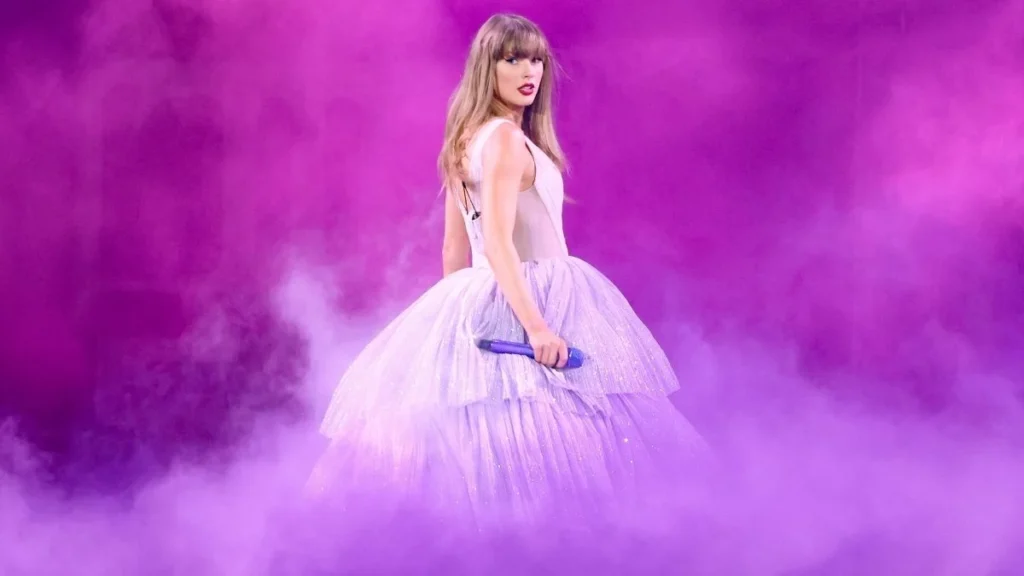

The marriage of global pop icon Taylor Swift and three-time Super Bowl champion Travis Kelce, held on July 3, 2026, at New York City’s Madison Square Garden, was a monumental cultural event that required an unprecedented level of security coordination. Beyond the standard protection protocols associated with two of the world’s most recognizable figures, internal reports have surfaced indicating that Swift’s security and wedding planning teams were specifically tasked with managing a unique variable: the potential for an uninvited appearance by rapper Kanye West. According to sources close to the event’s production, the possibility of West attempting to crash the ceremony was treated as a "real concern," leading to the development of specific contingency plans discussed during high-level security briefings.
While the ceremony ultimately proceeded without incident, the proactive measures taken by the planning team highlight the enduring nature of the friction between Swift and West. The objective of the security detail, as stated by insiders, was to ensure that the narrative of the day remained focused exclusively on the union of Swift and Kelce, rather than becoming another chapter in the long-standing public conflict involving the rapper.
The Security Protocol and the "Kanye Factor"
The decision to host the wedding at Madison Square Garden, a venue typically reserved for massive concerts and sporting events, presented both opportunities and challenges for the couple’s security apparatus. While the venue offers robust existing infrastructure for crowd control, the high-profile nature of the location made it a potential target for media intrusion and uninvited guests.
According to reports from Rob Shuter’s "Naughty But Nice," the security team conducted multiple planning meetings where West’s name was explicitly mentioned. The "fear" was not necessarily of a physical threat, but of a disruptive public relations moment. Sources indicated that the security detail was briefed on West’s history of unpredictable public behavior, particularly his penchant for interrupting Swift during significant career milestones.
The contingency plan reportedly included tiered response levels. This involved a perimeter watch with a "blacklist" of individuals who were to be denied entry immediately, as well as a specific protocol for how to handle a breach of the inner sanctum without causing a public scene that would detract from the ceremony. The goal was to manage any potential intrusion quietly and efficiently, ensuring that the "Enchanted" singer’s wedding would be remembered as a celebration of her marriage rather than a "Kanye moment."
A Chronology of the Swift-West Conflict
To understand the necessity of such stringent security measures, one must look at the seventeen-year history of public tension between Taylor Swift and Kanye West. The conflict has evolved from a single awards show interruption into a complex web of song lyrics, leaked phone calls, and media manipulation.
The 2009 MTV Video Music Awards
The genesis of the feud occurred during the 2009 MTV Video Music Awards. As a then-19-year-old Swift was accepting the award for Best Female Video for "You Belong with Me," West climbed onto the stage and took the microphone from her hands. He famously declared, "Yo, Taylor, I’m really happy for you, I’ma let you finish, but Beyoncé had one of the best videos of all time!" This moment became an instant piece of pop culture history, casting Swift as the victim of a public humiliation and West as the antagonist.
The 2015 Reconciliation and 2016 "Famous" Controversy
For a brief period in 2015, the two appeared to have mended fences. Swift presented West with the Video Vanguard Award at that year’s VMAs, and they were seen socializing at various industry events. However, the truce was short-lived. In 2016, West released the track "Famous," which included the lyrics, "I feel like me and Taylor might still have sex / Why? I made that bitch famous."
Swift’s representatives immediately condemned the lyrics as misogynistic. In response, West’s then-wife, Kim Kardashian, released snippets of a recorded phone call between West and Swift, suggesting that Swift had given her blessing to the song. The resulting "snake" emoji campaign and public backlash forced Swift into a period of self-imposed seclusion.
The 2020 Revelation and "Reputation"
The narrative shifted again in 2020 when the full, unedited 25-minute phone conversation between Swift and West was leaked online. The footage proved that West had not informed Swift of the specific "bitch" lyric, validating her original claim that she had been misrepresented. By this time, Swift had already used the experience as the creative catalyst for her 2017 album, Reputation, which explored themes of betrayal, media scrutiny, and the reclamation of one’s narrative.
Logistical Challenges of the Madison Square Garden Wedding
Choosing Madison Square Garden for a private wedding is a feat of logistics rarely seen in the entertainment industry. For the July 3 nuptials, the "World’s Most Famous Arena" was transformed into a high-security fortress.
Industry experts estimate that the security budget for the event likely exceeded several million dollars. This included:
- Airspace Control: Coordination with local authorities to manage drone activity and potential helicopter incursions by paparazzi.
- Digital Encryption: The use of signal jammers or high-level encryption to prevent the leaking of photos or audio during the ceremony.
- Vetting of Staff: Hundreds of venue employees, caterers, and decorators were reportedly required to sign extensive non-disclosure agreements (NDAs) and undergo background checks.
The presence of Travis Kelce, a prominent figure in the NFL, added another layer of security. The NFL’s own security consultants likely collaborated with Swift’s private team to manage the safety of the many high-profile athletes and celebrities in attendance. The union of "Chiefs Kingdom" and the "Swifties" meant that the guest list was a "who’s who" of American culture, requiring a perimeter that could withstand both fans and potential agitators.
Broader Implications for Celebrity Security
The revelation that a major celebrity’s wedding team had a "Kanye plan" reflects a broader trend in the security industry. High-net-worth individuals and A-list celebrities are increasingly moving away from general protection toward "threat-specific" modeling. In this case, West represented a specific "reputational threat."
Security analysts suggest that in the age of social media, the goal of a disruptor is often not physical harm but "clout" or the creation of a viral moment. For a wedding, which is a highly controlled and choreographed event, a single unscripted moment can redefine the entire legacy of the day. By identifying West as a potential variable, Swift’s team utilized a proactive strategy commonly used in corporate crisis management.
Furthermore, the choice of New York City—a city where West has a significant presence and history—added to the tactical necessity of the plan. The proximity of West’s own properties and his frequent public appearances in Manhattan made the possibility of a "walk-in" attempt more statistically probable than if the wedding had been held at a remote destination or a private estate in the Midwest.
The Cultural Context of the Marriage
The marriage of Taylor Swift and Travis Kelce on July 3, 2026, marked a significant milestone in Swift’s public life. Having spent much of her career writing about the complexities of love, heartbreak, and the search for a "long story short" happy ending, the wedding was seen by fans as the ultimate culmination of her personal journey.
The fact that her team felt the need to guard against West—even nearly two decades after their first encounter—speaks to the deep scars left by their public history. It also underscores Swift’s commitment to protecting her peace. Since the Reputation era, Swift has been notoriously private about her personal life, only sharing what she chooses through her music and carefully curated public appearances.
Travis Kelce’s role in this dynamic is also noteworthy. Known for his protective nature and outgoing personality, Kelce has frequently spoken about his desire to support Swift against the pressures of her immense fame. While there is no evidence that Kelce was directly involved in the security briefings regarding West, his public stance has always been one of unwavering support for Swift’s autonomy and safety.
Conclusion: A Flawless Execution
Despite the "fear" and the extensive contingency planning, the wedding of Taylor Swift and Travis Kelce was reported to be a flawless success. No interruptions occurred, and the couple was able to exchange vows in the presence of their closest friends and family. The security team’s success lay not just in what happened, but in what did not happen.
By preparing for the worst-case scenario—an uninvited appearance by a historical rival—Swift’s team ensured that the day remained a celebration of her future rather than a reminder of her past. As the couple embarks on their life together, the July 3 ceremony stands as a testament to the power of strategic planning in the face of unprecedented public scrutiny. The "Kanye plan," while never activated, serves as a fascinating footnote in the history of one of the most high-profile weddings of the 21st century, illustrating the lengths to which modern icons must go to secure their most private moments.