
The High Court in London is poised to deliver a significant judgment on Tuesday at 2 PM, concerning a landmark legal action brought by the Duke of Sussex and six other prominent individuals against Associated Newspapers Limited (ANL), the publisher of the Daily Mail and Mail on Sunday. The claimants allege widespread unlawful information gathering (UIG) by ANL titles, a charge vehemently denied by the publisher throughout the trial. This case represents a critical juncture in the ongoing debate surrounding media ethics, privacy rights, and journalistic practices in the United Kingdom.
The Core Allegations: A Challenge to Media Ethics
At the heart of the legal proceedings are serious allegations that ANL engaged in or commissioned a range of illicit activities to obtain private information. These methods reportedly included the hiring of private investigators to place listening devices inside cars, a practice that constitutes a significant breach of privacy. Furthermore, the claimants accuse ANL of "blagging" private records – a term referring to the deception used to obtain confidential information from third parties, such as medical records, financial details, or phone bills. Such activities, if proven, represent a profound violation of privacy laws and established journalistic codes of conduct.

Associated Newspapers Limited has consistently and vigorously refuted these allegations, maintaining that its reporting adheres to legal and ethical standards. The publisher’s defense has centered on challenging the evidence presented by the claimants and questioning the veracity of the claims, setting the stage for a highly anticipated judicial decision that could have far-reaching implications for both media organizations and public figures.
Prince Harry’s Enduring Campaign for Media Reform
Leading the charge in this collective legal action is the Duke of Sussex, Prince Harry, whose outspoken advocacy for media reform has been a consistent theme in his public life. The Duke, the second son of King Charles III and currently fifth in line to the throne, has frequently articulated his desire for greater accountability and ethical standards within the press. His personal experiences with intense media scrutiny, particularly after stepping back as a senior working royal in early 2020 and relocating to North America with his wife, the Duchess of Sussex, have fueled his resolve.
This legal battle against ANL marks the Duke’s third major action against a British newspaper publisher over alleged unlawful information gathering. He has previously pursued legal claims against News Group Newspapers (NGN), publisher of The Sun and the now-defunct News of the World, and Mirror Group Newspapers (MGN), which publishes The Mirror.
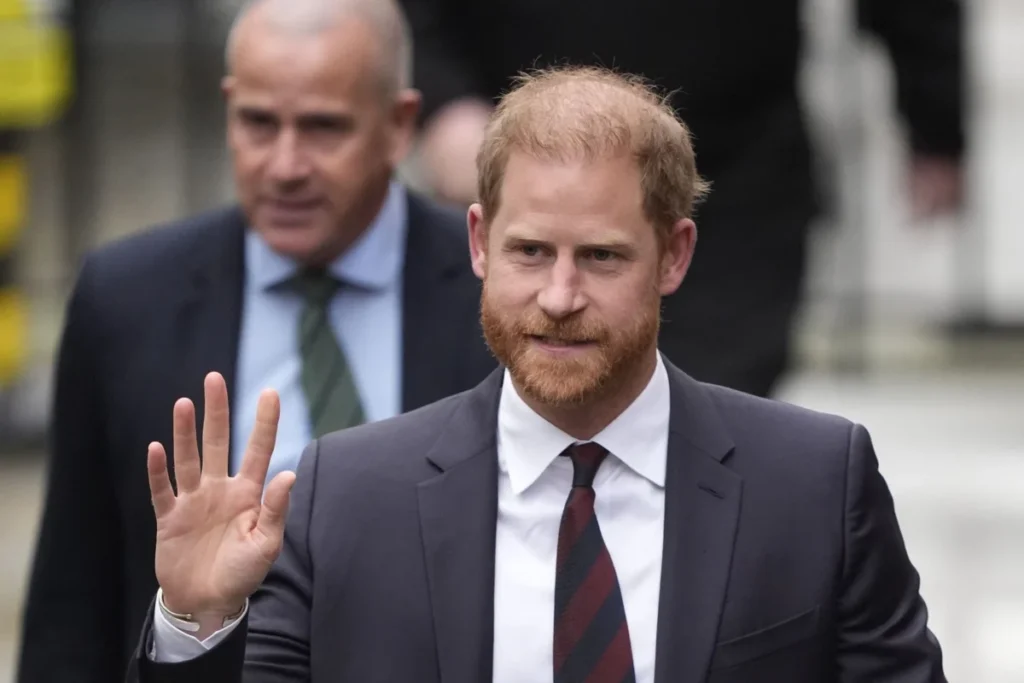
In a significant moment for royal protocol and legal history, Prince Harry became the first senior royal in over two decades to appear personally in court proceedings in June 2023. During this appearance, he faced nearly eight hours of questioning in his claim against MGN. That case concluded in December 2023, with Mr. Justice Fancourt ruling that phone hacking had become "widespread and habitual" at MGN titles in the late 1990s and that the Duke’s phone had been hacked "to a modest extent." The judge awarded Prince Harry £140,600 in damages, finding that 15 articles about him were the direct product of unlawful information gathering.
Building on this, in January of the following year, the Duke settled his claim against NGN on what would have been the second day of the trial. NGN issued an apology to the Duke and agreed to pay substantial damages, though it made no admission of liability in relation to The Sun.
During the trial against ANL, Prince Harry again attended court, both for the commencement of the case and to give evidence in support of his own claims, as well as to lend support to the other claimants. His emotional testimony concluded with the father-of-two close to tears as he claimed that the life of his wife, the Duchess of Sussex, had been made "an absolute misery" by the press. This powerful statement underscored the deeply personal impact of the alleged media intrusions on his family.
The Diverse Group of Claimants and Their Experiences

The Duke of Sussex is joined in this pivotal legal action by six other household names, each bringing their own distinct experiences with media scrutiny and allegations of unlawful information gathering.
Baroness Doreen Lawrence of Clarendon
Baroness Lawrence is a revered figure known globally for her tireless campaigning for justice following the racist murder of her son, Stephen Lawrence, in 1993. Stephen, an aspiring architect, was stabbed to death by a group of white youths in Eltham, south-east London. Historically, the Daily Mail, under then-editor Paul Dacre, had notably championed the cause of bringing Stephen’s killers to justice. Its front page on February 14, 1997, famously labelled five men – Gary Dobson, Neil Acourt, Jamie Acourt, Luke Knight, and David Norris – as "murderers" and challenged them to sue for libel. This campaign culminated in 2012 when Dobson and Norris were found guilty of the attack and sentenced to life imprisonment.
However, Lady Lawrence’s current claim against ANL paints a different picture of her relationship with the publisher. The High Court heard that she was "alerted" to a potential legal claim by a text message from Prince Harry. During her powerful testimony, she accused the Daily Mail of "pretending" to support her quest for justice, suggesting they merely sought the "credibility of supporting a black family." Her claims relate to five articles published between 1997 and 2007, with her lawyers alleging she was "extensively targeted" by private investigators and ANL.
Sir Elton John and David Furnish
Sir Elton John, born Reginald Kenneth Dwight on March 25, 1947, is a global music icon, knighted in 1998 for his services to music and charity, and later made a member of the Order of the Companions of Honour in 2021. Throughout his six-decade career, he has sold over 300 million records and earned numerous accolades, including two Oscars. He and his long-term partner, David Furnish, entered into a civil partnership in 2005 and married in 2014 after same-sex marriage was legalized in the UK. They are parents to two sons, Zachary and Elijah.

Both Sir Elton and Mr. Furnish gave evidence via video link during the trial, highlighting the alleged intrusions into their private lives. Their participation underscores the broad impact of alleged UIG on individuals from various public spheres.
Sir Simon Hughes
A former Liberal Democrat MP, Sir Simon Hughes represented Bermondsey and Old Southwark for 32 years until 2015. A qualified barrister, he also served as the Lib Dem candidate for Mayor of London in 2004 and was elected deputy leader of the party in 2010. Sir Simon has prior experience with media legal battles, having successfully sued NGN for misuse of private information and breach of confidence in 2019, accepting "substantial" damages in 2021. NGN also covered his legal costs, though without admitting liability in relation to The Sun.
In his current claim against ANL, Sir Simon expressed how "distressing" he found the publisher’s alleged targeting of him using "unlawful means" for "their own profit." Notably, his claim did not revolve around any published articles but concerned an alleged incident of unlawful information gathering involving a Mail on Sunday journalist.
Elizabeth Hurley
The acclaimed actress and model, Elizabeth Hurley, is no stranger to legal confrontations with the press. She has previously voiced complaints about intrusions into her private life, including details surrounding her pregnancy and a paternity dispute. In February 2019, she settled a phone-hacking claim against NGN just days before an anticipated trial in London. Prior to that, in May 2017, she received damages and an apology from MGN in settlement of a claim concerning the misuse of private information related to 58 articles published between 1998 and 2007. MGN admitted that "certain articles" she complained of were derived from illegal activity.

Ms. Hurley, best known for her roles in films like Austin Powers and Bedazzled, and for high-profile relationships including with the late Australian cricketer Shane Warne, and her former marriage to Arun Nayar, delivered emotional testimony during the trial, reportedly crying several times. Her son, Damian Hurley, and Prince Harry were present in court during her evidence, emphasizing the solidarity among the claimants.
Sadie Frost
An accomplished actress and film producer, Sadie Frost also possesses significant experience with media legal battles. In 2015, she was awarded a record £260,250 in damages for phone hacking by MGN. Her case involved 31 articles, 27 of which the publisher admitted were the product of phone hacking. This trial, brought alongside other public figures such as Shobna Gulati and Paul Gascoigne, was one of the first major phone-hacking trials during years of litigation.
Ms. Frost rose to prominence in the 1990s as a key figure in north London’s "Primrose Hill Set" of celebrities. Her past marriages to Spandau Ballet’s Gary Kemp and actor Jude Law frequently attracted media attention. In her case against ANL, Ms. Frost alleges invasions of her privacy through phone hacking and the tapping of Jude Law’s landline during discussions about their divorce settlement. Giving evidence, she powerfully claimed there was a "price on my head" for articles about her in the Daily Mail, indicating a sustained and aggressive campaign of information gathering.
Chronology of a Pivotal Legal Battle

The legal journey for this group of claimants against ANL has spanned several years, culminating in the recent High Court trial. While the exact date of the initial filing of the lawsuit is not detailed in the immediate context, the process of such high-profile litigation typically involves extensive preparatory work, evidence gathering, and pre-trial hearings.
- October 2022: The High Court granted permission for the claims to proceed to trial, rejecting ANL’s attempts to have the cases dismissed. This marked a crucial early victory for the claimants.
- Late 2023 / Early 2024: The main trial commenced at the High Court in London. Over several weeks, both sides presented their arguments and evidence.
- Witness Testimonies: Key claimants, including the Duke of Sussex, Baroness Doreen Lawrence, Elizabeth Hurley, Sadie Frost, Sir Elton John, and David Furnish, gave evidence, often recounting deeply personal experiences of alleged media intrusion. Sir Simon Hughes also provided his testimony.
- February 6, 2024: The trial concluded, with the judge reserving judgment.
- Tuesday, [Specific Date], 2 PM: The High Court is scheduled to hand down its judgment, a decision that has been keenly awaited by all parties involved and the wider public.
Broader Implications for Press Freedom and Privacy
The forthcoming judgment in this case carries substantial implications for the landscape of media law, privacy rights, and journalistic accountability in the UK and potentially beyond.
Firstly, a ruling in favor of the claimants would reaffirm the boundaries of press freedom, emphasizing that the right to publish does not extend to illegal methods of information gathering. It would reinforce the principle that individuals, regardless of their public profile, are entitled to a reasonable expectation of privacy. Such a decision could prompt media organizations to re-evaluate their internal practices, strengthen ethical guidelines, and invest further in compliance training to avoid similar legal challenges.

Conversely, a judgment in favor of ANL would present a different set of implications. While not condoning unlawful activities, it would highlight the challenges faced by claimants in proving such allegations, especially when tracing historical instances of UIG. It might also be interpreted by some as a defense of robust, investigative journalism, albeit within legal limits, and could embolden media outlets to resist what they perceive as attempts to stifle legitimate reporting.
The case also underscores the financial and reputational risks associated with these types of legal battles. For ANL, a finding of liability could result in significant damages awards, legal costs, and a blow to its public image. For the claimants, while the pursuit of justice and accountability is paramount, the process itself is lengthy, emotionally taxing, and costly.
Moreover, this trial comes against a backdrop of ongoing public and political debate about media regulation in the UK, a discussion reignited by the phone-hacking scandal of the early 2010s and the subsequent Leveson Inquiry. This judgment will undoubtedly feed into that broader conversation, potentially influencing future legislative efforts or industry self-regulation frameworks. It serves as a stark reminder of the delicate balance between a free press, essential for a functioning democracy, and the fundamental right to privacy for all citizens.
Ultimately, the High Court’s decision on Tuesday will not merely resolve a dispute between specific individuals and a powerful media conglomerate; it will contribute significantly to shaping the future of media ethics, accountability, and the protection of private information in an increasingly scrutinized public sphere.