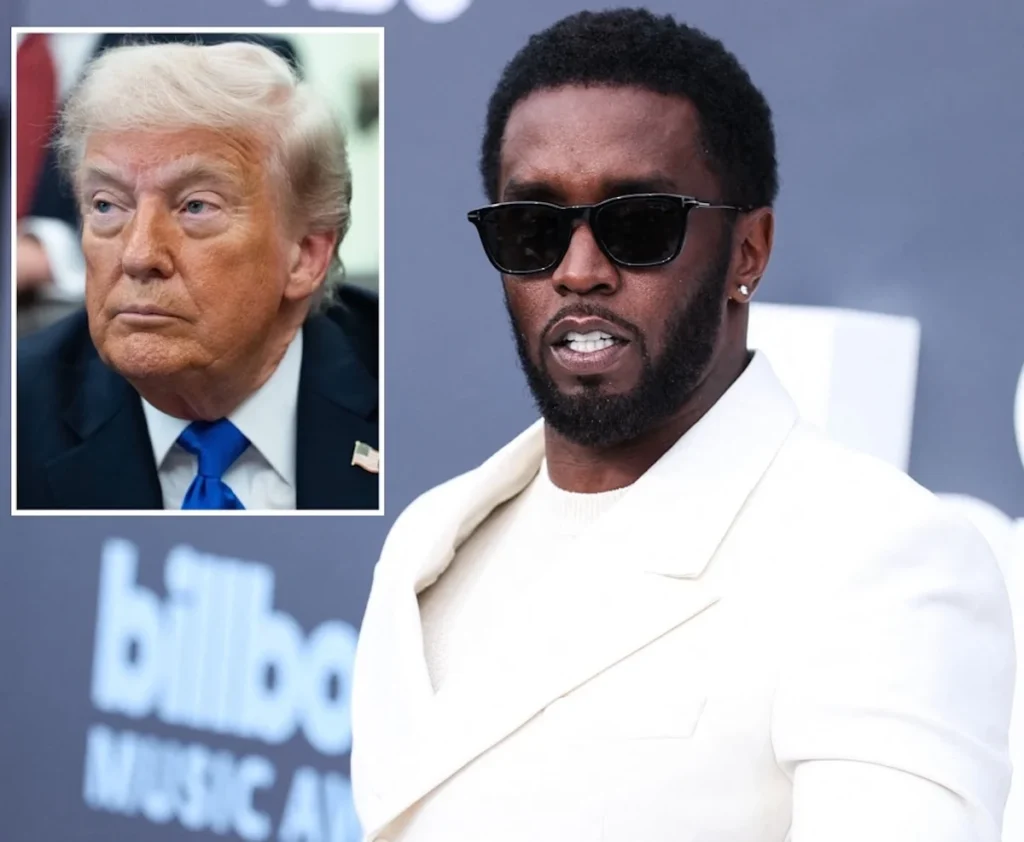

Despite earlier public pronouncements denying any such consideration, President Donald Trump is reportedly still deliberating the possibility of granting a presidential pardon to Sean "Diddy" Combs. This development emerges from confidential discussions within the White House, even as Combs is currently serving a federal prison sentence following his 2025 conviction on two counts of transportation to engage in prostitution. The intricate situation underscores the unique and often controversial nature of presidential clemency, with the President holding ultimate, unreviewable authority over such decisions, irrespective of formal recommendations from his advisory teams.
The Conviction and Its Aftermath: Sean Combs’ Legal Ordeal
Sean Combs, a towering figure in the entertainment industry known for his multifaceted career as a rapper, record producer, and entrepreneur, faced a dramatic fall from grace that culminated in his 2025 federal conviction. The charges stemmed from an extensive investigation into allegations of illicit activities. While Combs was acquitted of the more severe charges of sex trafficking and racketeering conspiracy during his high-profile trial, the jury found him guilty on two counts related to transportation to engage in prostitution. This conviction led to a federal prison sentence of just over four years, which Combs is currently serving at FCI Fort Dix, a low-security federal correctional institution in New Jersey.
The period leading up to and following Combs’ conviction was marked by a deluge of legal challenges and public accusations. Beyond the federal charges, Combs has been embroiled in numerous civil lawsuits, many alleging sexual assault, abuse, and illicit activities spanning decades. For instance, a horrifying lawsuit accused Diddy of sexually assaulting a former child actor, adding to the growing list of deeply troubling allegations. While some lawsuits, such as one filed by former Danity Kane member Dawn Richard, were dismissed, the sheer volume and severity of the claims significantly tarnished Combs’ public image and cast a long shadow over his legacy. These legal battles created an intense media firestorm, transforming a revered music mogul into a figure synonymous with controversy and legal jeopardy. The ongoing scrutiny and the nature of his conviction provide a critical backdrop against which any presidential pardon consideration would be judged.
A Shifting Narrative: Trump’s Evolving Stance on Diddy’s Pardon
The notion of a presidential pardon for Sean Combs has been a subject of persistent speculation and conflicting reports for months, painting a picture of internal debate and a President’s fluid position. Initial rumors of a potential pardon began swirling well before the public became aware of the full extent of Combs’ legal troubles, suggesting that informal discussions might have been underway for some time.
One of the earliest public acknowledgments, albeit a denial, came in January when President Trump directly addressed the matter. Speaking to the New York Times, Trump confirmed that Combs had indeed submitted a clemency request. However, at that time, the President explicitly stated that he was "not considering" granting it. This public statement seemed to put the matter to rest, at least temporarily, signaling a clear disinterest in intervening in Combs’ legal fate.
Yet, this initial denial was quickly complicated by subsequent reports. TMZ, a celebrity news outlet known for its White House connections, reported that Trump had been "going back and forth" on the issue of commuting Combs’ sentence. According to TMZ‘s sources, some within the White House were reportedly urging the President against such a move, highlighting internal dissent and the controversial nature of the potential pardon. While the White House disputed TMZ‘s reporting at the time, the outlet stood by its story, suggesting that the official denial might not fully reflect the private deliberations.
Adding another layer of intrigue, reports also emerged from inside FCI Fort Dix, where Combs is incarcerated. Fellow inmates reportedly claimed that Combs was confident about receiving a presidential pardon, with some accounts suggesting he believed it would arrive sometime in early 2026. Such claims, whether accurate or mere prison gossip, underscore the pervasive nature of the pardon discussions and the hope or belief within Combs’ immediate circle that a presidential intervention was a real possibility.
The most recent development, reported by CBS News late last week, reignited the speculation with renewed intensity. According to their sources, Diddy’s name "apparently remains in the mix"—or at least did so very recently—as President Trump engaged in a fresh round of clemency discussions with his closest advisers behind closed doors. This report directly contradicts Trump’s earlier public denial and indicates a continued, albeit private, consideration. Crucially, CBS News also reported an important caveat: Diddy is not expected to be among the formal recommendations put forth by the White House pardon team. This detail was further corroborated by another outlet on Saturday, which confirmed that Combs was indeed absent from the final pardon recommendations form. However, a White House official, emphasizing the President’s ultimate authority, reminded the outlet that Trump is "the ultimate decider" when it comes to pardons, signaling that he could override any formal team recommendation.
Despite a brief counter-report from "Source" (an unspecified outlet mentioned in the original article) suggesting the pardon might be "off the table" for now, the overarching sentiment from multiple reports indicates that the long-term conversation regarding a pardon for Sean Combs is far from over. The constant back-and-forth, the internal White House debates, and the President’s personal involvement suggest a complex and evolving situation that remains highly uncertain.
The Mechanism of Presidential Clemency: Power and Process
The power to grant pardons and commutations is one of the most significant and often controversial authorities vested in the President of the United States. Rooted in Article II, Section 2 of the U.S. Constitution, this power allows the President to forgive federal offenses, either fully (pardon) or by reducing a sentence (commutation). This executive prerogative is designed to temper justice with mercy, correct judicial errors, or serve broader public policy interests.
The typical process for federal clemency requests involves a rigorous review by the Department of Justice’s Office of the Pardon Attorney (OPA). The OPA conducts thorough investigations, gathering information from various sources, including the prosecuting attorney, the sentencing judge, and the victim(s). Based on its findings, the OPA then makes a recommendation to the President, usually through the Deputy Attorney General and the Attorney General. These recommendations are then forwarded to the White House Counsel’s office for further review before reaching the President’s desk.
However, it is crucial to understand that while this formal process provides structure and ensures due diligence, it is not binding on the President. The Constitution grants the President unilateral authority in clemency matters, meaning he can choose to grant a pardon or commutation with or without the OPA’s recommendation, and even against it. This absolute discretion is precisely what makes the current situation with Sean Combs so notable. The reports explicitly state that Combs is not expected to be included in the formal recommendations from the White House pardon team. Yet, President Trump’s continued "weighing" of the possibility highlights his capacity to bypass the standard vetting process and exercise his ultimate decider status.
Historically, presidential pardons have been both celebrated and condemned. Landmark pardons include Gerald Ford’s pardon of Richard Nixon, which sparked immense controversy but was defended as an act to heal a divided nation. More recently, President Trump himself has issued numerous high-profile and often contentious pardons, frequently to political allies, military figures, or individuals whose cases he believed represented an injustice. These actions often bypassed the OPA’s recommendations, further solidifying the precedent that the President’s will is supreme in these matters. The consideration of a pardon for Sean Combs, particularly given his recent conviction and the nature of his crimes, would fit into this pattern of presidential prerogative, potentially sparking similar levels of public and political debate.
Analysis: The Motivations and Implications of a Potential Pardon
The President’s continued consideration of a pardon for Sean Combs, despite internal opposition and the absence of a formal recommendation, raises significant questions about potential motivations and far-reaching implications. Such a move would undoubtedly be a high-stakes decision, fraught with political, ethical, and legal complexities.
Political Calculations: For President Trump, who is actively engaged in a political campaign, any pardon decision carries considerable weight. While specific details of his relationship with Combs are not widely publicized, Trump has historically shown an affinity for celebrities and figures within the entertainment industry. Granting a pardon could be seen as an assertion of executive power, a consistent theme throughout his presidency, demonstrating his willingness to act independently of bureaucratic processes. Furthermore, Trump often frames his pardon decisions around narratives of "unfairness" or overzealous prosecution, themes that might be invoked to justify a pardon for Combs. The ongoing broader review of clemency actions and reported lobbying efforts by various individuals suggest a strategic moment for such decisions, potentially aimed at consolidating support from certain demographics or influential circles. However, the optics of pardoning a figure convicted of sex-related crimes, especially one facing numerous other civil allegations, could also be highly detrimental, alienating critical voter blocs, particularly women and those concerned with justice reform.
Public and Ethical Concerns: A pardon for Sean Combs would undoubtedly ignite a firestorm of public outrage and ethical debate. Victims’ rights advocates, legal scholars, and the general public would likely view such a pardon as a profound betrayal of justice, trivializing the severity of the crimes for which Combs was convicted. Given the widespread allegations and the societal conversation surrounding sexual assault and accountability, pardoning a high-profile individual convicted of transportation to engage in prostitution would send a deeply troubling message. It could be perceived as an egregious example of favoritism, suggesting that wealth and celebrity status can circumvent the consequences of the legal system. This could further erode public trust in both the judiciary and the executive branches of government.
Legal Scope of a Pardon: It is vital to understand the precise legal effects of a presidential pardon. A pardon for federal offenses would forgive Combs for his 2025 conviction, restoring certain civil rights, such as the right to vote or hold public office, depending on state laws. However, a federal pardon does not affect state charges or civil liabilities. Combs is currently facing a multitude of civil lawsuits, many alleging serious misconduct. A presidential pardon would offer no protection against these ongoing or future civil actions, nor would it prevent state-level prosecutions should any arise. His reputation and public image, already severely damaged, would also not be automatically rehabilitated by a pardon. The legal relief would be specific to his federal conviction, leaving a significant portion of his legal and reputational challenges intact.
Reactions and Commentary (Inferred/General)
While no specific current statements from related parties beyond the White House official are available, the potential reactions to a pardon for Sean Combs can be logically inferred based on past similar events and the nature of the case.
White House Insiders and Pardon Team: The fact that Combs is not included in the formal recommendations from the White House pardon team suggests that the Office of the Pardon Attorney and other advisory staff likely followed standard procedures and applied established criteria, which presumably did not favor clemency in this instance. For these career professionals, overriding their recommendations would be a notable departure from protocol, highlighting the President’s direct intervention. There would likely be a mix of resignation to the President’s authority and quiet discomfort among those who adhere to a more structured clemency process.
Legal Scholars and Constitutional Experts: Legal experts would primarily focus on the constitutional prerogative of the President, emphasizing the broad and unreviewable nature of the pardon power. However, many would also raise ethical concerns about the potential abuse of this power, particularly if a pardon is granted without a compelling justification or against the advice of legal professionals. Commentary would likely center on the erosion of public trust in the justice system when presidential discretion appears to be exercised arbitrarily or based on factors unrelated to justice or rehabilitation.
Victims’ Advocates and Human Rights Organizations: These groups would almost certainly express vehement condemnation of any pardon for Sean Combs. Given the nature of his conviction and the numerous allegations of sexual assault and exploitation, a pardon would be seen as a profound insult to victims and a severe setback for accountability. Statements would likely emphasize the importance of holding powerful individuals accountable for their actions and the danger of sending a message that justice can be bought or influenced by status.
Public Opinion: Public reaction would be highly polarized and emotionally charged. A significant segment of the public, particularly those who have followed the extensive legal proceedings and allegations against Combs, would likely react with outrage and a sense of injustice. Conversely, some might view a pardon as an act of mercy or a belief in Combs’ potential for rehabilitation, or even as a challenge to what they perceive as an unfair legal system. Social media would undoubtedly erupt with intense debate, reflecting the deep divisions on issues of celebrity, justice, and accountability.
Broader Impact and Future Outlook
The decision regarding a pardon for Sean Combs carries significant implications that extend beyond the individual case, potentially impacting the integrity of the justice system, the political landscape, and the future trajectory of Combs’ life.
Integrity of the Justice System: A presidential pardon that bypasses formal recommendations and is issued to a high-profile individual convicted of serious crimes could significantly undermine public confidence in the fairness and impartiality of the justice system. It could fuel perceptions that the system is rigged in favor of the wealthy and powerful, challenging the fundamental principle of equal justice under the law. This erosion of trust could have long-term consequences for the legitimacy of judicial outcomes and executive actions.
Political Ramifications for Trump: For President Trump, granting such a pardon would be a considerable political gamble. While it might appeal to a niche segment of his base or certain elements within the entertainment industry, it risks alienating broader swaths of the electorate, particularly during a crucial election cycle. The optics of pardoning a celebrity convicted of crimes related to exploitation could be devastating, inviting accusations of moral bankruptcy and prioritizing personal connections over justice. The political cost could outweigh any perceived benefits, making it a decision that would undoubtedly be scrutinized intensely by voters and political opponents alike.
Combs’ Post-Pardon Landscape: Even if Sean Combs were to receive a presidential pardon, his future would remain fraught with challenges. While his federal conviction would be expunged, the extensive web of civil lawsuits against him would persist, potentially leading to substantial financial penalties and continued legal battles. His public image and career, severely tarnished by the allegations and conviction, would face an uphill battle for rehabilitation. A pardon, while providing legal relief from federal incarceration, would not erase the public memory or the ongoing civil liabilities, leaving him in a precarious position.
Uncertainty: Ultimately, the fate of a potential pardon for Sean Combs rests solely in the hands of President Donald Trump. His history of making unpredictable and often controversial clemency decisions means that the outcome remains inherently uncertain. The back-and-forth reports, the internal White House discussions, and the President’s ultimate discretion all contribute to a situation that is fluid, highly scrutinized, and poised to generate considerable public and political debate, regardless of the final decision.