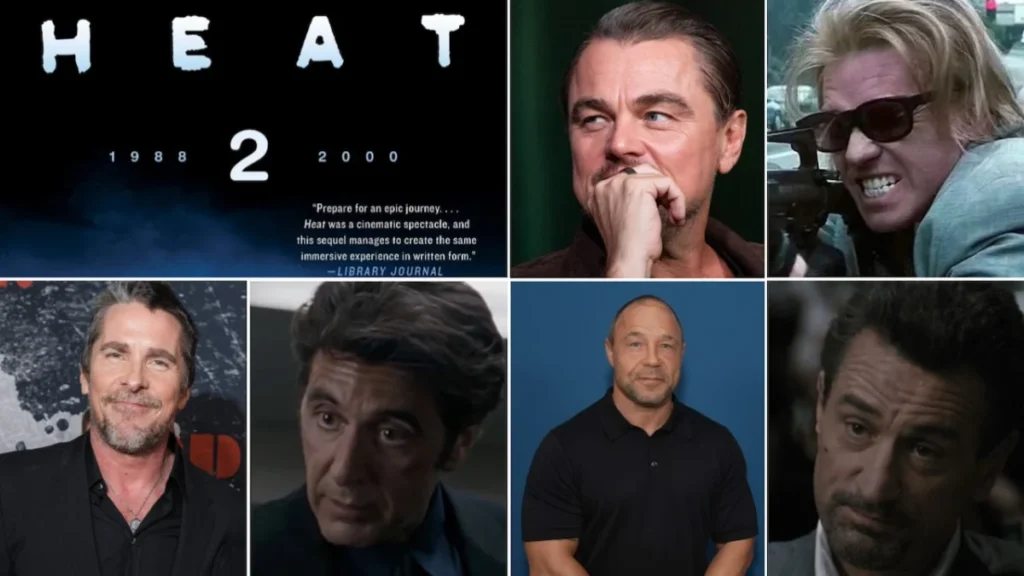

Filmmaker Michael Mann is officially set to commence principal photography on his highly anticipated crime epic, Heat 2, this fall. The project, which has been a subject of considerable speculation among cinephiles and industry observers for years, will feature an A-list ensemble cast, with Christian Bale and Leonardo DiCaprio slated to take on lead roles. The news, initially reported by TheWrap, confirms the long-awaited cinematic expansion of the universe first explored in Mann’s iconic 1995 film, Heat.
Christian Bale is cast as Vincent Hanna, the relentless LAPD detective originally portrayed by Al Pacino. Stepping into the shoes of the character known for his intense dedication and philosophical musings on the criminal mind, Bale faces the significant challenge of reinterpreting one of cinema’s most memorable law enforcement figures. Leonardo DiCaprio will embody Chris Shiherlis, the skilled and volatile getaway driver, a role originated by Val Kilmer. Shiherlis’s character arc, particularly in the sequel portion of the narrative, promises a complex and emotionally charged performance from DiCaprio. Further bolstering the cast, Stephen Graham has been tapped to play the professional heist mastermind Neil McCauley, the role made legendary by Robert De Niro. Graham’s involvement is particularly crucial given the prequel elements of the story, which will delve into McCauley’s formative years. Additionally, Adam Driver is reportedly in advanced discussions to portray the film’s primary antagonist, Wardell, though specific details about this character remain under wraps. The casting for the prominent female lead, a role reminiscent of Ashley Judd’s Charlene Shiherlis from the original, is still in progress, indicating Mann’s meticulous approach to assembling his cast.
The Enduring Legacy of Heat (1995)
To understand the immense anticipation surrounding Heat 2, one must first acknowledge the monumental impact of the original 1995 film. Heat stands as a seminal work in the crime thriller genre, celebrated for its meticulous realism, intricate character development, and groundbreaking action sequences. Written and directed by Michael Mann, the film famously brought together cinematic titans Al Pacino and Robert De Niro on screen for their first significant shared scenes, delivering an iconic diner confrontation that has since become a masterclass in dramatic tension.
The original Heat explored the parallel lives of a driven professional thief, Neil McCauley (De Niro), and an equally dedicated LAPD detective, Vincent Hanna (Pacino). Both men operate at the pinnacle of their respective professions, bound by a shared code of professionalism, an understanding of each other’s methodologies, and a profound loneliness stemming from their all-consuming careers. The film’s narrative was a sprawling tapestry of high-stakes heists, intense shootouts – most notably the downtown Los Angeles bank robbery and subsequent street gunfight, which set new benchmarks for cinematic realism – and deeply personal struggles faced by the characters and their families. Supporting performances from Val Kilmer, Tom Sizemore, Ashley Judd, Jon Voight, and Natalie Portman further enriched its narrative depth.
Critically acclaimed for its technical precision, thematic complexity, and Mann’s signature neo-noir aesthetic, Heat garnered significant box office success, grossing over $187 million worldwide against a $60 million budget. Beyond its commercial performance, the film cemented its place in popular culture, influencing countless subsequent crime dramas and action films with its detailed portrayal of criminal operations and police procedures. Its philosophical undertones, particularly the exploration of fate, choice, and the inherent solitude of professional life, resonate deeply with audiences, making it a perennial favorite and a frequent subject of academic study in film schools. The film’s enduring legacy is a testament to Mann’s singular vision and its timeless exploration of morality within the criminal underworld.
The Genesis of Heat 2: From Page to Screen
The concept of Heat 2 did not emerge overnight; it has been a long-gestating project for Michael Mann. The film is directly based on his 2022 novel of the same name, co-written with acclaimed crime author Meg Gardiner. The novel, released in August 2022, was a significant literary event, immediately topping bestseller lists and receiving widespread critical acclaim for its ambitious scope and faithful expansion of the Heat universe.
Mann had often expressed his fascination with the characters of Heat and the desire to delve deeper into their backstories and future trajectories. The novel Heat 2 masterfully serves as both a prequel and a sequel to the 1995 film, a narrative structure that presents unique opportunities and challenges for its cinematic adaptation.
The prequel segments of the novel transport readers back to 1988, seven years before the events of the original film. These sections vividly depict the early criminal careers of a younger Neil McCauley, Chris Shiherlis, and their crew as they navigate dangerous heists across Chicago, the US-Mexico border, and Southeast Asia. This period is crucial for understanding the formation of McCauley’s strict code, his meticulous planning, and the bonds of loyalty that define his crew. Simultaneously, the prequel explores the nascent career of a younger Vincent Hanna, tracing his origins as a brilliant but troubled LAPD detective in Chicago, providing context for his intense drive and unique investigative methods. This dual timeline allows for a rich exploration of how these characters became the men audiences met in 1995.
The sequel portion of the novel picks up immediately after the harrowing events of the original Heat. With McCauley dead, the narrative focuses on Chris Shiherlis, who is severely wounded and on the run. Hanna, having killed McCauley, is now relentlessly pursuing Shiherlis, whose escape takes him across international borders, notably to Paraguay. This post-1995 storyline delves into the consequences of the original film’s climax, exploring themes of survival, revenge, and the inescapable grip of past choices. The novel’s intricate plotting and character insights have laid a robust foundation for Mann’s cinematic return to this world, promising a narrative that is both expansive and deeply personal.
The Ensemble: A New Generation of Stars
The casting of Heat 2 is perhaps one of its most scrutinized aspects, given the iconic performances in the original. Michael Mann has assembled a new generation of esteemed actors, each bringing their own formidable talent to roles that are indelibly etched in cinematic history.
-
Bale as Hanna: Filling Iconic Shoes
Christian Bale’s selection as Vincent Hanna is a testament to his reputation as one of the most versatile and transformative actors working today. Al Pacino’s original portrayal of Hanna was a tour de force of intensity, marked by his signature explosive delivery and profound psychological depth. Bale, known for his rigorous method acting and physical transformations for roles such as Patrick Bateman in American Psycho, Trevor Reznik in The Machinist, and Bruce Wayne in Christopher Nolan’s Dark Knight trilogy, possesses the gravitas and commitment required to reinterpret this complex character. His ability to convey internal turmoil and unwavering dedication, even bordering on obsession, makes him an ideal candidate to explore Hanna’s earlier career and the psychological toll of his relentless pursuit of justice. The challenge for Bale will be to honor Pacino’s definitive performance while injecting his own unique interpretation, particularly in the prequel segments that explore a younger, perhaps less jaded, Hanna. -
DiCaprio as Shiherlis: A Character’s Evolution
Leonardo DiCaprio as Chris Shiherlis brings an unparalleled star power and acting pedigree to the role. Val Kilmer’s original performance as Shiherlis was nuanced, portraying a character who was both fiercely loyal to McCauley and deeply devoted to his wife, Charlene, making his eventual downfall all the more tragic. DiCaprio, a frequent collaborator with Martin Scorsese and known for his portrayals of complex, often morally ambiguous characters in films like The Departed, The Wolf of Wall Street, and Once Upon a Time in Hollywood, is perfectly suited to explore Shiherlis’s journey. The sequel’s focus on Shiherlis on the run, facing dire consequences and fighting for survival, offers DiCaprio a rich emotional landscape to explore, showcasing his capacity for both vulnerability and steely resolve. His involvement significantly elevates the film’s profile and promises a performance that will delve deep into the character’s post-original film trauma and evolution. -
Graham as McCauley: The Prequel’s Core
Stephen Graham’s casting as Neil McCauley is particularly intriguing for the prequel narrative. Robert De Niro’s McCauley was the epitome of the professional criminal – cool, calculating, and fatalistic, living by a strict code of never getting attached to anything you can’t walk away from in 30 seconds. Graham, a British actor celebrated for his intense and often gritty performances in projects like This Is England, Boardwalk Empire, and The Irishman, possesses the raw authenticity and formidable screen presence to embody a younger, perhaps still forming, version of McCauley. His ability to convey menace and a quiet determination will be crucial in depicting McCauley’s rise in the criminal underworld and establishing the origins of his iconic ethos. The prequel will rely heavily on Graham’s portrayal to build the foundation for the character audiences know from the 1995 film. -
Driver as Wardell: The Antagonist’s Intrigue
Adam Driver’s potential involvement as the villain Wardell adds another layer of star power and dramatic potential. Driver has proven his versatility across genres, from his complex villainous turn as Kylo Ren in the Star Wars saga to his nuanced dramatic performances in films like Marriage Story and House of Gucci. His ability to portray characters with intensity, intelligence, and a dark edge makes him a compelling choice for a new antagonist in the Heat universe. While details about Wardell are scarce, the character is expected to play a significant role in the challenges faced by both McCauley’s crew in the prequel and potentially Hanna or Shiherlis in the sequel, introducing a fresh threat to the established dynamics. -
The Remaining Role: Female Lead Significance
The ongoing casting for the primary female lead underscores the importance of strong female characters in Michael Mann’s storytelling. In the original Heat, characters like Charlene Shiherlis (Ashley Judd), Eady (Amy Brenneman), and Justine Hanna (Diane Venora) provided crucial emotional anchors and highlighted the personal stakes for the male protagonists. The new film will undoubtedly require a performer capable of carrying significant dramatic weight, whether in the prequel, sequel, or both timelines, adding depth and perspective to the male-dominated crime narrative.
Michael Mann’s Return to the Universe
Michael Mann’s decision to direct Heat 2 is perhaps the most significant factor in the project’s high expectations. Mann is renowned for his meticulous attention to detail, his commitment to realism, and his distinctive cinematic style characterized by cool urban landscapes, precise action choreography, and a profound exploration of character psychology. His recent work, including the biographical drama Ferrari (2023), further showcases his directorial prowess and commitment to authentic storytelling.
For Mann, Heat 2 is not merely a sequel; it is a passion project rooted in a universe he has nurtured for decades. He has always maintained a deep connection to these characters, often revisiting their complexities in his mind. Directing the film based on his own novel allows him complete creative control over the narrative and aesthetic, ensuring a faithful translation of his expanded vision. The challenge for Mann will be to integrate the prequel and sequel elements seamlessly, maintaining the thematic consistency and stylistic integrity that made the original a classic, while also delivering a fresh and engaging cinematic experience for both new audiences and long-time fans. His return promises a film that will be intellectually rigorous, visually striking, and emotionally resonant.
Production Timeline and Scope
With production slated to begin "this fall," the pre-production phase is likely well underway, involving detailed planning for locations, set design, and logistical arrangements. Given the novel’s expansive geographical scope—spanning Chicago, Los Angeles, the US-Mexico border, Southeast Asia, and Paraguay—the film is expected to feature a diverse array of international filming locations, adding to its visual grandeur and logistical complexity. This global footprint will undoubtedly necessitate a substantial budget, particularly with an all-star cast and Mann’s known preference for practical effects and on-location shooting.
The "fall" start date suggests a potential release window in late 2025 or early 2026, allowing ample time for principal photography, extensive post-production, and visual effects work. The project’s scale indicates it will be a tentpole release for the studio involved, positioning it as a major contender in the awards season circuit, depending on its critical reception.
Anticipation and Industry Implications
The announcement of Heat 2 with such a high-caliber cast has ignited a firestorm of excitement across social media and film news outlets. Fans of the original Heat have expressed overwhelming enthusiasm, tempered with the high expectations that accompany any sequel to a beloved classic. The project taps into Hollywood’s current trend of revisiting successful intellectual properties, but unlike many reboots, Heat 2 benefits from the direct involvement of its original creator, Michael Mann, and is based on a well-received novel that significantly expands the existing lore.
Industry analysts anticipate that Heat 2 will be a major commercial success, driven by the star power of Bale and DiCaprio, Mann’s directorial reputation, and the enduring appeal of the Heat brand. Its performance will likely be closely watched as a case study for how to successfully extend a classic film franchise, particularly one with such a distinct artistic identity. The film’s potential impact extends beyond the box office, potentially influencing future decisions on how studios approach legacy sequels—prioritizing creative integrity and original authorship alongside commercial viability.
The return of Michael Mann to the Heat universe, accompanied by a dream cast, signals not just the production of a new film, but the continuation of a cinematic legacy. The challenge for Heat 2 will be immense: to honor the original’s groundbreaking achievements while forging its own identity, captivating a new generation of viewers, and satisfying the fervent expectations of a global fanbase. As fall approaches, the anticipation for this ambitious crime saga will only continue to mount.