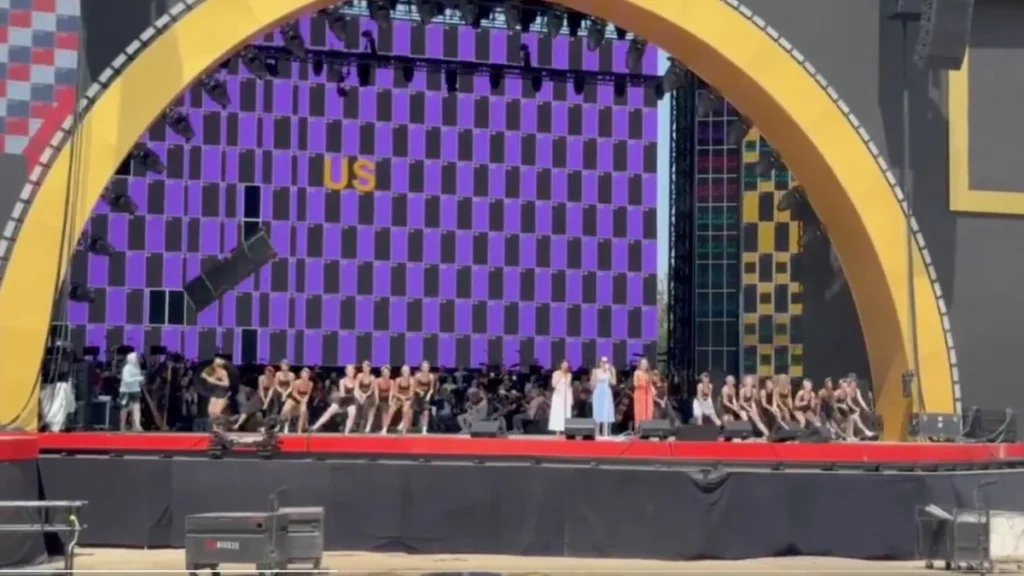

A potentially catastrophic incident unfolded Thursday afternoon at the Great American State Fair when a substantial piece of equipment from the Salute Stage detached and plummeted towards a group of young dancers rehearsing below. Fortunately, quick reactions and sheer luck prevented any injuries, but the close call has intensified scrutiny on the already beleaguered event, which has been plagued by weak attendance, exorbitant food prices, and a string of canceled musical acts since its opening. The near-disaster occurred as the young performers were preparing for the "Freedom 250’s July 4th celebration," a key event meant to anchor the fair’s patriotic programming.
The Incident Unfolds: A Narrow Escape
Eyewitnesses described a sudden, terrifying moment shortly after 2:00 PM local time on Thursday. The young dancers, estimated to be between the ages of 8 and 14, were engaged in a dress rehearsal on the main platform of the Salute Stage, a prominent outdoor structure designed to host a variety of performances throughout the fair. According to initial reports, a section of the stage’s overhead rigging, which typically supports lighting, sound equipment, and backdrops, gave way. The falling component, described by some as a heavy lighting truss or a large decorative panel, crashed onto the stage floor in an area where the dancers had been just moments before.
"It happened so fast," recounted Sarah Chen, a parent volunteer supervising the rehearsal. "One minute they were doing their routine, the next there was this loud creak, and then a thud. The kids had just moved to another mark, thank God. If they had been a foot to the left, it would have been a completely different story." The immediate aftermath was marked by shock and a scramble to ensure all children were safe. Fair security and medical personnel were on the scene within minutes, though their services were thankfully not required for physical injuries. The emotional impact, however, was palpable, with several children visibly shaken and parents expressing profound relief mixed with anger over the perceived safety lapse. An amateur video clip, widely circulated on social media, captured the immediate aftermath, showing the fallen equipment and the agitated reactions of those present, further amplifying concerns about the fair’s operational integrity.
A Troubled Start: The Great American State Fair’s Woes
The Great American State Fair, envisioned as a grand celebration of American culture and innovation, has struggled to live up to its ambitious billing since its inauguration. Prior to Thursday’s near-tragedy, headlines surrounding the event had already painted a grim picture. Organizers had projected record attendance figures, anticipating millions of visitors to pass through its gates over its multi-week run. However, actual attendance has reportedly fallen significantly short of these targets, leading to sparse crowds and a noticeable lack of vibrancy across the sprawling fairgrounds.
Economic analysts point to several contributing factors for the poor turnout. Steep ticket prices, coupled with what many visitors describe as "extortionate" food and beverage costs, appear to have deterred many potential attendees. A single meal, including a drink and a snack, could easily exceed $30-$40 per person, making a family outing a considerable financial burden. Vendors, who themselves face high operational costs and concession fees from the fair organizers, defend their pricing by citing increased supply chain expenses and the temporary nature of their operations. Yet, the perception of poor value for money has undeniably impacted visitor sentiment.
Adding to the woes, the fair has experienced a series of high-profile musical act cancellations. Several artists and bands, initially advertised as major draws, have pulled out of their scheduled performances, often citing "unforeseen circumstances" or "scheduling conflicts." These cancellations have left fairgoers disappointed and further diminished the event’s appeal, raising questions about contractual agreements and the financial stability of the fair’s entertainment budget. Industry insiders suggest that some cancellations may be linked to lower-than-expected advance ticket sales for individual concerts, prompting artists or their management to re-evaluate their commitments.
Official Response and Investigations
In the wake of the incident, fair organizers swiftly closed the Salute Stage indefinitely for a comprehensive safety inspection. A spokesperson for the Great American State Fair issued a statement expressing profound relief that no one was injured and emphasized that the safety and well-being of all fairgoers and performers remain their utmost priority. "We are launching an immediate and thorough investigation into the cause of this equipment failure," the statement read. "We are working closely with structural engineers, independent safety consultants, and local authorities to ascertain precisely what occurred and to implement any necessary corrective measures across all our temporary structures."
Local building inspection authorities and occupational safety and health officials have confirmed that they have initiated their own parallel investigations. Their primary focus will be on the structural integrity of the temporary stage, the quality of its construction and installation, the materials used, and adherence to all relevant safety codes and permitting requirements. Typically, large-scale temporary structures like those found at state fairs undergo rigorous inspection processes before public access is granted. Questions are now being raised about the efficacy of these initial checks and whether ongoing maintenance and daily pre-show inspections were adequately performed. Any findings of negligence or non-compliance could lead to severe penalties, including fines and further operational restrictions for the fair.
Witness Accounts and Emotional Aftermath
The young dancers, their parents, and their instructors were understandably shaken by the near-miss. "It was terrifying," said Maria Rodriguez, mother of 10-year-old Isabella, one of the dancers. "You send your child to an event like this, expecting them to be safe, to have fun. To think what could have happened… it’s a parent’s worst nightmare." The dance troupe’s instructor, Mr. David Lee, praised his students’ composure and the quick thinking that led them to move away from the impact zone just moments before the equipment fell. "We practice stage awareness, but this was beyond anything we could have prepared for," Lee commented. "The kids are resilient, but this will stay with them for a while. We’re grateful for their safety, but deeply concerned about the general safety standards here."
Psychological support services were offered to the affected children and their families, acknowledging the potential trauma of witnessing such a dangerous event. While the fair organizers focused on the structural investigation, the human element of the incident highlighted the broader anxieties now surrounding the event. Many parents are reconsidering allowing their children to participate in future performances or even attend the fair, signaling a potential further blow to attendance figures and public trust.
Safety Standards Under Scrutiny
The incident at the Salute Stage throws a harsh spotlight on the complexities of ensuring safety at large-scale outdoor events that rely heavily on temporary infrastructure. Event stages, particularly those designed for multi-day or multi-week use, are subject to stringent engineering and safety standards. These include considerations for wind loads, material fatigue, proper rigging techniques, and regular inspections. In the United States, such structures must typically adhere to local building codes, fire codes, and industry best practices set by organizations like the Event Safety Alliance (ESA).
The construction and dismantling of temporary stages involve specialized crews and certified technicians. Engineers must approve designs, and local permitting offices usually require detailed plans and safety certifications before granting operational permits. The investigation will likely delve into whether the specific piece of equipment that failed was properly secured, if it suffered from a manufacturing defect, or if environmental factors (such as recent weather patterns, though none extreme were reported immediately prior) played a role. Any deviation from these protocols could have serious consequences, as demonstrated by previous incidents at other large festivals and concerts where stage collapses have led to serious injuries or fatalities. The absence of injuries in this instance is a testament to the dancers’ fortunate positioning and perhaps the timing of the collapse.
Compounding Challenges: Heatwave and High-Profile Appearances
As if the current operational and reputational challenges were not enough, the Great American State Fair is bracing for an even more precarious weekend. Meteorologists are forecasting a severe heatwave, with temperatures expected to exceed 100 degrees Fahrenheit (38 degrees Celsius) and heat index values potentially making it feel even hotter. Public health officials have already issued extreme heat warnings, advising residents to stay hydrated, seek air-conditioned environments, and limit outdoor activities, particularly during peak daytime hours. Such conditions pose a significant health risk to fairgoers, staff, and performers, and could further depress attendance. The fair will need to implement robust heat mitigation strategies, including cooling stations, increased access to water, and modified schedules for outdoor events.
Adding another layer of complexity, former President Donald Trump is scheduled to make a high-profile appearance this weekend. Trump has publicly stated his intention to "make a really long speech just to show that I can do anything," a remark that has garnered attention. While the specific stage for his address has not been confirmed, the general atmosphere of disarray and the recent safety scare could overshadow his visit. Large political rallies inherently come with their own set of security and logistical challenges, which will now be compounded by the extreme heat and the need to reassure the public about overall safety at the venue. The combination of a safety incident, extreme weather, and a controversial political figure presents an unprecedented management challenge for the fair organizers.
Broader Implications for Public Events
The troubles at the Great American State Fair extend beyond its immediate boundaries, raising broader questions about the viability and safety of large-scale public events in the current economic and social climate. The incident highlights the critical importance of rigorous safety protocols, diligent oversight, and transparent communication from event organizers. Public trust, once eroded, is difficult to rebuild, and the ripple effects of such negative publicity can impact the entire industry.
For the Great American State Fair specifically, the path forward is uncertain. The ongoing investigations, potential lawsuits, and further decline in attendance could place its financial future in jeopardy. Sponsors and vendors may reconsider their involvement, and the fair’s reputation as a premier destination could be irrevocably damaged. The incident serves as a stark reminder that while the spectacle of grand events captivates audiences, the foundational elements of safety, logistics, and visitor experience must never be compromised.
Looking Ahead: The Fair’s Uncertain Future
As the Great American State Fair limps towards its final days, the fallout from Thursday’s incident and the cumulative effect of its operational challenges will undoubtedly be significant. The immediate focus remains on ensuring the safety of all remaining attendees and staff, especially with the impending heatwave. Beyond that, fair organizers face the daunting task of assessing the full extent of the damage to their reputation and financial standing. The potential for legal action from affected parties, the cost of repairs and enhanced safety measures, and the impact on future visitor numbers will shape the fair’s legacy for years to come. The promise of a "Great American" event has, for many, devolved into a cautionary tale of ambition outstripping execution, underscoring the delicate balance required to host successful, safe, and truly enjoyable public spectacles.