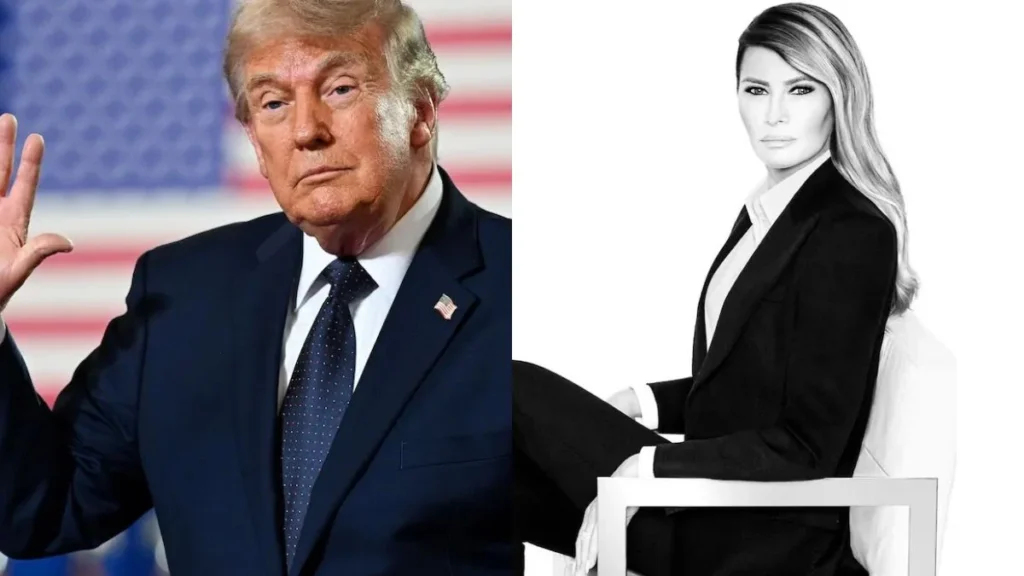

President Donald Trump’s latest annual financial disclosure, released by the US Office of Government Ethics (OGE), has brought into sharp focus the substantial financial gains he and his family have accrued from ventures intimately tied to his political identity and public office. The extensive 927-page filing notably revealed a $10.71 million licensing payment directly linked to Amazon MGM Studios’ critically panned Melania documentary, offering the most transparent insight yet into the financial returns from the project centered on First Lady Melania Trump. This figure is part of a broader tapestry of income streams that, according to the disclosure, pushed his reported annual revenue past an astonishing $2 billion, largely fueled by cryptocurrency ventures.
A Detailed Look at the Financial Disclosure
The financial disclosure, a mandatory public document for high-ranking government officials, meticulously itemizes the President’s various income sources and assets over the past year. Beyond the significant $10.71 million licensing fee for the Brett Ratner-directed Melania documentary, the filing shed light on several other lucrative endeavors connected to the First Lady. These include an additional $521,161 in licensing income derived from Melania Trump’s memoir, published by Skyhorse Publishing, a company known for releasing books by conservative authors and figures. Furthermore, the disclosure detailed approximately $6 million in proceeds from Non-Fungible Tokens (NFTs) and other digital collectibles associated with the First Lady, tapping into the burgeoning market for unique digital assets.
However, the most eye-popping figures in the report came from President Trump’s foray into the cryptocurrency space. The filing indicated more than $1.4 billion in cryptocurrency-related income through various ventures, including World Liberty Financial and the high-profile $TRUMP meme coin. This colossal sum from digital assets significantly inflated his total reported annual revenue, pushing it beyond the $2 billion mark, a figure that dwarfs his earnings in previous years. The report explicitly states that Trump made more than triple the profits from the year before he was re-elected, underscoring the unprecedented financial surge experienced during his latest term.
The "Melania" Documentary: Production, Reception, and Financial Underperformance
The Melania documentary, a central piece of this financial puzzle, has a convoluted history marked by significant investment and widespread critical derision. Directed by Brett Ratner, a filmmaker whose career had been largely on hiatus following accusations of sexual misconduct, the documentary aimed to provide an intimate portrait of the First Lady. The project’s inception and acquisition by Amazon MGM Studios were subjects of considerable speculation and reporting.
According to The Wall Street Journal, Amazon MGM Studios reportedly paid a staggering $40 million to acquire the rights to Melania following an intense post-election bidding war. This substantial investment came after a private meeting between Donald and Melania Trump and Amazon founder Jeff Bezos at the former president’s Mar-a-Lago estate, just weeks after the 2024 presidential election. Such a meeting, occurring during a critical transition period, immediately raised questions about the intersection of political influence and corporate deal-making. Amazon’s total investment in the documentary, encompassing both acquisition and marketing, was reportedly around $75 million, signaling a significant bet on the project’s commercial and cultural impact.
Despite this hefty investment and a widespread release strategy, the documentary was met with almost universal scorn. Melania debuted in theaters in January before subsequently becoming available on Amazon’s Prime Video streaming service. Critics were unsparing in their reviews. For instance, Consequence magazine famously awarded the "documentary" an "F" rating, lambasting it as a "glossy exercise in image management" that offered little more than "carefully controlled access to the First Lady" and failed to provide any genuine insight or critical perspective. This sentiment was echoed across the board, culminating in a dismal 7% rating on Rotten Tomatoes, a widely recognized aggregate review site.
Commercially, the film mirrored its critical failure. During its theatrical run, Melania grossed a mere $16.7 million worldwide, a fraction of Amazon’s reported $75 million investment. This significant financial underperformance highlights the disconnect between the perceived market value of the Trump brand by some investors and the actual audience reception to a product that was widely seen as a propaganda piece. The $10.71 million licensing payment to Trump, therefore, represents a personal financial gain from a project that proved to be a considerable loss for Amazon MGM Studios.
Broader Financial Holdings: Cryptocurrency and the Monetization of Political Identity
The Melania documentary’s financial details are just one facet of a much larger and more complex financial picture presented by the President’s disclosure. The reported $1.4 billion in cryptocurrency-related income through entities like World Liberty Financial and the $TRUMP meme coin underscores a strategic pivot towards leveraging emerging digital markets. This move into cryptocurrencies, particularly meme coins directly associated with his name, represents a novel approach to monetizing political celebrity and a loyal supporter base.
Meme coins, often volatile and speculative, rely heavily on community engagement and social media trends for their value. The creation and promotion of a $TRUMP meme coin directly links the President’s personal brand to a digital asset, allowing his supporters to invest in his "brand" in a new, albeit risky, way. The sheer volume of income reported from these ventures suggests a remarkably successful, albeit controversial, engagement with this sector, raising questions about market manipulation and the ethical implications of a sitting president promoting such assets.
Official Responses and Ethical Concerns
The blockbuster financial disclosure immediately ignited a firestorm of criticism and prompted pointed questions regarding potential conflicts of interest and the ethics of a sitting president enriching himself through ventures tied to his office. When directly confronted about profiting from the presidency in light of the disclosure, President Trump offered a defensive stance. He argued that "everybody is profiting" because "the stock market is up," attempting to conflate his personal wealth with broader economic indicators. During a brief exchange with reporters, he also remarked, "I made a lot of money before I became president… I don’t know if I had a better career in politics or business." However, the disclosure itself, showing more than triple the profits from the year before his re-election, strongly suggests that his recent political career has indeed been more financially lucrative than his prior business ventures.
The White House, through spokeswoman Anna Kelly, issued a formal statement in response to the growing concerns about the President’s business interests. Kelly asserted, "Neither the President nor his family has ever engaged – or will ever engage – in conflicts of interest," adding that "all actions by President Trump and his administration are taken in the best interest of the American people." This boilerplate denial, however, is unlikely to appease critics and ethics watchdogs who have consistently raised alarms about the intertwining of the President’s public duties and his private financial gains.
Historical Context and Persistent Criticisms
The debate over presidential finances and potential conflicts of interest is not new, but the scale and nature of President Trump’s disclosed earnings have pushed these discussions into unprecedented territory. The US Office of Government Ethics (OGE) was established to prevent conflicts of interest on the part of executive branch employees, including the President. Financial disclosures are designed to promote transparency and accountability, allowing the public to scrutinize the financial dealings of their leaders.
Historically, presidents have often placed their assets into blind trusts or divested from business interests to avoid even the appearance of impropriety. Donald Trump, however, famously chose a different path, maintaining ownership of his extensive business empire while in office, a decision that has been a constant source of controversy. Critics argue that his continued business dealings, and now these significant new income streams, violate the spirit, if not the letter, of ethical guidelines for public service. The Emoluments Clauses of the US Constitution, which prohibit federal officials from accepting gifts, payments, or titles from foreign states or domestic states without Congressional consent, have frequently been cited by those concerned about his business entanglements.
The Melania documentary deal and the cryptocurrency earnings are viewed by many as prime examples of the direct monetization of the presidency. Critics point to the timing of the Amazon deal, coming shortly after the election and following a meeting with Bezos, as evidence of potential influence peddling or at least a blurring of lines between public service and private gain. The documentary itself, widely seen as an attempt to "launder" the First Lady’s public image through "prestige-documentary packaging," further fuels concerns about using media platforms for political and personal ends while in office.
Beyond the Melania documentary, the filing’s release coincided with other controversies that critics highlight as indicative of the administration’s relaxed approach to ethical boundaries. The article mentions the administration’s acceptance of a luxury Boeing 747-8 from Qatar, which underwent extensive taxpayer-funded modifications before taking off as an interim Air Force One. Such incidents, when viewed alongside the President’s substantial personal financial gains, contribute to a narrative of a presidency where public and private interests are deeply intertwined.
Implications for Future Presidential Conduct and Transparency
The staggering financial figures in President Trump’s latest disclosure, particularly the multi-million dollar payment for the Melania documentary and the unprecedented cryptocurrency earnings, are set to have long-lasting implications for discussions surrounding presidential ethics, transparency, and the monetization of public office. This case raises critical questions about how future presidents will manage their personal finances, especially in an era where digital assets and media projects offer new avenues for wealth generation tied to public personas.
Ethics watchdogs and political opponents are likely to intensify calls for stricter regulations and enforcement mechanisms for presidential financial disclosures and conflict-of-interest rules. The episode may also prompt a re-evaluation of the role of major corporations, like Amazon MGM Studios, in engaging with political figures, especially when such engagements involve significant financial outlays for projects with clear political undertones and questionable commercial viability.
Ultimately, the disclosure underscores the ongoing tension between a president’s personal financial interests and their duties to the American public. The President’s assertion that "everybody is profiting" and the White House’s blanket denial of conflicts of interest are unlikely to quell the burgeoning debate. Instead, the revelations surrounding the Melania documentary and the President’s broader financial portfolio are poised to become a central point of contention, shaping public discourse on accountability and integrity in the highest office for years to come.