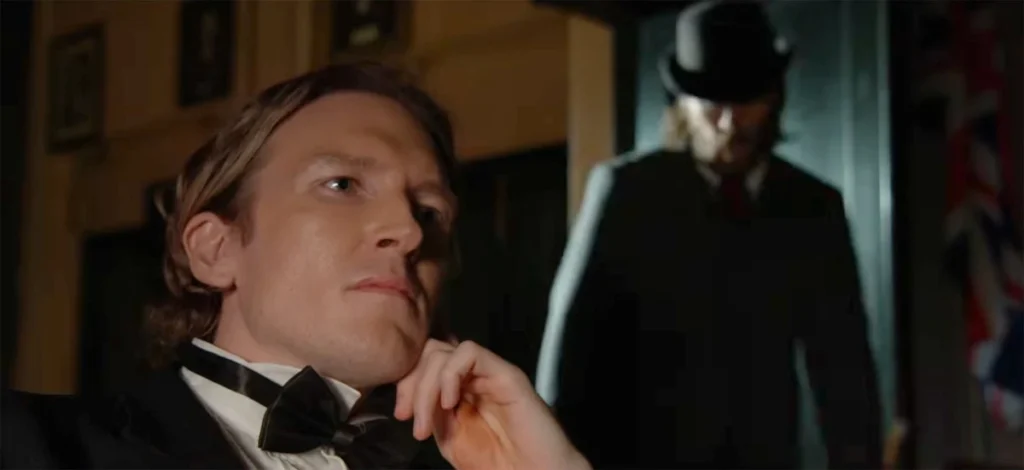

Freestyle Digital Media has unveiled the official trailer for "The Third Degree," a psychological thriller set to make its debut on Video on Demand (VOD) platforms on July 10, 2026. Directed by Canadian filmmaker Ryan Little, known for his work on "Saints and Soldiers" and "Forever Strong," the film plunges audiences into the shadowy depths of a historic London theatre where the lines between performance and perilous reality become irrevocably blurred. The narrative centers on four young actors rehearsing an ambitious West End play, only to find their personal lives and clandestine affairs unraveling with devastating consequences.
Unraveling Secrets Within a Historic Venue
The premise of "The Third Degree" hinges on a seemingly straightforward rehearsal that quickly devolves into a nightmarish labyrinth of deceit and danger. The film’s setting—a "creaky, centuries-old London theater"—is not merely a backdrop but an integral element of its atmosphere, evoking a sense of history, hidden stories, and perhaps, a lingering sense of unease. This choice of venue suggests a deliberate attempt to imbue the narrative with a gothic or classic mystery feel, reminiscent of the atmospheric tension often found in older theatrical settings.
The plot unfolds as the cast, comprised of former classmates from an English Dramatic Academy, gathers under the direction of William, who is not only directing the play but also serving as its writer. The play itself is described as a "murder mystery steeped in Hitchcockian dread and 1920s film noir," a meta-narrative device that allows the film to mirror its own thematic concerns. William’s meticulous control over the script and the cast, however, proves to be a fragile facade. As the rehearsal progresses, personal entanglements, including secret affairs and long-simmering betrayals, begin to surface.
The film’s synopsis highlights William’s manipulative tactics, stating he "rewrites scenes on the fly, manipulating his fellow actors’ egos and desires as deftly as he manipulates the characters on the page." This suggests a complex dynamic where the director’s control is not absolute but rather a form of psychological warfare, exploiting the actors’ vulnerabilities for dramatic effect. The inclusion of flashbacks to 1922 further complicates the narrative, blurring temporal boundaries and potentially linking the present-day drama to historical events or unresolved past traumas within the theater itself.

A Descent into Deadly Consequences
The transition from theatrical performance to genuine violence is a key dramatic arc in "The Third Degree." The trailer and promotional materials emphasize the escalating stakes, indicating that what begins as a staged conflict soon spills into real-world danger. The line "When the curtain falls, the truth is deadlier than the fiction" encapsulates this central theme, suggesting that the secrets revealed are more destructive than any fictional plot.
The film’s director, Ryan Little, has described "The Third Degree" as "a psychological puzzle box wrapped in a classic murder mystery." He elaborates on the film’s exploration of "the dark side of ambition when the characters they create refuse to stay on the page. It is a story about control, manipulation, and the deadly consequences of blurring art with real life." This statement underscores the film’s intent to delve into the psychological toll of performance and the ethical implications of using personal lives as fodder for artistic creation.
The cast of "The Third Degree" features James Barrington, Eric Geynes, Tom Hutch, and Nicola Posener. Their performances are expected to be crucial in conveying the escalating paranoia and desperation of characters trapped in a situation where distinguishing between acting and survival becomes increasingly difficult. The trailer hints at a series of "criss-crossing revelations" and "twist after twist," promising a complex narrative that will keep audiences guessing until the final act.
Production and Release Strategy
"The Third Degree" is a production of Ryan Little, with the screenplay penned by McKay Daines, who also serves as a producer alongside Steven A. Lee. The film’s direct-to-VOD release strategy by Freestyle Digital Media is a common approach for independent films aiming to reach a broad audience without the extensive theatrical distribution channels. This method allows for greater creative control and a faster release timeline, particularly relevant for genre films that may find a strong audience in the home entertainment market.
The film’s release date of July 10, 2026, places it within the summer release window, a period often characterized by a mix of blockbuster tentpoles and smaller, genre-specific films. While "The Third Degree" has not premiered at major film festivals, its VOD debut suggests a confidence in its marketability and a desire to connect directly with viewers.

Contextualizing the Thriller Genre
The "The Third Degree" arrives in a landscape where psychological thrillers continue to captivate audiences. Films that explore the darker aspects of human nature, the fragility of identity, and the blurred lines between reality and perception have consistently performed well. The emphasis on a theatrical setting and the meta-narrative of actors playing characters who then influence their real lives echoes themes explored in works like "Black Swan" and certain Hitchcockian masterpieces, which often delved into the psychological torment of artists.
The film’s stylistic influences, such as Hitchcockian dread and 1920s film noir, suggest a deliberate aesthetic choice. Hitchcock’s films were renowned for their suspense, psychological depth, and masterful use of atmosphere. Film noir, with its characteristic dark visuals, morally ambiguous characters, and complex plots, often explored themes of betrayal, obsession, and the underbelly of society. The combination of these influences in "The Third Degree" could result in a visually striking and thematically rich cinematic experience.
The "puzzle box" aspect of the narrative, as described by the director, points towards a film that prioritizes intricate plotting and surprising reveals. This approach often appeals to viewers who enjoy unraveling mysteries and piecing together clues alongside the characters. The success of such films often hinges on the skillful execution of their twists and the ability to maintain a consistent level of suspense without resorting to predictable tropes.
Broader Implications and Audience Appeal
The "The Third Degree" taps into a primal fear: the loss of control and the realization that the environments and relationships we navigate can be far more dangerous than they appear. The idea that performance can bleed into reality, or that the masks we wear can become our true faces, is a potent source of dramatic tension. For actors, the blurring of lines between character and self is a well-documented aspect of their craft, and "The Third Degree" appears to push this concept to its most extreme and violent conclusion.
The film’s focus on ambition and the potential for ruthlessness when pursuing artistic goals also resonates with contemporary discussions about the pressures and ethical compromises within creative industries. The trailer’s promise of "murderous consequences" suggests that the film will not shy away from the darker ramifications of unchecked ambition and manipulative behavior.

The direct-to-VOD release strategy means that audiences will have immediate access to the film, bypassing the traditional theatrical release window. This accessibility is crucial for niche genres like thrillers, which often build dedicated followings through online platforms and word-of-mouth. The film’s success will likely depend on its ability to generate buzz through trailers, reviews, and online discussions, encouraging viewers to seek it out on VOD.
In conclusion, "The Third Degree" presents itself as a compelling psychological thriller that leverages a classic mystery framework with a contemporary understanding of psychological tension and the blurred boundaries of performance. With its atmospheric setting, intricate plot, and exploration of dark human desires, the film aims to deliver a suspenseful and thought-provoking cinematic experience for VOD audiences this summer. The trailer suggests a film that is both visually engaging and narratively complex, promising a journey into the heart of deceit and the deadly consequences of playing with fire.