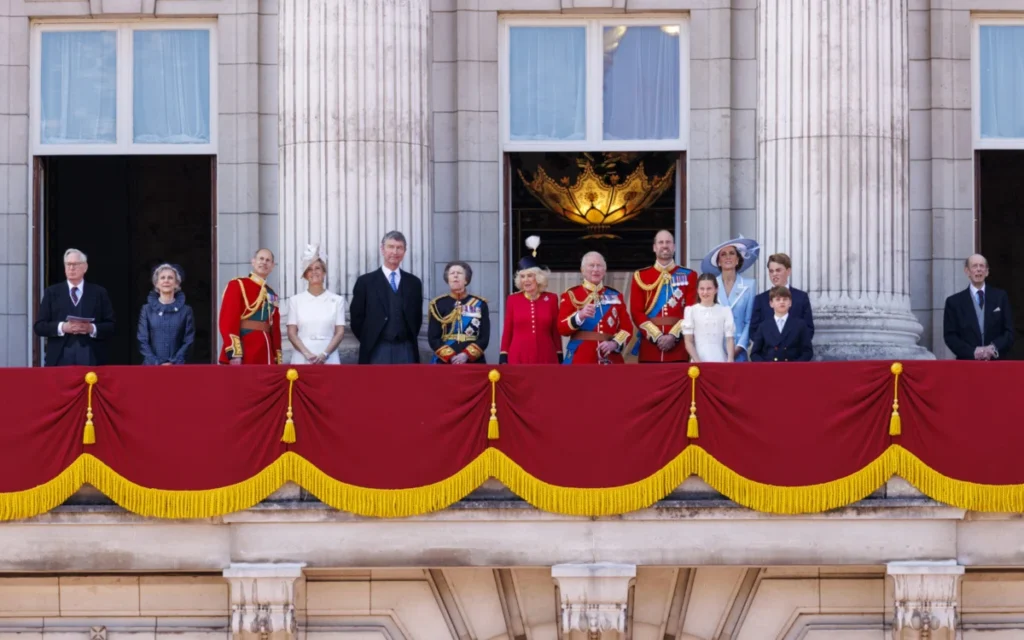

Queen Camilla’s choice of attire for the annual Trooping the Colour ceremony in 2026 was a masterclass in sartorial diplomacy and a deeply personal tribute to her significant role within the British Army. Arriving at Horse Guards Parade, Her Majesty captivated onlookers in a striking bright red coat dress, meticulously designed by Fiona Clare. This ensemble was not merely a fashion statement; it was a deliberate and poignant nod to the uniform of the Grenadier Guards, a regiment for which Queen Camilla holds the esteemed position of Colonel.
The significance of this choice was amplified by the fact that, in 2026, it was precisely the Grenadier Guards who were undertaking the honour of "trooping their colour." This prestigious annual event, a cornerstone of the British military calendar and a highlight of the King’s official birthday celebrations, involves the ceremonial trooping of the Colours of the 1st Battalion, Grenadier Guards. The regiment’s distinctive scarlet tunics and towering bearskin caps are instantly recognizable symbols of British military tradition and prowess. Queen Camilla’s deliberate emulation of these elements within her attire underscored her profound connection to and support for the regiment.
The coat dress itself was a testament to bespoke tailoring and thoughtful design. Its bold red hue immediately commanded attention, a colour synonymous with military uniforms and royal pageantry. Fiona Clare, a designer known for her elegant and sophisticated creations for members of the Royal Family, crafted the garment with a specific brief in mind. The cut and detailing of the dress were intended to echo the structure and formality of the Grenadier Guards’ uniform. Notably, the shoulders of the coat featured epaulettes, a direct sartorial reference to the insignia of rank worn by military officers, signifying Queen Camilla’s own distinguished position within the military hierarchy as Colonel of the Grenadier Guards.
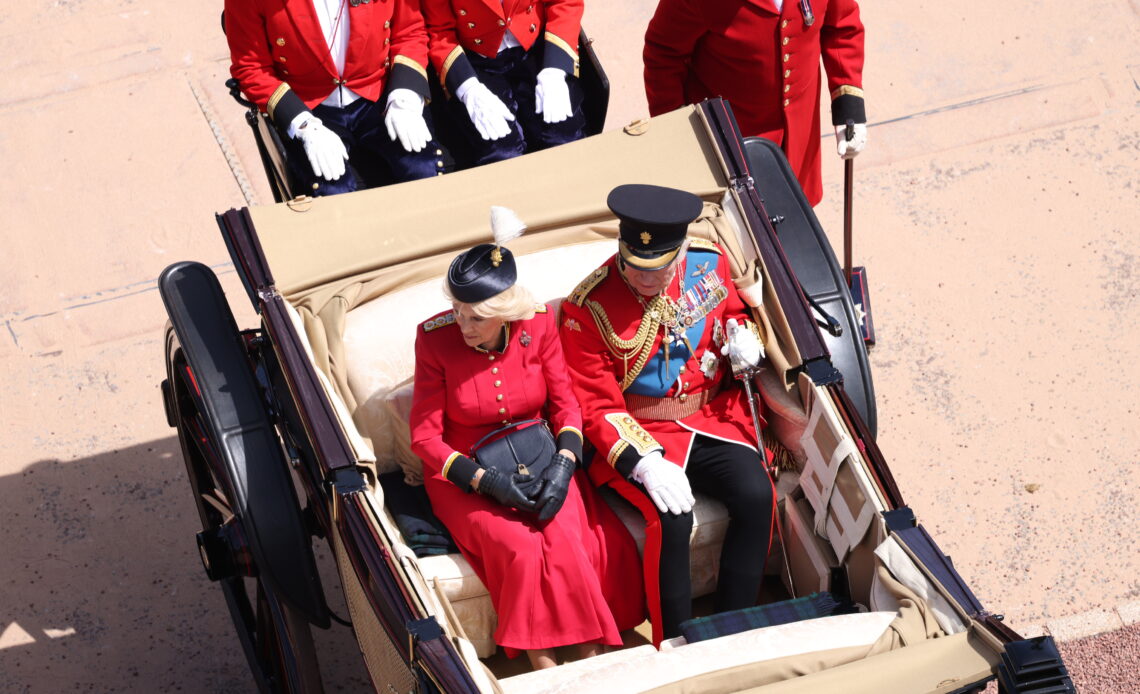
Further embellishing the regal red, the dress bore intricate gold embroidery around the "colour," a term that traditionally signifies the regimental flag. The inscription, "The Grenade Fired Proper," is an ancient and historically significant military motif, representing a flaming grenade, a symbol that has adorned military accoutrements for centuries. This detail added a layer of historical depth and authenticity to the ensemble, demonstrating a deep appreciation for the regiment’s long and storied history. The front of the coat was adorned with gleaming gold buttons, a classic military design element that lent an air of polished authority to the overall look.
This particular ensemble was not entirely new to Queen Camilla; she had worn the red coat dress to Trooping the Colour in previous years. However, for the 2026 ceremony, she elevated the look with a new, statement hat designed by the acclaimed milliner Philip Treacy. This exquisite headwear featured a magnificent ostrich plume, a direct and elegant homage to the iconic bearskin hats worn by the Grenadier Guards. The plume, in its height and grandeur, mirrored the distinctive headgear of the guardsmen, further reinforcing the theme of her sartorial tribute. The combination of the red coat dress and the feathered hat created a cohesive and powerful visual statement, seamlessly blending royal elegance with military symbolism.
The day’s proceedings began with the departure from Buckingham Palace, where Queen Camilla joined King Charles in a carriage procession to Horse Guards Parade. The King, himself a Colonel of various regiments, including the Welsh Guards, also participated in the ceremonial review. The carriage procession was a grand affair, featuring several members of the Royal Family. The Princess of Wales, Catherine, travelled alongside her three children: Prince George, then aged 12; Princess Charlotte, 11; and eight-year-old Prince Louis. Their presence highlighted the continuity of the monarchy and the importance of these traditions for the younger generations. Other members of the Royal Family participating in carriage processions included the Duke and Duchess of Gloucester, and the Duchess of Edinburgh, Sophie, accompanied by Sir Tim Laurence. The Prince of Wales, William, rode on horseback, leading a contingent that also included Princess Anne and the Duke of Edinburgh, Prince Edward.
The military parade itself unfolded under a clear, bright summer sky at Horse Guards Parade, a historic parade ground steeped in military tradition. The Princess of Wales joined King Charles and Queen Camilla on the main dais, a privileged position from which to observe the precise drills and ceremonial movements of the troops. The King, as Sovereign, conducted the inspection of the soldiers, a ritual that dates back centuries. The Grenadier Guards, resplendent in their scarlet tunics and bearskins, executed their drills with impeccable precision, a testament to their rigorous training and the enduring standards of the British Army. The rhythmic march of the soldiers, the stirring music of the military bands, and the proud display of the regimental colours created an atmosphere of solemnity and national pride.
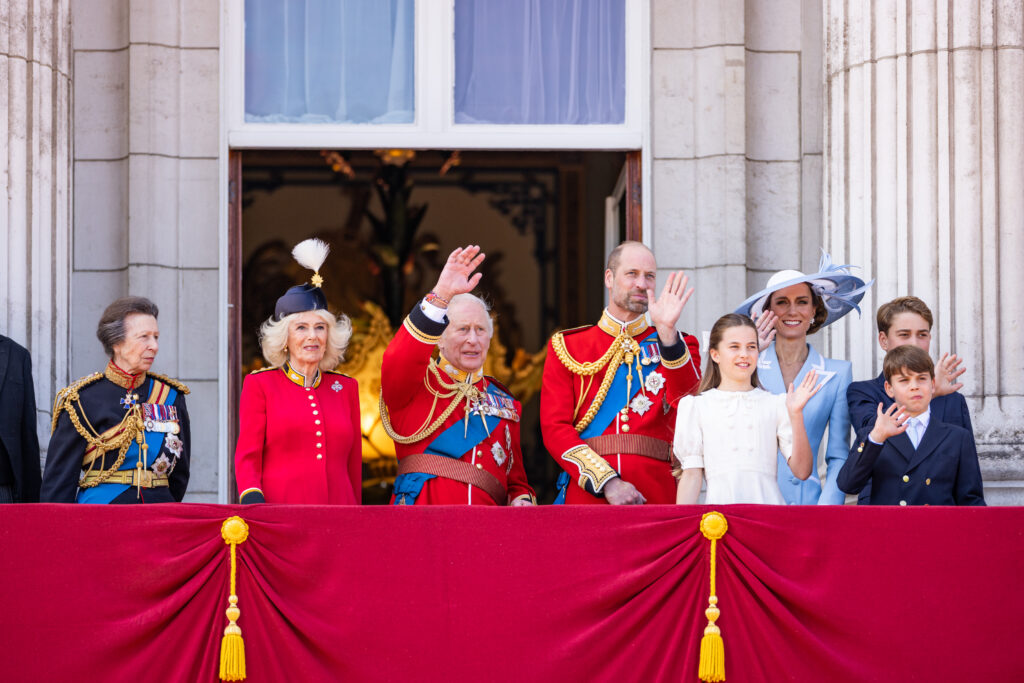
Following the ceremonial review, the Royal Family reconvened on the iconic balcony of Buckingham Palace for the traditional Royal Air Force flypast. This aerial spectacle, a hallmark of Trooping the Colour, marked the culmination of the day’s official celebrations. As the jets streaked across the sky, leaving trails of red, white, and blue, the assembled Royal Family, including Queen Camilla in her striking red ensemble, waved to the crowds gathered in The Mall below. The flypast is not only a display of modern military aviation but also a symbolic representation of the nation’s defence capabilities and a moment of collective national celebration.
The role of Colonel of the Grenadier Guards is one of significant honour and responsibility. Appointed by the Sovereign, the Colonel serves as the ceremonial head of the regiment, fostering a connection between the Crown and its soldiers. Queen Camilla’s dedication to this role has been evident through her consistent support and engagement with the regiment. Her choice of attire at Trooping the Colour is a powerful manifestation of this commitment, demonstrating her understanding of military symbolism and her respect for the history and traditions of the British Army.
The Grenadier Guards, one of the oldest regiments in the British Army, boasts a distinguished history dating back to 1656. They are renowned for their distinctive scarlet uniforms and bearskin caps, and their role in ceremonial duties, including providing the King’s Guard and Household Division, is a vital part of the nation’s heritage. Their participation in Trooping the Colour is a central element of the ceremony, showcasing their discipline, esprit de corps, and historical lineage.
The choice of a specific regiment to troop its colour each year is a matter of tradition and rotation. In 2026, the honour fell to the Grenadier Guards, making Queen Camilla’s sartorial tribute all the more poignant and relevant. Her outfit served as a visual declaration of her personal investment in the regiment’s success and her pride in their ceremonial duties.
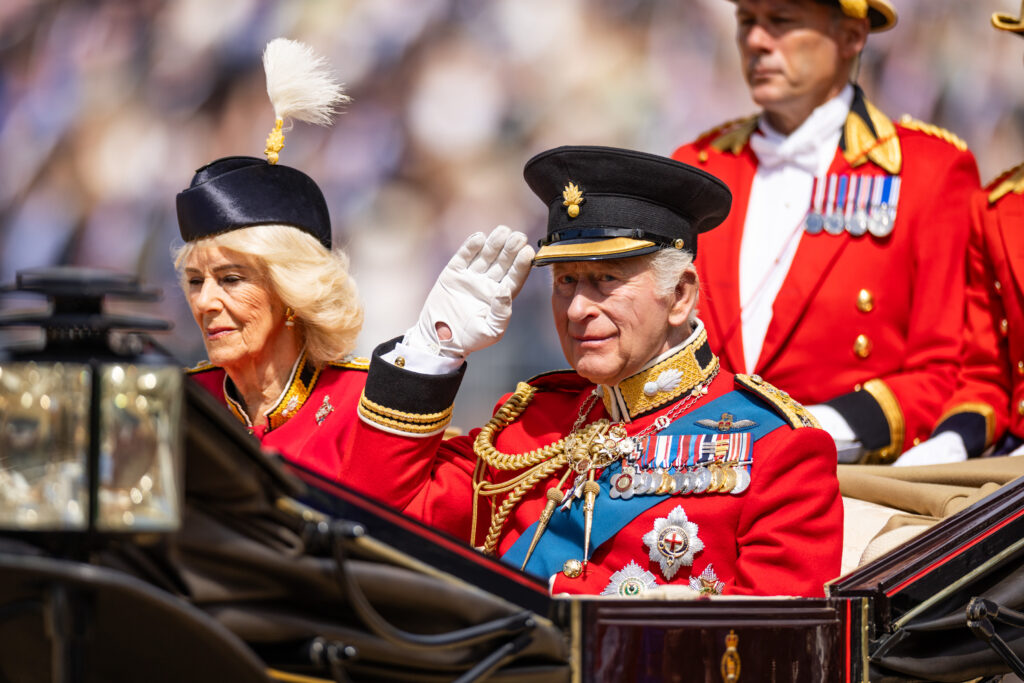
The broader implications of Queen Camilla’s fashion choices at such high-profile events extend beyond mere aesthetics. Royal fashion is often scrutinized for its messaging and symbolism. By choosing an outfit that so directly references a military uniform, Queen Camilla subtly reinforced the connection between the monarchy and the armed forces. In an era where public perception of institutions is crucial, such visible endorsements of the military are significant. This deliberate choice can be interpreted as a statement of solidarity with service personnel and a recognition of the vital role they play in national security and ceremonial traditions.
Furthermore, the involvement of the younger generation of the Royal Family, particularly the children of the Prince and Princess of Wales, in the carriage processions and their presence on the Buckingham Palace balcony, signals the ongoing transmission of these traditions. It ensures that future generations are familiar with and engaged in the ceremonial aspects of the monarchy, fostering a sense of continuity and national identity.
Queen Camilla’s red coat dress, with its military-inspired design elements and the accompanying Philip Treacy hat, was more than just an outfit; it was a carefully curated statement of allegiance, respect, and pride. It demonstrated a deep understanding of the significance of Trooping the Colour and the role of the Grenadier Guards within the fabric of British tradition. Her Majesty’s choice served as a powerful visual representation of her commitment as Colonel of the Grenadier Guards, blending regal elegance with a profound appreciation for military heritage, and resonating deeply within the context of this historic annual celebration. The event, a vibrant display of military precision and royal pageantry, was further enriched by Queen Camilla’s thoughtful and symbolic sartorial contribution.