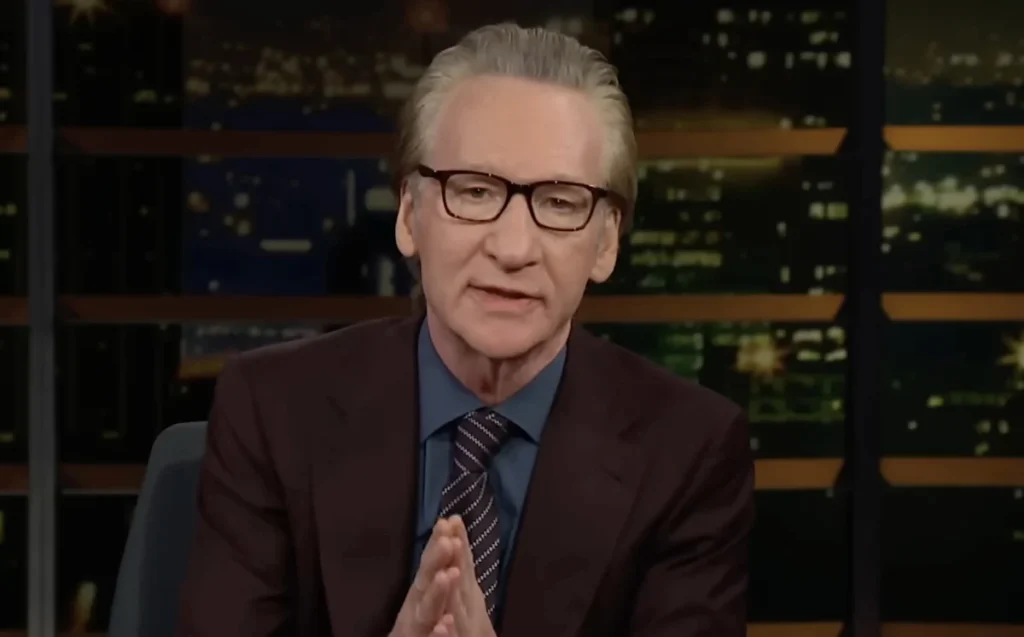

Bill Maher, the host of HBO’s Real Time, used his platform on Friday, May 29th, to dissect the current political landscape, focusing on President Donald Trump’s persistently low approval ratings. Maher argued that despite the Trump administration’s penchant for creating distractions, the stark reality of declining public support cannot be masked. His commentary specifically zeroed in on a recent YouGov/Economist poll that revealed Trump’s job approval rating had sunk to a new low of 34 percent, a figure Maher characterized as historically significant and indicative of a broader dissatisfaction, even among segments of the electorate previously considered staunch supporters.
The poll, published on Wednesday, May 27th, captured a snapshot of public opinion amidst a confluence of challenging domestic and international issues. These included ongoing geopolitical tensions, such as the simmering conflict with Iran, and significant economic pressures like rising gasoline prices across the United States. Maher directly linked these external factors to the precipitous drop in approval, quoting the poll’s findings and emphasizing that this represented Trump’s lowest approval rating across both of his terms in the White House.
A Historic Low and Shifting Demographics
The 34 percent approval rating, as reported by the YouGov/Economist poll, marks a critical juncture in Trump’s presidency. Historically, presidents facing re-election bids have often sought to maintain approval ratings significantly higher than this mark to secure a second term. This particular poll indicated that Trump’s support had eroded to a point where even his traditionally loyal base of white voters without a college education were showing signs of disaffection. Maher used a vivid analogy, comparing this scenario to "Taco Bell losing stoners," to underscore the perceived unlikelihood and significant impact of losing such a core demographic.
This erosion of support among non-college-educated white voters, a demographic that has been a cornerstone of Trump’s electoral success, raises substantial questions about his campaign strategy and the effectiveness of his messaging in the lead-up to future elections. The fact that this group, often characterized by their strong alignment with Trump’s populist appeal and economic messaging, is reportedly wavering suggests a broader recalibration of voter sentiment or a growing disconnect between the administration’s actions and the concerns of this significant portion of the electorate.
Diversionary Tactics and High-Profile Events
Maher’s commentary also touched upon the Trump administration’s frequent use of high-profile events and public spectacles, suggesting these are often employed to divert attention from unfavorable news cycles or policy shortcomings. He sarcastically questioned what more Trump could do to regain favor, before humorously recalling that the administration was, in fact, already planning significant events, including the hosting of Ultimate Fighting Championship (UFC) events.
The assertion that Trump was staging UFC fights on the White House lawn, while delivered with comedic hyperbole, pointed to a real and controversial development. It was revealed that on June 14th, President Trump was scheduled to host a UFC event on the South Lawn. This event, coinciding with celebrations for his 80th birthday, immediately drew scrutiny. Further compounding the controversy was the revelation that the President had made a significant stock purchase in TKO Group Holdings, the parent company of both UFC and WWE (World Wrestling Entertainment). This investment, valued between $15,001 and $50,000, sparked accusations of potential conflicts of interest, as it raised questions about whether presidential actions could be influenced by personal financial stakes in the entertainment industry.
The "Freedom 250" Concert and Artist Withdrawals
In addition to the UFC event, the Trump administration was also planning the "Freedom 250" event, a large-scale concert intended to be a centerpiece of the Great American State Fair on the National Mall, celebrating the United States’ 250th anniversary. However, this ambitious undertaking quickly became mired in controversy. Maher highlighted the announced lineup for the concert, which included artists like Vanilla Ice, Milli Vanilli, Morris Day, and Bret Michaels, quipping that the selection showed the president was "concerned for the unemployed" by booking acts whose peak popularity had passed.
The situation escalated when several prominent artists, initially slated to perform, began withdrawing from the "Freedom 250" concert. This exodus included notable names such as Bret Michaels, The Commodores, Young MC, Morris Day, and Martina McBride. The widespread withdrawals cast a shadow over the event’s viability and signaled a significant public relations setback for the administration. Maher, in his characteristic style, pointed out the potential sting of such high-profile rejections, stating, "That’s gotta hurt a lot when you can’t close the deal with Milli Vanilli." The inability to secure and retain performers for a nationally significant anniversary celebration underscored the challenges the administration faced in orchestrating public events that garnered widespread enthusiasm and participation.
Trump’s Response: A Solo Performance on Truth Social
In the wake of the artist withdrawals and mounting criticism, President Trump took to his social media platform, Truth Social, on Saturday, May 30th. His post suggested a dramatic shift in plans for the "Freedom 250" concert, indicating a potential cancellation of the musical performances. Instead, Trump proposed a bold alternative: he himself would headline the event, delivering a major speech to "rally the Country forward."
Trump’s statement attributed the artists’ decisions to "the yips," a term often associated with performance anxiety, and framed their withdrawal as a sign of weakness. He then elevated his own perceived popularity and national significance, declaring himself "the Number One Attraction anywhere in the World," and comparing his audience draw favorably to Elvis Presley. He characterized himself as someone who "loves our Country more than anyone else" and posited that "some say is the Greatest President in History (THE GOAT!)." His rhetoric suggested a belief that his personal charisma and perceived achievements far surpassed those of the contracted musical artists, whom he dismissively referred to as "highly paid, Third Rate ‘Artists.’" This declaration marked a significant moment, showcasing the President’s willingness to insert himself into events in a highly personalized manner, even when faced with organizational difficulties.
Analysis of Implications: A Broader Political Landscape
The confluence of declining approval ratings, the controversial scheduling of high-profile events, and the subsequent public relations challenges associated with them provides a compelling case study in contemporary political communication and governance. The YouGov/Economist poll’s findings, particularly the noted shift among non-college-educated white voters, suggest that the Trump administration’s messaging may be losing resonance with key constituencies. This demographic has historically been a critical pillar of support, and any significant erosion within this group could have profound implications for future electoral prospects.
Furthermore, the controversies surrounding the UFC event and the "Freedom 250" concert highlight the ongoing debate about the appropriateness of presidential involvement in events that carry potential conflicts of interest or appear to be designed for personal or partisan gain rather than national unity. The criticism leveled against the stock purchase in TKO Group Holdings, for instance, speaks to concerns about transparency and the potential for financial interests to influence public office. Similarly, the difficulties in organizing the "Freedom 250" concert, culminating in the President’s offer to perform himself, underscore the challenges of executing large-scale public events that aim to be broadly inclusive and celebratory, especially when they become entangled in political controversy.
The administration’s approach to managing public perception, often characterized by a reliance on direct appeals through social media and the staging of large rallies or events, appears to be meeting increasing resistance and skepticism. As the political landscape continues to evolve, the effectiveness of these strategies in bolstering approval ratings and unifying the electorate will remain a critical area of observation for political analysts and the public alike. The interplay between substantive policy, public opinion, and the strategic deployment of events and messaging will undoubtedly shape the trajectory of the current political climate.
Real Time With Bill Maher airs Fridays at 10/9c on HBO.