
The landscape of prestige television underwent a significant shift this week as the critically acclaimed series Hacks concluded its five-season run on Max, while Apple TV+ launched its latest high-profile contender, Widow’s Bay. The transition marks a pivotal moment for streaming platforms as they navigate the conclusion of established hits and the introduction of new intellectual property designed to capture a shifting demographic. As audiences bid farewell to the complex, intergenerational dynamic of Deborah Vance and Ava Daniels, the arrival of Widow’s Bay signals Apple TV+’s continued investment in atmospheric, character-driven narratives. This shift occurs amidst a broader cultural conversation involving celebrity memoirs, the historical semiotics of fashion, and the evolving standards of professional conduct on film sets.
The Legacy and Conclusion of Hacks
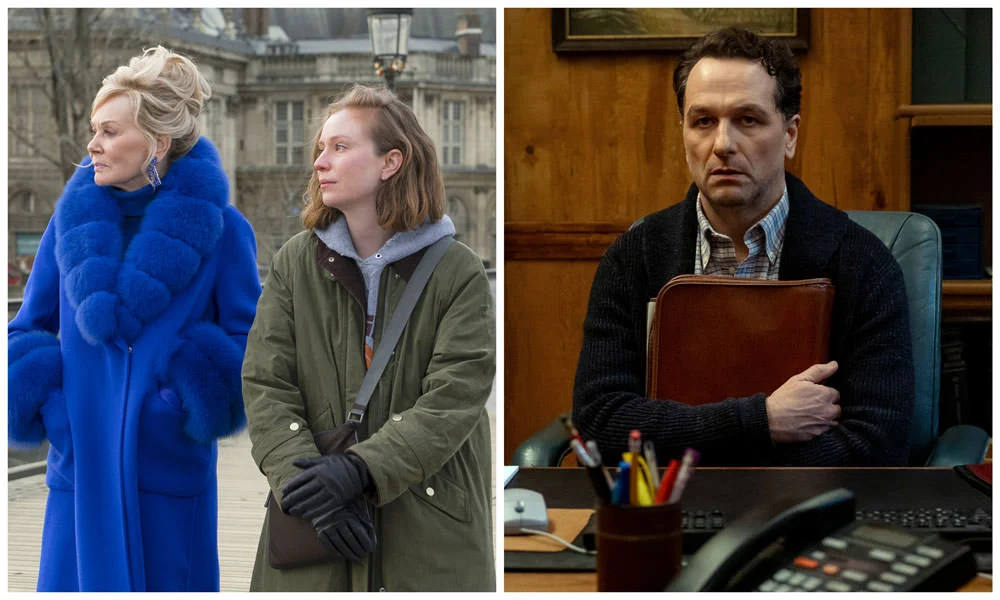
Since its debut in 2021, Hacks has served as a cornerstone of the Max (formerly HBO Max) original programming slate. Created by Lucia Aniello, Paul W. Downs, and Jen Statsky, the series utilized the backdrop of the Las Vegas comedy circuit to explore themes of ageism, gender dynamics in entertainment, and the grueling nature of creative mentorship. The series anchored itself on the chemistry between Jean Smart, portraying the legendary comedienne Deborah Vance, and Hannah Einbinder, playing the outcast Gen Z writer Ava Daniels.
Over its five seasons, Hacks garnered significant awards recognition, including multiple Primetime Emmy Awards for Jean Smart and accolades for its writing and directing. However, the final season has met with a more divided critical reception. Analysts suggest that while the central performances remained a primary draw, the narrative structure in the final episodes began to exhibit signs of strain. Critics have pointed to an increasing reliance on improbable plot developments and a perceived diminution of the show’s original bite. The finale, in particular, has sparked debate regarding its execution, with some industry observers arguing that the resolution failed to match the sophisticated subversion established in earlier seasons. Despite these critiques, the show’s ability to sustain a five-year narrative arc remains a notable success in an era of frequent streaming cancellations.
Chronology of Hacks (2021–2025)
- May 2021: Series premiere on HBO Max; immediate critical acclaim for the pilot’s sharp dialogue and the chemistry between Smart and Einbinder.
- September 2021: Jean Smart wins the Emmy for Outstanding Lead Actress in a Comedy Series, solidifying the show’s "prestige" status.
- May 2022: Season 2 premieres, expanding the scope to a road trip format; continues to dominate the cultural conversation regarding female-led comedies.
- 2023–2024: Production delays due to industry-wide strikes and Jean Smart’s health hiatus; Season 3 eventually premieres to strong viewership.
- 2025: The fifth and final season concludes, marking the end of Deborah Vance’s televised journey.
The conclusion of the series leaves a void in the "bittersweet comedy" genre, a space that Widow’s Bay now seeks to occupy, albeit with a different tonal approach.
The Arrival of Widow’s Bay on Apple TV+
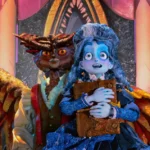
Apple TV+ has continued its strategy of prioritizing high production values and auteur-driven projects with the release of Widow’s Bay. Positioned as a "must-see" by early adopters and critics, the series represents the platform’s attempt to bridge the gap between psychological thriller and character study. While Hacks relied on the neon-lit artifice of Nevada, Widow’s Bay utilizes a more somber, atmospheric setting to explore its central mysteries.
The series enters a marketplace where Apple TV+ has found success with "slow-burn" narratives such as Severance and Silo. Industry data indicates that Apple’s subscriber base responds favorably to high-concept dramas that offer a distinct visual identity. Widow’s Bay appears to follow this trajectory, focusing on intricate world-building and a cast that emphasizes theatrical pedigree. As Hacks exits the stage, the industry is watching closely to see if Widow’s Bay can achieve similar longevity and awards season penetration.
Literary and Celebrity Discourse: Billy Eichner’s Memoir
The cultural dialogue this week extended beyond the screen to the literary world with the release of Billy Eichner’s new memoir. Eichner, known for his acerbic wit and the success of Billy on the Street and the film Bros, has long been a polarizing figure in the comedy world. His memoir has drawn attention for its unfiltered look at the industry, though some critics have described the tone as occasionally self-indulgent.
The release of the memoir comes at a time when the "comedian memoir" genre is undergoing a transformation. No longer just collections of essays or anecdotes, these books are increasingly being used as manifestos or critiques of the very industry that fostered the authors’ success. Eichner’s contribution to this genre highlights the tension between public persona and private ambition, a theme that resonates with the character arcs seen in shows like Hacks.
Fashion and History: The Babydoll Dress Controversy
In the realm of pop culture aesthetics, singer-songwriter Olivia Rodrigo has recently come under scrutiny from fashion historians and cultural critics regarding her use of the "babydoll" dress. While Rodrigo is celebrated for her ability to revive Y2K and 90s aesthetics for a Gen Z audience, critics argue that her styling often misses the historical weight and subversive origins of the garment.
The babydoll dress, characterized by its short length and high waistline, carries a complex lineage:
- The 1940s Origins: Originally designed by Sylvia Pedlar during World War II fabric shortages as a form of nightwear.
- The 1950s/60s Transition: Popularized by Carroll Baker in the film Baby Doll, where it became associated with a controversial blend of innocence and sexuality.
- The 1990s "Kinderwhore" Aesthetic: Reclaimed by artists like Courtney Love and Kat Bjelland as a feminist statement, using the dress to subvert traditional notions of girlhood and domesticity through a punk-rock lens.
Critics suggest that when modern icons adopt these styles without acknowledging their disruptive roots, the fashion becomes "sanitized," losing its original socio-political potency. This debate underscores the ongoing tension between fashion as a commercial trend and fashion as a historical text.
Workplace Standards: The Tom Hardy Discourse
The discussion regarding professional conduct in Hollywood has resurfaced with renewed focus on actor Tom Hardy. Known for his intense "method" approach and transformative performances in films such as Mad Max: Fury Road and The Revenant, Hardy has frequently been the subject of rumors regarding his "difficult" nature on set.
Recent retrospectives and industry reports have analyzed the cost of high-intensity performance styles. During the filming of Mad Max: Fury Road, the tension between Hardy and co-star Charlize Theron was well-documented, later attributed to Hardy’s immersive process and the grueling conditions of the shoot. In the contemporary production environment, there is an increasing shift toward prioritizing workplace harmony and "psychological safety" over the traditional "tortured artist" trope.
Statements from various production staff suggest a dual perspective: while Hardy’s results are undeniably successful at the box office and with critics, the methods used to achieve them are being re-evaluated under modern HR standards. This reflection is part of a broader industry movement seeking to balance creative excellence with sustainable and respectful working conditions.
Broader Implications and Future Outlook
The simultaneous conclusion of a major series and the launch of another highlights the cyclical nature of the "Peak TV" era. As platforms like Max and Apple TV+ compete for a limited pool of viewer attention, the emphasis is shifting toward shows that can generate "watercooler" discourse through either high-stakes drama or sharp social commentary.
The critiques leveled at the Hacks finale—specifically that it "fumbled" the ending—serve as a cautionary tale for showrunners. In an age of social media, the legacy of a series is often disproportionately tied to its final episodes. Conversely, the excitement surrounding Widow’s Bay suggests that there remains a high demand for original, atmospheric storytelling that deviates from the standard sitcom or procedural format.
Furthermore, the intersection of television, celebrity literature, and fashion history illustrates how modern entertainment is consumed as a "rich text" of interconnected opinions. Whether it is the historical accuracy of a dress or the behavior of a leading man on set, the audience’s engagement now extends far beyond the screen, requiring creators and performers to navigate a complex web of cultural expectations and historical contexts.
As the industry moves into the next quarter, the focus will remain on whether Apple TV+ can sustain the momentum of its new releases and how Max will fill the creative void left by the departure of one of its most decorated comedies. The evolution of these narratives, both on and off-screen, continues to define the current state of global media consumption.