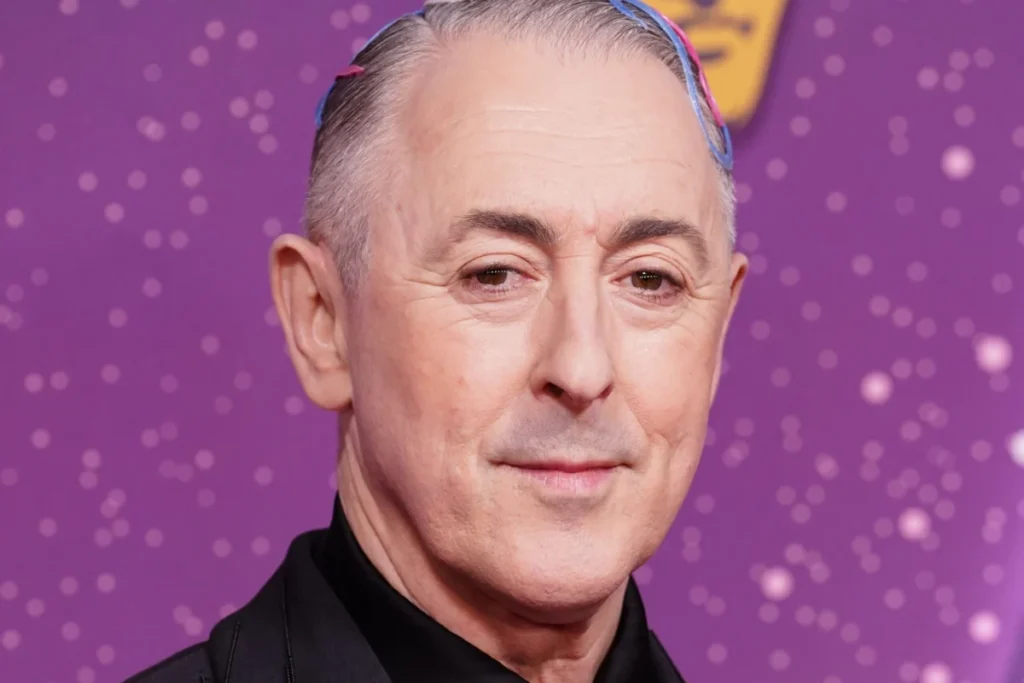

Scottish actor Alan Cumming has voiced profound concern over what he describes as a palpable increase in prejudice directed towards the LGBT+ community in recent years. His observations coincide with the impending premiere of "Tip Toe," a new Channel 4 drama penned by acclaimed Welsh screenwriter Russell T Davies, which starkly confronts the contemporary dangers and systemic biases faced by LGBT+ individuals. The series, featuring Cumming in a pivotal role, aims to illuminate the nuanced complexities of modern prejudice, while Davies unequivocally attributes much of this societal regression to the pervasive influence of the online world.
Alan Cumming’s Witness Account: A Shift in Societal Climate
Cumming, a celebrated figure in stage and screen known for his roles in "Cabaret," "The Good Wife," and as host of the US version of "The Traitors," articulated his unease to the Press Association. At 61 years old, with a career spanning decades and a prominent public persona as an openly gay man, he possesses a unique vantage point from which to assess shifts in public sentiment. "I do feel it quite palpably at times," he stated, acknowledging the inherent privilege of his "liberal queer bubble" but quickly pointing to the inescapable reach of online vitriol. Despite his insulated real-life experiences, he regularly encounters "hatred" directed at him via social media, a digital reflection of broader societal tensions.
Beyond his personal digital encounters, Cumming highlights a concerning trend observed within his own establishment. As the owner of Club Cumming, a popular gay bar and club in New York City, he noted a distinct change in the atmosphere and the anxieties expressed by his younger staff members. "Even in New York, which is very much a liberal bubble, I’ve noticed things shifting," he remarked. "In my club, the young people working there are talking about feeling more anxious about taking the subway and going about their lives." This anecdote provides a grounded, real-world illustration of how abstract prejudice translates into tangible fear and altered daily routines for LGBT+ individuals, even in ostensibly progressive urban environments. This sentiment resonates with broader reports from LGBT+ advocacy groups globally, which have increasingly documented a rise in public harassment, discrimination, and hate crimes, challenging the narrative of continuous linear progress in LGBT+ rights.
"Tip Toe": A Mirror to Modern Challenges
The new Channel 4 drama "Tip Toe" is poised to explore these very themes with the unflinching honesty characteristic of Russell T Davies’ work. In the series, Cumming portrays Leo, the owner of a gay bar situated in Manchester’s vibrant Gay Village. The narrative reportedly delves into a heated feud between Leo and his troubled next-door neighbour, played by David Morrissey, serving as a microcosm for larger societal issues. Davies, whose previous groundbreaking works like "Queer as Folk," "Cucumber," and "It’s a Sin" have consistently pushed boundaries in LGBT+ representation, once again turns his lens to the "dangers and prejudice facing LGBT+ people today."
Cumming offered insights into the complexities of his character, Leo, describing him as deeply "flawed" and "broken underneath it all." Despite presenting a façade of bravado, Leo is depicted as profoundly "lonely and fragile." This psychological depth allows the series to explore vulnerability within the LGBT+ community, moving beyond simplistic portrayals. A particularly significant aspect of Leo’s character is his HIV-positive status, which, according to Cumming, "only really comes out through his anger at how people with HIV/Aids are treated." This narrative choice is crucial, as it provides a platform to address ongoing stigma surrounding HIV/AIDS, an issue that, despite medical advancements, continues to affect countless individuals. Cumming views Leo as an "everyman figure for queer rights and the queer movement, spanning a significant part of a person’s life experience," making the role profoundly meaningful. He expressed that playing Leo felt like "the perfect time in my life to do it, it really was a convergence of many things," suggesting a personal resonance with the character and the timely nature of the drama’s themes.

Russell T Davies: The Digital Battlefield and Societal Decline
Russell T Davies, at 63, is a veteran voice in British television, renowned for his incisive social commentary and pioneering LGBT+ storytelling. His assertion that the world has become "significantly more dangerous for minorities than it was 25 years ago" is a grave assessment from a writer who has chronicled the journey of the LGBT+ community for decades. Davies places the blame squarely on the "online environment," arguing that it has played a "major role in amplifying hate and division."
This perspective is not new for Davies. He recalled writing "Screwdriver" in 2015, a piece for the Channel 4 website that explored the impact of online pornography on children. He draws a direct line from the unchecked proliferation of online content and discourse to the documented decline in children’s mental health. "Then we listen to surveys saying children’s mental health is declining, and I wonder how that’s happening," he posited, implying a clear cause-and-effect relationship with the digital realm. His broader observation paints a bleak picture: "Every day we’re being told things are going wrong, every survey, every crime report, every fact seems to suggest we’re in trouble. And yes, I think they’re right." This statement underscores a deep concern about the trajectory of contemporary society, where digital platforms, initially heralded as tools for connection and liberation, have simultaneously become potent vectors for division and harm.
Broader Context: The Resurgence of Anti-LGBT+ Sentiment
The sentiments expressed by both Cumming and Davies are not isolated. They align with a growing body of evidence from human rights organizations, academic studies, and statistical reports indicating a concerning global trend of increasing hostility towards LGBT+ individuals. After decades of significant progress, particularly with milestones like the legalisation of civil partnerships and same-sex marriage in many Western nations (e.g., UK Civil Partnership Act 2004, Marriage (Same Sex Couples) Act 2013; US Obergefell v. Hodges 2015), there is a tangible sense of regression.
In the United Kingdom, for instance, data from organizations like Stonewall and Galop consistently highlight a rise in anti-LGBT+ hate crimes. The government’s own figures have at times shown year-on-year increases in such incidents. This surge is often attributed to a combination of factors, including increasingly hostile public discourse, sensationalist media portrayals, and the amplification of extremist views through online channels. Political rhetoric around issues such as trans rights, in particular, has become highly contentious, often spilling over into broader anti-LGBT+ sentiment.
Across the Atlantic, in the United States, the situation is similarly dire. Numerous states have seen a proliferation of discriminatory legislation targeting LGBT+ individuals, particularly transgender youth. These range from bans on gender-affirming care and restrictions on drag performances to so-called "bathroom bills" and limitations on LGBT+ education in schools. The American Civil Liberties Union (ACLU) and Human Rights Campaign (HRC) track hundreds of such bills introduced annually, many of which pass into law, creating a hostile legal and social environment for millions. This legislative assault is frequently accompanied by a surge in anti-LGBT+ rhetoric from political figures and media commentators, further legitimizing prejudice.
Internationally, the picture is complex. While some nations continue to advance LGBT+ rights, others are actively rolling them back, often under the guise of "traditional values" or religious freedom. Reports from ILGA (International Lesbian, Gay, Bisexual, Trans and Intersex Association) consistently document the criminalization of homosexuality in dozens of countries, and even in nations with legal protections, social acceptance can lag significantly. The rise of authoritarianism and nationalism in various parts of the world has often coincided with increased state-sponsored homophobia and transphobia.

The Role of the Digital Realm: Amplifying Division
Davies’ emphatic critique of the "online world" as the primary culprit resonates deeply with experts in digital ethics and social psychology. Social media platforms, while offering unprecedented opportunities for connection and community building, have also proven to be fertile ground for the propagation of hate speech, misinformation, and radicalization. Algorithms designed to maximize engagement often inadvertently create echo chambers, reinforcing existing biases and exposing users to increasingly extreme content. The anonymity afforded by many online platforms can embolden individuals to express hateful views they might otherwise suppress in face-to-face interactions.
Studies have shown a correlation between increased exposure to online hate speech and a rise in real-world discrimination and violence. The constant barrage of negative or dehumanizing content can contribute to mental health issues among targeted communities, as Davies noted concerning children. Furthermore, online campaigns, often fueled by coordinated disinformation efforts, can quickly mobilize public opinion against minority groups, influencing policy debates and fostering a climate of fear. The ease with which hateful ideologies can spread and coalesce online presents a formidable challenge to democratic societies and the protection of human rights.
Implications and the Power of Storytelling
The concerns raised by Alan Cumming and Russell T Davies, and the themes explored in "Tip Toe," carry significant implications. They underscore the fragility of hard-won rights and the continuous need for vigilance and advocacy. The perceived regression in LGBT+ acceptance highlights that societal progress is not linear and requires constant effort to maintain and advance.
In this context, cultural productions like "Tip Toe" play a crucial role. By bringing complex, human stories of prejudice and resilience to a broad audience, television dramas can foster empathy, challenge stereotypes, and provoke essential conversations. Davies’ history demonstrates his capacity to use storytelling as a powerful tool for social change, and "Tip Toe" appears set to continue this legacy by shining a light on the specific anxieties and challenges facing the LGBT+ community today. The series’ exploration of flawed characters, the stigma of HIV, and the corrosive effects of mob mentality offers a nuanced yet impactful commentary on contemporary society.
The debate surrounding online responsibility also gains renewed urgency. Calls for greater accountability from tech companies, more robust content moderation, and media literacy education are becoming louder. As Davies implies, ignoring the impact of the digital sphere on societal health is no longer an option.
"Tip Toe" is more than just entertainment; it is a cultural response to a troubling societal trend. Its premiere on Channel 4 this Sunday will undoubtedly ignite discussions, reminding viewers that while progress has been made, the fight for equality and acceptance remains an ongoing, vital struggle, particularly in an increasingly complex and digitally interconnected world.