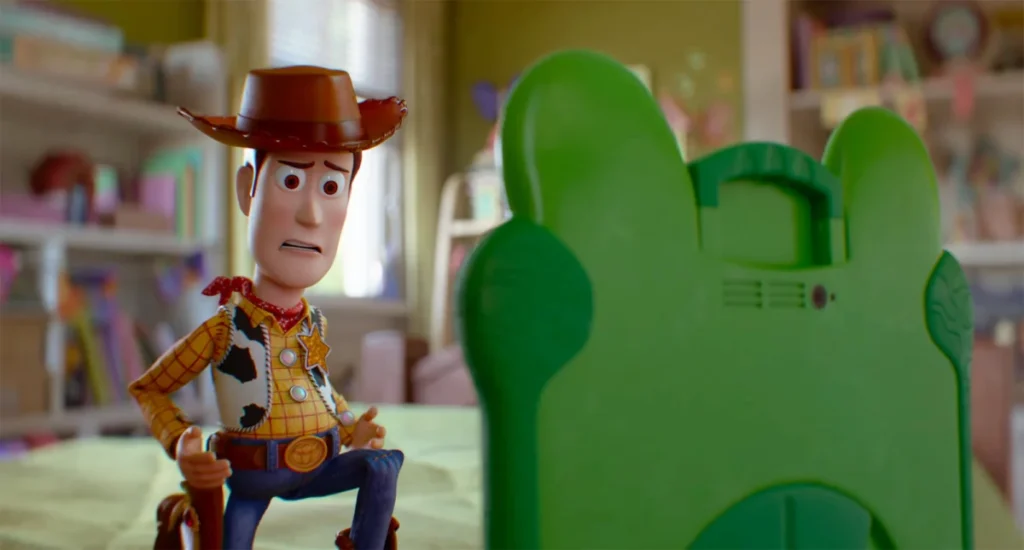

Disney and Pixar have unveiled a final, compelling trailer for their highly anticipated animated sequel, Toy Story 5, set to premiere in theaters worldwide on June 19, 2026. This release marks a significant milestone, arriving a full 31 years after the groundbreaking original Toy Story first captivated audiences in 1995. The latest installment ventures into new territory, directly confronting the evolving landscape of childhood entertainment and the pervasive influence of technology. The central conflict of Toy Story 5 revolves around the toys’ struggle to remain relevant in an era dominated by digital devices, a challenge that directly impacts their bond with children, particularly young Bonnie, who is shown to be disengaging from traditional play.
The narrative thrust of Toy Story 5 positions the beloved characters – Woody, Buzz Lightyear, and Jessie – against a formidable new antagonist: Lilypad, a sophisticated, frog-shaped smart tablet. Voiced by Greta Lee, Lilypad represents the allure of modern electronics, posing a direct threat to the tactile, imaginative world of physical toys. The trailer suggests that Lilypad is designed to captivate children’s attention, potentially sidelining the very toys that have defined their childhoods for generations. This thematic exploration of technological displacement is a timely commentary on contemporary parenting and the digital immersion of youth.
A New Era for Beloved Characters
The return of iconic voice actors anchors the film, promising the familiar warmth and humor that have defined the Toy Story franchise. Tom Hanks reprises his role as the ever-loyal cowboy Woody, while Tim Allen once again lends his voice to the space ranger Buzz Lightyear. Joan Cusack returns to saddle up as the spirited cowgirl Jessie, rounding out the core trio. Their established chemistry and enduring performances are expected to be a cornerstone of the film’s emotional resonance.
Adding a fresh layer of comedic talent to the ensemble, Conan O’Brien is set to voice Smarty Pants, a toilet-training tech toy. This casting choice hints at the film’s embrace of contemporary technological innovations, even those with a more niche or humorous application, and suggests a blend of nostalgic characters interacting with cutting-edge, and perhaps absurd, digital playthings.

The film also sees the return of Tony Hale as Forky, a character introduced in Toy Story 4 who embodies a certain handcrafted charm and a unique perspective on existence. Bonnie, the human owner of the toys, is also central to the plot, with her changing interests and priorities driving the toys’ anxieties and their quest to reconnect with her.
Creative Vision and Directorial Evolution
Toy Story 5 is helmed by acclaimed filmmaker Andrew Stanton, a seasoned veteran of Pixar Animation Studios. Stanton’s directorial credits include beloved classics such as A Bug’s Life, Finding Nemo, and the critically lauded WALL-E. His extensive experience within the studio and his proven ability to craft emotionally resonant and visually stunning animated features suggest a high level of artistic integrity and storytelling prowess for this new chapter. Notably, this marks Stanton’s directorial debut within the Toy Story saga itself, bringing a fresh perspective to a franchise he has undoubtedly influenced throughout his career.
The film is co-directed by Kenna Harris, whose previous work includes the charming short film Ciao Alberto. The screenplay is also penned by Andrew Stanton, indicating a singular creative vision guiding the narrative. Lindsey Collins, known for her work on Turning Red, WALL-E, and Finding Dory, serves as producer, further ensuring the film aligns with Pixar’s established standards of quality and innovation.
The Evolving Landscape of Childhood Play: A Thematic Analysis
The central premise of Toy Story 5 – the confrontation between traditional toys and advanced technology – reflects a significant societal shift. The original Toy Story premiered in an era where video games were nascent and digital devices were far from ubiquitous in the hands of young children. Fast forward to 2026, and children are immersed in a world of tablets, smartphones, and interactive smart devices from an increasingly early age. This cultural evolution presents a fertile ground for thematic exploration, raising questions about the impact of screen time on imaginative play, social development, and the enduring value of physical toys.
The introduction of Lilypad as the primary antagonist is a deliberate choice to personify this technological shift. A "high-tech frog-shaped smart tablet" is a tangible representation of the sophisticated, often seductive, digital interfaces that now compete for children’s attention. The toys’ challenge is not merely to win back Bonnie’s affection, but to articulate and demonstrate the unique benefits of their form of play – creativity, tactile engagement, and open-ended imagination – in contrast to the more prescribed experiences offered by digital entertainment.

Chronology of the Toy Story Franchise
The journey of Toy Story has been a remarkable one, charting the evolution of animation and storytelling over three decades.
- 1995: Toy Story revolutionizes the animation industry with its pioneering use of computer-generated imagery (CGI). It introduces Woody, Buzz Lightyear, and a world where toys come to life when humans aren’t around, establishing the core characters and their emotional depth.
- 1999: Toy Story 2 expands the universe, delving deeper into Woody’s backstory and introducing beloved characters like Jessie and Bullseye. The film explores themes of belonging and the potential obsolescence of toys.
- 2010: Toy Story 3 presents a poignant narrative about growing up and letting go, as Andy prepares for college and his toys face the prospect of being donated. It brings a powerful emotional conclusion to the original trilogy, widely considered a masterpiece.
- 2019: Toy Story 4 takes a surprising turn, focusing on Woody’s existential crisis and his encounter with Forky, a spork-turned-toy. This installment explores themes of purpose and self-discovery, while also introducing new characters and settings.
- 2025: A teaser trailer for Toy Story 5 is released, signaling the franchise’s return and hinting at the central conflict involving new technology.
- 2026: The first official trailer is unveiled, providing a clearer look at the plot and the introduction of Lilypad.
- June 19, 2026: Toy Story 5 is scheduled for worldwide theatrical release, continuing the legacy of the franchise.
This timeline highlights the franchise’s ability to adapt and evolve, consistently addressing themes relevant to its audience while pushing the boundaries of animation and storytelling.
Supporting Data and Industry Context
The Toy Story franchise has consistently been a commercial and critical success for Pixar and Disney. The previous installments have collectively grossed billions of dollars worldwide, solidifying their status as cultural touchstones. Toy Story 3, for instance, earned over $1.067 billion at the global box office, making it one of the highest-grossing animated films of all time upon its release. The franchise’s enduring appeal is a testament to its strong character development, universal themes, and high-quality animation.
The decision to produce Toy Story 5 in 2026, nearly seven years after the previous installment, suggests a carefully considered approach to revitalizing the franchise. The animation industry itself has undergone significant technological advancements since 1995, with CGI becoming the standard. Pixar, a pioneer in this field, continues to innovate, and Toy Story 5 is expected to showcase the latest advancements in animation technology, offering visually stunning and highly detailed character models and environments.
Potential Implications and Broader Impact
The thematic focus of Toy Story 5 on the conflict between traditional toys and technology could resonate deeply with parents and educators. In an age where concerns about excessive screen time and its effects on child development are prevalent, the film has the potential to spark conversations about the importance of balanced play. By portraying the toys’ struggle for relevance, the film may subtly advocate for the enduring value of imaginative, hands-on play in fostering creativity, critical thinking, and social-emotional skills.

Furthermore, the film’s success could influence the toy industry itself, potentially leading to a renewed emphasis on interactive, imaginative playthings that can compete with the digital allure of smart devices. The Toy Story franchise has a history of impacting cultural trends, and its exploration of this contemporary issue could have a tangible effect on how children play and how toys are designed and marketed.
The return of Andrew Stanton to the director’s chair, coupled with the established voice cast and Pixar’s reputation for quality, suggests that Toy Story 5 is poised to be a significant cinematic event. The trailer’s emphasis on the toys’ emotional journey and their fight for relevance promises a narrative that is both entertaining and thought-provoking, appealing to longtime fans and a new generation of viewers alike. The question of whether these beloved characters can successfully navigate the complexities of the digital age and remind children of the magic of traditional play remains to be seen, but the anticipation for their latest adventure is palpable.