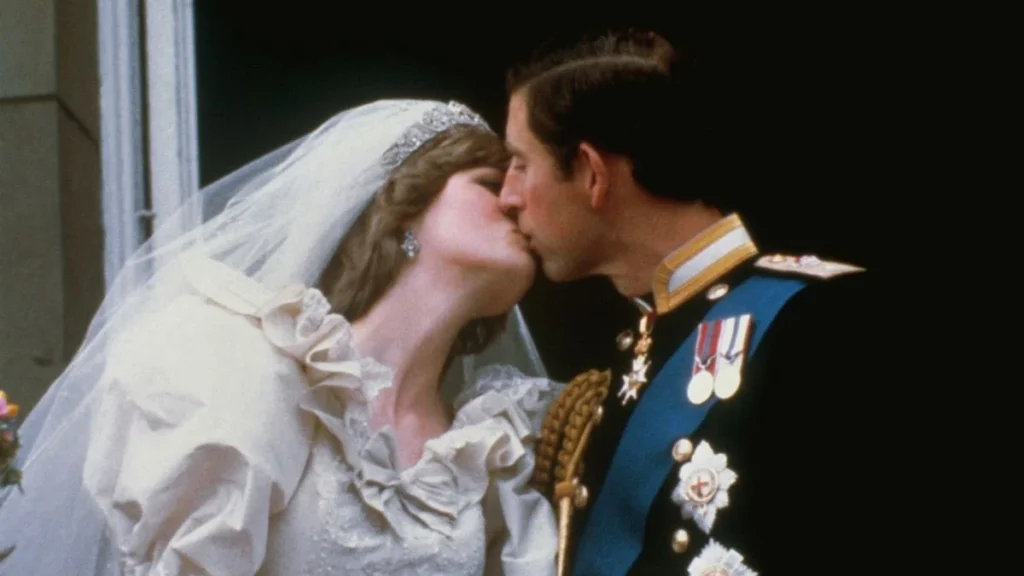

A recently discovered personal letter written by the late Diana, Princess of Wales, has provided a rare and candid window into her state of mind during the earliest weeks of her marriage to the then-Prince Charles. Written just two months after the 1981 "Wedding of the Century," the correspondence, addressed to a former classmate, reveals a young woman navigating the immense transition from private citizen to the world’s most photographed royal. The letter is set to be auctioned this summer, coinciding with what would have been the 45th anniversary of the royal nuptials, sparking renewed interest in the personal history of one of the 20th century’s most iconic figures.
The correspondence was sent to Katherine Hanbury, a former school friend of the Princess from their days at West Heath Girls’ School in Kent. Dated September 27, 1981, the letter captures Diana at age 20, reflecting on her honeymoon and her initial impressions of her new role within the British Royal Family. In the text, Diana expresses a sense of contentment that contrasts sharply with the later, more tumultuous years of the marriage, writing, “It’s wonderful being married—I think it’s safe to say that after two months…!”
The Honeymoon and the Escape to Scotland
The letter provides specific details regarding the couple’s honeymoon, which consisted of a Mediterranean cruise followed by a stay in the Scottish Highlands. Diana described the initial leg of the journey as a period of "blissful honeymoon with endless sun and luckily calm seas." This refers to the fourteen-day cruise the couple took aboard the Royal Yacht Britannia, which departed from Gibraltar and traveled through the Mediterranean, allowing the newlyweds a degree of privacy away from the relentless gaze of the international press.
Following the cruise, the couple traveled to the Balmoral Estate in Scotland, a traditional retreat for the Royal Family. Diana’s letter highlights her preference for the rural landscape over the confines of the capital. “We are now up in Scotland until the end of October, which is a big treat for us—I adore being outside all day & hate London!” she wrote. This sentiment reflects a recurring theme in Diana’s life: a struggle with the urban pressures of royal duty and a longing for the relative freedom of the countryside.
Historians note that Balmoral, while a "treat" in these early letters, would later become a site of significant stress for the Princess as she struggled to adapt to the rigid protocols and outdoor pursuits favored by the House of Windsor. However, in September 1981, the tone remained one of youthful optimism and enjoyment of the natural environment.
"Playing with Grown-ups": Navigating Royal Protocol
Perhaps the most revealing aspect of the letter is Diana’s description of her integration into the Royal Family. She admitted to Hanbury that adjusting to her new life was "a case of playing with grown-ups!" This phrasing offers a poignant reminder of Diana’s youth at the time of her marriage. At 20 years old, she was significantly younger than Prince Charles, who was 32, and she found herself thrust into a world of ancient traditions, formal hierarchies, and complex social expectations.
The use of the word "playing" suggests a sense of detachment or a feeling of being an outsider looking in on a sophisticated, established world. Analysts of royal history suggest that this phrase underscores the steep learning curve Diana faced. While she was born into the aristocracy as the daughter of Earl Spencer, the transition to the inner circle of the monarchy involved a level of scrutiny and formality for which few could be fully prepared.
Chronology of the Royal Marriage: From Fairytale to Separation
To understand the significance of this 1981 letter, it is essential to view it within the broader timeline of the Prince and Princess of Wales’ relationship. The trajectory of their marriage remains one of the most documented social histories of the modern era.
- February 24, 1981: The official engagement of Prince Charles and Lady Diana Spencer is announced to the public.
- July 29, 1981: The couple marries at St. Paul’s Cathedral in London. The ceremony is watched by an estimated global television audience of 750 million people.
- September 27, 1981: Diana writes the letter to Katherine Hanbury, expressing happiness and a dislike for London.
- June 21, 1982: The birth of Prince William, the couple’s first son and the future heir to the throne.
- September 15, 1984: The birth of Prince Harry.
- Late 1980s: Reports of marital strain and infidelity begin to surface in the tabloid press.
- December 9, 1992: Prime Minister John Major announces the formal separation of the Prince and Princess of Wales to the House of Commons.
- August 28, 1996: The divorce is finalized. According to archival reports from the BBC, Diana only agreed to the legal dissolution of the marriage following direct pressure from Queen Elizabeth II. Diana reportedly described the day the divorce was finalized as the "saddest day of her life."
- August 31, 1997: Princess Diana tragically passes away following a car crash in the Pont de l’Alma tunnel in Paris.
The Significance of the West Heath Connection
The recipient of the letter, Katherine Hanbury, shared a foundational period of Diana’s life at West Heath Girls’ School. Located in Sevenoaks, Kent, West Heath was a boarding school where Diana was known more for her sporting prowess and kindness than her academic achievements. The school played a critical role in shaping her social circle, many of whom remained confidantes during her early years as a royal.
The fact that Diana reached out to a school friend just two months into her marriage suggests a desire to maintain a link to her pre-royal identity. At a time when her life was being managed by palace officials and her schedule was dictated by state requirements, personal correspondence offered a rare outlet for authentic expression.
The Market for Royal Memorabilia and Historical Artifacts
The letter is scheduled to be auctioned by Gorringe’s Fine Art & Interiors in Lewes, East Sussex. As an item of historical interest, it is expected to draw significant attention from collectors and institutions worldwide. The market for personal items belonging to Princess Diana has remained robust in the decades following her death, with letters, garments, and photographs frequently fetching prices far exceeding their initial estimates.
In recent years, several collections of Diana’s letters have come to light. These documents are highly valued not only for their provenance but for the psychological insights they provide. Unlike official statements or ghostwritten biographies, these handwritten notes capture the Princess’s immediate thoughts, her characteristic handwriting, and her informal tone.
The timing of this specific auction is noteworthy. By scheduling the sale in July, Gorringe’s aligns the event with the anniversary of the 1981 wedding. While the marriage eventually ended in divorce, the early documents of that era remain a subject of fascination for a public that still remembers the "fairytale" atmosphere of the early 1980s.
Broader Implications and Historical Analysis
The revelation of this letter challenges, or at least complicates, the retrospective narrative that the marriage of Charles and Diana was unhappy from its very inception. While later biographies—most notably Andrew Morton’s Diana: Her True Story—detailed the Princess’s early struggles with bulimia and the presence of Camilla Parker Bowles in their lives, this letter shows a moment of genuine optimism.
The phrase "It’s wonderful being married" serves as a record of a period where Diana felt a sense of belonging or, at the very least, a successful adaptation to her new circumstances. However, the mention of "playing with grown-ups" also hints at the underlying power imbalance and the isolation that would later become central themes in her public discourse.
Furthermore, the letter reinforces Diana’s lifelong aversion to London and the "goldfish bowl" of Kensington Palace. After the honeymoon, the couple moved into Apartments 8 and 9 at Kensington Palace. While Diana worked to make the space a home, particularly by designing a nursery for her sons on the third floor, her letters consistently suggest that she felt more at peace away from the administrative and social hub of the monarchy.
Public and Official Reactions
While the Royal Family typically does not comment on the sale of private correspondence, the release of such letters often prompts a mixed reaction from the public. Supporters of the Princess view these artifacts as a way to keep her memory alive and to understand the woman behind the myth. Conversely, some critics argue that the sale of private letters by former friends represents a breach of confidence.
Katherine Hanbury’s decision to auction the collection brings these items into the public record, ensuring that Diana’s early thoughts are preserved as historical data. For historians, these documents are essential for constructing an accurate timeline of the Princess’s emotional journey.
As the auction date approaches, the letter serves as a poignant reminder of a brief window in time when the future seemed certain and the "fairytale" was still intact. It captures a 20-year-old woman on the precipice of global superstardom, still tethered to her schoolgirl friendships and finding her footing in a world of "grown-ups." In the context of her entire life, the letter is a vital piece of the puzzle, illustrating the fleeting moments of peace that preceded the challenges of her later royal tenure.