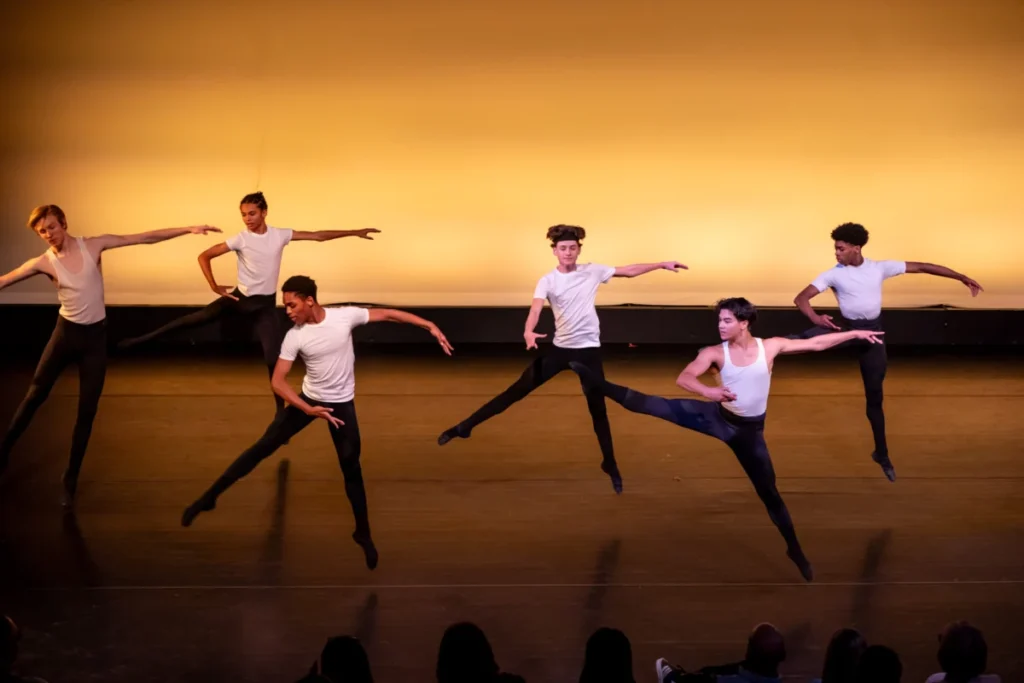

The Los Angeles County High School for the Arts (LACHSA), a powerhouse institution renowned for cultivating the talents of artists such as Josh Groban, Zoey Deutch, the band Haim, and Phoebe Bridgers, is marking its 40th anniversary with a landmark celebration. This milestone event, dubbed "LACHSAPalooza," is set to take place on May 30th at the iconic Greek Theatre, featuring a star-studded lineup including Ozomatli and Fitz and the Tantrums, and masterfully emceed by actor and alumnus Anthony Anderson. More than just a celebratory concert, LACHSAPalooza serves as a crucial fundraiser, aiming to secure an ambitious $2.5 million to fortify the future of this public, tuition-free institution amidst the escalating challenges confronting arts education nationwide.
A Legacy Forged in Four Decades
Founded in 1984, the Los Angeles County High School for the Arts emerged from a vision to provide rigorous, conservatory-style training in the arts alongside a robust academic curriculum. Unlike many private arts academies, LACHSA was established with the commitment to be a tuition-free public school, ensuring that talent, not socioeconomic status, would be the primary criterion for admission. This founding principle has been central to its identity, democratizing access to elite arts education for countless students across Los Angeles County. Over the past four decades, LACHSA has become a beacon for aspiring young artists, carving out a unique niche in the competitive landscape of performing and visual arts education. Its strategic location in Los Angeles, a global hub for entertainment and culture, has provided unparalleled opportunities for its students, offering proximity to industry professionals and a vibrant artistic community.
The school’s enduring success can be attributed to its unique pedagogical model, which seamlessly integrates intensive arts training with traditional liberal arts courses. Students at LACHSA immerse themselves in specialized programs encompassing dance, cinematic arts, music, theater, and visual arts. This comprehensive approach ensures that while students hone their artistic craft, they also receive a well-rounded academic education, preparing them for both collegiate pursuits and professional careers. The school’s commitment to nurturing creative talent in a diverse, inclusive environment has fostered a "tribe" mentality among its students and alumni, a sense of belonging and mutual encouragement that many graduates cite as instrumental to their development.
LACHSAPalooza: A Concert with a Cause
The forthcoming LACHSAPalooza concert at the Greek Theatre is more than just an anniversary celebration; it is a powerful statement about the enduring value of arts education. The event’s lineup, featuring critically acclaimed bands like Ozomatli and Fitz and the Tantrums, underscores the caliber of talent associated with LACHSA and its alumni network. Anthony Anderson, a distinguished member of LACHSA’s inaugural class of 1985 and a celebrated actor, comedian, and television host, will guide the evening as emcee. His presence not only adds star power but also serves as a testament to the school’s profound impact on its graduates.
"This school is special," Anderson shared with THR, reflecting on his formative years. "LACHSA helped me in my transformation to becoming an artist in a way I’d always envisioned since I was young." His sentiment resonates with countless alumni who found their artistic voice and direction within the school’s nurturing environment.
A poignant moment during the celebration will be the honoring of Jerry Freedman, a beloved teacher who has been with LACHSA since its early days in the 1980s. His continued dedication exemplifies the unwavering commitment of the faculty, who are consistently praised by alumni for their mentorship and profound influence. Recognizing figures like Freedman highlights the human element at the heart of LACHSA’s success – the passionate educators who inspire and guide generations of artists.
A Pantheon of Performers: LACHSA’s Illustrious Alumni
LACHSA’s alumni roster reads like a who’s who of contemporary entertainment, showcasing the school’s remarkable ability to identify and cultivate future stars across various artistic disciplines. Josh Groban, a Grammy-nominated vocalist, found his early training ground within LACHSA’s music program. Zoey Deutch, a versatile actress known for her roles in films like "Set It Up" and "Zombieland: Double Tap," attended the school in the 2010s, though she did not graduate. The indie-pop sensation Haim, comprised of sisters Este, Danielle, and Alana Haim, honed their musical prowess within its walls before achieving global recognition. Phoebe Bridgers, an acclaimed singer-songwriter, also developed her distinctive artistic voice at LACHSA.
Beyond these prominent names, the school has nurtured talent across the spectrum of performing arts. Taran Killam, a former cast member of Saturday Night Live and a LACHSA graduate from 2000, vividly recalls the pivotal role the school played in his comedic development. "It was such a wild escalation of information at such a young, impressionable age," Killam recounted. He credits his first improv class and a stand-up comedy elective taught by Norman Cohen, whom he calls his "favorite teacher I’ve ever had," as foundational experiences. "That type of training and exposure demystifies the idea of doing this as a career," Killam added. "If I had to boil down any part of my process as a comedian to one mantra, it’s that. It all came from LACHSA."
These testimonials underscore a common theme among LACHSA alumni: the school provided not just technical training, but a critical sense of validation and community. Deutch emphasized, "It wasn’t just a school, it was a space where being an artist is taken seriously. That kind of validation at that age can change someone’s life." Anderson further elaborated on this communal aspect, stating, "LACHSA gave us a place to live, to be accepted, to thrive and cultivate our talent. All of these alumni, if we just went the route of a traditional high school, we’d have been one of very few people there who were looking to be artists. This was a high school created for us to come together and become a tribe. And so we fed off each other, encouraged one another to pursue what we wanted." This environment, where aspiring artists are surrounded by peers who share their passion and ambition, is often cited as the school’s most potent asset.
The Unique Structure: A Public Arts Education Beacon
LACHSA operates on a distinctive financial model that highlights both its public mission and its ongoing reliance on philanthropic support. Approximately half of its operational funding is provided by the state of California. However, the remaining 50 percent, essential for covering the full spectrum of its specialized programs, faculty, and facilities, must be raised through donations channeled via the LACHSA Foundation. This hybrid funding structure, while common for many public-private partnerships in education, places a significant and continuous fundraising burden on the institution.
The school’s model positions it alongside other highly regarded performing arts programs in the U.S., such as New York’s Fiorello H. LaGuardia High School of Music & Art and Performing Arts (the inspiration for the film Fame) and Michigan’s famed Interlochen Arts Camp. What sets LACHSA apart, particularly in the public school sphere, is its unwavering focus on entertainment and professional readiness, deeply intertwined with its geographical advantage. Its proximity to Hollywood provides unparalleled access to guest lecturers, master classes, internships, and networking opportunities that are simply not available to schools in other regions. This practical, industry-focused approach, combined with its rigorous academic and artistic curriculum, prepares students not just for college, but for direct entry into the competitive arts and entertainment industries.
Navigating the Funding Labyrinth: Challenges in Public Arts Education
Despite its sterling reputation and a dazzling list of celebrity alumni, LACHSA faces significant financial hurdles, emblematic of broader struggles within public arts education. Trena Pitchford, Executive Director of the LACHSA Foundation, articulates the precarious reality: "Public education in general in the state of California hasn’t been fully funded in 50 years." This long-standing systemic issue means that even successful public schools like LACHSA cannot rely solely on state allocations to provide the comprehensive, high-quality education they strive for.
The ambitious $2.5 million fundraising goal for the 40th anniversary is not merely for expansion but for sustaining existing programs and ensuring the school’s vitality for future generations. In recent years, securing such funds has become increasingly difficult. Pitchford notes a phenomenon of "donor fatigue," exacerbated by a confluence of crises. The COVID-19 pandemic diverted philanthropic efforts towards immediate public health and economic relief, while devastating wildfires in Los Angeles County last year further shifted donor priorities towards disaster recovery. These events have created a challenging fundraising environment, even for institutions with compelling success stories.
"Public education today, the struggles are real," Pitchford emphasized. "You take all that’s happened the past few years, obviously philanthropy has shifted, understandably, to regions that were completely devastated in LA County. Donors are tired and more are getting stretched. The generosity of the public and some of our foundation partners is really important." This candid assessment highlights the intense competition for charitable dollars and the need for renewed public and private support for arts institutions.
Beyond Celebrity: The Broader Societal Impact
While the celebrity alumni undeniably provide a powerful narrative and attract attention, LACHSA and the Foundation are keen to emphasize that the school’s value extends far beyond producing stars. Pitchford firmly states that a track record of producing celebrities should not be the sole determinant of whether arts programs continue to receive funding. "That is what we’re trying to break through in doing all of this," she explained. "This is the small education that’s impacting the culture of Los Angeles, and it’s also creating better people in the world."
Numerous studies have consistently demonstrated the profound benefits of arts education, irrespective of a student’s career path. Engagement in the arts has been linked to higher academic achievement, improved critical thinking and problem-solving skills, enhanced creativity, and increased emotional intelligence. Furthermore, arts education fosters self-expression, builds confidence, and cultivates cultural understanding and empathy. For many students, schools like LACHSA provide a vital outlet for expression and a safe space for personal growth that may not be available in traditional high school settings.
The absence of such programs, Anderson warns, would constitute "a huge setback for the arts." He eloquently articulates the broader societal role of the arts: "Everyone I know in this world uses the arts to escape, be it through music, plays, movies, theater, poetry. Schools like LACHSA are important not only to young artists, but to our society." This perspective underscores the intrinsic value of arts education not just for individual development, but for the cultural enrichment and social cohesion of communities.
The Future of Arts Education: A Call to Action
LACHSA’s 40th anniversary celebration is thus a crucial moment, serving as both a tribute to its remarkable past and a rallying cry for its future. As public arts education continues to face mounting financial pressures across the country – from budget cuts in local school districts to a shifting philanthropic landscape – the model and success of institutions like LACHSA offer a compelling argument for continued investment.
The $2.5 million fundraising goal is not just about keeping the lights on; it is about ensuring that LACHSA can continue to offer its unique, high-caliber, tuition-free education to deserving students for the next four decades. It is about maintaining state-of-the-art facilities, attracting and retaining top-tier faculty, and providing the robust extracurricular and experiential learning opportunities that define the LACHSA experience.
The implications of underfunding public arts education are far-reaching. It risks creating a system where access to quality arts training becomes increasingly exclusive, available only to those who can afford private institutions. This would stifle diversity, limit the talent pool, and ultimately impoverish the cultural landscape. By supporting schools like LACHSA, society invests not only in the next generation of artists but also in the cultivation of critical thinkers, innovators, and culturally literate citizens who contribute to a more vibrant and empathetic world. The LACHSAPalooza event, therefore, stands as a testament to LACHSA’s enduring legacy and a vital call to action for the preservation and advancement of arts education for all.