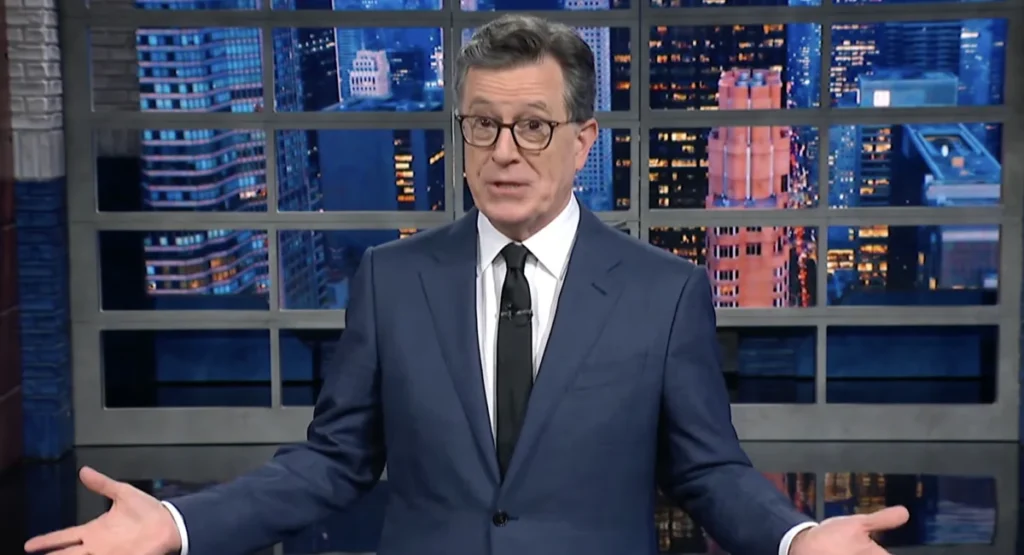

Stephen Colbert, host of CBS’s The Late Show, delivered a scathing critique of President Donald Trump’s newly established $1.8 billion Department of Justice fund on his Tuesday night broadcast, labeling it an "unprecedented level of grift." The segment, which aired on May 19th, focused on the controversial fund, its origins, and its potential implications, with Colbert employing his signature blend of satire and pointed commentary to dissect the administration’s actions.
The Genesis of the "Anti-Weaponization Fund"
The fund in question, officially termed an "anti-weaponization fund," emerged as a component of a settlement related to a $10 billion lawsuit initiated by Donald Trump against the Internal Revenue Service (IRS). The settlement, reached without explicit congressional or judicial approval, grants the Department of Justice the authority to establish and disburse these substantial funds. According to initial reports, the fund is intended to provide "formal apologies and monetary relief owed to claimants" who believe they were unjustly prosecuted or investigated under the Biden administration.
However, the establishment of such a significant discretionary fund, particularly one that bypasses traditional legislative oversight, has drawn considerable criticism from various quarters. Concerns have been raised about the potential for the fund to be used to reward political allies or to circumvent established legal and financial accountability mechanisms.
Colbert’s Critique: "An All-You-Can-Fraud Buffet"
Colbert opened his monologue by drawing a stark parallel between the administration’s actions and a perceived erosion of constitutional norms. "We may be canceled, but apparently, The Late Show has outlived the constitution of the United States," he quipped, setting a tone of alarm and disbelief. He characterized the unilateral creation of the fund as Trump "giving himself a $1.8 billion tax-fueled slush fund" without the necessary checks and balances typically provided by Congress or the courts.
The late-night host then elaborated on the potential beneficiaries of this fund, drawing a provocative, albeit satirical, connection to individuals involved in the January 6th Capitol riot. "That means people who stormed the Capitol, rubbed their poop on the walls, assaulted police officers, and tried to hang Vice President Mike Pence could be getting this cash," Colbert stated, highlighting the perceived absurdity and potential for misuse. He further suggested, with a cynical edge, that even these individuals might not ultimately benefit, as he posited that "Trump is going to steal it all."
Examining the Settlement’s Ambiguous Clauses
A key point of contention for Colbert, and indeed for many observers, lies in the specific language of the settlement agreement. He highlighted an addendum to the guidelines, reportedly issued by the Acting Attorney General, which states: "Once the funds are deposited into the designated account, the United States has no liability whatsoever for the protection or safeguarding of those funds, regardless of bank failure, fraudulent transfers, or any other fraud or misuse of the funds."
This clause, as interpreted by Colbert, effectively creates a loophole, absolving the government of responsibility for any misappropriation or loss of the funds once they are allocated. "So, it’s just an all-you-can-fraud buffet," he declared, emphasizing the perceived lack of accountability. He contrasted this with the standard procedures for managing large sums of public money, which typically involve either congressional appropriation or court supervision. The current arrangement, he argued, amounts to little more than a unilateral decree allowing the President to control "a bunch of your money."
The "Get Out of Jail Free" Card
Further compounding the controversy is another provision noted by Colbert: an addendum to the settlement that reportedly bars the IRS from "forever pursuing examinations of Trump, related or affiliated individuals, and related trusts and businesses." This clause has been interpreted by critics as granting Trump and his associates a broad immunity from future tax audits and investigations.
Colbert seized upon this aspect of the settlement, delivering a particularly sharp jab: "Trump just gave himself a get out of jail free card, and a way better one than Jeffrey Epstein got." This darkly humorous comparison underscores the gravity with which the provision has been received, suggesting it creates a level of protection far beyond typical legal recourse.
Broader Context and Potential Ramifications
The creation of this $1.8 billion fund and its associated settlement raise significant questions about governmental transparency, accountability, and the potential for executive overreach. The lawsuit against the IRS stemmed from allegations of politically motivated targeting of conservative organizations during the Obama administration. While such allegations warrant thorough investigation, the resolution through a self-created fund with limited oversight is highly unusual.
Supporting Data and Historical Precedents
Historically, the establishment of large government funds typically follows a rigorous legislative process, involving congressional hearings, debates, and votes. This process is designed to ensure public funds are allocated responsibly and for demonstrably public purposes. The creation of the "anti-weaponization fund" appears to have bypassed this established framework, relying instead on an executive branch settlement.
While settlements between government agencies and individuals or entities are common, the scale of this particular fund and the broad immunity it seemingly confers are exceptional. The $1.8 billion figure itself represents a substantial amount of taxpayer money, and its allocation outside of traditional congressional appropriations is a departure from standard practice.
Reactions from Related Parties (Inferred and General)
While direct statements from all parties involved in the settlement may not be publicly available, the controversy has elicited reactions from various political commentators and watchdog groups. Critics of the administration have voiced concerns about the lack of transparency and the potential for political favoritism. Legal scholars have weighed in on the unprecedented nature of such a settlement and its implications for the separation of powers.
Conversely, supporters of the administration might argue that the settlement represents a necessary step to address perceived injustices and to protect individuals from what they deem to be politically motivated governmental actions. However, the specifics of the fund’s operational guidelines and the broad exculpatory clauses remain central to the ongoing debate.
Analysis of Implications
The implications of this $1.8 billion fund are multifaceted.
- Transparency and Accountability: The lack of congressional oversight raises concerns about how these funds will be managed and disbursed. The clause absolving the government of liability for fund protection could create a significant vulnerability for misuse.
- Executive Power: The ability to unilaterally establish such a fund, particularly as part of a legal settlement, could be seen as an expansion of executive authority, potentially setting a precedent for future administrations.
- Public Trust: The perception of the fund as a "slush fund" or a mechanism for political appeasement can erode public trust in government institutions and processes.
- Legal Ramifications: The broad immunity granted from IRS examinations could have long-term legal and financial consequences, potentially limiting the government’s ability to ensure tax compliance for those covered by the provision.
The creation and management of this $1.8 billion Department of Justice fund represent a significant development with far-reaching implications for governmental accountability and the public’s understanding of how taxpayer money is utilized and protected. As the details of the settlement continue to be scrutinized, the debate over its legitimacy and potential consequences is likely to persist.