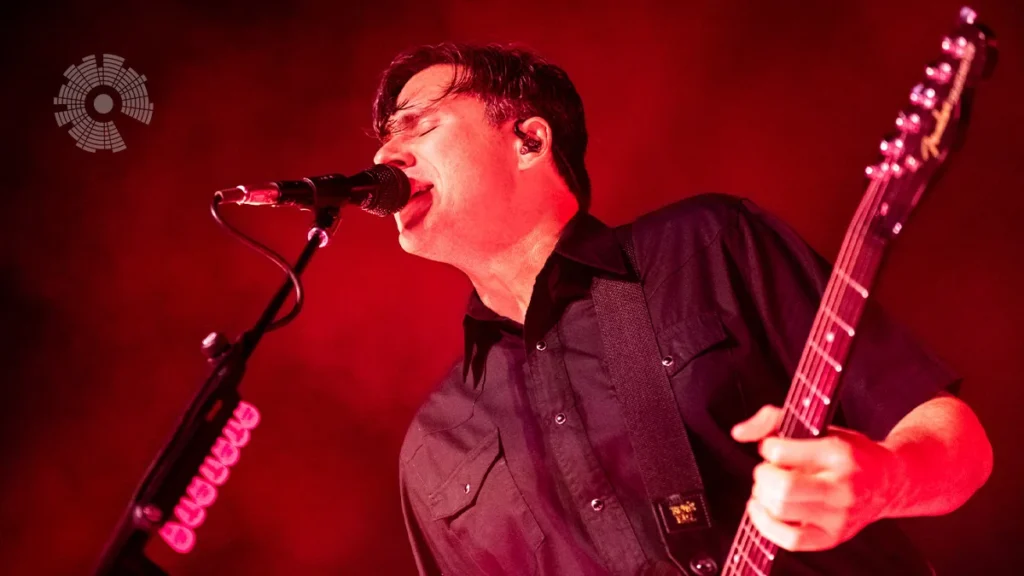

When a band embarks on a full album playthrough tour, the expectations of the audience are typically well-defined. Fans purchase tickets with a precise understanding of the musical journey they are about to undertake, their connection to the seminal record serving as the primary draw. The success of such an event hinges not on setlist surprises, but on the band’s ability to faithfully and energetically re-create the magic of the album in a live setting, avoiding either a stage flop or overly interpretive renditions that deviate too far from the beloved studio versions. Jimmy Eat World, the Arizona quartet known for their emotive alternative rock, is currently navigating this intricate balance with their 25th-anniversary tour celebrating their breakthrough album, Bleed American.
Often lauded as a definitive emo touchstone, a crossover alternative hit, and a power-pop masterpiece, Bleed American stands as one of the most influential albums of 2001. Its enduring impact resonates deeply with a vast listenership, making the prospect of hearing it performed in its entirety a potent convergence of nostalgia, fervent fandom, and the visceral thrill of live music. The tour, commemorating a quarter-century since its release, arrived at Brooklyn Paramount on Tuesday, June 16th, marking the fourth stop on a highly anticipated itinerary. The evening delivered precisely what the dedicated fanbase had envisioned, reaffirming the album’s timeless appeal and the band’s unwavering prowess.
The Enduring Legacy of Bleed American
Released on July 24, 2001, Bleed American (initially titled Jimmy Eat World due to post-9/11 sensitivities before reverting to its original name) represented a pivotal moment in Jimmy Eat World’s career. Following the critical acclaim of their 1999 album Clarity, which garnered a devoted cult following but limited commercial success, the band found themselves at a crossroads, having been dropped by Capitol Records. Undeterred, they self-financed the recording of Bleed American, a move that underscored their artistic independence and belief in their material. This self-reliance ultimately paid off handsomely.
Bleed American quickly transcended its genre confines, propelled by singles like "The Middle," which became an unexpected mainstream anthem, peaking at No. 5 on the Billboard Hot 100. Other tracks like "Sweetness" and the title track also enjoyed significant airplay, cementing the album’s status as a commercial success. Critically, the album was lauded for its sharper songwriting, more accessible melodies, and polished production, a departure from the more sprawling and experimental nature of Clarity. Publications praised its blend of earnest introspection with undeniable pop hooks, positioning Jimmy Eat World as leaders in the burgeoning emo and alternative rock scenes of the early 2000s. Its lyrics, often exploring themes of youth, love, heartbreak, and resilience, resonated deeply with a generation, forging an emotional connection that has persisted for decades. The album’s concise 46-minute, 38-second runtime, packed with fourteen meticulously crafted songs, demonstrated a mastery of song structure and emotional arc.
Jimmy Eat World’s Journey to Breakthrough
The story of Jimmy Eat World is one of perseverance and artistic integrity. Formed in Mesa, Arizona, in 1993, the band — comprising Jim Adkins (lead vocals, lead guitar), Tom Linton (rhythm guitar, backing vocals), Rick Burch (bass guitar), and Zach Lind (drums) — evolved from a raw punk sound to a more melodic and emotionally charged style. Their early work, particularly Clarity, showcased their ambitious songwriting and willingness to experiment, earning them a reputation as an innovative force. However, commercial success remained elusive, leading to their departure from Capitol Records. This period of uncertainty, ironically, fueled the creative process for Bleed American, allowing the band to record with renewed focus and without major label interference. This backstory adds a layer of depth to the anniversary tour; it’s not just a celebration of an album, but a testament to the band’s journey, resilience, and eventual triumph against industry odds.
The 25th Anniversary Tour: A Deep Dive
The Brooklyn Paramount, a storied venue with a rich history, provided a fitting backdrop for this milestone celebration. With a capacity that allowed for an intimate yet energetic atmosphere, the sold-out show was infused with palpable anticipation. Full album playthroughs, while offering a clear setlist, present unique challenges. Bands must consider the album’s original sequencing, which may not always align with optimal live dynamics. Frontman Jim Adkins acknowledged this in a pre-show interview, noting that Bleed American inherently features "peaks and valleys" that might differ from a typical concert setlist designed to continuously build energy. This transparency from Adkins only heightened the appreciation for the band’s commitment to the album’s original artistic vision.
The Performance: Act I – A Nod to Clarity
Understanding that Bleed American‘s runtime, while impactful, might not fill a complete headline slot, Jimmy Eat World ingeniously structured the evening. Before diving into the main event, the band treated the audience to a captivating prelude of tracks from Clarity. With the stage initially shrouded by a black curtain and illuminated by a single row of stark lights, the atmosphere was one of focused intensity. Renditions of "Clarity," "Believe in What You Want," "Your New Aesthetic," and "Lucky Denver Mint" served as a powerful opening act. These selections, drawn from their other landmark record, weren’t mere filler; they were rousing performances that demonstrated the band’s deep catalog and offered a sophisticated warm-up. They effectively functioned as both an appetizer for the main course and a tribute to the album that paved the way for their subsequent breakthrough, simultaneously building anticipation for the beloved Bleed American cuts that awaited. This strategic programming highlighted the band’s narrative arc, acknowledging their roots while building towards their celebrated peak.
The Performance: Act II – Bleed American Unleashed
The transition was dramatic and meticulously executed. As the final notes of the Clarity set faded, the black curtain dramatically split apart, revealing a fully realized stage production. A comprehensive lighting rig illuminated the space, grated risers added visual depth, and drummer Zach Lind ascended to a higher kit, signaling a shift in energy. Touring member Robin Vining took his place behind the keyboards, his presence expanding the sonic palette, ready to flesh out the intricate arrangements of Bleed American.
The moment the title track’s instantly recognizable, driving opening notes reverberated through the venue, accompanied by a cloud of theatrical smoke, the crowd’s reaction was nothing short of explosive. It was, as described, a reactor hitting critical mass – an immediate, visceral eruption of energy. The shift was akin to lightning striking Doc Brown’s DeLorean, transporting the sold-out Brooklyn Paramount audience back to the myriad personal memories intrinsically linked to Bleed American. This collective rush sustained the eager audience through the next hour as cherished track after track roared forth from the stage.
The album’s inherent sequencing, as Adkins had alluded to, meant navigating a dynamic range. The opening half of Bleed American is front-loaded with high-energy anthems like "Sweetness" and "A Praise Chorus," which ignited fervent singalongs. Side 2 transitions into more power-pop structures with tracks such as "The Authority Song" and "If You Don’t, Don’t," while interspersed throughout are slower, more emotionally resonant gut-punches like "Your House" and "Hear You Me." Despite these shifts in tempo and mood, the devoted audience remained fully engaged, demonstrating that their connection extended to every facet of the album, not just the radio hits.
Interestingly, the most ubiquitous song in their catalog, "The Middle," received a comparatively muted, though still ample, appreciation from the diehards. Positioned as track three, following the high-octane "Bleed American" and "A Praise Chorus," its familiarity seemed to elicit a different kind of response. Adkins candidly addressed this from the stage, recalling, "None of us really knew what to do with this song. We didn’t expect much from track three because it came together really easy." This remark offered a fascinating insight into the creative process and the often-unpredictable nature of commercial success. "The Middle," while undeniably one of the best songs of 2001 and a significant factor in the band’s widespread recognition, does not, for the long-standing fan, singularly define the profound depth and breadth of Bleed American.
Instead, the album’s true essence, for many, lies in tracks like "Your House," which received the most notable live alteration — a subtle change in tempo and a shift in the chorus structure — yet retained its exquisite beauty. It’s found in the exhilarating call-and-response dynamics of "Sweetness," the aggressive declaration of "Get It Faster," and the exquisite heartbreak woven into numbers such as "Hear You Me" and "Cautioners."
A particularly intriguing moment arose during the introduction to "Cautioners." Adkins quipped, "Live Nation begged us not to play this next one. You’ve got a nice venue here – be a shame if we played ‘Cautioners’ in it." This statement sparked immediate contemplation. While "Cautioners" is commonly interpreted as a poignant breakup song, Adkins’ commentary hinted at a deeper, possibly industry-related critique, given Jimmy Eat World’s well-documented history of being dropped by Capitol Records prior to Bleed American‘s independent success. Alternatively, it could have been a playful acknowledgment of the track’s inherently downbeat and emotionally intense nature, a challenging contrast to the more upbeat moments of the album. Fans eagerly await further clarification, perhaps through the band’s ongoing track-by-track breakdown series on YouTube, which could shed more light on such lyrical and contextual nuances. This brief interjection underscored the band’s wry humor and their deep connection to the material, inviting fans into an inside joke or a shared understanding of their journey.
The Encore: Beyond the Album
Following the main set and the album closer, "My Sundown," the band took their bow, only to return for a robust five-song encore. This carefully curated mini-set extended the evening’s narrative beyond the confines of Bleed American, demonstrating a profound appreciation for the band’s entire discography and the loyalty of their long-term fans. The encore featured "Disintegration," "Pain," "For Me This is Heaven," the Bleed American B-side "(Splash) Turn Twist," and the fan-favorite "23." This selection showcased a range of deep cuts, rarities, and classics from across their extensive catalog, serving as a powerful acknowledgment of those who have remained dedicated fans beyond the commercial smash hits. The audience, still buzzing from the Bleed American playthrough, responded with an equally electric delight, cementing the communal bond between band and audience. The inclusion of a B-side like "(Splash) Turn Twist" was a particularly thoughtful touch, appealing to the most ardent followers and adding a layer of exclusivity to the live experience.
A Full House, Full Hearts: Audience Engagement and Band Connection
The atmosphere at Brooklyn Paramount was exceptionally vibrant. While the venue has hosted countless packed shows, this particular evening felt imbued with an extraordinary depth of feeling. Even a minor technical hiccup, such as Rick Burch needing to swap out his bass during "A Praise Chorus," did not detract from the jubilant mood; Burch, like the crowd, couldn’t suppress a genuine smile. This small moment highlighted the relaxed and celebratory nature of the performance, underscoring the band’s comfort and the audience’s unwavering enthusiasm.
This tour, while framed as an album anniversary, transcends a mere nostalgic trip to a record released two and a half decades ago. It is fundamentally a celebration of Jimmy Eat World themselves – the four individuals who crafted this breakout album and have continued to evolve and create music for nearly thirty years. For countless attendees, Bleed American was not just an album; it was the genesis of a long-standing love affair with a band that consistently delivers authenticity and emotional resonance. Twenty-five years later, Jimmy Eat World’s music continues to resonate deeply with a vast and dedicated global fanbase, proving that their impact extends far beyond a single album or a specific era.
Broader Implications: Legacy and Future
The success of the Bleed American 25th Anniversary Tour at Brooklyn Paramount underscores several broader implications for both Jimmy Eat World and the music industry. Firstly, it reaffirms the enduring power of classic albums and the appeal of full album playthroughs as a touring model. In an era where music consumption is increasingly fragmented, these tours offer a cohesive, immersive experience that reconnects fans with a complete artistic statement. Secondly, it highlights Jimmy Eat World’s remarkable longevity and consistent relevance. Unlike many bands from their era who might rely solely on nostalgia, Jimmy Eat World has continued to release new material and maintain a strong touring presence, demonstrating that their artistry is not static. This tour, therefore, is not a final bow, but a vibrant affirmation of their place in rock history and their ongoing connection with multiple generations of fans. The band’s ability to seamlessly integrate their earlier work with their seminal album, and then extend the performance with a diverse encore, speaks volumes about their confidence in their entire body of work and their respect for their audience’s journey with them. The celebration at Brooklyn Paramount was a poignant reminder that some albums, and some bands, simply get better with age.