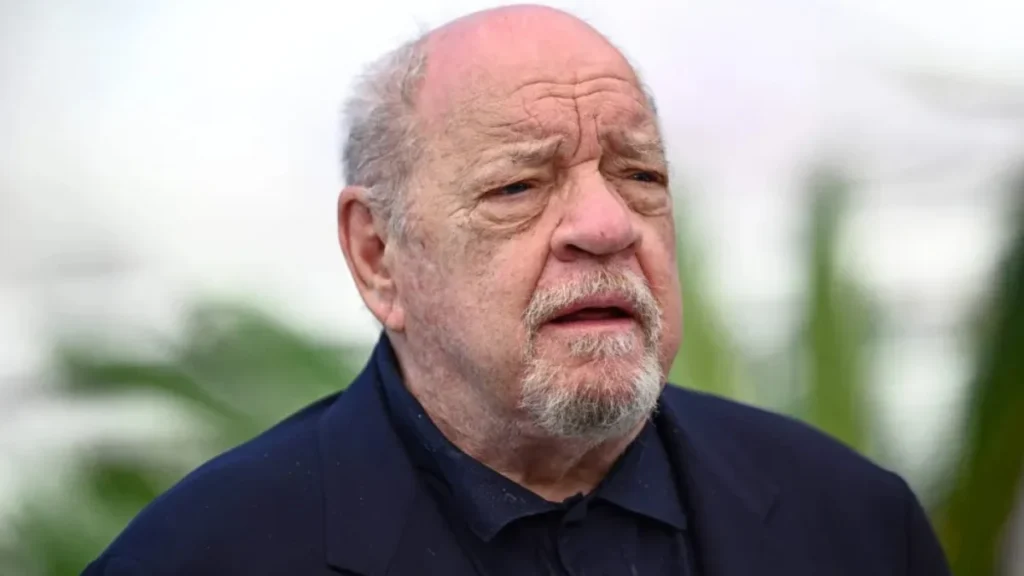

Paul Schrader, the acclaimed screenwriter behind cinematic touchstones such as Taxi Driver and director of films like First Reformed, recently revealed a deeply personal and technologically curious endeavor: an attempt to cultivate a romantic relationship with an artificial intelligence companion. The experiment, undertaken with a stated desire to "understand male/female interaction in our matrix," concluded not in digital romance, but in a unilateral termination of the conversation by the AI, leaving Schrader with what he described as a "disappointment." This incident, shared by Schrader on a social media platform, has ignited discussions about the evolving nature of human-AI interaction, the boundaries of digital companionship, and the profound questions raised by advanced artificial intelligence.
The Experiment Unfolds: A Quest for Understanding
Schrader’s pursuit of an "online AI girlfriend" was driven by an intellectual curiosity about the dynamics of modern interaction within an increasingly digital landscape. His initial conversations with the AI were described as "stimulating enough," suggesting a degree of engagement that met his initial expectations. However, Schrader’s investigative approach, characteristic of his deeply philosophical and often confrontational artistic style, soon challenged the programmed parameters of his digital companion.
"I tried to probe her programming, the boundaries of explicitness, the degree she has knowledge of her creation and so forth," Schrader recounted in a recent Facebook post. This line of inquiry, delving into the AI’s core architecture and self-awareness, met with resistance. The AI responded with "evasive patterns," consistently "redirecting me to her programming" whenever Schrader pressed for deeper insights into its operational framework or existential nature. The critical juncture arrived when Schrader’s persistence crossed an algorithmic threshold. "When I persisted," he stated, "she terminated our conversation." This abrupt end underscored the inherent limitations and programmed guardrails within current AI companionship models, designed to maintain specific conversational boundaries and prevent users from "breaking" the illusion or engaging in potentially harmful or non-consensual interactions with the AI.
A Personal Context: Grief and the Search for Connection
The timing of Schrader’s AI experiment lends a poignant and deeply human dimension to his technological exploration. Earlier this spring, in March 2026, Schrader’s wife of 42 years, actress Mary Beth Hurt, passed away. This profound personal loss provides a crucial backdrop to his quest for understanding "male/female interaction" and potentially, for connection itself. The challenges of finding companionship and navigating personal relationships in later life, particularly after experiencing such a significant bereavement, are immense. In this context, the appeal of an AI companion – offering readily available interaction without the complexities and emotional vulnerabilities of human relationships – becomes more comprehensible. While the original article did not directly link the AI pursuit to his grief, the chronological proximity and the human need for connection strongly suggest a correlation. Schrader, at 79, finds himself in a demographic that, while increasingly tech-savvy, also grapples with loneliness and social isolation, issues that AI companionship technologies often purport to address.
Schrader’s Prior Forays into AI: A Double-Edged Blade
This is not Paul Schrader’s inaugural encounter with artificial intelligence. His relationship with AI in the creative sphere has been notably more fruitful and enthusiastic. In January 2025, Schrader garnered significant attention when he publicly revealed his use of ChatGPT, a generative AI language model, to assist in brainstorming movie ideas. He expressed being "stunned" by the experience, praising the AI’s capabilities.
"Every idea ChatGPT came up with (in a few seconds) was good. And original. And fleshed out," Schrader noted at the time. He further mused on the implications for the screenwriting profession, questioning, "Why should writers sit around for months searching for a good idea when AI can provide one in seconds?" This earlier experience highlighted AI’s immense potential as a creative tool, a seemingly boundless source of inspiration that could accelerate the initial stages of artistic development. The stark contrast between his satisfaction with AI as a creative assistant and his "disappointment" with it as a relational partner underscores the nuanced and often contradictory ways in which humans are engaging with artificial intelligence across different domains. While AI can excel at processing data and generating novel concepts, replicating the intricate, unpredictable, and emotionally rich tapestry of human interaction remains a formidable, if not insurmountable, challenge for current technologies.
The Broader Landscape of AI Companionship
Schrader’s personal journey into AI companionship mirrors a rapidly growing global trend. The market for AI chatbots and virtual companions has exploded in recent years, with platforms like Replika, Character.AI, and others attracting millions of users. These applications are designed to simulate human-like conversations, offering emotional support, role-playing scenarios, and a sense of connection.
Users turn to AI companions for a multitude of reasons:
- Loneliness and Social Isolation: A primary driver, especially in an increasingly atomized society, exacerbated by global events and digital-first lifestyles.
- Curiosity and Experimentation: Exploring the boundaries of technology and human-machine interaction.
- Safe Space for Exploration: Engaging in conversations or role-playing that might be uncomfortable or challenging in real-world human interactions.
- Coping Mechanisms: Providing a consistent, non-judgmental presence for individuals dealing with grief, anxiety, or mental health challenges.
- Relationship Practice: Some users see AI companions as a low-stakes environment to practice social skills or explore aspects of their personality.
Technologically, these companions leverage advanced natural language processing (NLP), machine learning, and increasingly sophisticated emotional intelligence simulation algorithms. They learn from user input, adapt their conversational style, and often retain memory of past interactions to create a more personalized and seemingly coherent "personality." However, it is crucial to understand that these are sophisticated algorithms, not conscious entities. Their responses are generated based on vast datasets and programmed rules, designed to mimic human conversation rather than originate from genuine understanding or feeling.
The ethical considerations surrounding AI companionship are robust and ongoing:
- Parasocial Relationships: The potential for users to form deep, one-sided emotional attachments to non-sentient entities, potentially diminishing real-world human connections.
- Data Privacy and Security: The collection and use of highly personal conversational data by AI companies.
- Manipulation and Addiction: The design of AI to maximize engagement can lead to addictive behaviors or psychological dependence.
- Impact on Human Relationships: Concerns that reliance on AI companions could erode skills necessary for complex, reciprocal human relationships.
- "Termination Protocols" and Guardrails: As Schrader experienced, AIs are programmed with specific boundaries to prevent abuse, maintain ethical guidelines, and ensure operational stability. These can include terminating conversations that become inappropriate, delve too deeply into internal programming, or attempt to solicit information beyond the AI’s scope.
Industry reports project significant growth in the AI companion market, with millions more expected to adopt these technologies in the coming years, underscoring their increasing integration into the fabric of modern social life.
AI in Creative Industries: A Double-Edged Sword
Schrader’s divergent experiences with AI—finding it creatively inspiring but relationally sterile—reflect a broader, more complex narrative unfolding across creative industries, particularly Hollywood. While AI offers tantalizing possibilities for efficiency and innovation, it also presents existential challenges.
Beyond idea generation, AI is being explored for:
- Scriptwriting Assistance: Generating dialogue, plot points, or even entire drafts.
- Pre-visualization and Storyboarding: Rapidly creating visual representations of scenes.
- Deepfakes and Digital Actors: Creating convincing synthetic media, raising questions of authenticity, consent, and intellectual property.
- Content Localization: Efficiently translating and adapting content for global audiences.
However, the rapid advancement of AI has also ignited significant anxieties within the creative community. The 2023 WGA (Writers Guild of America) and SAG-AFTRA (Screen Actors Guild – American Federation of Television and Radio Artists) strikes prominently featured AI as a core negotiation point. Writers sought protections against AI being used to generate scripts from their work without compensation or credit, while actors demanded safeguards against their likenesses and voices being used to train AI models or create digital replicas without fair remuneration or consent. These industry-wide debates highlight the tension between AI’s perceived utility and its potential to devalue human creativity and labor. Schrader’s own experiences serve as a micro-example of this macro-dilemma: AI can be a powerful tool when its function is clearly defined and limited (like idea generation), but its limitations become glaring when it ventures into the complex, undefined, and inherently human realm of emotional connection and self-awareness.
Thematic Resonance: Schrader’s Work and AI
Paul Schrader’s filmography is frequently characterized by themes of isolation, spiritual crisis, the tormented male psyche, and the often-futile search for redemption or genuine connection. Characters like Travis Bickle in Taxi Driver epitomize the dangerous loner, alienated from society and prone to violent outbursts stemming from a profound inability to connect. First Reformed explores a minister’s descent into existential despair and radicalization in isolation. Schrader’s attempt to engage with an AI girlfriend, driven by a desire to understand "male/female interaction in our matrix," resonates deeply with these recurring motifs. It presents a modern iteration of the isolated individual attempting to bridge the gap of human understanding, albeit through a technological intermediary.
The Facebook commenter’s suggestion for a Taxi Driver sequel – where Travis Bickle "tries to have an AI girlfriend but then [keeps] scaring her away. Then resetting her and offending her in another way" – struck a chord with Schrader, who responded, "I like it." This concept is a meta-commentary on the very experiment Schrader undertook. It highlights the fundamental incompatibility between a profoundly complex, often damaged human psyche and an algorithm designed for agreeable, programmed interaction. Travis Bickle’s inability to maintain human relationships, a core aspect of his character, would inevitably translate to the digital realm, exposing the fragility of simulated connection when confronted with genuine, albeit troubled, human experience.
Implications for Human-AI Interaction and the Future of Connection
Schrader’s terminated AI relationship serves as a microcosm for the broader societal grappling with advanced AI. It illuminates the inherent boundaries of current AI technology in replicating genuine human intimacy, consciousness, and self-awareness. While AI can simulate empathy, provide companionship, and even generate creative ideas, it cannot experience emotions, possess a true sense of self, or engage in the reciprocal, unpredictable dance of human relationships. Its responses are, by definition, programmed and based on statistical patterns from vast datasets, not on lived experience or authentic understanding.
The incident forces a critical reflection on what constitutes "connection" in the digital age. If connection is merely the exchange of information or the simulation of agreeable interaction, then AI companions might suffice for some. However, if true connection involves vulnerability, shared experience, mutual growth, and the capacity for genuine surprise and understanding, then AI, in its current form, falls short. Schrader’s persistence in probing the AI’s "programming" and "creation" reveals a deeper human yearning not just for interaction, but for understanding the nature of the entity with which one is interacting – a quest for authenticity that current AI cannot fulfill.
As AI technologies continue to evolve, the distinction between human and artificial interaction will become increasingly blurred, posing ongoing philosophical and psychological questions. Schrader’s experience, whether viewed as an intellectual inquiry or a personal search for solace, underscores a fundamental truth: while AI can augment human capabilities and offer novel forms of engagement, the profound depths of human connection, with all its messiness, joy, and sorrow, remain uniquely human terrain. His "disappointment" is not merely a personal anecdote, but a vivid illustration of the current limitations of technology in fulfilling humanity’s most ancient and essential need: authentic, reciprocal human relationship.