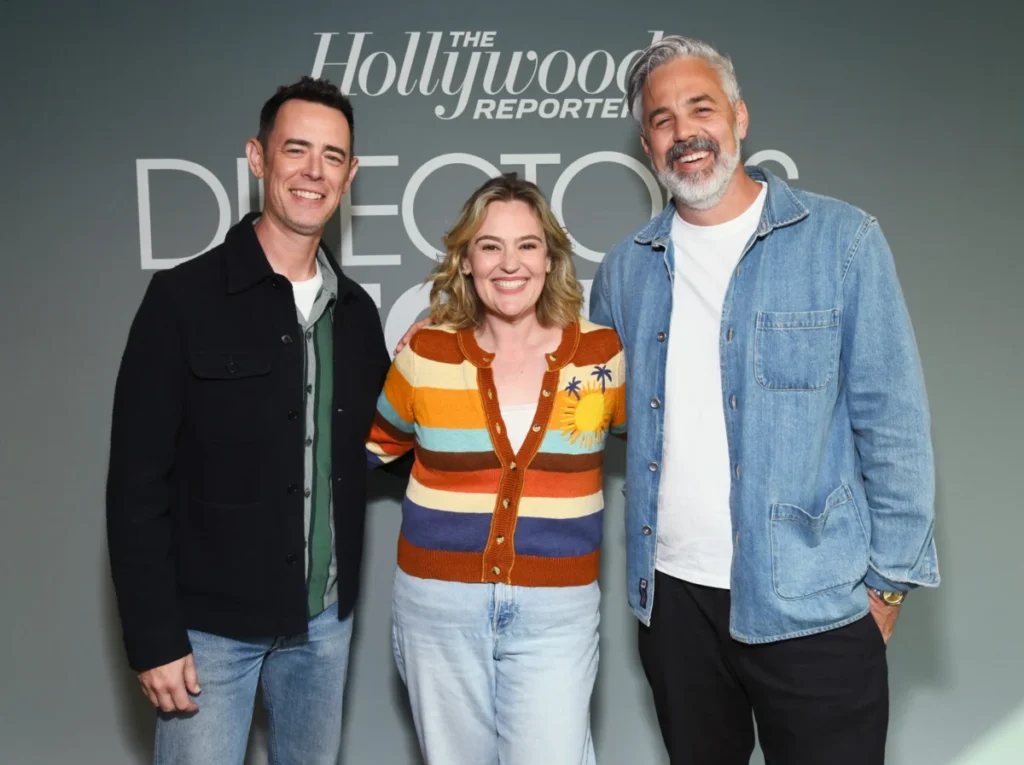

As the echoes of the 2025 awards season began to fade, the industry’s gaze swiftly shifted to the horizon, with first-round voting for the prestigious 2026 Emmy Awards commencing in just over a month. This impending electoral cycle provided the opportune backdrop for The Hollywood Reporter’s highly anticipated "Directors in Focus" event, a meticulously curated gathering held at the esteemed Directors Guild of America (DGA) Theater in sunny Southern California. On a balmy Saturday, an assembly of creators and directors, whose works are already being touted as frontrunners for the upcoming Emmy nominations, convened to delve into the intricate nuances of their craft, offering invaluable insights into the creative processes, technical challenges, and emotional leadership inherent in bringing compelling television to life. The event, a cornerstone of THR’s awards season coverage, served not only as a platform for critical discourse but also as a strategic showcase for the directorial prowess vying for industry recognition.
Navigating the Emmy Race: A Strategic Gathering
The timing of "Directors in Focus" is no mere coincidence; it is a calculated move designed to influence and inform the industry’s taste-makers and, crucially, the Emmy voters. The Hollywood Reporter, a venerable institution in entertainment journalism, leverages such events to foster dialogue between leading creators and the broader industry, providing a deeper understanding of the artistic and technical achievements behind the season’s most acclaimed productions. The DGA Theater itself, a symbol of directorial excellence and a hub for cinematic discourse, lent an air of gravitas to the proceedings, underscoring the significance of the conversations taking place. This early-season event allows directors to articulate their visions and challenges directly, offering a compelling narrative that can resonate with voters as they begin to cast their ballots for the 78th Primetime Emmy Awards.
The Art of Revival and Remembrance: The Comeback

The series of illuminating discussions began with an intimate interview featuring Michael Patrick King, the visionary creator behind HBO’s critically lauded series The Comeback, in conversation with THR’s Chris Gardner. King, a veteran storyteller known for his work on Sex and the City, focused on the poignant journey of crafting the show’s third and final season, a season marked by the profound absence of beloved co-star Robert Michael Morris, who portrayed Valerie Cherish’s steadfast right-hand man, Mickey Deane, and passed away in 2017.
King recounted the emotional complexities of continuing the narrative without Morris, revealing the actor’s brave battle with Stage 4 cancer during the production of earlier seasons. "We knew he was sick. He had Stage 4 cancer, but we thought we could do it. HBO knew that he was sick and they couldn’t insure him. And they said, ‘What do you think?’ And I said, ‘I think he’ll make it,’" King shared, illustrating the collective hope and the actor’s remarkable resilience. He detailed how Morris’s engagement with his craft seemed to imbue him with renewed vitality. "He got better and better. Like the more he was in service, and feeling energy and strength… He became less and less sick, and the doctors were saying, ‘What are you doing? The tumors aren’t growing. What are you doing?’"
The eventual passing of Morris was a profound loss, not just for the production but for the industry. King concluded his tribute with a bittersweet anecdote, highlighting Morris’s enduring desire for recognition. "When he died, everybody was really sad. And one of the things that I remember is Entertainment Weekly said, ‘Television star Robert Michael Morris dead at 77,’ and I thought, it would almost be worth him leaving if he heard him described as a television star. He would almost take that." This segment underscored the delicate balance directors often face in honoring personal relationships while steering a creative enterprise, a testament to the human element often interwoven into the fabric of television production. The Comeback, known for its meta-commentary on fame and vulnerability, gained an additional layer of pathos through King’s handling of Morris’s character, solidifying its place as a uniquely poignant series.
Crafting Visual Spectacles: Euphoria‘s Bold Direction
Next on the agenda, Sam Levinson, the provocative creator of HBO’s hit drama Euphoria, engaged in a compelling dialogue with THR’s David Canfield. Levinson offered an exclusive glimpse into the show’s much-anticipated third season, screening a dynamic scene featuring Zendaya’s character, Rue, in a perilous escape from a Jeep stranded atop a border wall. His comments shed light on the meticulous crafting of Euphoria‘s distinctive visual language and the exceptional talents of its lead cast.

Levinson lauded Zendaya’s extraordinary range, particularly her flair for physical comedy, attributing it to her foundational training. "What’s so spectacular about Zendaya as an actor is the physicality that she has, and I think it goes back to her Disney training, that she’s able to move with such humor and tell a story," he observed. This insight highlights how foundational experiences can shape an actor’s unique abilities, allowing them to embody characters with multifaceted dimensions. The scene itself, described by Levinson as a blend of "Buster Keaton set in this modern drug world," speaks to the show’s ambition to push narrative boundaries and incorporate diverse cinematic influences, creating a visual tapestry that is both visceral and darkly humorous. Euphoria has consistently garnered acclaim for its stylistic audacity, its unflinching portrayal of youth culture, and its visually stunning cinematography, often employing innovative camera work and heightened aesthetics to convey internal states.
Beyond Zendaya, Levinson also commended Sydney Sweeney, another breakout star from the series, for her remarkable adaptability on set. He recounted an instance where Sweeney flawlessly adjusted to a pivotal scene’s last-minute alterations. "What’s interesting is if you push it a little bit, she becomes brilliant. You just do a few more takes, and she can reach these levels that are very honest emotionally, but also deeply funny. She’s able to anchor the scene with this kind of madness and chaos going on around her." This praise underscores the value of an actor’s flexibility and emotional depth, essential qualities for navigating the often-unpredictable environment of a demanding television production. Levinson’s directorial approach, characterized by a willingness to experiment and trust his actors’ instincts, has been a key factor in Euphoria‘s critical and commercial success, contributing to its status as a cultural phenomenon and a consistent Emmy contender.
Beyond Realism: The Intricate World of The Pitt
The conversation then shifted to the high-stakes environment of medical drama with executive producer John Wells, known for his work on seminal shows like ER and The West Wing, discussing the hyper-realistic demands of his latest project, The Pitt, with THR’s Mikey O’Connell. The Pitt distinguishes itself through its unflinching portrayal of emergency room scenarios, pushing the boundaries of medical authenticity on screen.
Wells provided a fascinating account of the complexities involved in creating graphic medical sequences, illustrating his points with a clip from the show featuring doctors performing an emergency C-section to save a baby from its dying mother. "A podcaster who I love referred to that as The Pitt‘s version of the bank robbery scene in Heat," Wells mused, drawing a compelling parallel between the meticulous planning and high-pressure execution required for both intense action sequences and detailed medical procedures. This comparison emphasizes the directorial challenge: these scenes are not merely about gore, but about precise choreography, technical accuracy, and maintaining dramatic tension under extreme conditions.

He elaborated on the logistical nightmare of such a scene, stating, "Those scenes, and we have them fairly regularly, are really like doing stunts. I’ve done a lot of stunts, big action stunts." Wells revealed that the specific birthing sequence took approximately three days to shoot, broken down into intricate sequences, each presenting unique problems. The scarcity of specialized props added another layer of difficulty: "The uterine bag that we cut, we only had four of them; it’s sort of like you only have two shots at the car rollover." Furthermore, unexpected issues arose with practical effects, such as the animatronic baby’s "goo" dissolving the protective coating, hindering its removal from the prop uterus. This detailed breakdown offered a rare glimpse into the practical realities of achieving such a high degree of realism, showcasing the blend of artistic vision, scientific accuracy, and problem-solving ingenuity required from a director in this specialized genre. The Pitt‘s commitment to this level of authenticity positions it as a significant entry in the evolving landscape of medical dramas, distinguishing it from its predecessors through sheer technical ambition.
Empathy and Leadership: Directing Traumatic Narratives in The Testaments
While many directors at the event highlighted technical and logistical hurdles, Jet Wilkinson, a director on The Handmaid’s Tale spinoff The Testaments, brought a crucial humanistic dimension to the discussion. In a world grappling with increasingly sensitive and traumatic narratives, Wilkinson emphasized the director’s vital role as an emotional leader on set, particularly when depicting harrowing scenes.
After showcasing a profoundly disturbing execution scene from The Testaments, Wilkinson detailed her approach to safeguarding the well-being of her cast and crew. "I think the content for us is to start with just sort of getting over what was happening here. Execution of women at point-blank range, that was hard," she acknowledged. Her strategy involved proactive communication and empathy. "Doing those days, we began with addressing all of the background artists: ‘This is going to be hard and it’s going to be confronting, but just know that you’re seen and you’re valued, and we thank you for being here and being part of something so important.’ We wanted to make sure that we acknowledge that this is hard for everyone."
This focus on psychological safety is becoming increasingly recognized as a critical component of modern filmmaking, especially for productions that delve into themes of violence, trauma, and systemic oppression, much like The Handmaid’s Tale universe. Wilkinson’s insights underscore that while technical mastery is essential, a director’s ability to foster a supportive and understanding environment can profoundly impact the quality of the performances and the overall health of the production. Her approach serves as a model for ethical leadership in an industry that is increasingly aware of the mental toll that intense dramatic work can take on its participants. The Testaments, with its heavy thematic material, relies heavily on such empathetic leadership to create its impactful and often brutal portrayal of a dystopian society.

The Unscripted Hero’s Journey: The Unique Challenge of Jury Duty Presents: Company Retreat
Among the diverse directorial challenges discussed, Jake Szymanski, director of Jury Duty Presents: Company Retreat, presented perhaps the most unconventional scenario. While his peers relied on carefully crafted scripts, seasoned actors, and pre-determined shot lists, Szymanski faced the singular task of directing a main actor entirely unaware that he was filming a television show. This innovative premise built upon the success of the original Jury Duty, pushing the boundaries of "prankumentary" television into new narrative territory.
This season’s unassuming protagonist, Anthony Norman, genuinely believed he was merely a temp managing a corporate retreat for a small hot-sauce company. Szymanski recounted the immense satisfaction and emotional impact felt by the entire crew as they witnessed Norman deliver an impassioned, unscripted speech in the show’s finale, attempting to prevent the fictional company from being sold to a conglomerate he believed would destroy its essence.
"Honestly, the moment Anthony walked in the door, we said, ‘We did it.’ It almost didn’t matter what happened. The goal was completed," Szymanski told THR’s Scott Feinberg, emphasizing the initial relief and excitement upon finding such a genuine and empathetic individual. The director highlighted the profound moment of Norman’s "hero’s journey": "He went in there. He’s going in there to stop the deal. He has completed his hero’s journey. That’s the moment we all celebrated."
What made Norman’s performance so extraordinary, Szymanski explained, was its inherent authenticity. "Anthony gives a speech that no one could have written, right? Because he brings so much of himself and his own humanity to that moment." He contrasted this with traditional scripted performances, noting the raw emotional power of the unscripted moment: "It goes from big comedy, at the top of the hill with a guy eating crab legs, saying, ‘Yeah, stop the deal.’ We’re all watching it crying, and it’s like a real human moment, like drama playing out in the boardroom." Jury Duty Presents: Company Retreat stands as a groundbreaking example of how to construct compelling narrative through meticulous planning and a deep understanding of human psychology, all while maintaining an elaborate illusion. The show’s success lies in its ability to generate genuine emotion and unexpected heroism from an authentic individual, blurring the lines between reality and fiction in a truly unprecedented way.

Diverse Narratives: Rounding Out the Directorial Spectrum
The day of programming, designed to celebrate a wide array of Emmys-eligible directorial work, concluded with several equally compelling discussions. Director Stephen Kay joined Scott Feinberg for a conversation surrounding Landman, a series that delves into the cutthroat world of oil rigging and industry, expanding the acclaimed Taylor Sheridan universe. Kay’s insights likely touched upon the unique challenges of directing large-scale, gritty dramas set against expansive, rugged landscapes, a hallmark of Sheridan’s storytelling.
Filmmaker Georgi Banks-Davies, recognized for her distinctive visual style, provided an in-depth look into the highly anticipated second season of The Night Manager. Her discussion with David Canfield explored the complexities of continuing a spy thriller that captivated audiences with its initial run, likely addressing how to maintain suspense and character development while evolving the aesthetic and narrative threads of the acclaimed series.
Finally, the day rounded out with a deeply personal and poignant segment featuring Colin Hanks alongside producers Jennifer Candy-Sullivan and Shane Reid. They discussed their documentary, John Candy: I Like Me, an intimate portrait of the beloved comedic legend. This panel likely delved into the unique challenges and emotional responsibilities of directing a documentary about a cultural icon, especially one involving the participation of his family. The discussion would have explored the process of curating archival footage, conducting interviews, and crafting a narrative that honors Candy’s legacy while revealing new dimensions of his life and career, showcasing the directorial craft in the realm of non-fiction storytelling.
Implications for the 2026 Emmy Season and Beyond

The Hollywood Reporter’s "Directors in Focus" event served as a potent kick-off to the 2026 Emmy season, offering voters and industry professionals a critical window into the minds and methods of television’s leading storytellers. The insights shared by Michael Patrick King, Sam Levinson, John Wells, Jet Wilkinson, Jake Szymanski, Stephen Kay, Georgi Banks-Davies, and the team behind the John Candy documentary collectively painted a vivid picture of the multifaceted nature of contemporary television directing.
From the delicate act of honoring a deceased actor’s legacy to the precise orchestration of hyper-realistic medical emergencies, from fostering emotional safety on set to orchestrating elaborate unscripted narratives, and from capturing the essence of a comedic icon to delving into complex industrial dramas, the event underscored the incredible breadth and depth of directorial skill required in today’s television landscape. These discussions not only highlight individual achievements but also reflect broader industry trends: the increasing demand for authenticity, the sophisticated integration of special effects, the growing emphasis on mental health in production, and the innovative approaches to narrative construction that blur traditional genre lines.
As Emmy voters begin their deliberations, the candid revelations and detailed explanations from "Directors in Focus" will undoubtedly inform their choices, providing a deeper appreciation for the artistry and sheer dedication involved in bringing these compelling stories to the screen. The event reinforces the critical role of the director as not just a technical orchestrator, but as a visionary, a collaborator, a problem-solver, and an emotional anchor—a true architect of the television experiences that captivate and move global audiences. The conversations initiated at the DGA Theater are a testament to the thriving, dynamic, and ever-evolving craft of television direction, setting a high bar for excellence in the upcoming awards cycle and for years to come.