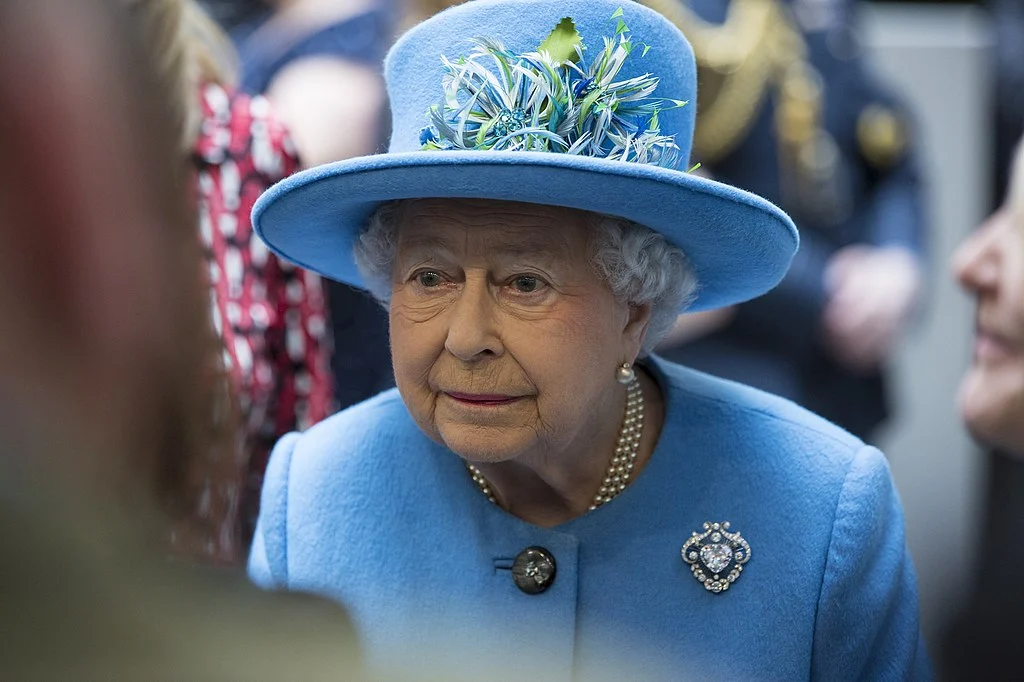

As the Princess Royal, Princess Anne, embarks on a significant overseas mission to Greece next week, a curious footnote in the extensive travelogue of Queen Elizabeth II has resurfaced: her never undertaking an official state visit to the nation where her beloved husband, Prince Philip, Duke of Edinburgh, was born. Over her unparalleled 70-year reign, Queen Elizabeth II cemented her status as one of history’s most travelled monarchs, undertaking landmark tours to over 100 countries, forging and strengthening diplomatic ties with nations as diverse as Australia, Canada, China, Russia, and Brazil. Yet, the Hellenic Republic, the ancestral homeland of her consort, remained conspicuously absent from her official itinerary as a reigning monarch.
This enduring omission has long been a subject of keen interest and scholarly debate among royal historians. The prevailing theory points to the deeply complex and, at times, traumatic family history of Prince Philip with Greece. Born Prince Philippos of Greece and Denmark in 1921 on the island of Corfu, his early life was inextricably linked to the turbulent political landscape of the era. The family, a branch of the ruling Glücksburg dynasty, was deeply entrenched in Greek royal affairs. However, the nation was grappling with the aftermath of its defeat in the Greco-Turkish War, a conflict that profoundly reshaped its geopolitical standing and internal stability.
A Childhood Defined by Exile: Prince Philip’s Greek Roots
The ramifications of the war soon extended to Prince Philip’s immediate family. His father, Prince Andrew of Greece and Denmark, faced accusations of military incompetence during the conflict and was subsequently arrested and put on trial in 1922. While he narrowly escaped a death sentence, the political climate necessitated the family’s swift departure from Greece. Prince Philip, barely an infant at the time, was famously smuggled out of the country in a specially adapted cot aboard a British naval vessel. This abrupt and enforced exile, commencing in his infancy, is widely believed by historians to have cast a long shadow over Prince Philip’s enduring sentiments towards his birthplace.
Royal historian Hugo Vickers, a noted biographer of the Royal Family, has previously elaborated on this perspective. He suggested that the traumatic experiences surrounding his family’s expulsion significantly shaped Prince Philip’s lifelong feelings about Greece. "Prince Philip didn’t like Greece because of what happened to his family," Vickers stated, underscoring the deep personal impact of these early events. This perspective offers a compelling explanation for the Queen’s own avoidance of an official state visit, suggesting it was, in part, a gesture of sensitivity towards her husband’s deeply personal history and the unresolved emotions associated with it.
Pre-Ascension Visits and Evolving Diplomatic Tides
While Queen Elizabeth II never undertook an official state visit to Greece during her reign, her personal connection to the country predates her accession to the throne. In 1950, two years before she became Queen, she made a brief visit to Greece. This trip was undertaken at the invitation of King Paul of Greece, who was Prince Philip’s first cousin. This visit offered a glimpse of the Queen’s early engagement with her husband’s homeland, albeit in a private capacity and before the full weight of her royal duties and the complex diplomatic considerations of state visits came into play.
The relationship between the British Royal Family and Greece, however, was to become increasingly delicate and politically charged with the abolition of the Greek monarchy in 1973. This seismic political shift saw King Constantine II, Prince Philip’s first cousin and Greece’s final monarch, forced into exile. He subsequently spent decades living in London, maintaining close ties with the British Royal Family until his passing in 2023. The presence of the deposed Greek monarch in Britain for an extended period undoubtedly added another layer of diplomatic complexity to any potential state visit by the British sovereign to Greece.
The Mechanics of State Visits: Diplomatic Priorities and Sensitivities
The decision to undertake a state visit is a meticulously orchestrated affair, far removed from spontaneous travel. These visits are not merely ceremonial; they are sophisticated diplomatic engagements, requiring extensive coordination between the host nation and the British government, particularly the Foreign, Commonwealth and Development Office (FCDO). Diplomatic priorities, bilateral relations, political sensitivities, and the overall strategic interests of the United Kingdom all play a crucial role in determining which countries are invited for state visits and when.
Some historians posit that a formal invitation for a full state visit from the Greek government may never have materialized during Queen Elizabeth II’s reign. This could be attributed to a confluence of factors, including the aforementioned political upheaval in Greece, the evolving nature of Anglo-Greek relations, and the intricate diplomatic landscape that characterized the post-war era. The absence of such an invitation, coupled with the personal history of Prince Philip, would have created a situation where initiating a state visit might have been diplomatically challenging or even counterproductive.
Prince Philip’s Enduring Personal Connections
Despite the absence of an official state visit by his wife, Prince Philip maintained a profound and personal connection to Greece throughout his life. He would occasionally travel to the country on private visits, often to reconnect with family members or visit places of personal significance. A particularly poignant aspect of these private journeys was his visits to his mother, Princess Alice of Battenberg, who had returned to Greece and founded a Greek Orthodox nursing order. These private sojourns underscore that while official state interactions were absent, the Duke of Edinburgh never fully severed his personal ties to his homeland.
Princess Anne’s Upcoming Mission: A Modern Chapter in Royal-Greek Relations
Princess Anne’s impending visit to Greece, set to commence next week, marks a new chapter in the ongoing engagement between the British Royal Family and Greece. Her itinerary includes attending commemorations marking the 85th anniversary of the Battle of Crete. This significant event, a pivotal moment in World War II, underscores the shared history and the sacrifices made by both nations during that global conflict. The Princess Royal’s engagement in such commemorations highlights the enduring strength of historical bonds and the continuing importance of remembering shared experiences.
While Princess Anne’s visit is not a state visit in the same vein as those undertaken by the monarch, it represents a high-level royal engagement that underscores the continued importance of bilateral relations. It also provides an opportunity to reflect on the historical complexities that have shaped the relationship between the two royal families and the two nations.
Broader Implications and Historical Echoes
The story of Queen Elizabeth II’s unvisited Greece offers a fascinating case study in the intricate interplay of personal history, family legacy, and international diplomacy. It demonstrates how deeply individual experiences can influence even the most formal of state interactions. The absence of a state visit does not, however, diminish the historical significance of Prince Philip’s Greek heritage or the broader ties between the two countries.
The legacy of Prince Philip’s Greek roots is a complex tapestry woven with threads of royalty, war, exile, and resilience. His life story, from his infancy in Corfu to his marriage to Queen Elizabeth II and his long service as the Duke of Edinburgh, is a testament to his ability to transcend his tumultuous beginnings and forge a new identity. The enduring curiosity surrounding the Queen’s unvisited Greece serves as a reminder that even the most public figures carry personal histories that can subtly, yet profoundly, shape their public roles and the decisions they make. As Princess Anne now engages with Greece, it offers a chance for a contemporary royal to connect with the nation that holds such a significant place in the personal history of her late father and grandfather, perhaps weaving new threads into the enduring narrative of royal-Greek relations. The enduring fascination with this particular absence underscores the human element that often lies beneath the surface of royal duty and international diplomacy.