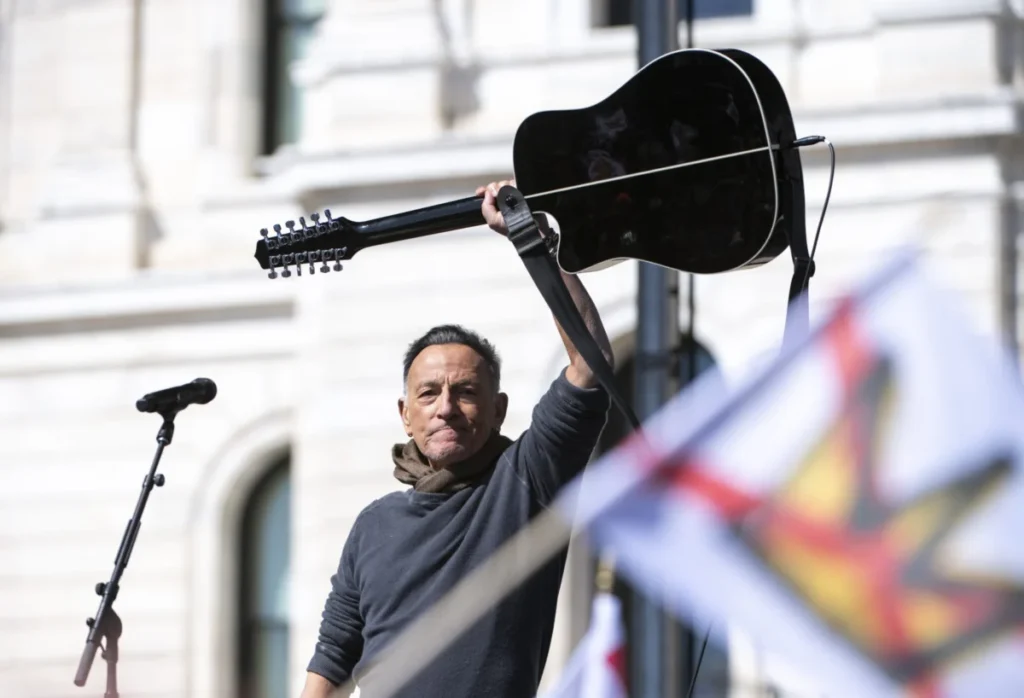

The Tribeca Festival, a prominent cultural event celebrating film, music, and art, concluded its 2026 iteration with a poignant ceremony on June 13th, honoring legendary musician Bruce Springsteen with the Harry Belafonte Voices for Social Justice Award. The prestigious accolade, presented on the festival’s final day, recognized Springsteen’s decades-long commitment to using his platform to advocate for social and political causes. The event, held in lower Manhattan, brought together influential figures from the arts and entertainment world, including fellow musicians Bono and Patti Smith, as well as Tribeca co-founders Robert De Niro and Jane Rosenthal.
The award ceremony, framed within a Tribeca Storytellers event, evolved into an in-depth conversation between Springsteen and U2 frontman Bono. This discussion delved into themes of democracy, federal overreach, and the role of artists in contemporary society, mirroring the socio-political undercurrents of Springsteen’s recent "Land of Hopes & Dreams Tour." The setting provided a platform for a candid exchange about the challenges facing American democracy and the responsibilities of public figures in addressing them.
A Legacy of Advocacy Recognized
Robert De Niro, introducing Springsteen for the award, lauded the musician’s unwavering dedication to amplifying the voices of the marginalized. "This is a man who knows how to use his voice," De Niro stated, emphasizing Springsteen’s fearless approach to activism. "He uses it to give voice to the powerless and he uses it to lead the resistance. He is fearless and direct. He knows what the problem is and he names it: Donald Trump. Donald J. Trump and his feckless enablers. That’s so important because this isn’t about reasonable disputes on policy: this is about the corruption and megalomania of one person. Bruce Springsteen puts a face on it, and he does it with the words of a poet."
Springsteen, in his acceptance remarks, expressed a degree of humility, stating, "I’m a little embarrassed to get this award." He dedicated the honor to the citizens of Minneapolis, Portland, and Los Angeles, acknowledging their resilience and resistance "against the federal invasion of their cities this year." He characterized himself as "just a concerned citizen," underscoring that his activism stems from a deeply felt sense of civic duty rather than a pursuit of accolades.
The Erosion of Democracy: A Central Theme
The conversation between Springsteen and Bono directly addressed the perceived erosion of democratic principles in the United States, particularly in light of the Trump administration’s actions. Springsteen’s "Land of Hopes & Dreams Tour" had already signaled his intention to confront these issues head-on, making the Tribeca event a natural extension of his artistic and political dialogue.
Bono, a self-described "fan masquerading as a friend," posed thoughtful and sometimes challenging questions to Springsteen, exploring the complexities of an artist’s connection with the working class. Bono reflected on the perception of elitism that can sometimes surround left-leaning artists, admitting, "I fear sometimes we on the left lost a little bit of it and that the accusations of elitism that are out there for people like me are not inaccurate."
He further inquired about the potential cost of Springsteen’s outspokenness: "Has it cost you? Do you feel torn at all thinking there’s people in this town that used to come see my shows who don’t now? Or have you made peace with that?"
Springsteen’s candid response highlighted the delicate balance artists must strike between their convictions and their audience. "I’m not sure," he admitted. "You have to do two things. There’s the classic folk song, ‘Which Side Are You On?’: you have to make your stand and follow your beliefs and you have to have the faith in them that they will be explicable and understandable by your fellow citizens. And you have to believe that America is a sacred argument and a compromise." This sentiment reflects a long-standing philosophical approach to American democracy, one that emphasizes dialogue and collective progress through reasoned debate.
Navigating Art, Commerce, and Activism
The discussion also touched upon Springsteen’s strategic approach to activism and his selective engagement with commercial ventures. Bono recalled instances where he had approached Springsteen to support causes, including a request to license the song "Girls In Their Summer Clothes" for a Gap commercial as part of the (RED) campaign to combat HIV/AIDS in Africa. Springsteen had previously declined such requests, preferring to maintain a clear distinction between his artistic output and commercial endorsements.
However, in a moment of self-reflection, Springsteen acknowledged a past misjudgment. "That was a big mistake, too," he interjected, seemingly to Bono’s surprise. "I should have said yes." He explained that he considered "Girls In Their Summer Clothes" to be one of his favorite songs, even if it wasn’t a commercial hit, and expressed regret for not participating in the charitable initiative. "I should have f***ing done it. I have to apologize," he stated, demonstrating a willingness to revisit past decisions and acknowledge potential oversights in his advocacy efforts.
Springsteen also addressed his highly political "Land of Hopes & Dreams Tour," acknowledging that its overtly socio-political themes were clearly communicated beforehand. "I warned everybody what the tour was gonna be like so they didn’t waste their money before they came," Springsteen said with a chuckle. "I figured I did my job and it was every man for himself after that." This statement reflects his belief in transparency with his audience, allowing them to make informed decisions about their engagement with his work.
A Collaborative Performance for Peace and Power
The evening’s program took a musical turn with the addition of Rock & Roll Hall of Famer Patti Smith to the stage at the BMCC Tribeca Performing Arts Center. Accompanied by Tony Shanahan on keys, Smith delivered a moving rendition of "Peaceable Kingdom," a song inspired by the tragic story of Rachel Corrie, an American activist killed by an Israeli military bulldozer in 2003 while protesting the demolition of Palestinian homes. The song’s message of peaceful resistance resonated deeply within the context of the evening’s discussions.
Following this, Smith performed her powerful anthem "People Have the Power," a call to action that has become a staple of her live sets. Springsteen and Shanahan joined her on acoustic guitar, and Bono, who had briefly left the stage, was called back to contribute backup vocals, creating a powerful ensemble performance that underscored the shared commitment of these artists to social change.
While the official program for the Tribeca Storytellers event did not explicitly promise a live musical performance from Springsteen, the audience harbored quiet hopes for such an offering. In a moment that delighted attendees, Springsteen indeed took the stage to perform a mesmerizing solo rendition of his beloved song "Land of Hope and Dreams." This unexpected performance, delivered with characteristic passion and skill, served as a powerful capstone to the evening. The contrast with the vocal and sometimes demanding fans at Miley Cyrus’s Tribeca Q&A the previous year, where music was not guaranteed, highlighted the more subdued but deeply appreciative anticipation from Springsteen’s audience.
Concluding Thoughts and a Call to Action
As Bruce Springsteen prepared to leave the stage amidst a standing ovation, he offered a final, lighthearted sentiment to the New York City audience: "Go Knicks." This brief interjection, a nod to the local sports team, served as a moment of shared community and connection, a reminder of the everyday aspects of life that activism ultimately seeks to protect and improve.
The Harry Belafonte Voices for Social Justice Award, named after the iconic singer, actor, and activist, honors individuals who have demonstrated exceptional dedication to using their public platform for positive social change. Belafonte himself was a lifelong champion of civil rights and humanitarian causes, and his legacy continues to inspire artists and activists alike. Springsteen’s receipt of this award signifies a recognition of his enduring impact on both the music industry and the broader landscape of social justice advocacy. The Tribeca Festival’s decision to highlight these themes through such a prominent figure underscores the ongoing relevance of art as a tool for social commentary and a catalyst for meaningful dialogue in contemporary society. The event served as a powerful reminder that even in times of political division, artists can play a crucial role in fostering understanding, inspiring action, and advocating for a more just and equitable world. The enduring messages of Springsteen, Smith, and Bono continue to resonate, encouraging listeners to engage with the world around them and to use their own voices for the causes they believe in.