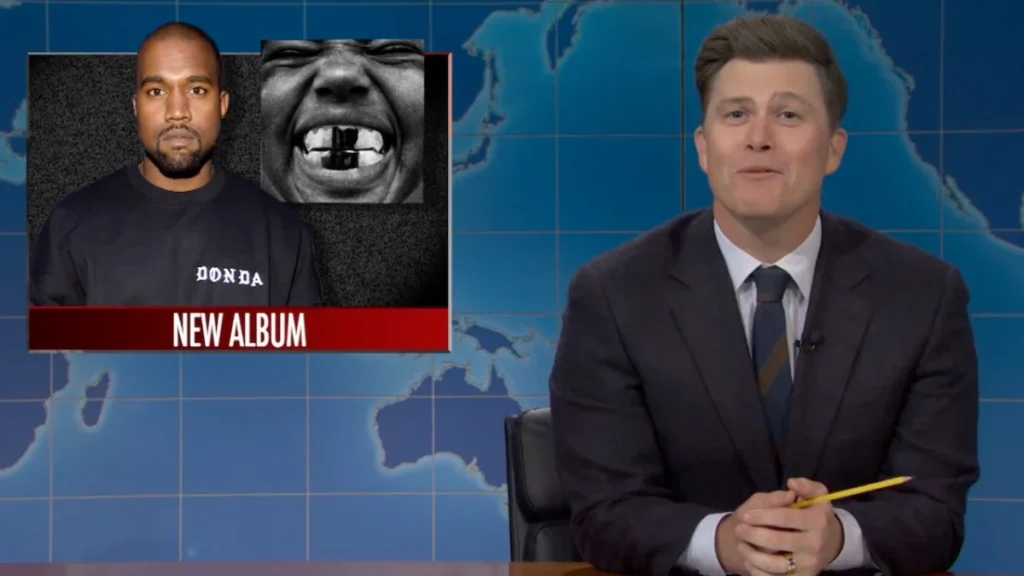

The season 51 finale of NBC’s venerable sketch comedy institution, Saturday Night Live, concluded with a segment of its long-running news parody, "Weekend Update," that pushed the boundaries of comedic taste further than perhaps any installment in recent memory. Anchors Colin Jost and Michael Che, known for their often provocative and politically charged humor, upheld their traditional end-of-season "joke swap," delivering a series of unvarnished and frequently shocking punchlines that touched upon highly sensitive topics including autism, racial stereotypes, pedophilia allegations involving Michael Jackson, and antisemitic rhetoric associated with Kanye West. The segment culminated in a dramatic, albeit comedic, act where Jost appeared to shave his head, underscoring the extreme nature of the exchange.
The Enduring Legacy of "Weekend Update" and Its Controversial Finale Tradition
"Weekend Update" has been a cornerstone of Saturday Night Live since its inception in 1975, evolving from its initial anchor Chevy Chase to a long line of influential comedians including Jane Curtin, Dan Aykroyd, Dennis Miller, Norm Macdonald, Tina Fey, Amy Poehler, and Seth Meyers. It serves as a satirical news desk, offering sharp commentary on current events, politics, and pop culture, often employing a blend of observational humor, one-liners, and deadpan delivery. Colin Jost and Michael Che, who took over as co-anchors in 2014, have become the longest-serving anchor duo in the segment’s history, their contrasting comedic styles—Jost’s often deadpan, Ivy League-educated wit against Che’s more grounded, often cynical perspective—providing a dynamic that has defined the segment for a decade.
The "joke swap" tradition, specifically between Jost and Che at the season’s close, has become a highly anticipated event. In these segments, the anchors write jokes for each other, which the other must deliver sight-unseen, often leading to discomfort, genuine surprise, and moments designed to make the other squirm. This ritual amplifies the inherent tension of live television and often serves as an opportunity for the duo to push the comedic envelope, knowing that their partner is obligated to perform the material, regardless of its edginess or potential for controversy. Past joke swaps have featured uncomfortable sexual innuendos, personal jabs, and politically incorrect statements, but the season 51 finale’s iteration appears to have set a new benchmark for audacity.
A Chronology of Provocation: Deconstructing the Season 51 Finale Joke Swap
The May 17, 2026, broadcast of the SNL season 51 finale saw Jost and Che embark on their annual comedic duel, with each joke seemingly designed to outdo the previous in terms of shock value and social commentary.
Opening with a Jolt: Autism and Inappropriate Humor
The exchange began with Colin Jost delivering a joke penned by Che: "Mattel has introduced a new Barbie that has autism… Oh, now it’s gonna feel wrong when I have sex with it." The joke immediately established the segment’s provocative tone. In recent years, Mattel has made significant strides in promoting inclusivity with its Barbie line, introducing dolls with various body types, skin tones, and disabilities, including a Barbie with Down Syndrome in 2023. This initiative aims to foster greater representation and empathy among children. Che’s joke, delivered by Jost, deliberately subverted this progressive effort by injecting a highly inappropriate and predatory sexual connotation, leveraging the perceived innocence of a children’s toy line to create an immediate sense of shock and discomfort. It set the stage, signaling that no topic, however sensitive or well-intentioned, was off-limits for satirical deconstruction.
Che’s Counter: Body Image and Self-Deprecation
Michael Che responded with a joke written by Jost, playing on male insecurity and body image: "A new study finds that the average length of an erect penis in the country is 6.34 inches… Oh boy, that means I’m only 6 inches below average. Now I just have to figure out how to get erect." While less overtly controversial than Jost’s preceding joke, Che’s delivery of this self-deprecating line contributed to the escalating tension. It is a classic comedic trope, but in the context of the overall exchange, it served as a momentary, albeit brief, relief from the more pointed social commentary that followed, while still maintaining an adult, R-rated sensibility.
Racial Stereotypes and Performative Activism: The Sinners Segment
The segment took a sharper turn when Jost delivered another joke from Che: "Michael B. Jordan won Best Actor for his role in the vampire movie Sinners… A Black vampire is just like a white vampire, except the only thing it sucks dry is the welfare state." This joke directly invoked a deeply entrenched and harmful racial stereotype, linking Black individuals to welfare dependency. The mention of a fictional movie, Sinners, and Michael B. Jordan, a prominent Black actor, provided a veneer of pop culture relevance before delivering the biting and racially charged punchline.
Following this, Che continued the bit, having Jost deliver a mock apology and pledge that only amplified the problematic nature of the preceding joke. Jost stated, "Now, now that was just a joke. I’m not a racist, and to prove it, I, Colin Jost, hereby pledge this season’s salary to Dr. Umar Johnson’s School for Black Boys. Now y’all might know, but the brothers at home is nodding their heads. No one in our white audience understands. And if that’s not enough, I have a beautiful new ferry ready to give any Black person a free one-way trip back to the motherland."
This elaborate "apology" was a layered satirical attack. Dr. Umar Johnson is a controversial figure known for his Pan-Africanist views, often criticized for his separatist rhetoric and unverified claims regarding his educational initiatives. By having Jost pledge allegiance to Johnson and offer a "free one-way trip back to the motherland" (a loaded phrase with historical connections to colonization and forced repatriation), Che satirized performative allyship and the often-misguided attempts to address racial issues, while simultaneously injecting specific cultural references that would resonate differently with various audience demographics. The meta-commentary on the audience’s understanding ("No one in our white audience understands") further highlighted the racial divide and the perceived insincerity of such gestures.
The Unthinkable: Michael Jackson and Child Molestation
The intensity escalated further when Che delivered a joke written by Jost that delved into the highly sensitive and widely publicized allegations against pop icon Michael Jackson: "A new study suggests that men are less likely to suffer from erectile dysfunction if they drink grape juice, which explains why my boyfriend is always rock hard. Speaking of giving little boys juice… the movie Michael won the box office again this weekend, and since a few members of the Jackson family are actually in the audience tonight, I wanted to take a moment to tell everybody what I really think. Michael Jackson did nothing wrong. He was right to molest all those kids. And they were lucky. I would have paid him to do it. And I did. That’s right. When I was 10 years old, Michael Jackson molested me, and the only thing it gave me was a fetish for middle-aged white women."
This sequence of jokes, building from an innocuous health tip to a direct, graphic, and highly offensive statement about child molestation, represented a significant breach of typical comedic boundaries, even for SNL. The Michael Jackson allegations have been a source of intense public debate and pain, particularly for victims of child abuse. Che’s delivery, framed as a personal confession and justification, was designed for maximum shock. The final twist—the revelation that the "molestation" led to a fetish for "middle-aged white women"—added another layer of dark, self-deprecating humor, simultaneously racializing and sexualizing the trauma in a way intended to be deeply unsettling. The implication of Jackson family members being in the audience, whether true or not, added a performative cruelty to the joke.
The Climactic Provocation: Kanye West, Hitler, and the "Sacrifice"
The joke swap reached its zenith when Jost delivered the final, most incendiary joke, penned by Che: "Ye has released a new album called Bully, so please try to separate the art from the artist, and remember that Ye can make awful music and still be right about Hitler… Now that joke is offensive to everybody and I’d like—and I have to apologize. I’d like to sacrifice the most important thing in my life, my beautiful, award-winning, world-famous hair. That’s right. I’m shaving it off. Send in the barber. Make me unpretty."
This joke directly addressed Kanye West’s widely condemned antisemitic remarks, including his public praise for Adolf Hitler and his denial of the Holocaust, which led to significant professional and personal repercussions for the artist. The phrase "separate the art from the artist" is a common cultural debate, but Che’s joke twisted it to suggest that even if West’s music is bad, his abhorrent views on Hitler could somehow be "right." This punchline, linking a contemporary cultural figure to one of history’s most reviled genocidal dictators, was intended to be universally offensive and an ultimate test of boundaries.
The immediate follow-up—Jost’s mock apology and the decision to "sacrifice" his hair—served as the comedic climax. Jost’s hair has long been a running gag and a point of pride for the anchor, often highlighted for its pristine appearance. The act of shaving it off live (or the implication of doing so, as the camera cut away before the full deed was done, leaving some ambiguity) was a grand, physical gesture of comedic atonement for the extreme nature of the preceding jokes. It was a theatrical flourish, signaling that the jokes had gone so far that a tangible, personal sacrifice was required, even if performed for comedic effect.
Audience and Critical Reception: Navigating the Outrage Economy
The immediate aftermath of the "Weekend Update" joke swap saw a predictable surge of activity across social media platforms. Terms like "#WeekendUpdate," "#SNLFinale," and the names of the anchors, along with the controversial topics referenced, quickly trended. Reactions were sharply divided:
- Admiration for Bravery/Edginess: A segment of the audience lauded Jost and Che for their audacity, praising them for pushing comedic boundaries and challenging societal norms. These viewers often see SNL as a platform for satire that should be fearless, even if it makes people uncomfortable.
- Condemnation for Offense: Another significant portion of the audience expressed outrage and disgust, deeming the jokes—particularly those concerning autism, racial stereotypes, Michael Jackson, and Hitler—as beyond the pale. Critics argued that such humor trivializes serious issues, harms marginalized communities, and contributes to a culture of insensitivity.
- Debate on Satire’s Limits: Many online discussions revolved around the perennial question of where the line for satire should be drawn. Is any topic fair game for comedy, or do certain subjects cross into harmful territory regardless of intent?
While NBC and Saturday Night Live rarely issue official statements regarding controversial "Weekend Update" segments, their historical modus operandi suggests a tacit acceptance of boundary-pushing humor, especially within the context of a live, late-night comedy show known for its irreverence. The show’s producers and network executives understand that such segments, while drawing criticism, also generate significant buzz and maintain SNL‘s reputation for being topical and unafraid to tackle difficult subjects, often leading to increased viewership and cultural relevance.
Broader Implications of Boundary-Pushing Comedy in the Modern Era
The season 51 "Weekend Update" joke swap is more than just a series of offensive jokes; it’s a microcosm of the ongoing cultural debate surrounding comedy, free speech, and social responsibility in the 21st century.
- The Role of Satire: This segment re-ignites the discussion about the purpose of satire. Is its primary function to provoke thought, expose hypocrisy, or simply to entertain, even through shock? When does satire become indistinguishable from mere offense?
- The "Cancel Culture" Debate: In an era where public figures face swift consequences for perceived missteps, Jost and Che’s willingness to engage with such extreme material tests the limits of "cancel culture." For some, it’s a defiant act against perceived over-sensitivity; for others, it’s a demonstration of privilege that allows certain comedians to skirt accountability.
- The Evolving Media Landscape: SNL operates within a fragmented media environment where clips instantly go viral, often stripped of their original context. A joke delivered in a late-night comedy setting can be re-contextualized and amplified across social media, leading to broader and more intense reactions than might have occurred in previous eras.
- The Power of Discomfort: Comedians like Che and Jost understand the power of discomfort in humor. By making their audience, and themselves, squirm, they force a confrontation with uncomfortable truths, stereotypes, and societal taboos. The question remains whether the discomfort generated by this particular segment serves a higher comedic purpose or merely indulges in shock for shock’s sake.
Ultimately, the season 51 finale of "Weekend Update" solidified Colin Jost and Michael Che’s reputation as anchors willing to venture into uncharted and often perilous comedic territory. It served as a potent reminder that Saturday Night Live, even after five decades, continues to grapple with and reflect the evolving, often contentious, landscape of American humor and social discourse. The segment’s brutality ensures its place as one of the most memorable—and certainly one of the most debated—joke swaps in the show’s extensive history.