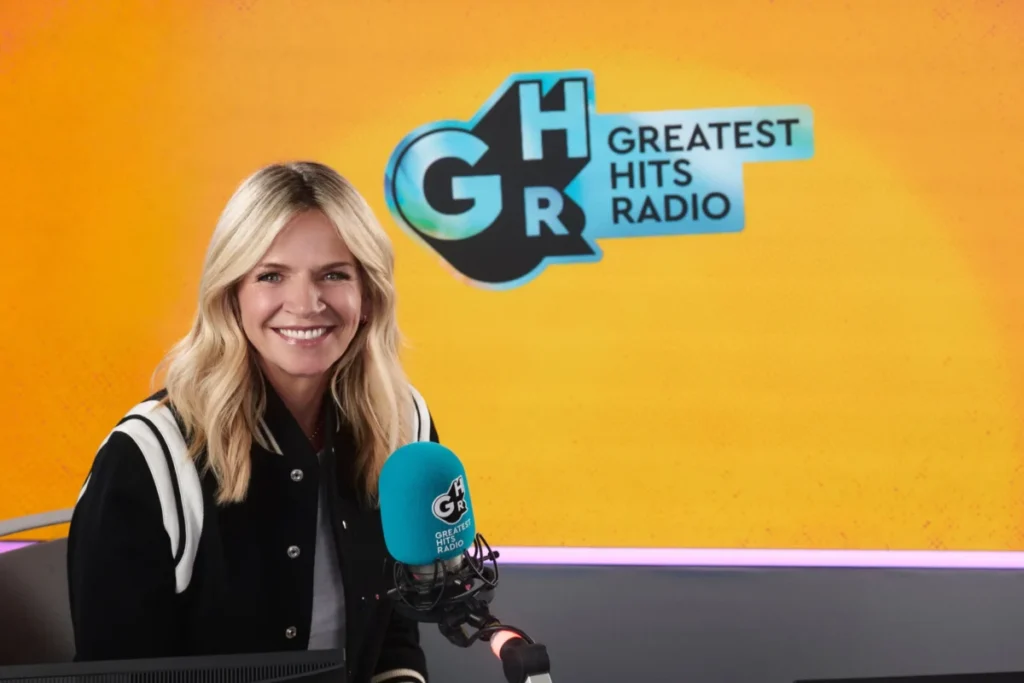

Veteran broadcaster Zoe Ball has confirmed her highly anticipated return to daily radio, joining Greatest Hits Radio in a move that marks a significant shift in the competitive landscape of UK radio. Ball, a familiar and beloved voice across the nation, will take over from Kate Thornton, thereby reuniting with former BBC Radio 2 colleagues Ken Bruce and Simon Mayo, further solidifying Greatest Hits Radio’s position as a formidable rival to the BBC. This recruitment represents another considerable blow to the corporation, which has seen a steady stream of high-profile presenters depart for commercial stations in recent years.
Ball’s arrival at Greatest Hits Radio was announced with a clever, tongue-in-cheek promotional trailer inspired by the popular TV series "The Traitors." The clip, widely shared and garnering significant attention, featured Ball entering a dimly lit studio, lantern in hand, before lowering her hood to reveal herself to Bruce and Mayo. Her playful declaration, "I couldn’t let you two have all the fun, could I?" instantly set the tone for her new role. In a nod to the station’s core musical offering and its star-studded lineup, Ball then made a "Traitors-style pledge" to exclusively play music from the 1970s, 1980s, and 1990s, and, crucially for many listeners, to keep Ken Bruce’s enduringly popular "PopMaster" quiz on air every day. This commitment not only reinforces Greatest Hits Radio’s brand identity but also strategically leverages the established loyalty of listeners to iconic radio segments.
A Familiar Voice Returns to Daily Airwaves
The move heralds Ball’s first return to daily radio broadcasting since her departure from the coveted BBC Radio 2 Breakfast Show at the end of 2024, followed by her exit from her Saturday afternoon programme the subsequent year. Her statement upon announcing the news resonated with many: "I’ve missed it and this felt like the right time to begin a new chapter with Greatest Hits Radio." This sentiment underscores a desire to return to the rhythm of daily interaction with listeners, a staple of her long and distinguished career. The appointment of Ball, a household name with a career spanning decades, is a clear indication of Greatest Hits Radio’s ambition to capture a larger share of the mainstream adult contemporary radio market.
Ball’s journey through the ranks of British broadcasting has been both varied and influential. She first rose to prominence in the 1990s as a presenter on BBC Radio 1, becoming the first female solo presenter of the Radio 1 Breakfast Show in 1997, a groundbreaking achievement that shattered traditional gender barriers in prime-time radio. Her energetic and engaging style quickly made her a youth icon, synonymous with the vibrant ‘Britpop’ era. After a period away from daily radio, during which she explored television presenting and other media projects, Ball made a triumphant return to radio in 2011, joining BBC Radio 2 to host a Saturday show. Her popularity on Radio 2 steadily grew, culminating in her taking over the flagship Breakfast Show in January 2019, succeeding Chris Evans.
The BBC Radio 2 Breakfast Show Era: Highs and Challenges
Her tenure at the BBC Radio 2 Breakfast Show was significant, making her the first woman to host the programme. During her time, she initially commanded an impressive listenership, maintaining the show’s status as the most listened-to radio programme in the UK. At its peak, the show attracted over 9 million weekly listeners, a testament to her enduring appeal and ability to connect with a broad audience. Her warm, relatable, and often candid approach endeared her to millions, even as the landscape of radio listening continued to evolve with the rise of podcasts and streaming services.
However, the demands of a high-profile daily breakfast show are immense, both professionally and personally. Ball had openly discussed the intense pressure that came with such a role, operating under constant scrutiny and the expectation of maintaining peak performance every morning. This period of her career, while successful, also coincided with significant personal challenges that ultimately led to her decision to step back from the daily grind.

Personal Trials and Public Departures: Grief, Health, and Stepping Back
The original announcement of her departure from the BBC Radio 2 Breakfast Show in late 2024, and subsequently her Saturday programme, came after a period of intense personal difficulty for Ball. In April 2024, she suffered the profound loss of her mother, Julia, who passed away from pancreatic cancer. This period of grief profoundly impacted her, and she took an extended break from her broadcasting duties to cope with the bereavement.
Upon her return, Ball began to speak candidly about how this immense grief, compounded by the onset of perimenopause, led to significant mental health struggles. In heartfelt discussions on her "Dig It" podcast with Jo Whiley, she revealed the extent of her battle with panic attacks and "crippling anxiety" while on air. "I started to have panic attacks and I think it was from grief, because that’s when it started for me," she explained. She added, "Then along came perimenopause as well and I started to have crippling anxiety to the point where I was struggling to work or get through a show." This honest revelation offered a rare glimpse into the private struggles of a public figure, resonating with many listeners experiencing similar challenges.
Ball later disclosed that she had taken a low dose of the antidepressant sertraline for two years to help manage her symptoms, bravely sharing her journey to recovery. She informed her fans that she had since "come out of it" and strongly encouraged others experiencing similar struggles to seek medical advice from their GP. Her openness not only destigmatized discussions around mental health and perimenopause but also provided valuable context for her decision to step away from the demanding schedule of a daily breakfast show, a role she had held while being one of the BBC’s highest-paid presenters, earning an annual salary of £950,000.
Greatest Hits Radio’s Aggressive Talent Acquisition Strategy
Zoe Ball’s move is not an isolated incident but rather the latest in a calculated and aggressive talent acquisition strategy by Greatest Hits Radio, owned by Bauer Media. The station has systematically targeted and successfully recruited some of the BBC’s most cherished and experienced broadcasters, particularly from Radio 2. The most prominent example prior to Ball was the departure of Ken Bruce in 2023, after 31 years of hosting his mid-morning show on Radio 2. His move sent shockwaves through the industry, and he brought his iconic "PopMaster" quiz with him, a significant draw for millions of loyal listeners. Before Bruce, Simon Mayo, another long-standing BBC presenter, had also made the switch to Greatest Hits Radio.
This pattern of recruitment highlights a clear strategic intent by Bauer Media: to build a powerhouse of established, trusted voices who appeal to a mature demographic, particularly those aged 45 and above. By offering these presenters new opportunities, potentially with more creative freedom or different schedules, Greatest Hits Radio is directly challenging BBC Radio 2’s traditional stronghold on this lucrative demographic. The station’s musical format, focusing on "greatest hits" from the 70s, 80s, and 90s, perfectly aligns with the nostalgic preferences of these listeners, creating a consistent and appealing brand identity that is now fronted by a dream team of familiar voices. This strategy appears to be paying off, with Greatest Hits Radio consistently reporting significant increases in listenership figures since the arrival of its high-profile presenters, underscoring the power of established talent in attracting and retaining audiences in a fragmented media landscape.
The Shifting Sands of UK Radio: BBC vs. Commercial Rivals
The exodus of talent from BBC Radio 2 to commercial stations like Greatest Hits Radio reflects broader shifts within the UK radio industry. Public service broadcasters like the BBC are increasingly challenged by well-funded commercial rivals that can offer competitive packages and often a more focused musical brief. While the BBC operates under a public service remit funded by the license fee, commercial stations rely on advertising revenue, which can be significantly boosted by increased listenership figures driven by popular presenters.
Data from RAJAR (Radio Joint Audience Research) has shown a trend of fluctuating listenership for BBC Radio 2, with some quarters indicating a decline in overall reach, even as it remains a dominant force. Concurrently, Greatest Hits Radio and other commercial stations in the "heritage" music sector have seen steady growth. This suggests a potential migration of listeners who are seeking a consistent music policy and familiar presenters, a combination that Greatest Hits Radio is now expertly providing. Industry analysts have pointed to a perception among some listeners that BBC Radio 2 has, at times, attempted to broaden its appeal to younger demographics, potentially alienating its traditional core audience. This perceived "dumbing down" or shift in musical focus has created an opening for commercial rivals to step in and cater specifically to the tastes of an older, affluent audience.
Implications for BBC Radio 2: A Continued Talent Drain?
For BBC Radio 2, Zoe Ball’s departure represents more than just the loss of a presenter; it raises further questions about its talent retention strategy and future direction. While the BBC has a long history of nurturing talent, the increasing competition from commercial entities, coupled with public scrutiny over presenter salaries and perceived editorial shifts, presents a complex challenge. The station will undoubtedly need to re-evaluate how it competes for and retains its star names, especially as the allure of commercial freedom and potentially different working conditions becomes more attractive.
The departure of Ball, following Bruce and Mayo, could also lead to further listener migration, impacting listenership figures and potentially advertising revenue for the BBC (indirectly, through overall audience share). It places increased pressure on the remaining presenters and on the station’s programming team to innovate and re-engage its audience. While Radio 2 remains a beloved institution, these high-profile exits are undoubtedly prompting internal discussions about how to future-proof the station in an increasingly dynamic and competitive radio environment.
Zoe Ball’s New Chapter: A Return to Passion and Pace
For Zoe Ball herself, this new chapter at Greatest Hits Radio appears to be a well-considered professional and personal decision. After the intense pressures of the BBC Radio 2 Breakfast Show and the personal trials she faced, a move to a station with a clear musical identity and a roster of familiar, supportive colleagues offers a fresh start. The schedule for her new show, while daily, may offer a different pace and perhaps less intense scrutiny than a national flagship breakfast programme. This could provide her with the opportunity to focus on her passion for music and engaging with listeners, in an environment that feels more aligned with her current personal and professional priorities. Her statement about missing daily broadcasting suggests a rekindled enthusiasm for the craft, and the opportunity to play "music from the 70s, 80s and 90s" aligns perfectly with her personal taste and the demographic she naturally connects with.
The Future Landscape: What This Means for Listeners and Broadcasters
The movement of Zoe Ball to Greatest Hits Radio underscores a broader trend in UK radio: the increasing fluidity of talent between public and commercial broadcasters, driven by evolving listener preferences and strategic commercial ambition. For listeners, this means more choice and increasingly distinct offerings across the dial. Greatest Hits Radio’s success in assembling a ‘supergroup’ of radio talent demonstrates the power of nostalgia formats combined with established, trusted voices. For broadcasters, it highlights the need for constant innovation, a clear understanding of audience demographics, and a competitive approach to talent management.
The UK radio landscape remains vibrant, but the battle for ears is intensifying. Zoe Ball’s return to daily broadcasting on Greatest Hits Radio is not merely a change of station for a popular presenter; it is a significant indicator of the evolving dynamics of the industry, promising an exciting and highly competitive era for both listeners and the broadcasters vying for their attention. As the dust settles, all eyes will be on how these strategic moves reshape listenership figures and influence the future direction of radio in the UK.