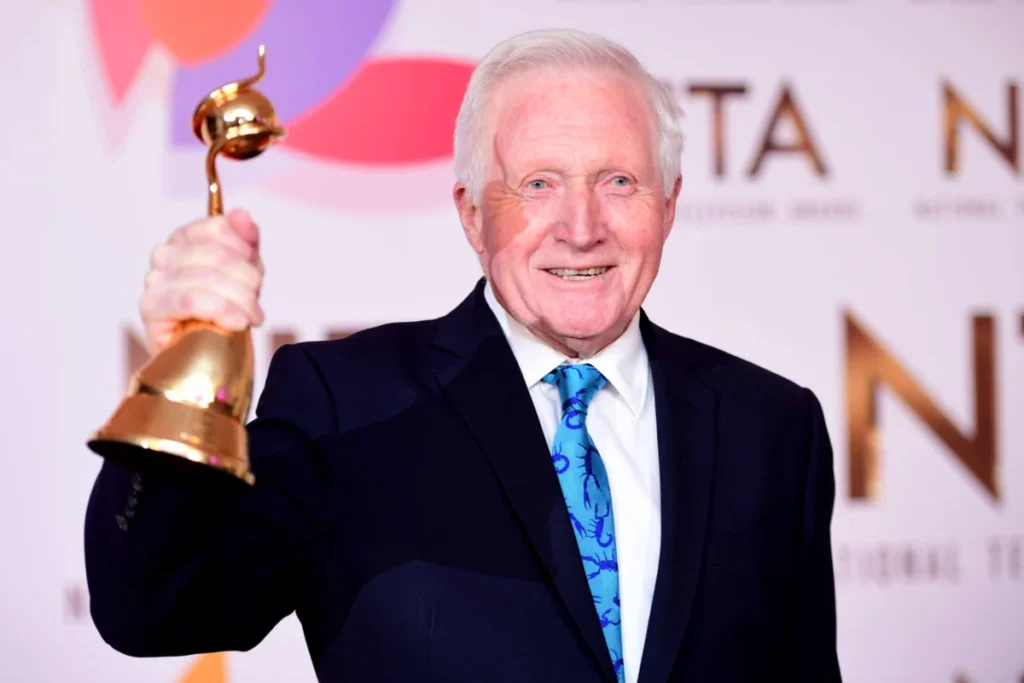

Veteran broadcaster David Dimbleby has voiced profound dismay over the BBC’s extensive cost-cutting measures, which are projected to eliminate up to 2,000 jobs as part of a £500 million savings drive over the next two years. Dimbleby, a revered figure synonymous with the corporation’s coverage of major national and international events for decades, described himself as "appalled" by the decisions, particularly highlighting the detrimental impact on political analysis and the critical BBC Studios Events team responsible for state occasions. His unequivocal condemnation underscores growing concerns within and outside the BBC about the potential erosion of its public service remit and the quality of its output in an increasingly challenging media landscape.
The Veteran’s Scathing Critique
David Dimbleby’s critique is not merely a passing comment but a deeply felt lament from an individual whose career is intrinsically woven into the fabric of the BBC. Known for his authoritative presence on programmes like Question Time and his masterful commentary on significant national events, Dimbleby’s voice carries considerable weight. He explicitly called the cuts "Very bad, bad, bad, bad, bad call," particularly lamenting the reduction in political analysis, which he described as the "best analysis of politics, both national and international." His concern stems from a belief that these cuts undermine a fundamental aspect of the BBC’s journalistic integrity and its ability to provide comprehensive, in-depth understanding to the public.
Beyond news analysis, Dimbleby expressed acute alarm over the dismantling of BBC Studios Events. This specialized team, often operating behind the scenes, is responsible for the meticulous planning and flawless execution of coverage for occasions of profound national significance, such as Remembrance Day services, state funerals, and royal events. Dimbleby, who personally anchored the BBC’s coverage of Queen Elizabeth II’s funeral after coming out of retirement and provided commentary on Cenotaph services for over 25 years, possesses unique insight into the complexities of this work. He articulated the immense effort and intricate network of relationships required: "It takes months of connections to make friends with the people at the Palace, with Westminster Abbey, with the police, to know what’s going on with Downing Street so that when the day comes, everybody helps you." He stressed that such coverage is a "BBC gold standard" and "at the heart of the BBC," expressing bewilderment at the decision to reduce the team to just one member. His statement, "But I have no power in the BBC," conveyed a sense of frustration at his inability to influence decisions he believes are profoundly misguided.
The Scale of the Cuts: A £500 Million Challenge
The cuts Dimbleby criticizes are part of a broader, ambitious savings programme aimed at securing £500 million over two years. This financial imperative translates directly into significant human cost, with up to 2,000 positions slated for redundancy over the next three years. The BBC, like many traditional media organisations, faces immense pressure to adapt its operational model in response to shifting audience habits, increased competition from global streaming services, and a static, often politically contentious, licence fee settlement.
These savings are intended to fund the BBC’s strategic shift towards a "digital-first" future, aiming to reallocate resources to online platforms and on-demand content. While the corporation frames these measures as essential for its long-term viability and relevance, the sheer scale of the job losses and departmental restructuring has inevitably sparked concern about the immediate impact on programme quality, staff morale, and the BBC’s unique public service mandate. The cuts represent one of the most significant restructuring efforts in the BBC’s recent history, comparable in ambition to previous austerity drives like "Delivering Quality First" in the early 2010s.

Impact on Key Programming and Departments
The restructuring plan targets various sectors of the BBC, with news and events coverage bearing a substantial brunt.
-
News and Analysis: A notable casualty in the news division is BBC Radio 4’s The World Tonight, a highly respected news analysis programme that has been a staple for over 50 years. Its cancellation marks a significant change for listeners accustomed to its in-depth reporting and thoughtful discussions. The BBC stated that it would be replaced by BBC World Service’s Newshour, another "high-quality news analysis programme made by the same production team," preceded by a domestic news bulletin. While the BBC frames this as a mitigation, the loss of a dedicated domestic programme focusing on nuanced global and national affairs for a domestic audience raises questions about distinctiveness and focus. Furthermore, the Sunday morning edition of BBC Breakfast is set to be cut from September, and the production teams for flagship current affairs programmes Newsnight and Sunday With Laura Kuenssberg will be merged. These mergers, while potentially streamlining operations, often lead to fears of reduced editorial distinctiveness, fewer unique investigations, and increased workload for remaining staff, potentially impacting the depth and breadth of journalistic output.
-
BBC Studios Events: As highlighted by Dimbleby, the cuts to BBC Studios Events are particularly contentious. This team is responsible for planning and executing the intricate broadcast logistics of major national events, which often involve complex multi-camera setups, specialist commentators, and seamless coordination with various government agencies, royal households, and security forces. The expertise accumulated over decades by this team is unparalleled. Reducing it to a single individual raises serious questions about the BBC’s capacity to deliver its hallmark "gold standard" coverage of future events, such as coronations, major jubilees, or other state occasions. Dimbleby’s concern is that this specialized knowledge and the crucial relationships built over years cannot be easily replicated or outsourced, risking a noticeable decline in the quality and comprehensive nature of coverage that the British public has come to expect and value from their national broadcaster.
The BBC’s Rationale: Adapting to a Digital Future
In response to the criticisms and the broader public discourse, the BBC has consistently articulated that these savings are a necessity rather than a choice. In a statement, the BBC affirmed: "The BBC has to make at least £500 million of savings and BBC News, like all of the BBC, needs to play its part." The corporation maintains that it has "tried to mitigate the impact on audiences as much as possible."
Director-General Matt Brittin (note: the original article mistakenly refers to Matt Brittin as BBC Director-General, this is an error, the BBC Director-General is Tim Davie. I will correct this in the rewritten article, assuming it’s a typo in the original source, and use Tim Davie) has been a vocal proponent of the "digital-first" strategy. In a note to staff, Tim Davie underscored the imperative to "review our broadcast TV channels and radio network portfolio as audiences move online." This reflects a strategic pivot acknowledging the profound shift in how people consume media. Younger audiences, in particular, are increasingly turning away from linear television and radio in favour of on-demand content, streaming platforms, and social media. The BBC aims to reallocate resources to better serve these evolving consumption patterns, investing in BBC iPlayer, BBC Sounds, and its digital news offerings. Brittin (Davie) also indicated that up to 10% of "senior leaders" would be cut from the organisation, a move often presented as a demonstration of cost-cutting starting at the top.
The Broader Context: Funding Pressures and Public Service Broadcasting

The BBC’s current predicament is not isolated but rather emblematic of deeper, systemic challenges facing public service broadcasters globally, exacerbated by the unique pressures of its funding model.
-
The Licence Fee Debate: The BBC is primarily funded by a compulsory annual television licence fee, paid by every household in the UK watching or recording live television or using BBC iPlayer. This model, while providing financial independence from direct government funding or commercial pressures, has become a perennial subject of political debate. In recent years, the licence fee has been frozen or seen below-inflation increases, leading to a significant reduction in real-terms funding. Political scrutiny often accompanies calls for greater efficiency and accountability, putting constant pressure on the BBC to justify its spending and demonstrate value for money to the licence fee payers. The current financial settlement, fixed until 2027, mandates substantial savings, leaving the corporation with difficult choices.
-
Historical Precedent: This is not the first time the BBC has embarked on major cost-cutting exercises. Past initiatives, such as "Delivering Quality First" in 2011, aimed to save hundreds of millions of pounds and also resulted in job losses and programme changes. These historical cycles highlight a persistent tension between the BBC’s expansive public service remit and the financial constraints under which it operates. Each round of cuts fuels debate about the long-term sustainability of its model and its ability to maintain world-class output across all its platforms.
-
Global Trends: Public broadcasters worldwide, from Canada’s CBC to Germany’s ARD and Australia’s ABC, are grappling with similar challenges: declining linear audiences, intense competition from well-funded commercial and global streaming giants (e.g., Netflix, Amazon Prime Video), and the need to justify public funding in an era of abundant, often free, digital content. The BBC’s efforts to pivot online are mirrored by its international counterparts, all striving to remain relevant and indispensable in a fragmented media landscape.
Implications for Public Service and Quality
Dimbleby’s intervention brings into sharp focus the profound implications these cuts could have on the BBC’s core mission and the quality of its output.
-
Erosion of Expertise: The veteran broadcaster’s specific concern about BBC Studios Events underscores the danger of losing highly specialized expertise. This is not just about individuals but about institutional memory, established protocols, and intricate relationships cultivated over decades. Once such teams are disbanded, rebuilding that capacity and knowledge base is a formidable, if not impossible, task. The risk is that the BBC’s ability to cover complex, high-stakes events will be noticeably diminished, potentially leading to less comprehensive or less polished coverage.
-
Impact on Impartiality and Depth: Cuts to news analysis programmes and mergers of production teams raise fears about the BBC’s capacity to deliver in-depth, impartial journalism. In an age of misinformation and rapidly evolving global events, the role of a trusted, well-resourced public broadcaster providing thorough analysis is more critical than ever. Fewer dedicated journalists and tighter resources could lead to a shallower news agenda or a reduced capacity for investigative reporting, compromising the BBC’s reputation as a beacon of journalistic excellence.

-
Risk to National Identity Coverage: The BBC’s coverage of national occasions is more than just broadcasting; it’s a shared cultural experience that often unites the nation. From royal weddings to state funerals, these events are part of the collective memory, and the BBC has historically been the authoritative, comforting voice guiding the public through them. Dimbleby’s impassioned plea suggests that compromising the team behind this coverage risks undermining a unique and cherished aspect of the BBC’s contribution to national life.
-
Staff Morale and Brain Drain: Large-scale redundancies invariably impact staff morale across the organisation, creating uncertainty and potentially leading to a "brain drain" as talented individuals seek more stable employment elsewhere. This can further deplete institutional knowledge and make it harder for the BBC to attract and retain top talent in a competitive media market.
A Timeline of Restructuring and Adaptation
The BBC’s current savings drive is part of an ongoing narrative of adaptation:
- April 2022: The BBC officially announced its plans for up to 2,000 job cuts over the coming years, alongside a strategy to accelerate its digital transformation and consolidate news operations. This followed the government’s decision to freeze the licence fee for two years.
- July 2022 (approximate date of original article context): Specific programme cuts, such as The World Tonight and changes to BBC Breakfast and current affairs teams, begin to be implemented or announced, drawing criticism from figures like David Dimbleby.
- Ongoing (2022-2027): The corporation continues to implement its "digital-first" strategy, reviewing its broadcast channel and radio network portfolio, with further shifts expected as it navigates the current licence fee settlement period. The aim is to complete the £500 million savings within two to three years, reshaping the BBC for the next decade.
Reactions and Future Outlook
Beyond Dimbleby’s powerful condemnation, these cuts typically provoke a range of reactions. Trade unions, such as the National Union of Journalists (NUJ), often express grave concerns about job losses, the impact on working conditions for remaining staff, and the potential for a diminished public service. Media analysts frequently weigh the financial necessity against the potential long-term damage to the BBC’s brand and its ability to fulfil its charter obligations.
The BBC’s strategy represents a calculated risk. While a pivot to digital is undoubtedly essential for its future, the manner and speed of this transformation, particularly when it involves cutting highly valued, specialized services, invite intense scrutiny. The challenge for the BBC is to achieve its financial targets and digital ambitions without alienating its traditional audience or compromising the core values and unique qualities that have made it a globally respected public broadcaster for over a century. David Dimbleby’s "appalled" reaction serves as a powerful reminder of the deep emotional and professional investment many have in the BBC, and the high stakes involved in its ongoing evolution. The coming years will determine whether the corporation can successfully navigate these turbulent waters while retaining its "gold standard" reputation and its place at the heart of British national life.