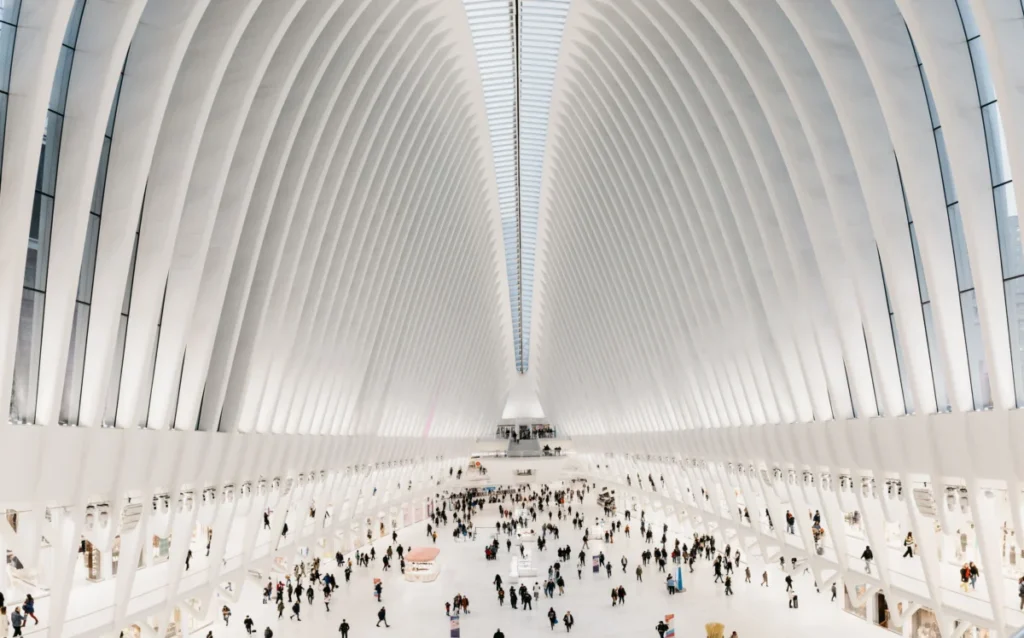

It should be harsh and cruel, as if made of bones, Antoni Gaudí wrote in his preliminary sketches for the Passion Façade, the west-facing entrance of his life’s work, the Sagrada Família. This directive served as the aesthetic foundation for one of the most polarizing and structurally complex architectural features in modern history. Unlike the Nativity Façade, which utilizes flowing, organic, and celebratory imagery to chronicle the birth of Christ, the Passion Façade stands as a skeletal landscape of suffering. Gaudí’s insistence on a bone-like geometry was not merely an aesthetic preference; it was a deliberate move toward a structural language that mirrored the human condition. By stripping away ornamental artifice, he forced the viewer to confront the stark, functional, and ultimately fragile framework that supports both the human body and the architectural edifice.
A Chronological Evolution of Skeletal Symbolism
The use of skeletal forms in the built environment predates modern architecture by millennia, serving as a bridge between the spiritual, the political, and the domestic. Historically, the incorporation of bones into architecture functioned as a profound expression of memento mori—a Latin phrase meaning "remember that you must die."

The earliest archaeological evidence of human skeletal integration dates back to the Pre-Pottery Neolithic period, approximately 7,200 BCE. In sites across the Levant, specifically in modern-day Jericho and Ain Ghazal, archaeologists have discovered human skulls that were plastered and painted to mimic living faces, then displayed within domestic settings. This practice suggests that early human societies viewed the skeleton not as a finality, but as a vessel for ancestral presence, integrating the deceased into the daily rhythms of the living.
By the time of the Aztec Empire (14th to 16th century), the function of skeletal display had shifted from ancestral reverence to political theater. The tzompantli, or skull racks, were monumental structures designed to display the skulls of sacrificial victims or defeated warriors. These displays served as potent symbols of state power, a grim public record of cosmic duty and terrestrial authority.
In Europe, the transition from the Middle Ages to the early modern period saw a rise in the aestheticization of death. As urban populations surged and cemeteries became overcrowded, the exhumation of remains became a logistical necessity. This led to the creation of ossuaries—structures designed specifically to house skeletal remains as a decorative, albeit somber, feature. The Capela dos Ossos in Évora, Portugal, constructed in the 16th century, and the Sedlec Ossuary in the Czech Republic, renovated in the 19th century, serve as definitive examples of this phenomenon. These spaces were not intended to be macabre, but rather to provide a meditative space for the faithful to contemplate the transience of life.

Gaudí and the Biomimetic Revolution
Antoni Gaudí stands at the intersection of this historical obsession with the skeleton and the emergence of structural engineering as an art form. His work in the late 19th and early 20th centuries marked a departure from the purely decorative use of bones to a functional application of biomimicry.
In his residential projects, such as Casa Batlló—often dubbed the "House of Bones"—Gaudí utilized load-bearing columns that mimic the appearance of skeletal joints and ribs. This was not a stylistic gimmick; Gaudí was a pioneer in the study of compressive forces. He understood that natural forms, evolved over millions of years to support weight, provided the most efficient models for construction. By examining the branching patterns of trees and the load-distribution capabilities of the human femur and rib cage, Gaudí developed a structural system that minimized the need for flying buttresses and internal steel reinforcement, allowing for a more fluid and "living" interior.
Casa Milà, another of his masterpieces, further explored this logic. The building’s facade is an undulating limestone cliff, but the internal structure relies on a complex network of iron beams and masonry arches that function similarly to a rib cage, distributing weight in a way that allows for an open-plan design—a concept that was decades ahead of its time.

Supporting Data: The Physics of Bone-Inspired Design
The adoption of skeletal anatomy in architecture is increasingly validated by modern engineering. Bone tissue is a "smart material" that adapts to stress, a quality known as Wolff’s Law. In architecture, this concept is replicated through parametric design and generative algorithms.
Recent studies in structural engineering show that "bone-inspired" load-bearing structures can reduce material usage by 20 to 30 percent while maintaining structural integrity. By utilizing computer-aided design to simulate the trabecular structure of bone—the spongy internal tissue that provides strength without bulk—architects are able to create buildings that are both lighter and stronger.
For instance, the use of hyperbolic paraboloids and catenary arches, staples of Gaudí’s work, are now being analyzed by software to optimize material efficiency. Data from the construction of the Sagrada Família indicates that the stone columns, which branch out like trees or skeletal limbs, are engineered to carry vertical loads directly to the ground, effectively turning the building’s "skeleton" into its primary support system.

Official Reactions and Contemporary Perspectives
The architectural community has long debated the ethical and aesthetic implications of skeletal forms. Critics in the early 20th century often dismissed Gaudí’s work as "barbaric" or "grotesque," fearing that the association with death would overwhelm the functionality of the buildings.
However, modern architects and art historians view these structures through the lens of structural honesty. Jordi Faulí i Oller, the current Chief Architect of the Sagrada Família, has noted in numerous reports that the project’s longevity is due precisely to Gaudí’s skeletal logic. By emulating the structural efficiency of nature, the building is capable of withstanding seismic activity and the weight of its own massive spires in ways that traditional, rigid masonry could not.
"The bones are the logic of the building," Faulí has stated in technical presentations regarding the ongoing construction. "When Gaudí said the building should be made of bones, he was not speaking of morbidity. He was speaking of the perfect alignment of force and form."

Broader Impact and Implications for Modern Architecture
The legacy of skeletal-inspired architecture continues to influence contemporary practice, moving beyond the religious and the residential into the realm of high-tech sustainability. Modern architects such as Zaha Hadid and Santiago Calatrava have pushed the boundaries of this aesthetic, utilizing digital modeling to create structures that evoke the fluidity of the human body.
The implications for this are significant in the context of climate change and material scarcity. As the construction industry seeks to reduce its carbon footprint, the move toward "lean" construction—building with less material by mimicking natural structures—is becoming a necessity rather than an aesthetic choice.
Furthermore, the integration of skeletal forms serves a psychological function in the urban environment. In a world of glass-and-steel skyscrapers that prioritize sterile, rectilinear efficiency, buildings that evoke the organic, the skeletal, and the ancestral provide a necessary connection to our biological origins. They remind the occupant that architecture is not merely an enclosure, but a living, breathing entity that supports human life, just as a skeleton supports the body.

Conclusion: The Enduring Muse
From the plastered skulls of the Neolithic Levant to the gravity-defying spires of the Sagrada Família, the human fascination with the skeleton remains a constant in the history of building. What began as a primitive attempt to honor the dead and manage the limitations of the body has evolved into a sophisticated engineering language.
Gaudí’s "harsh and cruel" vision for the Passion Façade was, in essence, a recognition of the fundamental truth of architecture: all buildings are temporary, all must bear weight, and all must eventually submit to the laws of nature. By embracing the aesthetics of the skeleton, architects have found a way to bridge the gap between the finite nature of human existence and the infinite aspirations of the built environment. As technology advances, the "bones" of our buildings will likely become even more efficient, more complex, and more deeply integrated into the fabric of our cities, ensuring that the dialogue between the living and the structural remains as vibrant as it was in the hands of the Catalan master.