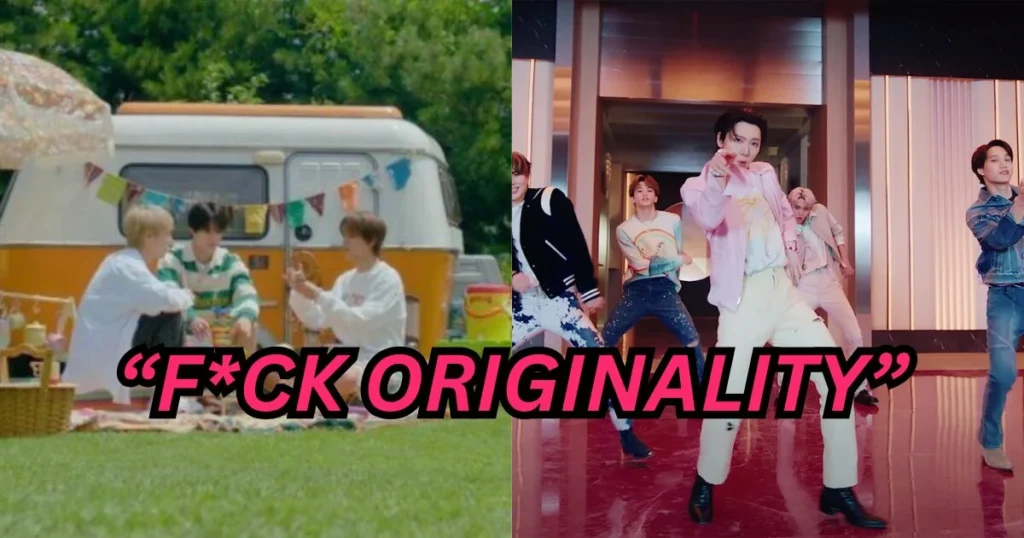

The South Korean entertainment landscape is currently navigating a period of heightened tension as SM Entertainment, one of the industry’s "Big Four" agencies, faces a wave of plagiarism accusations. The controversy, which primarily involves alleged similarities between SM’s recent releases and the work of BTS and other HYBE labels’ artists, has sparked a massive debate regarding creative integrity, industry trends, and the legal boundaries of intellectual property in the K-pop sphere. While fandom rivalries are common in the genre, the current discourse has moved beyond social media banter, drawing in professional directors and highlighting historical patterns of creative overlap that critics argue have become too frequent to be coincidental.
The Catalyst: NCT Wish and the Ode to Love Controversy
The most recent surge in allegations began on April 20, 2026, with the release of Ode to Love, the latest album from NCT Wish, a Japanese-centric sub-unit of the NCT brand. Almost immediately following the album’s debut, fans of the global boy group BTS—known as ARMY—identified what they described as "damning" similarities between the new release and BTS’s established discography. The initial complaints centered on song titles; two tracks on the Ode to Love album reportedly shared identical titles with high-profile BTS releases.
Beyond the nomenclature, the scrutiny quickly shifted to the lyrical content of the NCT Wish track "2.0." Social media users compiled side-by-side comparisons of the lyrics, suggesting that the phrasing and thematic structure closely mirrored BTS’s previous work. One widely circulated comparison pointed to a specific lyrical sentiment where NCT Wish’s phrasing appeared to be a slightly altered version of a BTS lyric, leading fans to characterize the songwriting as a "deliberate decision" rather than a coincidental use of common tropes. The backlash intensified as fans argued that the title "2.0" itself implied a "version two" of an existing concept, which they interpreted as a subtle admission of imitation.
A Pattern of Alleged Visual and Conceptual Imitation
As the NCT Wish controversy gained momentum, it acted as a catalyst for fans to revisit older grievances involving other SM Entertainment acts, specifically NCT Dream and SuperM. One of the most prominent cases brought back into the spotlight involves NCT Dream’s "Life Is Still Going On." Critics pointed out that the title is an echo of BTS’s 2020 hit "Life Goes On," which served as a cornerstone of the group’s BE album.
The accusations regarding "Life Is Still Going On" extend beyond the title to the visual storytelling and aesthetic direction of the music video and promotional materials. Fans argued that the color palettes, the use of domestic settings to convey a sense of intimacy, and the general "vibe" of the production were too similar to BTS’s original work to be dismissed as a mere reflection of current aesthetic trends.
Similarly, the 2021 release of "We Do" by SuperM—a supergroup often referred to as the "Avengers of K-pop"—was re-examined. At the time of its release, many listeners noted structural and stylistic similarities to BTS’s "Dynamite," the English-language single that propelled the group to unprecedented heights on the Billboard charts. The argument posed by critics is that SM Entertainment attempted to replicate the "Dynamite" formula—a bright, disco-pop sound paired with retro visuals—to capture a similar level of Western commercial success.
Direct Confrontation from Industry Professionals
Unlike many plagiarism controversies that remain confined to fan circles, the current situation involving SM Entertainment includes rare public commentary from industry professionals. Wonmo Seong, a director at the prominent creative studio Digipedi, who directed the music video for TXT’s (Tomorrow X Together) "Nap of a Star," recently spoke out on social media.
Seong’s comments were directed at the team behind NCT Wish’s "Find My Wish" music video. He accused the production of plagiarizing the entire visual concept of "Nap of a Star," a music video noted for its unique, storybook-like stop-motion aesthetic and whimsical imagery. Seong’s statement was blunt, suggesting that the "advertising industry is ruined" and that the "gaming industry is ruined," and now the same systems are "flocking here to ruin K-pop." His public stance lent a significant level of professional weight to the fan-led accusations, moving the conversation from subjective interpretation to professional critique.
Historical Precedents and Credit Adjustments
The current controversy is further complicated by SM Entertainment’s past handling of similar issues. In 2021, a dispute arose regarding the song "Countdown (3, 2, 1)" by NCT Dream. Music analysts and fans noted that the track utilized a beat that was nearly identical to work previously produced for TXT.
The resolution of that incident is often cited by critics as a "silent admission of guilt." Rather than entering a public legal battle or issuing a formal apology, SM Entertainment eventually added the original HYBE producers to the song’s official credits months after its release. Industry observers note that this "quiet settlement" is a common tactic used by large labels to avoid the legal repercussions of a plagiarism verdict while acknowledging the need to compensate the original creators. This history of retroactive credit adjustment has led some to believe that SM Entertainment operates on a "borrow first, settle later" philosophy.
Broadening the Scope: Allegations Beyond HYBE
While the focus has largely been on the overlap between SM Entertainment and HYBE artists, the allegations are not limited to these two entities. Evidence has surfaced suggesting similarities between NCT 127’s 2021 track "Lemonade" and P1Harmony’s 2020 release "Nemonade." While the titles are not identical, the conceptual similarity and the timing of the releases led fans of P1Harmony to question the originality of the SM release.
Furthermore, SM Entertainment has faced criticism regarding the use of lyrics from Black artists. In past instances, fans and lyricists have pointed out that certain songs under the SM umbrella appeared to "copy-paste" phrases and stylistic markers from Western R&B and Hip-Hop artists without proper attribution or cultural consideration. These recurring issues have painted a picture of a label that critics say prioritizes "guaranteed hits" over the risk-taking required for true originality.
Chronology of Key Events
The following timeline illustrates the frequency and nature of the accusations levied against SM Entertainment in recent years:
- October 2020: P1Harmony releases "Nemonade."
- November 2020: BTS releases "Life Goes On."
- May 2021: NCT Dream releases "Life Is Still Going On."
- September 2021: NCT 127 releases "Lemonade," sparking comparisons to P1Harmony.
- Late 2021: SM Entertainment quietly adds HYBE producers to the credits of NCT Dream’s "Countdown (3, 2, 1)" following plagiarism claims.
- March/April 2026: NCT Wish releases "Find My Wish," prompting Digipedi director Wonmo Seong to issue a public call-out for visual plagiarism.
- April 20, 2026: NCT Wish releases Ode to Love, triggering the current massive wave of plagiarism accusations regarding BTS’s titles and lyrics.
Official Responses and Industry Silence
As of the time of reporting, SM Entertainment has not issued a formal statement addressing the specific allegations surrounding NCT Wish or the comments made by Wonmo Seong. Historically, the agency has tended to remain silent on such matters, allowing the news cycle to move forward or resolving credit issues behind closed doors.
This lack of public response often fuels further frustration among fans and creators. Critics argue that the silence of major labels allows a culture of "creative poaching" to flourish, where smaller artists or even established competitors find their concepts being absorbed by larger entities with more significant marketing power.
Implications for the K-pop Industry
The mounting accusations against SM Entertainment raise critical questions about the future of creative direction in K-pop. As the industry becomes increasingly globalized, the pressure to produce consistent hits has led some to wonder if the "factory system" of K-pop is reaching a breaking point in terms of originality.
- The "Blueprint" Theory: Some analysts suggest that SM Entertainment may be using BTS’s successful career trajectory as a direct "blueprint." By mirroring the titles, themes, and visual styles that have already proven successful in the global market, a label can theoretically minimize risk. However, this strategy risks alienating a savvy global audience that values authenticity.
- Legal vs. Ethical Boundaries: In music, plagiarism is notoriously difficult to prove in court unless there is a direct melodic or lyrical theft. However, in the court of public opinion, "conceptual plagiarism"—the stealing of an aesthetic or a specific visual storytelling method—can be just as damaging to a brand’s reputation.
- Fandom Polarization: These controversies deepen the divide between fandoms. While ARMY and MOA (TXT’s fans) feel their artists’ hard work is being exploited, NCT fans (NCTzens) often find themselves in a position of defending their idols from criticisms that are directed at the label’s management and creative directors, not the performers themselves.
- Intellectual Property Protection: The public outcry from professionals like Wonmo Seong may signal a shift in how creative agencies protect their work. In the future, we may see more stringent contracts and a higher frequency of public "call-outs" to protect the visual and conceptual assets of K-pop productions.
As the situation continues to unfold, the industry remains watchful. Whether SM Entertainment will pivot its creative strategy or continue to weather the storm of accusations remains to be seen. However, the sheer volume of "eerily similar" instances has created a narrative that the label may find increasingly difficult to ignore in the eyes of the global music community.