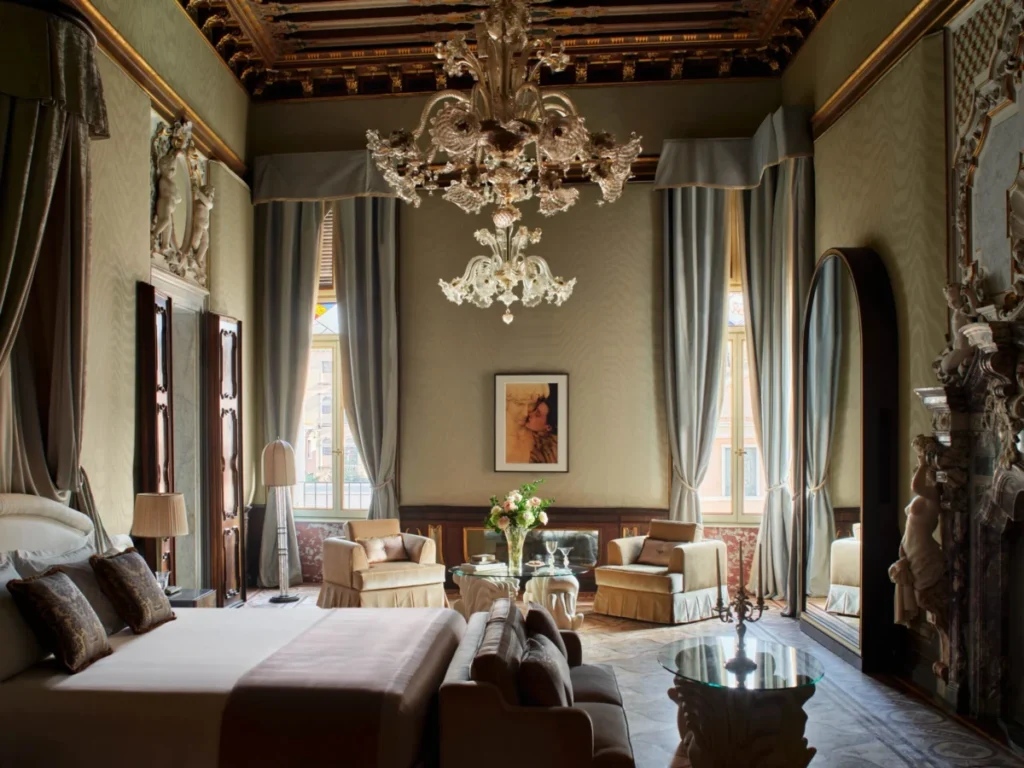

In the labyrinthine waterways of Venice, where the echoes of history resonate against the lap of the Adriatic, a landmark architectural transformation has reached its zenith. The Palazzo Donà Giovannelli, a structure that has stood as a silent witness to nearly six centuries of Venetian history, has been reimagined as the Orient Express Venezia. This project, led by the Lebanese architect and designer Aline Asmar d’Amman and her firm, Culture in Architecture, represents a significant milestone in the intersection of heritage preservation and ultra-luxury hospitality. By converting a 15th-century palatial residence into a modern sanctuary for global travelers, the project seeks to honor the city’s legacy as a crossroads of civilizations while introducing a new chapter for the legendary Orient Express brand.
Located at the intersection of two canals in the Cannaregio district, the palazzo serves as a physical manifestation of Venice’s "place of passage" identity. The neighborhood of Cannaregio, known for its authentic atmosphere and historical significance as the site of the world’s first Jewish Ghetto, provides a storied backdrop for a hotel that aims to be more than just a place of lodging. The transformation of Palazzo Donà Giovannelli is not merely a renovation but a curated dialogue between the eras of the Renaissance, the Neo-Gothic period, and the contemporary age of experiential travel.

A Chronological History of Palazzo Donà Giovannelli
The history of the edifice begins in 1432, a period when Venice was at the height of its maritime power. Originally constructed for the Donà family, the palazzo was designed to reflect the wealth and influence of one of the city’s most prominent patrician lineages. For centuries, the building served as a hub for political and social maneuvering, hosting some of the most significant figures in Italian history.
In 1548, the palazzo achieved a particular level of historical fame as the site of the wedding of Vittoria Farnese, the Duchess of Urbino. The celebration took place in what is now known as the Salone Vittoria, a room that retains its extravagant molding and architectural grandeur to this day. Throughout the 16th and 17th centuries, the building underwent various internal modifications to keep pace with changing artistic tastes, incorporating the Baroque and Rococo flourishes that defined the Venetian aesthetic of the time.
A pivotal shift occurred in the 19th century when the architect Giovanni Battista Meduna was commissioned to oversee a significant update of the property. Meduna, a towering figure in Venetian architecture known for his restoration of the Ca’ d’Oro and the Teatro La Fenice, introduced a Neo-Gothic sensibility to the palazzo. His most dramatic contribution was the installation of an octagonal staircase, a structural marvel that remains one of the building’s most defining features. Meduna’s work ensured that the palazzo remained a relevant architectural landmark during the transition into the modern era.

In the 21st century, the building sat as a dormant treasure until the Orient Express brand, under the stewardship of the Accor Group, identified it as the ideal location for its foray into the Italian luxury hotel market. The current transformation, completed in the mid-2020s, marks the most comprehensive restoration of the property in over 150 years.
Architectural Vision and Design Philosophy
Aline Asmar d’Amman’s approach to the Orient Express Venezia was rooted in a philosophy of "rediscovery" rather than "imposition." Having previously worked on high-profile projects such as the Hôtel de Crillon and the Le Jules Verne restaurant in Paris, d’Amman brought a specialized expertise in balancing historical integrity with modern luxury.
The design process began with an intensive period of observation. D’Amman studied the building at various hours of the day to understand how the unique Venetian light interacted with the internal spaces. This led to a commitment to preserve the "imperfections" caused by the passage of time—a design choice that prioritizes the patina of age over the sterile perfection often found in new luxury developments.

The restoration involved the meticulous cleaning and repair of original frescoes and flooring. The palazzo features a variety of floor types, including traditional Venetian terrazzo and intricate mosaics, each requiring specialized artisanal knowledge to restore. Wood paneling and gilding were revived using traditional techniques, ensuring that the materials aged naturally alongside the building’s stone bones.
The interior palette was carefully selected to evoke the "Golden Age of Rail Travel," a direct nod to the Orient Express’s heritage. Richly figured marbles, plush velvets, and bright silks are used throughout the 47 guest rooms, six suites, and two apartment-style units. These materials are complemented by burnished brass and Murano glass, the latter of which was sourced from local master glassblowers to maintain a connection to the Venetian craft tradition.
Supporting Data and Project Specifications
The Orient Express Venezia is positioned as a boutique ultra-luxury offering, a sector of the hospitality market that has seen significant growth in Italy over the last decade. According to industry reports from 2023 and 2024, the demand for "heritage hospitality"—hotels located within protected historical monuments—has increased by 15% in the Mediterranean region.

Key specifications of the project include:
- Total Accommodations: 47 guest rooms, 6 suites, and 2 exclusive apartments.
- Historical Square Footage: Over 4,500 square meters of restored historical space.
- Key Public Spaces: The Hall of Culture (featuring lapis lazuli accents), the Salone Vittoria (the historic ballroom), and La Corte del Conte (the grand lobby).
- Arrival Experience: A private water gate allows guests to arrive via the canal, entering through a 15th-century Gothic arch.
The economic impact of the project extends beyond the walls of the palazzo. The restoration employed over 100 local artisans, restorers, and specialists in Venetian crafts, providing a boost to the local preservation economy. Furthermore, the hotel’s location in Cannaregio is expected to encourage a more distributed flow of high-spending tourists, potentially easing the congestion in the San Marco district while supporting local businesses in the northern part of the city.
Official Positioning and Cultural Impact
The Orient Express brand has characterized this opening as part of a broader strategy to redefine luxury travel as a "multi-sensory journey." By linking the physical hotel experience with the upcoming "La Dolce Vita" train service, the brand is attempting to create a seamless luxury ecosystem across Italy.

Aline Asmar d’Amman has articulated the project’s goal as a form of storytelling. "I wanted the palazzo to speak, for guests to hear its stories and become part of them," she stated during the project’s unveiling. She described the hotel as a "place of transition," where the act of travel is viewed as an internal journey as much as a physical one. This sentiment aligns with the broader trend in the luxury market toward "transformative travel," where guests seek experiences that offer intellectual and emotional depth rather than just comfort.
Cultural historians have noted that the restoration of Palazzo Donà Giovannelli is a positive example of how private investment can serve the public interest of heritage conservation. In a city like Venice, which faces significant environmental and demographic pressures, the repurposing of underutilized historical buildings into high-value assets is seen by many as a viable path toward sustainable urban management.
Broader Implications for Venice and Global Luxury
The debut of the Orient Express Venezia comes at a time when Venice is navigating a complex relationship with tourism. The introduction of the Venice Access Fee and regulations on large cruise ships reflect a city trying to find a balance between its economic dependence on visitors and the preservation of its fragile ecosystem.

The Orient Express model—low volume, high value—is often cited by urban planners as the ideal form of tourism for historic cities. By focusing on a small number of guests who are willing to pay a premium for a deep connection to the city’s history, the hotel minimizes the physical footprint on the city’s infrastructure while maximizing the economic return.
Furthermore, the project reinforces Venice’s status as a global center for design and art. The successful integration of Aline Asmar d’Amman’s contemporary vision with Meduna’s 19th-century additions and the original 15th-century structure proves that Venice is not a "museum city" frozen in time, but a living laboratory for architectural evolution.
As the Orient Express Venezia begins its operations, it stands as a testament to the enduring power of the Venetian palazzo. It remains a place where water, light, and memory converge, offering a modern address for a dream that began in 1432. The project serves as a blueprint for future heritage restorations, demonstrating that with enough care, the "passage of time" can be a building’s greatest asset rather than its enemy. In the heart of Cannaregio, the Palazzo Donà Giovannelli has once again become a crossroads, inviting a new generation of travelers to enter with one story and leave with another.