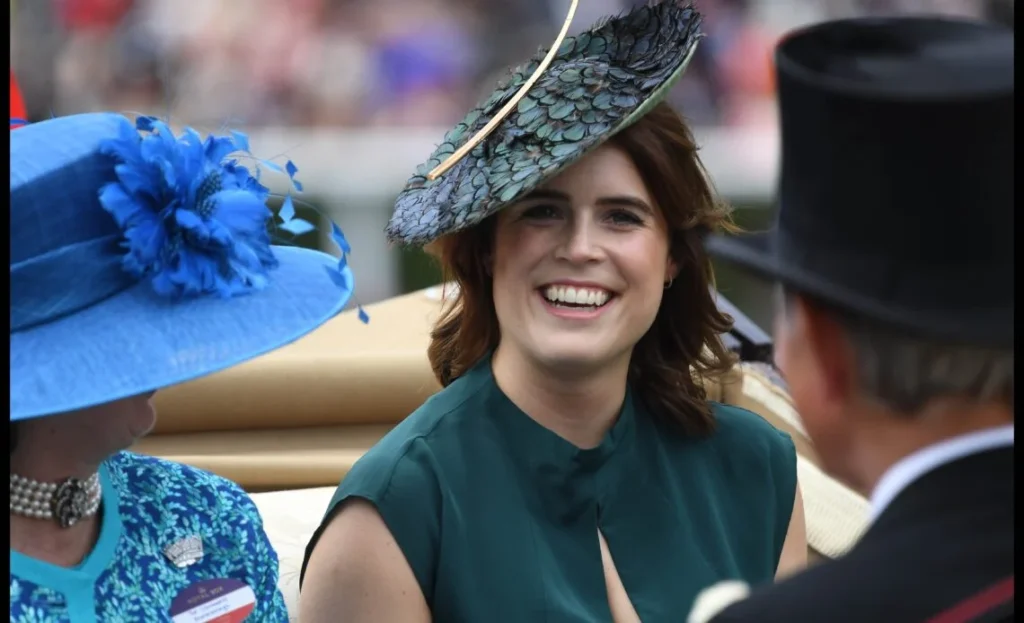

Buckingham Palace has officially announced that Her Royal Highness Princess Eugenie is expecting her third child, a development that has sparked considerable interest within and beyond the Royal Family. While the news itself is a cause for celebration, the carefully worded statement issued by the Palace carries a subtler, yet highly significant, implication regarding the enduring royal status of Princess Eugenie and her sister, Princess Beatrice. This announcement serves as a clear affirmation that their positions within the monarchy remain steadfast, particularly in the wake of the considerable speculation and public discussion that has surrounded their family in recent years.
The Royal Family shared the joyful news through official social media channels and a formal press release, confirming that the Princess and her husband, Jack Brooksbank, are eagerly anticipating the arrival of a new family member this summer. However, it is the precise language employed in the announcement that has drawn particular attention, offering a definitive signal of continuity for the York sisters.
The statement commenced with the formal designation, "Her Royal Highness Princess Eugenie," a deliberate choice that carries substantial weight. This formal address is a direct response to ongoing discussions and conjecture concerning the royal titles and standing of both Princess Eugenie and her elder sister, Princess Beatrice. These conversations gained momentum following the stripping of royal titles from their father, Prince Andrew, Duke of York, in October 2025. The subsequent debate questioned whether his daughters would retain their own royal appellations and their associated standing within the monarchy. The current statement from Buckingham Palace unequivocally indicates that there is no intention to diminish or revoke the royal styles of either Princess Eugenie or Princess Beatrice.
Historical Context of Royal Titles
The entitlement to the styles of "Her Royal Highness" (HRH) and "Princess" for both Beatrice and Eugenie stems from Letters Patent issued by King George V in 1917. These Letters Patent stipulated that all grandchildren of a monarch, when born in the male line (i.e., children of a monarch’s sons), are entitled to the style of HRH and the title of Prince or Princess. Both daughters of Prince Andrew and his former wife, Sarah Ferguson, have held these titles since their birth.
The recent actions taken by King Charles III have, however, placed the princesses’ royal status under a magnifying glass. The King’s decision to remove the HRH title from his brother, Prince Andrew, by issuing fresh Letters Patent, and to divest him of his other royal dignities by requesting their removal from the Roll of Peerage, inevitably drew attention to Prince Andrew’s immediate family.
Navigating a Period of Scrutiny
Both Princess Beatrice and Princess Eugenie have maintained a deliberately low public profile since their father’s titles were revoked. This period of reduced visibility has coincided with Prince Andrew relinquishing the lease on Royal Lodge, the significant thirty-room mansion on the Windsor estate where he resided until early in the current year.
The debate surrounding their royal titles intensified further following revelations within the Epstein files. These documents included confirmations that both Princesses had travelled with their mother, Sarah Ferguson, during their adulthood to stay with Jeffrey Epstein, even after his release from prison following his conviction for sex offenses. This association, however indirect, brought further scrutiny to the York sisters.
Neither Princess Beatrice nor Princess Eugenie attended the traditional royal Christmas celebrations at Sandringham last year. Their public appearances have been notably infrequent since their father’s arrest in February of the same year on suspicion of misconduct in public office. While Prince Andrew was released without charge, he remained under investigation at the time.
Subtle but Significant Affirmation
Princess Eugenie was recently photographed in London, leaving a restaurant with her husband, where a visible baby bump was apparent beneath her attire, confirming the news that has now been officially announced by Buckingham Palace.
Beyond the immediate joy of a new royal baby, the subtext of the Palace statement is particularly noteworthy. The very fact that Buckingham Palace chose to issue an official statement at all is significant. In an era where King Charles III is actively pursuing a strategy to "slim down" the Royal Family, personal announcements, such as the impending arrival of a child, might typically be expected to be shared more informally, without a formal official pronouncement.
The deliberate choice of wording in this instance is therefore particularly resonant. By commencing the announcement with Princess Eugenie’s full royal title, the Palace is reinforcing her continued adherence to that status. This signals not only her intention to retain her royal title but also her enduring position within the monarchy, explicitly with the full endorsement of the King.
The King’s Direct Endorsement
The statement concludes with the affirmation, "His Majesty The King has been informed and is delighted with the news." This phrase transcends a simple expression of familial goodwill. It represents a direct endorsement from the reigning monarch, indicating his support for his niece and, by extension, her established royal standing. It signifies not merely the congratulations of a happy uncle but the explicit backing of the Sovereign for the royal status of his nieces.
Implications for the Royal Family
This official confirmation of Princess Eugenie’s third pregnancy and the emphatic affirmation of her royal title carry several broader implications for the future of the British monarchy.
Firstly, it provides a degree of stability and continuity for the younger generation of royals. As the Royal Family navigates a period of transition and adaptation under King Charles’s reign, the clear demarcation of roles and statuses for individuals like Princess Eugenie and Beatrice offers a sense of order. It suggests a structured approach to the evolving composition of the working monarchy, even as the overall size is being managed.
Secondly, the affirmation of their titles may suggest a strategic decision to maintain a broader base of royal connection with the public. While the focus is often on senior working royals, the continued recognition of titles for Prince Andrew’s daughters ensures that they remain part of the wider royal narrative. This can be seen as a method of retaining public engagement with a larger segment of the extended royal family.
Thirdly, it addresses the historical precedent set by the 1917 Letters Patent. By upholding the entitlement of Princess Eugenie and Princess Beatrice, the Palace is adhering to established hereditary principles that have long underpinned the British monarchy. While the King has the power to alter these, the decision to maintain the status quo in this instance suggests a respect for tradition.
A Growing Family
Princess Eugenie’s new baby is expected to arrive in the summer of the current year. This new arrival will be the fifteenth in line to the British throne, a position that reflects the established order of succession. Princess Eugenie and Jack Brooksbank are already parents to two sons: August, who is five years old, and Ernest, who is two years old. The arrival of a third child will further expand their family and add another young cousin for the growing number of royal children.
The announcement marks a moment of personal joy for the Princess and her family, while simultaneously offering a definitive statement on their enduring place within the fabric of the British monarchy, a position clearly sanctioned and supported by His Majesty The King. The carefully crafted wording of the Buckingham Palace announcement serves as a clear signal that, despite past controversies and ongoing discussions, Princess Eugenie and Princess Beatrice remain integral figures within the broader royal landscape.