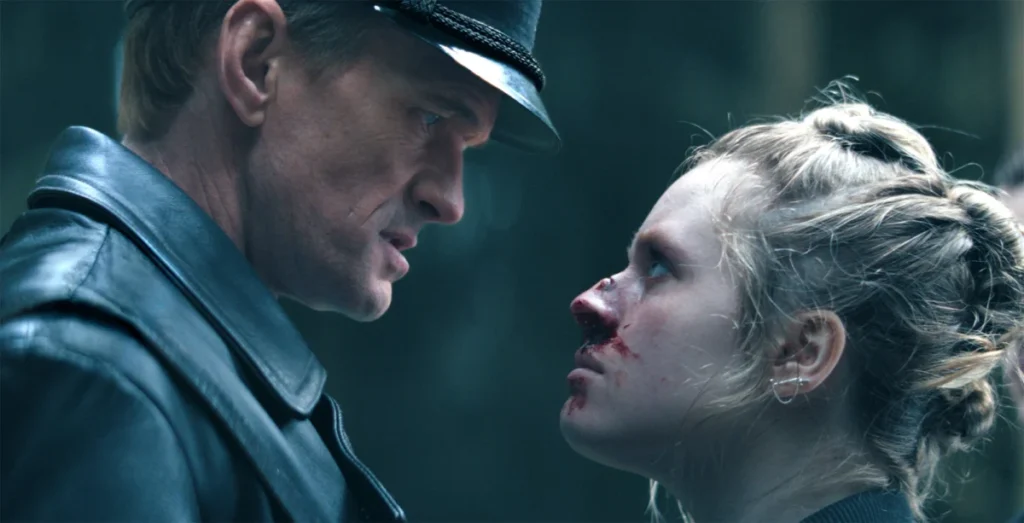

Quiver Distribution has officially released the first promotional teasers for The Last Temptation of Becky, marking the explosive third installment in the popular action-horror franchise. Scheduled to hit domestic theaters on November 4, 2026, the film continues the bloody, vengeance-driven journey of its titular protagonist, Becky. Following the unexpected success of the 2020 original film and its 2023 sequel, The Wrath of Becky, the latest chapter shifts the narrative scope from domestic bloodshed to international espionage, pitting a now-grown Becky against a clandestine neo-Nazi movement rooted deep within European history.
Lulu Wilson reprises her iconic role as Becky, transitioning from an abused teenager defending her cabin into a hardened, highly trained Central Intelligence Agency field agent. The newly unveiled footage, first showcased at the Fantasia Film Festival earlier this year, establishes a darker, more geopolitical tone for the franchise while retaining the high-octane violence and dark comedic edge that defined its predecessors. Directed by genre filmmaker Jenn Wexler, the film is poised to test whether a cult action-horror series can successfully evolve into a grand-scale geopolitical thriller.
Evolution of a Franchise: From Cabin Intruder to Government Operative
To understand the trajectory of The Last Temptation of Becky, it is necessary to examine the origins of the franchise. Released in 2020 and directed by Jonathan Milott and Cary Murnion, the original Becky surprised audiences with its unyielding brutality and Wilson’s chillingly calm performance as a troubled teen who turns the tables on a group of neo-Nazi escapees led by Kevin James. The film relied on isolated, claustrophobic tension, utilizing a scenic cabin retreat as the playground for visceral, home-invasion-style warfare.
The 2023 sequel, The Wrath of Becky, directed by Matt Angel and Suzanne Coote, elevated the stakes by expanding the cinematic universe. In that installment, Becky took her vengeance on a white supremacist paramilitary group known as the "Noble Men," cementing her status as an implacable force of nature capable of tracking down organized hate groups. The film earned praise for its comic-book pacing, vivid neon aesthetics, and Wilson’s magnetic screen presence as a young woman refusing to be victimized by extremist ideologies.
Now, in the upcoming 2026 trilogy conclusion, the narrative timeline advances significantly. Becky is no longer merely reacting to localized threats; she is an active operative of the United States intelligence apparatus. This structural shift transforms the franchise from a survival thriller into a globe-trotting espionage narrative, demonstrating how the character has grown and how the filmmakers have intentionally scaled up the production values, settings, and ideological stakes for the finale.

Plot Overview and Historical Context
The narrative of The Last Temptation of Becky thrusts its protagonist into the heart of Europe under the guise of deep-cover espionage. Assigned to a CIA operation in Poland, Becky infiltrates a family-run tourist business operating out of an infamous historical site: The Wolf’s Lair (Wolfsschanze), Adolf Hitler’s secret World War II military headquarters located in the Masurian forests.
The historical weight of the setting serves as more than just a grim backdrop; it directly mirrors the ideological malignancy of the antagonists. Operating the inn is Wilhelm Reuss, portrayed by Neil Patrick Harris. Beneath the veneer of a mundane hospitality business, Reuss is orchestrating a sinister conspiracy with the ultimate objective of sparking the Fourth Reich. When Becky uncovers the depth and imminence of this extremist plot, standard protocol is discarded. Recognizing that institutional channels may be too slow or compromised to stop the resurgence of fascism, she resolves to dismantle the operation through her own lethal brand of intervention.
The integration of real-world historical atrocities with heightened genre fiction represents a bold thematic choice for the creative team. By anchoring the villain’s motives to the literal ruins of the Third Reich, the film creates a direct symbolic continuity between Becky’s historic cinematic enemies—white supremacists and neo-Nazis—and a grander, more coordinated global threat.
Cast and Creative Lineup
The Last Temptation of Becky boasts a robust ensemble cast that blends returning talent with high-profile franchise newcomers. Lulu Wilson anchors the production once again, her maturation as an actress mirroring Becky’s evolution into a seasoned operative.
Joining the call sheet is acclaimed actress Kate Siegel, known for her frequent collaborations in the horror genre, alongside Brandon Flynn, Catherine Walker, and James Urbaniak. However, the most notable casting addition is Neil Patrick Harris as the primary antagonist, Wilhelm Reuss. Harris, traditionally celebrated for comedic and dramatic roles, steps firmly into the realm of prestige villainy, providing a sophisticated, chilling counterweight to Wilson’s kinetic intensity.

Behind the camera, the directorial reins have been handed to Jenn Wexler. A respected figure in independent genre filmmaking, Wexler previously directed The Ranger (2018) and The Sacrifice Game (2023). Her experience in atmospheric, tension-driven storytelling makes her a natural fit for expanding the visual and psychological horizons of the Becky universe.
The screenplay was penned by Jenn Wexler and Matt Angel, working from an original story crafted by Matt Angel and Suzanne Coote. The production features a collaborative team of producers, including Chadd Harbold, Russ Posternak, Jordan Beckerman, Larry Greenberg, Aideen Hand, Paul Kennedy, Jordan Yale Levine, and Bannor Michael MacGregor, ensuring a polished aesthetic that bridges the gap between independent horror sensibilities and studio-level action choreography.
Festival Circuit Reception and Release Strategy
The film’s promotional rollout began earlier this year with high-profile festival screenings that generated early critical discussion. The Last Temptation of Becky celebrated its world premiere at the 2026 Fantasia Film Festival in Montreal, a premier destination for boundary-pushing international genre cinema. Following its Canadian debut, the film traveled across the Atlantic for a coveted screening slot at FrightFest London, Europe’s leading horror fantasy film festival.
Early responses from festival attendees have highlighted the film’s successful transition from regional slasher-thriller to expansive international action piece. Critics have particularly noted the dynamic between Wilson and Harris, praising the ideological clash between the veteran operative and the aristocratic neo-Nazi mastermind.
Quiver Distribution, which has shepherded the franchise’s distribution strategy, has slated the film for a theatrical rollout in the United States starting November 4, 2026. Following its exclusive run on the big screen, the film will transition to digital and home entertainment platforms, matching the distribution models of its predecessors that successfully cultivated a passionate, dedicated streaming fanbase.
Industry Implications and Cultural Resonance

The arrival of a complete trilogy centered around a young, female-led action anti-hero highlights shifting paradigms within contemporary genre filmmaking. Over the past decade, audiences have increasingly embraced hyper-violent, stylized revengers’ tales—a lineage that includes franchises like John Wick, The Equalizer, and Nobody. However, the Becky series carves out a distinct niche by marrying the exploitation-thriller tropes of the 1970s and 1980s with modern, serialized storytelling.
Industry analysts have frequently questioned the sustainability of niche cult franchises, particularly those originating outside major studio systems. Yet, the persistent demand for the Becky films demonstrates the viability of mid-budget, high-concept action cinema that relies on strong brand identity and loyal audiences rather than massive intellectual property pre-sales. By continuously pivoting the narrative framework—from home invasion to paramilitary revenge, and finally to international espionage—the creative team has avoided creative stagnation.
Furthermore, the overt political and historical antagonists of the series—unapologetic neo-Nazis and extremist ideologues—provide a clear moral compass for the narrative violence. While Becky’s methods are undeniably lethal and extralegal, the targets of her wrath ensure that audience sympathy remains unequivocally on her side, transforming cathartic cinematic violence into a stylized rejection of hate groups.
Looking Ahead to November 2026
As the release date approaches, anticipation continues to build among horror enthusiasts, action aficionados, and fans of Lulu Wilson’s career. The release of the dual teaser trailers has provided a clear look at the elevated production values, confirming that the trilogy conclusion will spare no expense in delivering high-stakes set pieces, intricate choreography, and uncompromising tonal attitude.
Whether The Last Temptation of Becky will definitively close the book on the character’s cinematic journey or leave the door open for future expansions remains to be seen. For now, audiences are preparing to witness the ultimate evolution of a cinematic icon as she takes the fight against fascism to the historic ruins of Europe. Quiver Distribution will release The Last Temptation of Becky in US theaters on November 4, 2026.