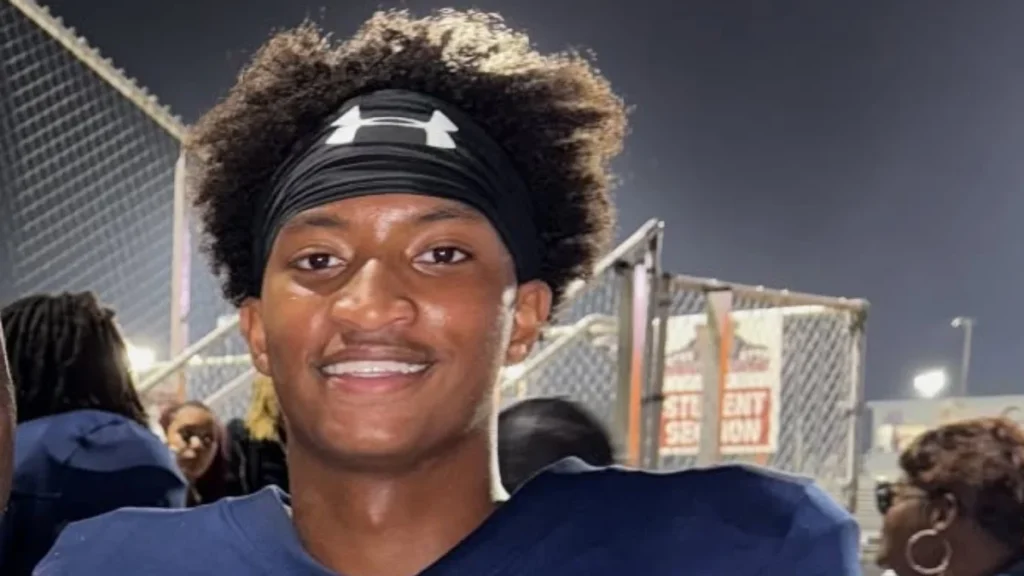

The coastal community of Ocean Springs, Mississippi, became the epicenter of a national conversation regarding justice, safety, and transparency on Monday as family, friends, and prominent civil rights advocates gathered to celebrate the life of 18-year-old Nolan Wells. The funeral service, held at Center Pointe Church, served not only as a final farewell to a young man described by loved ones as vibrant and full of potential but also as a powerful call for accountability regarding the mysterious circumstances surrounding his death. Wells, whose body was discovered on Horn Island following a Fourth of July excursion, has become the focal point of an investigation that has drawn the attention of the nation’s most prominent legal and civil rights figures.
The atmosphere inside the sanctuary was one of profound grief tempered by a collective demand for answers. As the service was streamed live to thousands of viewers across the country, the presence of Reverend Al Sharpton, who officiated the ceremony, and renowned civil rights attorney Ben Crump, who delivered a stirring call for justice, underscored the gravity of the case. The death of Nolan Wells, initially framed by some as a tragic accident, is now being scrutinized through the lens of an independent investigation funded by high-profile philanthropists and supported by a community that refuses to let the case go cold.
A Chronology of the Horn Island Incident
The events leading to the death of Nolan Wells began on July 4, 2026, a day typically marked by celebration and communal gatherings on the Mississippi Gulf Coast. Wells joined a group of friends for a boat trip to Horn Island, a popular destination within the Gulf Islands National Seashore known for its pristine beaches and secluded environment. Horn Island, located several miles offshore from Ocean Springs and Gautier, is accessible only by private vessel and is managed by the National Park Service.
According to preliminary accounts provided by those on the boat, the group spent the day on the island participating in holiday festivities. However, the narrative becomes fragmented in the late afternoon and evening hours. When the boat returned to the mainland that evening, Nolan Wells was not on board. His friends reportedly informed investigators and family members that Wells had chosen to remain on the island voluntarily, under the impression that he could secure a ride back with another group of boaters.
The timeline of the search operation began shortly after his absence was noted. Local authorities, including the Jackson County Sheriff’s Department and the U.S. Coast Guard, were alerted. A search and rescue mission was launched, involving aerial surveillance and water patrols. The search concluded with the grim discovery of Wells’ body on the island. The immediate aftermath of the discovery left the Wells family in a state of shock, as the explanation provided by the friends—that an 18-year-old would choose to be left alone on a remote island without a confirmed means of transport—struck many as inconsistent with Nolan’s character and common safety practices.
Independent Investigation and National Support
As the official investigation by local and federal authorities progressed, the Wells family expressed growing concerns regarding the transparency of the process and the thoroughness of the initial inquiries. These concerns resonated with national figures who have frequently stepped in to support families navigating the complexities of the legal system in high-profile death cases.
Ben Crump, who has represented the families of Trayvon Martin, George Floyd, and Breonna Taylor, was retained by the Wells family to conduct an independent investigation. Crump has been vocal in his assertion that the "theory of accidental drowning" or "voluntary abandonment" must be backed by rigorous forensic evidence. To facilitate this, former NFL quarterback and activist Colin Kaepernick stepped forward to cover the costs of an independent autopsy and comprehensive toxicology report. This move ensures that the family has a secondary, unbiased medical opinion to compare against the findings of the state’s medical examiner.
Furthermore, the financial burden of the funeral services was eased by filmmaker and philanthropist Tyler Perry, who has a history of supporting families in similar straits. The involvement of Perry and Kaepernick has elevated the case from a local tragedy to a national civil rights matter, highlighting the disparities often found in how different communities experience the justice system.
Forensic Procedures and the Grand Jury Process
The official investigation into Nolan Wells’ death is currently in a critical phase. Toxicology and autopsy results are pending, which will provide essential data regarding the cause and manner of death. In Mississippi, the "manner of death" is typically classified into five categories: natural, accident, suicide, homicide, or undetermined. The family’s legal team is particularly focused on whether there were any signs of trauma or the presence of substances that could indicate foul play or negligence.
Authorities have indicated that once the comprehensive investigative report is finalized, the findings will be presented to a grand jury. A grand jury’s role is to determine whether there is sufficient evidence to bring criminal charges against any individuals involved. This process is conducted in secret, but it represents a significant step in the legal pursuit of "truth and transparency," a phrase frequently used by Crump during Monday’s service.
The legal complexity of the case is compounded by the jurisdictional overlap. Because Horn Island is part of the Gulf Islands National Seashore, federal authorities, including the National Park Service and the Department of the Interior, may have a role alongside the Jackson County Sheriff’s Office and the District Attorney’s office. This multi-agency involvement ensures a broader scope of resources but can also lead to delays in the dissemination of information to the family.
Statements from the Service and Community Reaction
During the funeral, Reverend Al Sharpton delivered a eulogy that connected Nolan’s life to the broader struggle for dignity and respect for young Black men in the American South. "We are not here just to mourn; we are here to demand that a life taken too soon be accounted for," Sharpton told the congregation. He emphasized that the "staying behind" narrative requires a level of scrutiny that matches the tragedy of the loss.
Ben Crump’s remarks focused on the legal rights of the family and the necessity of a "full and fair" investigation. He called upon the friends who were with Nolan on the boat to provide more detailed accounts and urged any witnesses who were on Horn Island that day to come forward with photos, videos, or statements. The use of social media and digital evidence has become a cornerstone of modern investigations, and Crump’s team is actively seeking digital footprints that could reconstruct the final hours of Wells’ life.
The Ocean Springs community has shown a mixture of mourning and activism. Local vigils have been held, and "Justice for Nolan" has become a rallying cry on social media platforms. Supporters argue that the case highlights the need for better safety protocols for boaters and more rigorous monitoring of the barrier islands during high-traffic holidays.
Broader Implications and Statistical Context
The death of Nolan Wells brings to light several systemic issues. First is the statistical reality of boating and water-related accidents. According to the U.S. Coast Guard’s 2024 Recreational Boating Statistics, drowning remains the leading cause of death in boating accidents, accounting for approximately 75% of fatalities. However, the circumstances of being left on an island by a group of peers add a layer of social and legal complexity that moves beyond standard accidental drowning statistics.
Secondly, the case underscores the role of "civil rights infrastructure"—the network of lawyers, activists, and donors—that now mobilizes when a death occurs under suspicious circumstances in marginalized communities. The speed with which Crump and Sharpton became involved reflects a shift in how families respond to perceived inadequacies in local law enforcement.
Finally, the case serves as a somber reminder of the vulnerabilities faced by young people in recreational settings. The legal concept of "duty of care" is being discussed by legal analysts in relation to the friends who were on the boat. While Mississippi law regarding the abandonment of an adult in a non-emergency situation is nuanced, the ethical and moral questions raised by the incident have sparked a national debate on peer responsibility.
Conclusion and Future Outlook
As the service at Center Pointe Church concluded, the casket of Nolan Wells was escorted from the sanctuary, followed by a grieving family that remains steadfast in their pursuit of the truth. The coming weeks will be pivotal as the independent autopsy results are released and the grand jury convenes.
The investigation into the death of Nolan Wells is no longer just a local inquiry; it is a test of the legal system’s ability to provide clarity to a family in the midst of an unthinkable tragedy. Whether the findings point to a series of unfortunate events or something more litigious, the legacy of Nolan Wells is now inextricably linked to a movement for transparency and the protection of youth. For the Wells family, the funeral was a day of remembrance, but the days ahead will be defined by the search for the answers that were missing on the shores of Horn Island.