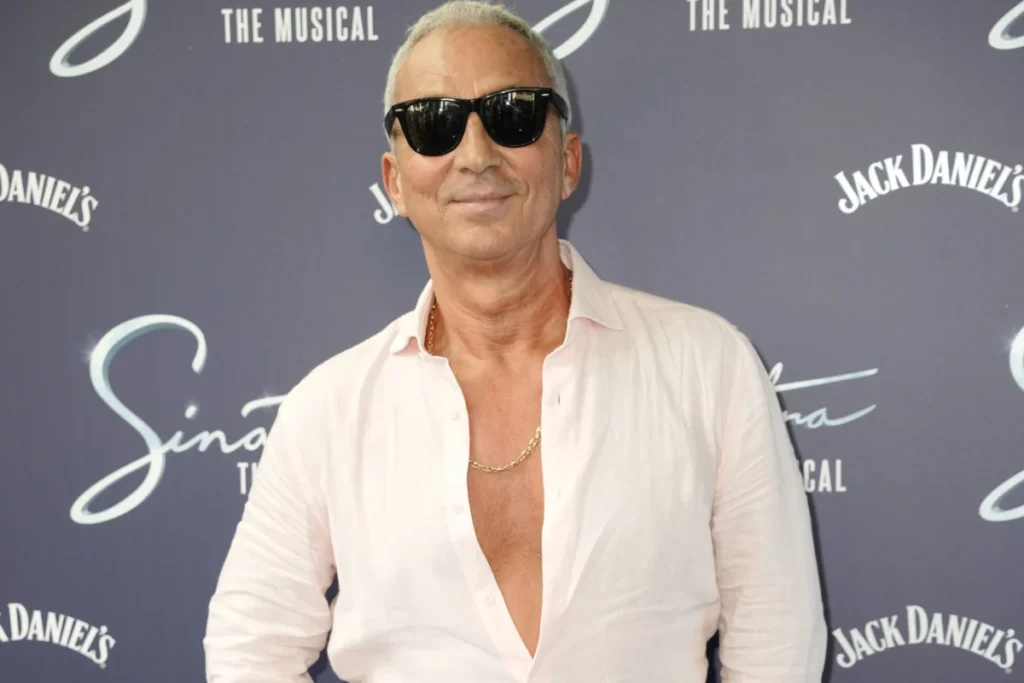

London’s vibrant West End was abuzz with anticipation and glamour as "Sinatra: The Musical" officially premiered at the Aldwych Theatre, drawing a host of celebrities and theatre aficionados. Among the distinguished guests celebrating the life and legacy of one of the 20th century’s most influential entertainers was celebrated Italian choreographer and television personality, Bruno Tonioli. The 70-year-old former Strictly Come Dancing and current Britain’s Got Talent judge lauded the biographical production, expressing his profound admiration for Frank Sinatra and underscoring the vital importance of London’s theatrical heartland in inspiring future generations of performers.
The new musical endeavors to chronicle the meteoric rise, tumultuous challenges, and eventual triumphant comeback of Frank Sinatra, whose indelible mark on music, film, and popular culture remains unparalleled. Sinatra, who passed away in 1998 at the age of 82, carved out a decades-long career defined by an extraordinary vocal talent and a captivating stage presence. His repertoire includes timeless classics such as "My Way," "New York, New York," and "Strangers In The Night." Beyond his musical prowess, Sinatra also garnered critical acclaim in cinema, earning two Academy Awards for his acting roles. The musical aims to encapsulate the essence of this complex figure, bringing his iconic story to a new audience on one of the world’s most prestigious stages.
A Deep Dive into Sinatra’s Enduring Appeal
At the glittering premiere, Bruno Tonioli articulated his lifelong reverence for the legendary "Ol’ Blue Eyes." Speaking to the Press Association, Tonioli remarked, "I’ve always been a great admirer. I read everything, I have his records." His appreciation extends beyond mere fandom, delving into the technical brilliance that defined Sinatra’s artistry. "He has the best phrasing, the delivery of the song, playing with the rhythms – it’s unique. There has never been anyone like him." This sentiment echoes the consensus among music critics and historians who frequently cite Sinatra’s unparalleled ability to interpret a lyric, infusing each word with emotion and nuance, making every performance a masterclass in storytelling. His command over timing, dynamics, and the subtle interplay between voice and orchestra set a benchmark that few have ever reached.
Frank Sinatra’s journey from a working-class background in Hoboken, New Jersey, to global superstardom is a testament to his talent and resilience. Born in 1915, he began his career during the Big Band era, first with Harry James and then with Tommy Dorsey, before launching a highly successful solo career in the 1940s. His initial wave of success saw him become a teen idol, dubbed "The Voice," captivating audiences with his smooth baritone and charismatic appeal. However, the late 1940s and early 1950s brought a period of professional decline and personal struggles. His voice suffered, his record sales plummeted, and his film career waned.

His remarkable comeback began in the mid-1950s with a renewed focus on acting, notably his Oscar-winning role in "From Here to Eternity" (1953), which revitalized his career. He then signed with Capitol Records, entering what many consider his artistic peak, producing a series of critically acclaimed concept albums with arrangers like Nelson Riddle, Billy May, and Gordon Jenkins. These albums, including "In the Wee Small Hours," "Songs for Swingin’ Lovers!", and "Come Fly with Me," showcased his versatility and cemented his status as a vocal titan. The 1960s saw him form Reprise Records, become a founding member of the legendary Rat Pack, and continue to dominate both the music charts and the Las Vegas stage. His impact extended beyond entertainment; Sinatra was also a vocal advocate for civil rights and supported various charitable causes throughout his life, further solidifying his place as a cultural icon whose influence transcends generations.
The Enduring Power of Musical Theatre
Beyond his personal connection to Sinatra, Tonioli also passionately articulated his admiration for musical theatre as an art form. The star, renowned for his flamboyant personality and sharp critical eye on television talent shows, described musical theatre as "amazing." He elaborated on the immense challenges faced by its practitioners: "It’s the hardest form for a performer. You have to be able to do everything right, and it’s incredibly hard work." This statement highlights the unique demands of musical theatre, where performers must master singing, dancing, and acting simultaneously, often across multiple shows a week, requiring immense discipline, stamina, and artistic versatility.
Tonioli continued, expressing profound respect for the dedication evident on stage: "The passion and the talent I’ve seen is outstanding. These people love what they do and they’re excellent at it, and it inspires new generations of kids that one day will be on the West End stage, so I love it." His words underscore the cyclical nature of inspiration within the performing arts. Live theatre, particularly the spectacle of a West End production, serves as a powerful catalyst for aspiring artists, providing tangible examples of excellence and achievable dreams. This nurturing environment is crucial for the continuous regeneration of talent, ensuring the future vibrancy of the industry.
Dame Arlene Phillips on the Life-Affirming Art of Dance
Adding to the chorus of praise for the performing arts was Dame Arlene Phillips, another iconic figure in British dance and television, who graced the premiere alongside Tonioli. As an original judge on Strictly Come Dancing with Tonioli, her presence underscored the shared passion for movement and expression that defined their careers. Dame Arlene, celebrated for her groundbreaking work with the 1970s dance troupe Hot Gossip and her extensive choreography credits for stage and screen, shared Tonioli’s enthusiasm for musical theatre.

For Dame Arlene, the art of dance is fundamentally "life affirming." She articulated a democratic view of dance, stating, "The art of dance is the art of walking, you can make it look like dance. It’s not possible that you can’t dance because you can’t dance, because it’s walking to music – and that’s my passion, and helping, teaching." This perspective demystifies dance, making it accessible and intrinsic to human movement, rather than an exclusive domain for trained professionals. Her career has been dedicated to this philosophy, whether choreographing for major West End productions like Starlight Express and We Will Rock You, or nurturing talent on television. Her belief that dance is inherent in everyday movement resonates deeply with the spirit of musical theatre, where movement is an integral part of storytelling. Dame Arlene, who attended the event in a stylish patterned black blouse and plain black trousers, also confessed to being a "massive fan" of Sinatra, connecting her personal appreciation to the evening’s tribute.
The West End: A Global Beacon of Theatrical Excellence
London’s West End is not merely a collection of theatres; it is a cultural institution and a significant economic engine. Annually, it attracts millions of visitors from across the globe, contributing billions of pounds to the UK economy. In 2023, West End theatre attendance saw a robust recovery post-pandemic, with figures approaching pre-2020 levels, demonstrating its enduring appeal and resilience. The district supports tens of thousands of jobs, from performers and stagehands to marketing teams and front-of-house staff. Its historical significance dates back centuries, with many of its iconic venues having hosted countless world premieres and legendary performances.
The presence of "Sinatra: The Musical" within this ecosystem is particularly noteworthy. Biographical musicals, or "jukebox musicals" featuring the music of a specific artist, have become a popular and often successful genre on the West End, appealing to a broad demographic, including established fans and new audiences curious about a legend’s life. Productions like "Tina: The Tina Turner Musical," "Motown: The Musical," and "MJ The Musical" (on Broadway) have proven the commercial viability and critical potential of this format. By bringing Sinatra’s story to the stage, producers aim to not only entertain but also to preserve and reinterpret his legacy for contemporary audiences, ensuring his music and life narrative continue to resonate.
A Star-Studded Premiere and Broader Implications
The premiere of "Sinatra: The Musical" unfolded amidst a London heatwave, yet the high temperatures did little to deter a constellation of stars from gracing the Aldwych Theatre. The guest list underscored the broad appeal of Frank Sinatra and the gravitational pull of a major West End opening. Pop sensation Sinitta, singer-songwriter Matt Goss, and music mogul Simon Cowell were among the notable attendees from the entertainment world. Their presence highlighted the continued reverence for Sinatra’s influence across different genres and eras of popular music.

Adding a touch of Hollywood glamour was Spider-Man star Marisa Tomei, whose attendance further emphasized the crossover appeal of the event, given Sinatra’s significant film career. Perhaps the most poignant presence was that of Tina Sinatra, the daughter of the legendary performer, whose involvement often signals the estate’s endorsement and commitment to preserving her father’s artistic integrity. Her attendance at the premiere lends an air of authenticity and personal connection to the production, suggesting it faithfully represents her father’s complex narrative. Model and actress Ellie Goldstein and TV personality Charlene Douglas also joined the distinguished gathering, contributing to the evening’s festive atmosphere.
The successful staging of "Sinatra: The Musical" in the West End carries several broader implications. Firstly, it reaffirms the enduring power of classic artists to attract and captivate audiences in live theatrical settings. In an increasingly digital world, the visceral experience of a live musical offers a unique connection to cultural history. Secondly, it contributes to the economic and cultural vitality of London, strengthening its position as a global leader in theatre and tourism. Each new major production creates jobs, stimulates local businesses, and enriches the city’s cultural tapestry. Finally, as Bruno Tonioli so eloquently stated, such productions serve as a crucial source of inspiration. By showcasing the extraordinary lives and talents of figures like Frank Sinatra, and the immense skill of the performers bringing their stories to life, these musicals ignite the imaginations of young people, encouraging them to pursue their own artistic passions and potentially become the next generation of West End stars.
The musical’s narrative of Sinatra’s "explosive rise and fall, and subsequent comeback" is particularly resonant in contemporary times, offering a story of resilience, reinvention, and the human spirit’s capacity for redemption. It’s a universal theme that transcends the specifics of Sinatra’s life, making his story not just a historical account but a timeless narrative about perseverance against adversity. As the curtain rises on "Sinatra: The Musical," it promises to be more than just a show; it is a celebration of a legend, a testament to the power of musical theatre, and a beacon of inspiration for the future of the performing arts.