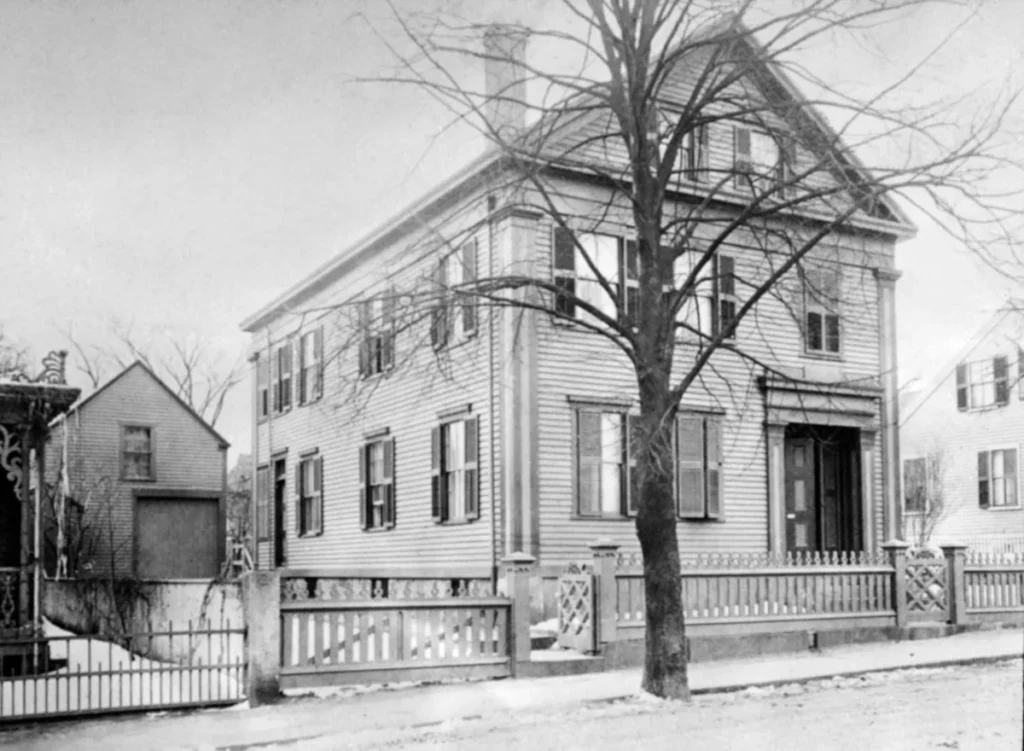

The Lizzie Borden House, located at 230 Second Street in Fall River, Massachusetts, serves as a dual monument to American architectural history and one of the most persistent enigmas in the annals of criminal justice. Built in 1845, the Greek Revival-style residence has evolved from a private family home into a high-profile museum and bed-and-breakfast that capitalizes on the 1892 double homicide of Andrew and Abby Borden. As the latest dramatization, Netflix’s Monster: The Lizzie Borden Story, brings the case back into the cultural zeitgeist, the property remains a focal point for those seeking to confront the grim reality of a case that has remained legally unsolved for over 130 years.

A Chronology of the 1892 Tragedy
The events that transformed the Borden household into a permanent fixture of American folklore occurred on the morning of August 4, 1892. At approximately 9:00 a.m., Abby Borden was discovered in the guest room on the second floor, having sustained multiple blows to the head from a sharp, heavy instrument. Less than two hours later, at roughly 11:00 a.m., Andrew Borden was found dead in the downstairs sitting room, his face severely disfigured by similar blunt-force trauma.
Following the discovery, the investigation centered on the primary inhabitants of the house: Andrew, his wife Abby, his daughter Lizzie, and the family maid, Bridget Sullivan. Lizzie Borden, then 32, was the primary suspect. Despite a sensationalized trial in 1893, a jury of twelve men acquitted her of the murders, citing a lack of physical evidence linking her directly to the weapon or the crime scene. The legal acquittal, however, did little to dampen public suspicion, which has been fueled by a nursery rhyme and decades of pop-cultural retellings, including operas, ballets, and television anthologies.

The Evolution of a Crime Scene into a Commercial Enterprise
The transition of the property from a site of mourning to a site of tourism began in earnest in 1996, when it opened as a house museum. In 2021, the property was acquired by US Ghost Adventures for approximately $1.9 million. The ownership group, led by founder Lance Zaal, manages the house as part of a portfolio of haunted properties across the United States.
The management of the residence represents a significant challenge in the field of public history: balancing the preservation of an authentic historical artifact with the commercial demands of "dark tourism." To that end, the property has undergone rigorous restoration efforts. These include forensic paint analysis to return the exterior to its original 19th-century muted army green and the restoration of the perimeter fence, which had been modified over the decades.
.jpg)
Forensic and Historical Context
The Borden home serves as a primary text for historians analyzing 19th-century domestic life and class stratification in New England. Andrew Borden was a prominent businessman whose wealth was significant, yet his household was characterized by a profound sense of frugality. Historical records indicate that the home lacked indoor plumbing despite the technology being available and affordable for a man of Andrew’s stature at the time.
This tension between wealth and austerity was a recurring point of friction within the family. Scholars have often pointed to these domestic disputes as a potential motive for the crimes. The inheritance dynamic—wherein the death of both Andrew and Abby would leave their substantial estate to the daughters—formed the bedrock of the prosecution’s case during the 1893 trial. However, the absence of a "smoking gun" weapon and the societal bias of the era, which struggled to envision a woman of Lizzie’s social standing as capable of such violence, contributed to the acquittal.

The Mechanics of Modern Dark Tourism
The operational model of the Lizzie Borden House has faced scrutiny regarding the ethics of commodifying a violent crime. The current management offers various levels of engagement, ranging from educational tours focused on the Victorian-era household to "ghost hunts" that utilize dousing rods and spirit boxes.
Critics and historians often debate the appropriateness of such displays. US Ghost Adventures maintains that their approach is rooted in educational outreach. According to Lance Zaal, the goal is to provide a "balanced" experience that serves both the "history lover" and the "thrill-seeker." By maintaining the structural integrity of the home—including the narrow staircases and the original floor plan—the curators allow visitors to visualize the spatial constraints that defined the morning of the murders.

However, the presence of staged mannequins, "ax-on-pillow" service add-ons, and gift shop merchandise featuring catchphrases like "I survived" reflects the commercial reality of the business. These elements are designed to satisfy the expectations of modern consumers, who are accustomed to interactive, immersive, and often gamified historical experiences.
The Broader Impact: Why the Case Persists
The longevity of the Lizzie Borden story in the public consciousness can be attributed to the "unsolved" status of the case. In legal terms, the murders are cold, and without the discovery of new forensic evidence, the identity of the killer remains a matter of conjecture. This ambiguity has allowed the narrative to be reinterpreted through various cultural lenses.

The recent Monster series is merely the latest in a long line of adaptations. Each iteration tends to project contemporary anxieties onto the Victorian source material. For example, some modern adaptations explore the possibility of a relationship between Lizzie and the maid, Bridget Sullivan—a theory that lacks historical evidence but speaks to contemporary interest in historical queer narratives.
Ethical Implications and Future Preservation
The preservation of the Lizzie Borden House raises broader questions about how society treats the sites of "difficult heritage." While the home is a piece of local history in Fall River, it is also the scene of a brutal act of violence. The current staff notes that they often act as a buffer between the historical reality and the sensationalism sought by some visitors. For instance, the use of Ouija boards was banned following incidents of theft and vandalism, a policy shift that reflects the tension between maintaining a respectful atmosphere and catering to the "supernatural" expectations of the public.

Furthermore, the physical evidence remains a haunting reminder of the event. The stains on the basement ceiling—alleged to be blood from the scene above—continue to attract intense scrutiny from those who view the house as a liminal space between the past and the present. Whether or not the supernatural activity is accepted as fact, the house functions as a powerful physical manifestation of a trauma that has refused to fade over the last century.
As the property continues to operate, the focus remains on the duality of its existence: it is a time capsule of 1892, complete with the era’s social pressures and domestic constraints, and it is a modern business venture operating in the competitive landscape of the true-crime industry. The success of the house as an attraction confirms that as long as the question "Did she do it?" remains unanswered, the public will continue to flock to 230 Second Street to look for the truth behind the closed doors of the Borden home.