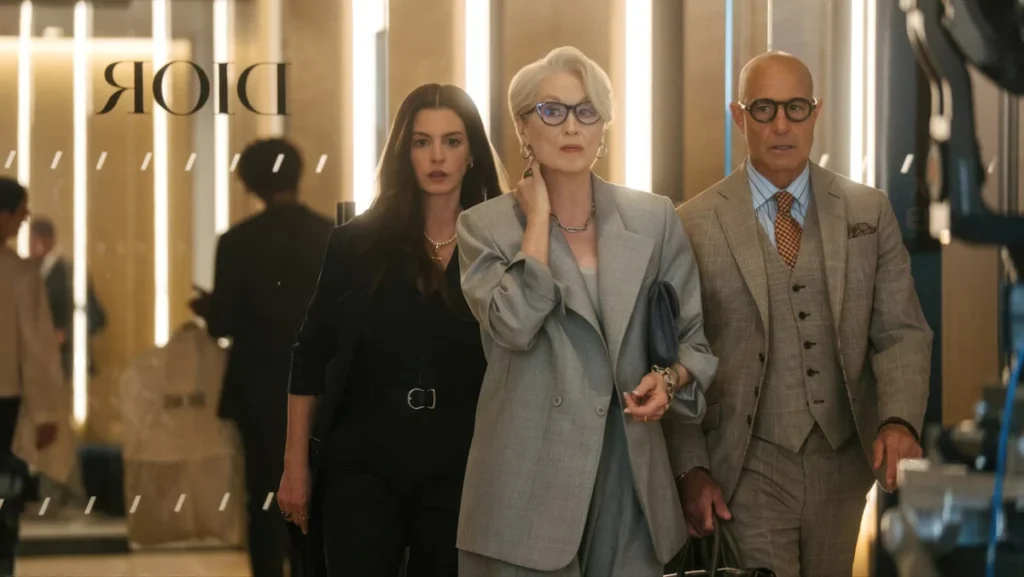

In a dazzling display of cinematic prowess and enduring cultural resonance, The Devil Wears Prada 2 has made an unequivocally fashionable entrance, shattering box office expectations and signaling a significant shift in the traditional summer movie season paradigm. The highly anticipated sequel, a joint venture from 20th Century and Disney, roared to an impressive $32.5 million on its opening Friday at the North American box office, firmly positioning itself for an estimated $75 million to $80 million debut weekend. This monumental achievement arrives nearly two decades after its predecessor, The Devil Wears Prada, quietly emerged as a sleeper hit, ultimately grossing $326.5 million globally and cementing its status as an indelible cultural touchstone.
The sequel’s early performance underscores a powerful and often underestimated force in the entertainment industry: the formidable buying power of women and teenage girls. Friday’s robust haul included a remarkable $10 million from Thursday previews alone, a figure that ranks among the best showings ever for a female-fueled picture. This impressive preview performance places The Devil Wears Prada 2 in an elite category, not far behind recent box office giants like the Michael Jackson biopic Michael and the sci-fi epic Project Hail Mary, demonstrating the immense anticipation and immediate engagement from its target demographic.
A Groundbreaking Summer Opener
Historically, the coveted position of kicking off the summer box office has almost exclusively been reserved for male-dominated franchises, typically dominated by Marvel superhero spectacles or high-octane Fast & Furious installments. The Devil Wears Prada 2 has dramatically rewritten this narrative, becoming the first female-driven film in modern history to claim this prestigious slot. Its success is not merely a testament to its predecessor’s legacy but is amplified by glowing reviews from critics and overwhelmingly positive audience exit polls, evidenced by a coveted A- CinemaScore. This critical and popular acclaim suggests a film that not only satisfies long-held fan expectations but also resonates deeply with contemporary audiences, offering a blend of nostalgia and fresh storytelling.
The film’s magnetic appeal extends across all age groups, drawing a diverse audience eager to witness the reunion of its beloved original cast members. Meryl Streep reprises her iconic role as the legendary, searing fashion magazine editor, Miranda Priestly, whose performance in the original film garnered an Academy Award nomination and became synonymous with the character. She is joined by Anne Hathaway, returning as the once-naïve Andrea Sachs; Stanley Tucci, whose portrayal of Nigel Kipling provided much-needed wit and heart; and Emily Blunt, whose caustic yet endearing Emily Charlton became a breakout character. The continuity behind the camera has also been a significant boon, with David Frankel returning to direct and Aline Brosh McKenna once again crafting the screenplay, ensuring the sequel maintains the sharp wit and distinctive voice that defined the original.
A Legacy of Influence and Enduring Appeal
To fully appreciate the magnitude of The Devil Wears Prada 2‘s opening, it is crucial to contextualize it against the backdrop of its precursor. The original The Devil Wears Prada, released in June 2006, opened to a respectable but not spectacular $27.5 million over its entire opening weekend. In a striking comparison, the sequel’s opening day alone has surpassed that figure, even without adjusting for nearly two decades of inflation. When accounting for inflation, the 2006 opening weekend figure would translate to approximately $40 million in 2024 dollars, making Prada 2‘s single-day performance even more impressive and indicative of a significantly larger immediate draw.
The journey of the first film from a critical darling to a global phenomenon and cultural touchstone is a fascinating timeline of growing influence. Based on Lauren Weisberger’s 2003 novel, which itself was inspired by Weisberger’s experiences as an assistant to Vogue editor-in-chief Anna Wintour, the film resonated with audiences far beyond the fashion industry. Its themes of ambition, mentorship, workplace politics, and the compromises inherent in professional success struck a chord. Miranda Priestly became a quintessential cinematic villain, revered and feared, while Andrea Sachs’s transformation became an aspirational journey for many. The film’s meticulously curated fashion, sharp dialogue, and unforgettable performances ensured its longevity, leading to countless re-watches, quotable lines, and a perpetual presence in pop culture discussions, especially on social media platforms. The enduring demand for a sequel, despite the significant time gap, is a testament to this deep-seated affection and the original film’s sustained relevance.
International Triumph and Global Resonance
The success of The Devil Wears Prada 2 is not confined to North American shores. The film is proving to be an even bigger sensation overseas, where its total through Friday reached an astounding $82.1 million, pushing its early global cumulative gross north of $114 million. This international performance includes securing the top opening day of any film this year in key markets such as Brazil and Italy, highlighting the universal appeal of its narrative and characters. The global recognition of the Prada brand, synonymous with luxury fashion, likely contributes to its broad international draw, but the core story of ambition and style transcends geographical boundaries.
The decision to greenlight a sequel nearly two decades later speaks volumes about Hollywood’s evolving understanding of audience demand and the value of intellectual property that possesses genuine cultural weight. For years, rumors of a sequel circulated, often fueled by the cast’s public statements about their willingness to return. The timing of Prada 2‘s release capitalizes on a growing trend of "legacy sequels" – films that revisit beloved stories and characters years later, often bringing back original cast members to appeal to both nostalgic fans and new generations. This strategy, when executed with care and respect for the source material, as appears to be the case with Prada 2, can yield exceptional results.
Implications for the Industry and Future Trends
The groundbreaking performance of The Devil Wears Prada 2 carries significant implications for the entertainment industry. Its success directly challenges the long-held notion that only male-centric action films or superhero sagas can anchor the highly lucrative summer box office season. This film demonstrates that character-driven narratives, particularly those with strong female leads and universal themes, possess immense commercial viability and can attract broad audiences when given prominent release slots and marketing support.
Box office analysts are likely to interpret this outcome as a clear signal for studios to diversify their summer slates. For too long, the industry has relied on a predictable formula, potentially overlooking the diverse tastes of a significant portion of the movie-going public. Prada 2‘s triumph validates investing in stories that cater to female audiences, proving that such films are not niche but mainstream blockbusters in their own right. This could lead to a broader range of genres and narratives being considered for prime theatrical windows, fostering a more inclusive and representative cinematic landscape. Furthermore, it reinforces the power of established IP that has cultivated a passionate fanbase over time, even if it doesn’t involve capes or car chases.
From a production standpoint, the seamless return of director David Frankel and writer Aline Brosh McKenna underscores the value of creative continuity. Their ability to recapture the original film’s essence while evolving the characters and story for a contemporary context is undoubtedly a key factor in the sequel’s success. This approach minimizes the risk often associated with belated sequels, ensuring that the new installment feels authentic and connected to its predecessor.
The Enduring Power of Miranda Priestly and Beyond
The cultural impact of The Devil Wears Prada has been profound, influencing perceptions of the fashion industry, workplace dynamics, and the pursuit of professional excellence. Miranda Priestly, in particular, transcended the screen to become an archetype of the demanding, brilliant, and often terrifying boss. Her return, alongside the continued journeys of Andrea and Emily, offers audiences a chance to reflect on how these characters have evolved in a world that has significantly changed over two decades. The sequel’s success suggests a hunger for sophisticated storytelling that explores these complex themes through the lens of well-loved characters.
In parallel news from the box office, Lionsgate’s Michael, the highly anticipated biopic chronicling the life of Michael Jackson, continues its impressive run, having crossed the $300 million mark globally. This achievement solidifies its position as the top-grossing music biopic of all time, surpassing previous records held by critically acclaimed films such as Walk the Line and Elvis. This concurrent success further illustrates the diverse array of films currently captivating audiences, from high-fashion dramas to musical legends.
As The Devil Wears Prada 2 continues its theatrical run, its opening weekend performance stands as a powerful testament to the film’s intrinsic quality, its enduring cultural legacy, and the undeniable commercial might of a broad, enthusiastic audience. This fashionable return to the big screen is not just a box office victory; it’s a statement, signaling a more diverse and dynamic future for the summer blockbuster season and cementing its place as a pivotal moment in contemporary cinema. The industry will undoubtedly be watching closely to see how this trend-setting success will influence future greenlighting decisions and redefine what it means to be a summer movie sensation.