
The creative partnership between acclaimed filmmaker Luca Guadagnino and architect Stefano Baisi has reached a new commercial milestone with the launch of an expansive, multi-disciplinary collection for Zara Home. Spanning over 200 unique pieces of furniture, decor, and ready-to-wear apparel, the collaboration represents a culmination of nearly a decade of shared aesthetic research. This project, which integrates elements of French Art Deco, Brazilian modernism, and the structural precision of the Vienna Secession, marks a significant intersection between high-concept interior design and global retail accessibility.
A Chronology of Creative Collaboration
The professional synergy between Guadagnino and Baisi began in earnest in 2017, when the filmmaker tapped the architect to lead his interior design practice, Studio Luca Guadagnino. Over the subsequent years, the duo established a distinctive visual language characterized by architectural rigor and narrative depth.
Their collaborative timeline includes several high-profile projects that underscored their ability to blend historical reverence with contemporary sensibility:

- 2017–2018: The formalization of Studio Luca Guadagnino, focusing on bespoke interior architecture that reflects the director’s cinematic eye.
- 2023: The transformation of a 16th-century school building into a luxury boutique hotel, showcasing their capacity for adaptive reuse and historical preservation.
- 2024: The production design for Guadagnino’s film Queer, which utilized a surrealist, mid-century Mexico City aesthetic to influence the mood of the narrative.
- Late 2024: The development and launch of the Zara Home collection, which serves as the most accessible iteration of their design philosophy to date.
This trajectory reflects a shift from exclusive, commission-based architecture to a democratization of design. By partnering with Zara Home—a division of the Inditex group—the pair has moved their "stylistic code" from the realm of private estates and film sets into the public sphere, making their curated vision available to a mass-market audience.
Design Philosophy and Research-Driven Curation
The development of this collection was rooted in a meticulous, research-heavy process. Guadagnino describes the genesis of the project as an exhaustive review of visual culture, involving the cataloging of digital archives, fine art references, and historical intellectual works.
The primary aesthetic anchor for this collection is the Vienna Secession movement—a radical group of artists and designers who broke away from the traditionalist Academy of Fine Arts in late 19th-century Vienna. The influence of figures such as Koloman Moser is palpable in the collection’s geometry. For instance, a small, intricate silver and coral box designed by Moser provided the foundational inspiration for the collection’s approach to ornamentation and material contrast.
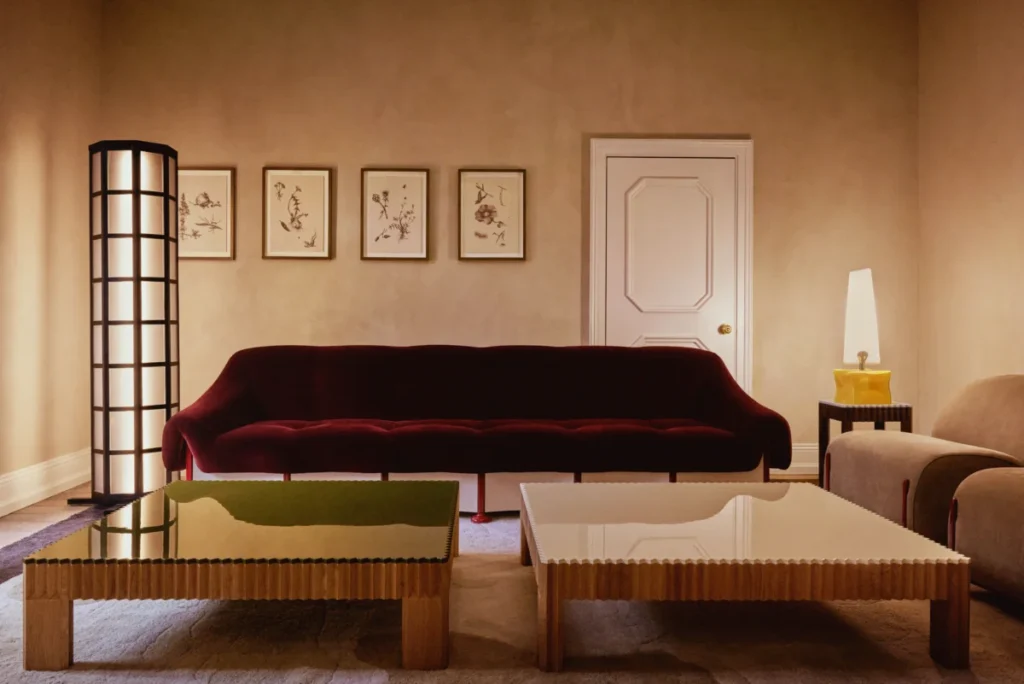
This historical grounding is balanced by a modern, "tailored" sensibility. The furniture is marked by sharp, angular lines and high-gloss finishes, echoing the precision of bespoke suiting. Key items, such as the Elsewhere table lamp, utilize thin, arching steel necks and triangular shades to achieve a space-age silhouette, while the Bretonita sofa employs hunter-green flannel and burgundy piping to convey a sense of structural integrity and poise.

Data and Market Scope
The collaboration is categorized as an "expansive" offering, featuring a breadth of products rarely seen in designer-retailer partnerships. The collection encompasses:
- Scale: Over 200 individual SKUs, covering living room furniture, dining sets, lighting, and a capsule clothing line.
- Pricing Strategy: The collection occupies a wide market spectrum, with items ranging from $16.90 for smaller decor objects to $18,400 for high-end furniture pieces.
- Materials: A deliberate focus on tactile, premium materials, including stainless steel, lacquered oak, sycamore wood, and high-quality velvet and flannel upholstery.
This tiered pricing structure is a strategic move, allowing the brand to capture both the aspirational consumer looking for a small piece of the Guadagnino-Baisi aesthetic and the serious collector interested in the larger, more substantial furniture units.
Official Responses and Public Engagement
To mark the launch, the duo orchestrated a high-production campaign that bridges the gap between their film and design work. Guadagnino directed a short film—penned by screenwriter Scott Z. Burns—starring notable actors including Jamie Bell, Chase Sui Wonders, Michael Stuhlbarg, and Patricia Arquette. The film, set within a space designed by Baisi, serves as a narrative framing device for the furniture, positioning the objects not merely as household items, but as props in a cinematic life.
"Through working together, we found a shared stylistic code that is rooted in tradition while trying to find its own identity," Stefano Baisi noted during the lead-up to the launch. He emphasized the flexibility of the collection, stating, "What is exciting about this project is that the same object can now enter very different homes and become part of completely different lives. In a way, the collection can exist across many parallel worlds at the same time."

The public launch is supported by an immersive, two-day pop-up event at La Pelota in Milan, strategically timed to coincide with Milan Fashion Week in late September. This choice of venue is significant, as La Pelota is a renowned space for high-fashion installations, signaling that the collection is intended to be viewed through the lens of fashion and art, rather than traditional retail.
Broader Implications for the Interior Design Industry
The Guadagnino-Baisi x Zara Home collaboration signals a growing trend in the luxury sector: the "auteur" designer. In an era where brand identity is increasingly tied to the personal brand of the creative director, retailers are seeking to align themselves with visionaries who can offer a cohesive, intellectualized narrative.
This partnership highlights three major implications for the industry:
- The Blurring of High and Low Design: By utilizing the same rigorous, research-based methodology used in film production and luxury architecture for a mass-market retail collection, the pair is challenging the traditional boundaries of luxury furniture.
- The Rise of "Cinematic Interiors": There is a growing consumer appetite for "world-building" in residential spaces. Consumers are increasingly interested in purchasing furniture that feels as if it belongs to a specific, curated narrative, rather than generic, trend-based decor.
- Institutionalized Collaboration: The success of this collection may encourage further institutional partnerships between major fashion retailers and independent architecture firms. Such collaborations offer retailers the opportunity to diversify their offerings while providing designers with a massive distribution platform.
The collection serves as a testament to the belief that rigorous, intellectually driven design can—and perhaps should—be accessible. By synthesizing the architectural history of the Vienna Secession with the slick, futuristic minimalism of the 21st century, Guadagnino and Baisi have created a collection that functions as a microcosm of their wider artistic output. Whether through the stark, angular lines of their stainless steel chairs or the historical nod of their octagonal dinnerware, the collection invites consumers to inhabit the parallel worlds that have defined the pair’s decade-long partnership.

As the pieces hit the global market, the true impact will be measured by their adaptability. If the duo’s vision holds, these 200+ objects will serve as the architecture for a diverse array of domestic lives, proving that even mass-produced goods can carry the weight and intention of a master-crafted film set. The collection is available for purchase as of late September 2024 through the official Zara Home website and select global flagships.