
Production Context and the Vision of Wim Wenders
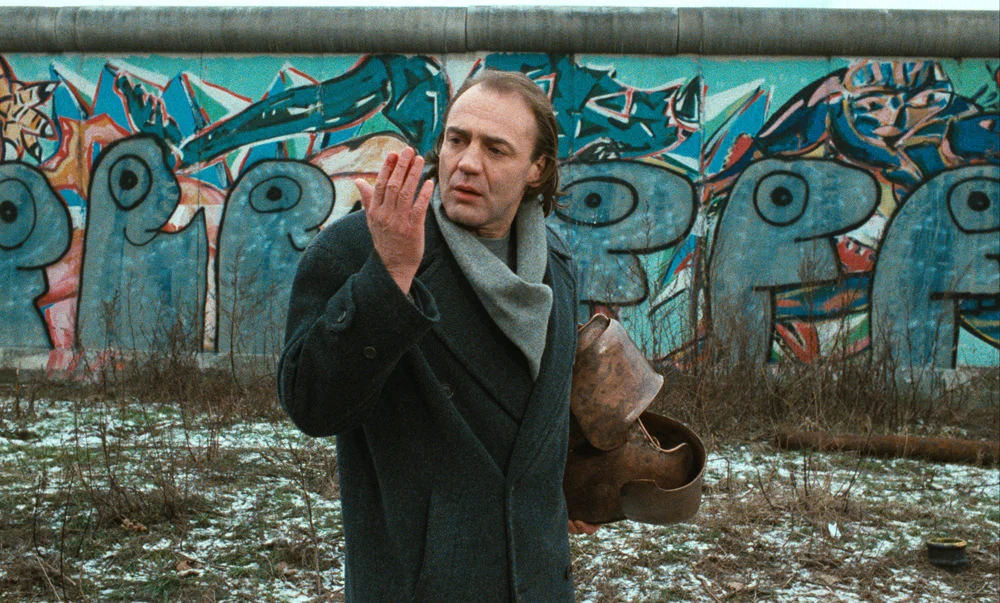
The genesis of the film occurred after Wim Wenders returned to West Germany following an eight-year residency in the United States. Seeking to reconnect with his cultural roots, Wenders found himself drawn to the unique atmosphere of West Berlin—an island of Western democracy surrounded by the German Democratic Republic (East Germany). The city at the time was defined by its physical and ideological isolation, encapsulated by the presence of the Berlin Wall.
Wenders collaborated with Austrian playwright and novelist Peter Handke to develop the film’s linguistic backbone. Rather than a traditional screenplay, the production relied heavily on Handke’s poetic fragments, most notably the recurring "Lied Vom Kindsein" (Song of Childhood). This poem serves as the film’s thematic anchor, exploring the transition from the wonder of youth to the complexities of adulthood. The production was notably improvisational; Wenders frequently began shooting days without a fixed script, allowing the city’s environment and the actors’ instincts to dictate the flow of the scenes. This method resulted in a "shaggy," non-linear structure that prioritizes mood and existential inquiry over traditional plot progression.
The Visual Language of Henri Alekan
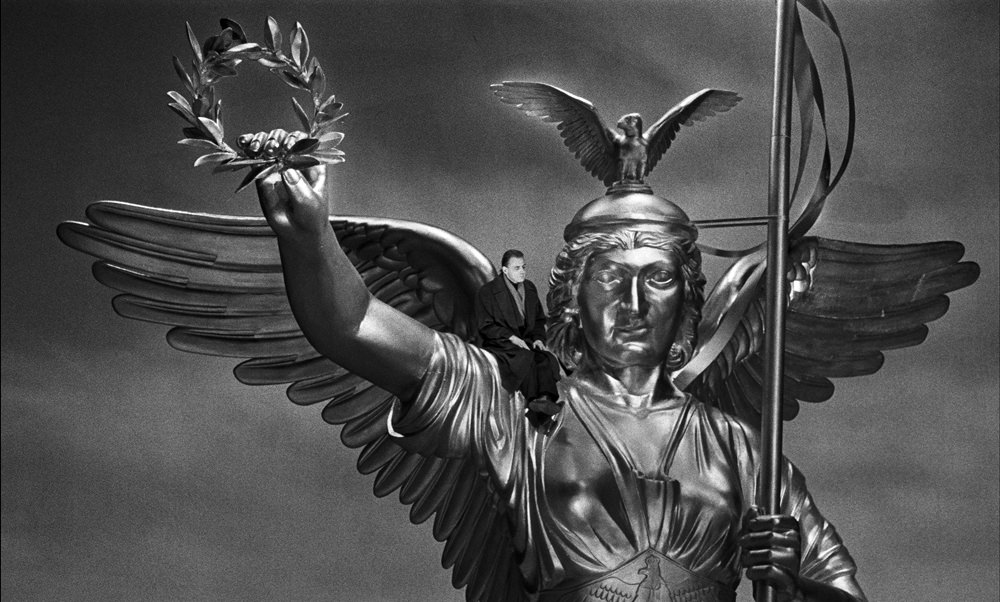
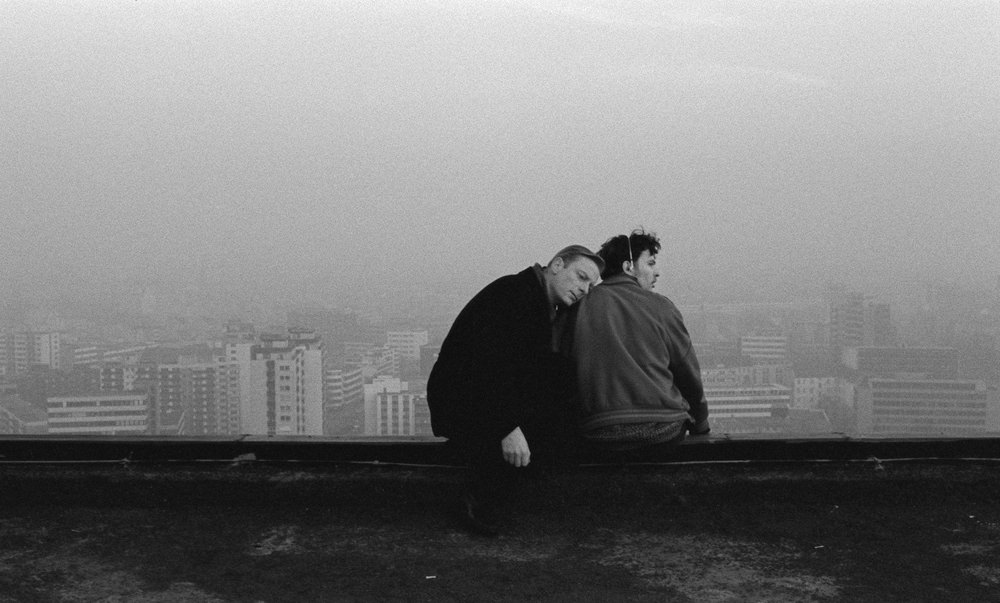
One of the most significant technical achievements of the film is its cinematography. Wenders recruited the legendary Henri Alekan, who had famously lensed Jean Cocteau’s Beauty and the Beast (1946). Alekan’s work on the film is characterized by a dual visual palette: a sepia-toned monochrome representing the perspective of the angels, and a vibrant, sometimes gritty color palette representing the sensory world of humanity.
To achieve the luminous, dreamlike quality of the black-and-white sequences, Alekan famously utilized a highly unconventional filter: a piece of silk from an old stocking belonging to his grandmother. This created a soft, diffused lighting effect that suggests a realm beyond physical substance. The transition from monochrome to color occurs when the protagonist, the angel Damiel (played by Bruno Ganz), chooses to surrender his immortality to experience the tactile realities of human life—pain, hunger, and love. This visual shift serves as a powerful metaphor for the richness of the mortal experience, suggesting that even the "messiness" of human existence is preferable to the detached perfection of the divine.
Narrative Structure and Character Analysis
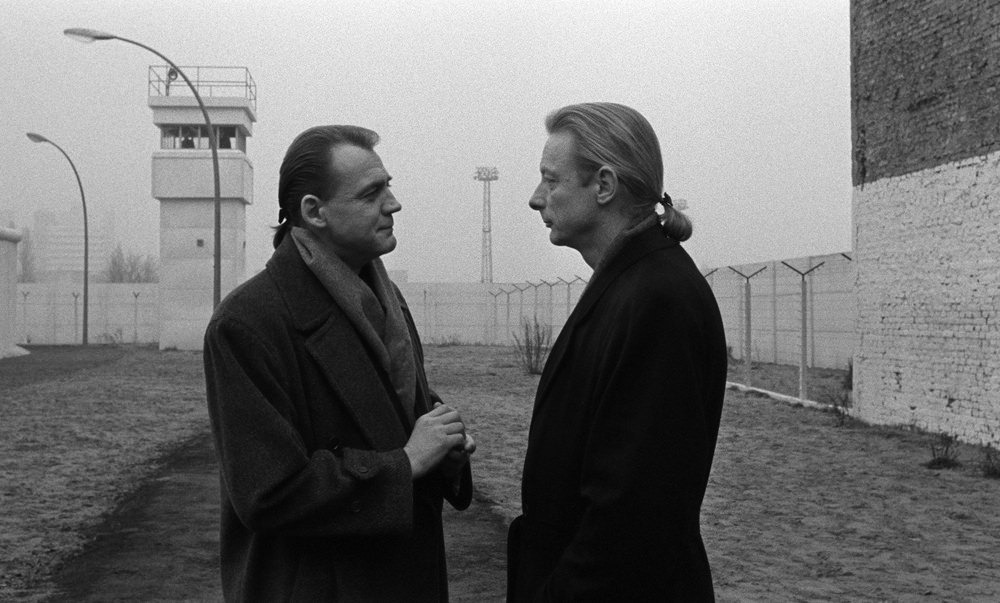
The film follows two angels, Damiel and Cassiel (Otto Sander), who roam the streets of West Berlin. They are not the winged figures of religious iconography but rather gentle observers dressed in heavy overcoats, their presence marked only by a quiet stillness. They listen to the inner monologues of the city’s inhabitants—ranging from a suicidal man on a bridge to an aging storyteller named Homer (Curt Bois) who wanders the desolate Potsdamer Platz.
The narrative gains momentum through two key encounters. The first is Damiel’s fascination with Marion (Solveig Dommartin), a French trapeze artist working in a circus that is about to close. Marion’s loneliness and her physical grace provide the catalyst for Damiel’s desire to "fall" into humanity. Dommartin, who was Wenders’ partner at the time, performed her own trapeze stunts after weeks of rigorous training, adding a layer of authentic physical vulnerability to the role.
The second pivotal figure is the American actor Peter Falk, playing a fictionalized version of himself. Falk is in Berlin to film a movie about the city’s Nazi past. In a meta-fictional twist, it is revealed that Falk was once an angel himself who chose to become human. His character provides the necessary encouragement for Damiel, bridging the gap between the celestial and the mundane. Falk’s performance, characterized by his search for a good hat and his appreciation for a hot cup of coffee, grounds the film’s loftier philosophical themes in relatable, everyday pleasures.
Berlin as a Living Character
At its core, the film is an "ode to a city." In 1987, Berlin was a landscape of scars. The film captures the vast, empty stretches of the "death strip" near the Wall, the bullet-riddled facades of old buildings, and the modern architecture of the Berlin State Library (Staatsbibliothek). The library, designed by Hans Scharoun, serves as a primary hub for the angels, who congregate there to listen to the collective wisdom and suffering of the readers.
The inclusion of a performance by Nick Cave and the Bad Seeds further cements the film’s connection to the 1980s West Berlin underground scene. The raw, industrial energy of the concert sequence contrasts sharply with the silent, watchful presence of the angels, illustrating the city’s vibrant, if fractured, cultural identity. Today, the film serves as an invaluable historical document. The areas of Potsdamer Platz depicted as muddy wastelands are now bustling commercial centers of a unified Germany. The film thus captures a version of Berlin that no longer exists, making it a "memory shot through a memory."
Chronology of Impact and Legacy
The release and subsequent reception of the film followed a trajectory of critical acclaim and enduring cultural influence:
- May 1987: The film premieres at the Cannes Film Festival. Wim Wenders wins the Best Director award, and the film is nominated for the Palme d’Or.
- October 1987: The film is released in West German cinemas, becoming a significant box-office success for an art-house production.
- 1988: The film receives the European Film Award for Best Director and Best Supporting Actor (Curt Bois).
- 1989: Shortly after the film’s international success, the Berlin Wall falls. The film’s themes of division and the longing for connection take on a new, prophetic resonance.
- 1993: Wenders releases a sequel, Faraway, So Close! (In weiter Ferne, so nah!), which explores the lives of the characters in a post-unification Berlin.
- 1998: A Hollywood remake titled City of Angels, starring Nicolas Cage and Meg Ryan, is released. While commercially successful, it is often criticized for stripping away the political and philosophical depth of the original in favor of a more conventional romance.
Analysis of Implications and Enduring Relevance
The film remains relevant today for its profound exploration of empathy. The angels’ primary function is to offer comfort by simply being present—pressing their foreheads against the struggling or placing a hand on a shoulder. In an increasingly digital and disconnected world, this emphasis on silent, focused attention on the "other" remains a powerful moral statement.
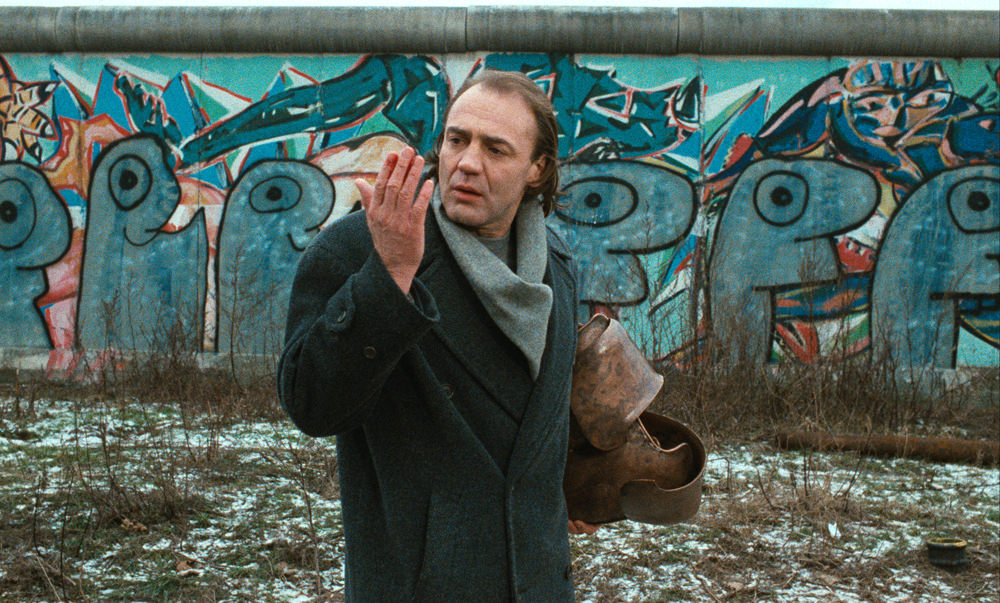
Furthermore, the film’s treatment of time and history offers a lesson in urban resilience. By focusing on the "wounds" of Berlin, Wenders argues that a city’s beauty is inseparable from its trauma. The transformation of Damiel from a timeless observer to a mortal man who is "now" in time reflects a broader philosophical shift from the abstract to the concrete. As Damiel celebrates his first taste of coffee or the discovery of colors, the audience is invited to rediscover the miracle of the mundane.
In the decades since its debut, the passing of its lead actors—Bruno Ganz in 2019, Otto Sander in 2013, Peter Falk in 2011, and Curt Bois in 1991—has added a layer of elegiac weight to the viewing experience. The film, which was always about the fleeting nature of life and the persistence of memory, has itself become a vessel for the memories of its creators. It stands not only as a masterpiece of 20th-century art but as a testament to the enduring power of cinema to capture the invisible rhythms of the human heart.