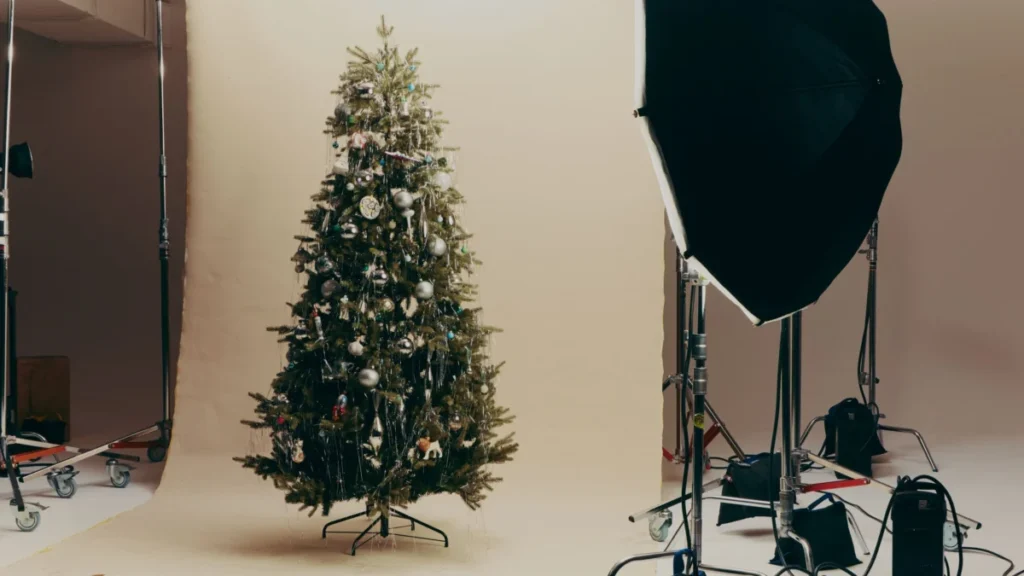

While the tradition of harvesting a fresh evergreen remains a cornerstone of holiday festivities, the modern domestic landscape is increasingly dominated by the artificial Christmas tree. As consumer preferences shift toward convenience, year-over-year cost efficiency, and allergen mitigation, the market for faux trees has evolved from static, plastic-looking greenery into highly engineered, hyper-realistic home decor. For households balancing aesthetic ambition with the practical constraints of modern living, selecting an artificial tree has become an exercise in evaluating material science, lighting technology, and interior design versatility.
The transition from live to artificial foliage represents a broader trend in holiday consumer behavior. According to the American Christmas Tree Association (ACTA), the majority of American households that display a Christmas tree now opt for an artificial variety. This shift is driven by several factors: the absence of needle shedding, the elimination of water maintenance, and the long-term economic benefits compared to the annual expense of purchasing a fresh-cut pine or fir. Beyond logistics, the rise of "pre-lit" technology has fundamentally changed the setup process, removing the labor-intensive task of stringing lights and ensuring a professional-grade illumination distribution that is difficult to achieve manually.
Expert insights from prominent interior designers, such as Shea McGee and floral designer Jeff Leatham—the latter of whom is noted for his work with the Kardashian-Jenner family—underscore the importance of structural integrity and lighting quality. Professional designers consistently advocate for pre-lit models, noting that the uniformity of modern LED integration provides a foundational "glow" that anchors the overall decor scheme.

Evaluating Realism and Engineering
The contemporary faux tree industry relies on "true needle" technology, which utilizes polyethylene (PE) to create branch tips that mimic the soft, multidimensional appearance of real-life species like the Fraser Fir or Norwegian Spruce. In our rigorous testing of top-tier models, we focused on three primary criteria: ease of assembly, visual realism, and structural durability.
The Balsam Hill Fraser Fir, for instance, serves as a benchmark for high-end artificial trees. Modeled after the species frequently selected for the White House, it utilizes a sophisticated blend of branch types to create a dense, Appalachian-inspired silhouette. The inclusion of an "easy plug" system—where lights are connected through the center pole—eliminates the traditional frustration of finding and connecting individual strands, reducing assembly time from hours to mere minutes.
In contrast, budget-conscious options from manufacturers like the National Tree Company demonstrate that high-quality aesthetic outcomes are achievable at lower price points. These models often utilize hinged branch designs, which allow for rapid expansion and storage. A critical finding in our testing is that "fluffing"—the manual process of shaping branches post-unboxing—remains the most significant variable in achieving a natural look. Experts recommend dedicating at least 30 to 60 minutes to this process to eliminate gaps and create a sense of organic growth.
A Chronology of Holiday Decor Evolution
The history of the artificial Christmas tree dates back to the 19th century in Germany, where goose feathers were dyed green and wrapped around wire to simulate pine needles. These early iterations were designed as a solution to deforestation and the scarcity of real trees in urban environments. Throughout the 20th century, materials evolved from aluminum and plastic bristles to the sophisticated, flame-retardant polymers used today.
.JPG)
The current era, characterized by smart-lighting technology and app-controlled color modulation, reflects a desire for seamless integration into the smart home. Products like those featuring "Twinkly" lights allow users to map their tree lights via smartphone, enabling complex lighting animations that would have been impossible with traditional incandescent bulbs. This technological integration has elevated the tree from a simple physical prop to a dynamic element of home automation.
Economic and Practical Implications
When analyzing the lifetime cost of an artificial tree, the upfront investment—which can range from $100 to over $1,500—must be measured against a 10-to-15-year usage cycle. While a live tree provides the sensory experience of a pine scent and a unique organic shape, the cumulative cost of annual purchases, transportation, and disposal, combined with the risk of fire hazards as the tree dries, creates a compelling argument for the artificial alternative.
Safety is a primary consideration in this market. Unlike live trees, which require consistent hydration to remain fire-resistant, high-quality artificial trees are constructed from flame-retardant materials. This provides peace of mind for families with pets or those living in multi-story residences where fire safety is a critical priority.
Professional Design Strategies
Achieving a high-end look requires more than just the tree itself; it requires a disciplined approach to decoration. Designers like Shea McGee recommend a "less is more" philosophy regarding the base, advocating for decorative collars or skirts that hide the mechanical nature of the stand.

Key design principles identified by industry professionals include:
- Layering: Utilizing garlands and wide, cascading ribbons to create depth and texture.
- Cohesion: Selecting a limited color palette—such as jewel tones or metallics—to ensure the tree feels "curated" rather than cluttered.
- Strategic Placement: Placing ornaments toward the middle of branches rather than at the very tips to ensure stability and structural balance.
- Lighting Depth: Wrapping the trunk in lights to create a warm, inner glow that mimics the way light filters through a natural canopy.
Addressing the "Realism" Gap
Despite technological advancements, a segment of the market remains skeptical of the artificial aesthetic. However, our testing suggests that the perceived "fakeness" of a tree is often a result of improper styling rather than the product itself. When a tree is correctly fluffed and complemented by scent-based sensory additions—such as essential oil-infused candles or natural cedar sprays—the sensory disconnect is effectively bridged.
As sustainability remains a global concern, consumers are also evaluating the environmental impact of artificial trees. While the production of plastic-based trees has a higher initial carbon footprint than the harvest of a single live tree, the environmental impact of a faux tree is diluted over its 10-to-15-year lifespan. For many, the choice between real and artificial is ultimately a personal one, rooted in the balance between tradition and modern necessity.
Conclusion
The selection of an artificial Christmas tree today is as much about investment in a long-term piece of home infrastructure as it is about holiday cheer. By prioritizing construction quality, ease of assembly, and thoughtful decoration, homeowners can create a holiday centerpieces that rival those found in professional design portfolios. Whether opting for a slim pencil tree for an apartment or a towering, pre-lit fir for a vaulted living room, the modern market offers a solution for every spatial and aesthetic requirement, ensuring that the holiday spirit remains a constant, reliable presence year after year.