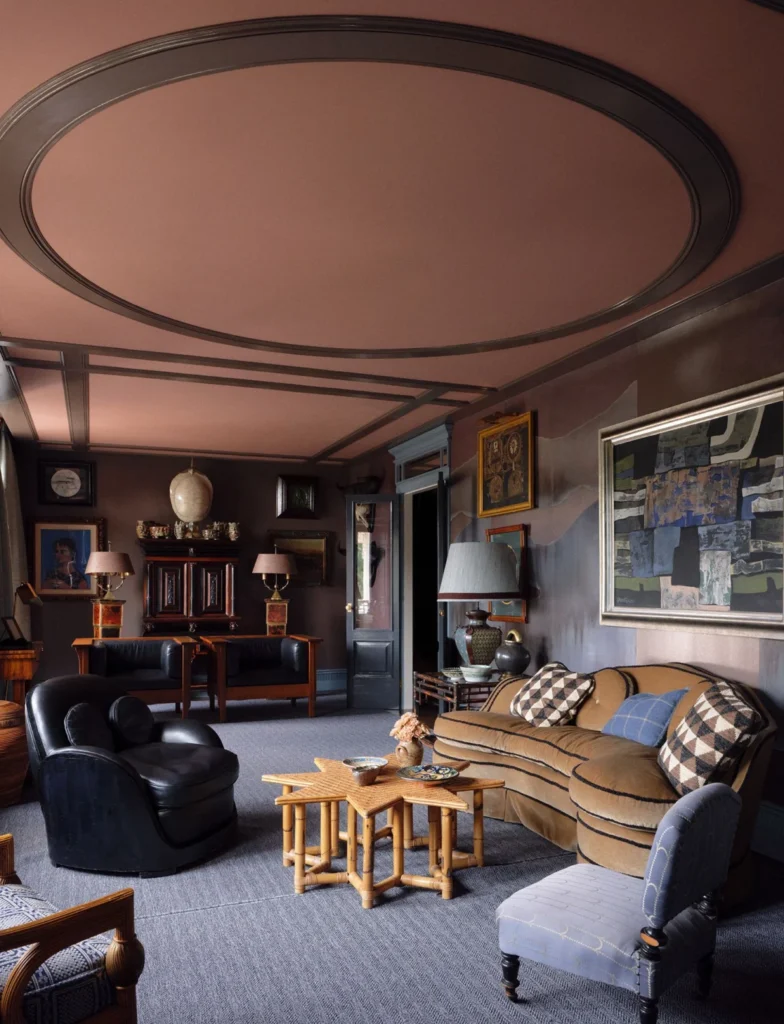

The trajectory of Spanish interior designer Lorenzo Castillo has reached a definitive zenith, marked by a shift from high-profile residential commissions to a more profound commitment as an educator of design history. Born in Madrid in 1968, Castillo has spent decades cultivating a signature aesthetic that bridges the gap between 17th-century European classicism and the bold, eclectic sensibilities of the late 20th century. His recent transformation of two combined apartments into a singular, cohesive residence in Oviedo, the capital of Asturias, serves as a masterclass in his evolving philosophy: that interior design is not merely about ornamentation, but about the pursuit of human happiness and historical continuity.

A Career Defined by Synthesis and Transition
Castillo’s career began in the antique trade, a sector he entered alongside his brother, Santiago. Operating out of Madrid’s historic Barrio de las Letras, the brothers focused on the acquisition and placement of period pieces. However, Castillo soon found that the traditional, restrictive nature of the antique business stifled his creative impulses. While his peers focused on the intrinsic value of items, Castillo advocated for a "decorative approach," which prioritized how objects could influence the mood and functionality of a modern room.
By the early 2000s, this perspective had effectively rebranded him in the eyes of the public. Where other designers were strictly adhering to either traditionalist or minimalist paths, Castillo gained acclaim for his ability to mix classic French cabinetry with 1970s sculptural furniture. This approach, he notes, was heavily influenced by the work of David Hicks and a rigorous study of design history. His transition from a dealer to a decorator was marked by a steady stream of requests from clients who recognized that his understanding of space was rooted in a deep academic knowledge of art and architecture.

Architectural Renovation and the Oviedo Residence
The renovation of his Oviedo home stands as the primary case study for his current design methodology. The project involved the fusion of two adjacent apartments within an early 20th-century French-style building, an architectural style emblematic of the stately character found in northern Spain.
The renovation was not merely cosmetic; it was a total reconfiguration of space to maximize light and flow. Castillo relocated the primary bedroom suite to the front of the building to capitalize on the views of the Campo de San Francisco park, a decision that challenged traditional floor-plan conventions where the living room typically occupies the most prominent position. By shifting the living areas to the rear and reintroducing a glass-enclosed gallery—a traditional Asturian architectural feature—Castillo demonstrated his commitment to integrating regional heritage with contemporary living requirements.

The home serves as a repository for his professional evolution, featuring pieces by Jansen, Gabriella Crespi, and Anthony Redmile, alongside his own bespoke furniture collections. The result is an interior that manages to balance Hollywood Regency glamour with the somber, calming tones of northern Spanish architecture.
The Science of Color and Light
Central to Castillo’s design success is his nuanced application of color theory. He operates on the principle that light exposure should dictate the color palette, rather than personal preference alone. In his Oviedo residence, the bedroom—which receives limited natural light—is bathed in deep, soothing shades of pink, blue, camel, and chocolate brown. Conversely, the brighter, sun-drenched sections of the apartment are finished in butter, cream, ochre, and mustard.

Castillo’s frequent use of gold, which critics occasionally label as ostentatious, is defended by the designer as a functional choice for warmth. He emphasizes the importance of patina, noting that modern, brushed gold finishes can be engineered to look as though they have been in place for generations. By balancing these warm metallic tones with cool silver accents, he creates a visual equilibrium that grounds the space.
Education and the Future of Design
As Castillo prepares to publish a comprehensive book outlining the fundamentals of interior design, his focus has shifted toward institutionalizing his knowledge. This shift is partly driven by the influence of his father, a university professor, and his desire to mentor the next generation of designers. He views his current role not as a departure from design, but as the culmination of his professional life.

He argues that the barriers to entry in interior design are lowering, and that the field is becoming increasingly accessible to those with curiosity rather than just significant financial resources. This democratization of design is a recurring theme in his recent television work, particularly on the Spanish design competition show DecoMasters, where he encourages contestants to view history as a tool for innovation.
Historical Context and Cultural Shift
Castillo’s career has coincided with a significant shift in the Spanish design landscape. For much of the 20th century, Spanish interiors were characterized by a late adoption of the bourgeoisie aesthetic, hampered by the country’s socio-economic history. According to Castillo, the 18th and 19th centuries saw a decline in Spanish decorative influence, leading to a reliance on imported styles.

However, he identifies a growing rejection of post-World War II minimalism, which he believes has failed to provide the psychological comfort necessary for a home. Instead, there is a movement toward a return to textures, patterns, and a fusion of global influences—an aesthetic that pays homage to the era of the Catholic Monarchs, when Spain was at the center of international cultural exchange. His work seeks to reclaim this richness, drawing inspiration from historical figures like Jaime Parladé and the overlooked pioneer Rafael García.
The Role of Cinema and Personal Inspiration
Castillo’s design process is heavily influenced by the visual language of cinema. His current fascination with Luchino Visconti’s Death in Venice (1971) serves as a testament to his process of constant observation. He notes that the film provides endless inspiration for textiles, fabric layering, and the use of light, suggesting that the most effective design inspiration often comes from outside the traditional architecture and interior design journals.

Implications for the Modern Home
The implications of Castillo’s work extend beyond his immediate projects. By emphasizing the importance of "the home as a sanctuary," he taps into a broader cultural trend of nesting that has intensified in the wake of global instability. His insistence on creating a "mini home"—a private, restricted space within his residence that is off-limits to guests—reflects a growing need for personal boundaries in an increasingly connected world.
His philosophy of "constant change" is perhaps his most controversial yet compelling contribution to the field. While most designers aim for a timeless, finished product, Castillo views his own home as a living, breathing experiment. By regularly updating social spaces, he treats his home as a dynamic environment that supports his own quest for happiness, rather than a museum-like display of wealth.

Conclusion: The Legacy of a Designer
Lorenzo Castillo stands at a crossroads of tradition and modernity. His ability to weave historical narratives into the fabric of contemporary living has made him one of the most significant figures in European design. As he continues to document his knowledge for future generations, his focus remains on the democratization of beauty. By proving that interior design is less about the cost of materials and more about the understanding of space, light, and history, Castillo is ensuring that his influence will be felt long after his next project is completed. Whether through his books, his television appearances, or his continued work with international clients, he remains a vocal advocate for the idea that a home is the most important instrument in the pursuit of a well-lived life.