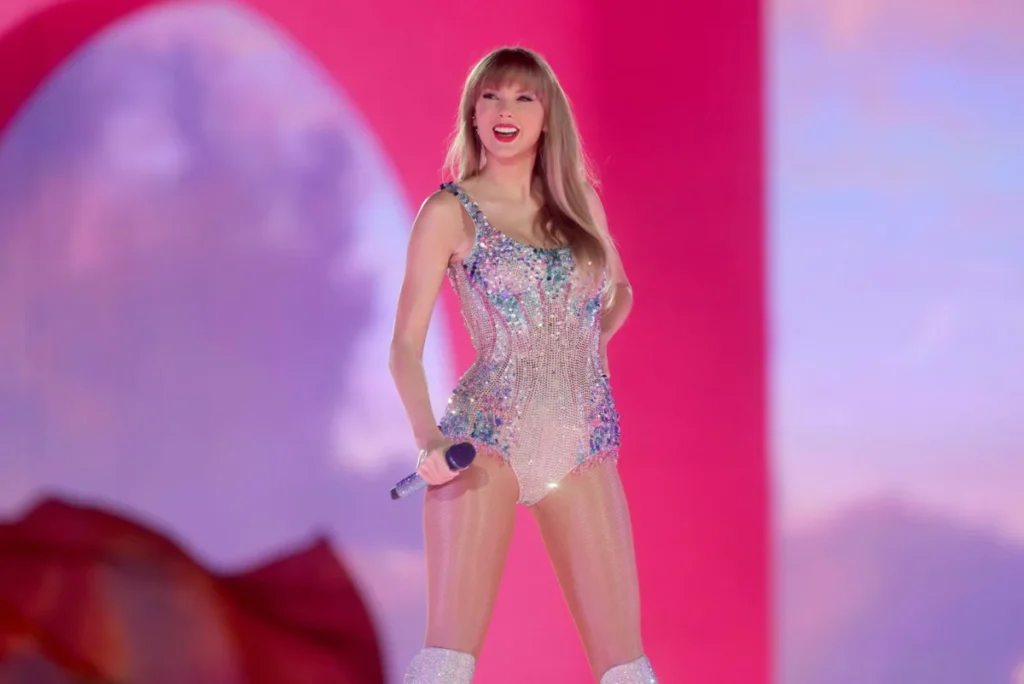

The phenomenon that is Taylor Swift’s "Eras Tour" has captivated audiences worldwide, breaking records and redefining the concert experience. While the tour is celebrated for its ambitious scope, spanning Swift’s diverse musical eras, a closer examination of her extensive discography reveals a recurring, yet perhaps under-discussed, thematic element: automobiles. From her debut single to her most recent works, cars, trucks, and the act of driving have served as consistent motifs, weaving through narratives of love, loss, ambition, and introspection. This article delves into the comprehensive presence of automotive imagery in Taylor Swift’s lyrical landscape, demonstrating its significance across her twelve studio albums.
The Ubiquitous Automobile in Swift’s Songwriting
Taylor Swift’s lyrical prowess is renowned for its evocative storytelling, often employing relatable touchstones to connect with her audience. Beyond her frequently cited thematic staples like rainy days, high school memories, and late-night musings, the automobile occupies a surprisingly prominent position in her songwriting. This is not merely a passing mention; cars are integrated into the fabric of her songs with remarkable frequency, appearing in at least one track, and often several, on every single one of her studio albums.
The automotive journey in Swift’s music began from the very inception of her career. Her debut single, "Tim McGraw," released in 2006, set the precedent with the opening lines, "Just a boy in a Chevy truck." This early inclusion established a pattern of using vehicles to paint vivid scenes, to fantasize about romantic encounters, and to construct insightful metaphors. Over the years, Swift has utilized automobiles to represent freedom, escape, youthful recklessness, and the passage of time, imbuing them with a rich symbolic weight that resonates with listeners.
To fully appreciate the breadth of this lyrical trend, a meticulous review of her entire catalog was undertaken. The criteria for inclusion were specific: while the act of driving itself was acknowledged, only lyrics that explicitly mentioned a vehicle, a specific automobile manufacturer, or a distinct car part were counted. This encompassed references to "car," "truck," "taxi," "cab," as well as components such as headlights and rearview mirrors. This detailed approach ensures a comprehensive understanding of how Swift has consistently integrated automotive imagery into her songwriting.
A Chronological Exploration of Swift’s Automotive Themes
The presence of cars in Taylor Swift’s music is not confined to a single era but rather spans her entire career, evolving in its nuance and application.
Early Years: Freedom and First Loves (Debut Album to Speak Now)
From her self-titled debut album, Swift established cars as symbols of youthful freedom and nascent romance. "Tim McGraw" immediately placed a Chevy truck at the center of a nostalgic recollection. This theme continued through her sophomore album, Fearless. In "Fifteen," the imagery of driving to school in a beat-up car evokes the shared experiences of adolescence. "Hey Stephen" features a charming plea to a love interest, including the line, "I’ve got a new car, and I love your dad." This line, while seemingly casual, ties the excitement of a new vehicle to the burgeoning feelings for Stephen.
Speak Now further cemented this trend. "Sparks Fly" uses the metaphor of a fast car to describe the intensity of a relationship: "I’m on a rocket ship to your heart, it’s a wild ride." "Mean" incorporates a truck into its narrative of overcoming adversity, with the protagonist imagining a better future where she’s "driving my car" and leaving her detractors behind. The title track, "Speak Now," also features a fleeting reference to a car, underscoring its everyday presence in her lyrical world.
Maturation and Metaphor: Red to 1989
As Swift’s songwriting matured, so too did the complexity of her automotive metaphors. The Red album, known for its emotional depth, features several notable instances. "All Too Well," a fan-favorite epic, is replete with automotive imagery. The iconic scarf left at a sister’s house is a tangible memory tied to a car ride: "You keep all yourcherished memories, you put them in a box, you lock them up, and you keep them safe." The music video for "All Too Well (10 Minute Version)" further amplifies this, featuring scenes of Swift and her ex-lover driving together, solidifying the car as a vessel for shared experiences and lingering emotions. "Treacherous" uses the imagery of a speeding car to describe the exhilarating, yet dangerous, pull of a new attraction: "This slope is treacherous, this path is reckless, this slope is treacherous, and I, I, I like it."
The transition to pop with 1989 saw a shift in lyrical style, but cars remained a relevant motif. "Style" evokes a sense of effortless cool and perpetual motion with the line, "Take that late-night drive down the coast," a scene often associated with cruising in a stylish vehicle. While less overt, the imagery of movement and transport is intrinsically linked to the automotive world.
Deeper Reflection and Societal Commentary: Reputation to Lover
Reputation introduced a darker, more introspective tone, yet cars still found their way into the narrative. "King of My Heart" uses the powerful imagery of being swept away, with the line, "I’m perfectly fine, I’m perfectly fine, you’re the king of my heart and the reason I’m breathing, the master of my [car]." This suggests a sense of being transported and captivated by love.
Lover saw Swift return to more optimistic and celebratory themes, and the automotive references reflected this. "Cruel Summer" captures the exhilarating rush of a secret romance, with the implied speed and freedom of a car: "I scream for you, I look for you, I lay here and I wait for you, and you are in my veins." While not explicitly mentioning a car, the intensity of the emotion and the setting of secret rendezvous often evoke images of clandestine drives. "Paper Rings" playfully touches upon the idea of a future together, including the mundane yet comforting thought of "building a castle, eventually, we’ll buy a little house, and then we’ll have kids, and then we’ll get a dog, and then we’ll drive around the town."
Thematic Evolution: folklore and evermore
The surprise indie-folk albums folklore and evermore marked a significant stylistic departure, but Swift’s lyrical depth continued to explore universal themes, including those touched by automotive imagery. In folklore, "The 1" offers a wistful reflection on a past relationship, with the line, "We were something, don’t you think so? / Fifteen, and I was at a car dealership, feeling helpless." This line, though seemingly minor, grounds the wistful reflection in a tangible, relatable moment. "August" evokes the ephemeral nature of summer love with imagery of escape: "So much for summer love and saying ‘us’ / ‘Cause you were never mine." The implied freedom of summer often involves road trips and the open road.
evermore continued this trend of nuanced storytelling. "Willow" uses the metaphor of being led, with the line, "I’m like a willow, and you’re like a wind / And I’m like a river, and you’re like a rain." While not directly automotive, the sense of being carried along and the journey of life are often visualized through travel. "Champagne Problems" hints at a dramatic narrative where a proposal gone wrong might have involved a significant journey or event, often symbolized by travel.
The Modern Era: Midnights and Beyond
In Midnights, Swift returned to a more pop-infused sound, and her lyrical exploration of cars continued. "Lavender Haze" touches on the desire for privacy and escape from public scrutiny, a theme often associated with seeking refuge in a car. The line, "I’m damned if I do give a damn what people say / No deal, the sun will rise, and I’ll be okay," suggests a determination to forge one’s own path, which can be symbolized by driving away from societal pressures. "Bejeweled" uses vibrant imagery of self-expression and confidence, and while not explicitly automotive, the idea of "shimmering" and "dazzling" can be associated with the polished gleam of a vehicle.
Thematic Significance and Broader Impact
The consistent presence of automotive references in Taylor Swift’s discography serves multiple functions:
- Relatability and Vivid Imagery: Cars are a ubiquitous part of modern life, making them instantly relatable to a wide audience. Swift uses them to ground her narratives in concrete, tangible experiences, allowing listeners to visualize the scenes she describes.
- Symbolism of Freedom and Escape: The open road and the act of driving often symbolize freedom, independence, and the ability to escape from constraints, whether emotional, social, or geographical.
- Metaphor for Relationships and Journeys: Cars can represent the progression of relationships, the shared journeys of life, or the bumpy roads of love and loss. Headlights can symbolize guidance, rearview mirrors can represent looking back, and the speed of travel can mirror the intensity of emotions.
- Nostalgia and Memory: For many, cars are intrinsically linked to formative experiences and memories, making them powerful tools for evoking nostalgia, as seen in songs like "All Too Well."
- Narrative Device: Swift employs automotive imagery to propel her stories forward, to create moments of introspection, or to highlight key turning points in her lyrical narratives.
The sheer volume and consistent inclusion of automotive references across twelve studio albums underscore its importance as a thematic building block in Taylor Swift’s songwriting. It speaks to her ability to draw upon everyday elements of human experience and imbue them with deep emotional and symbolic meaning. This lyrical thread, woven through her vast catalog, contributes significantly to the rich tapestry of her storytelling and her enduring connection with her global fanbase.
Looking Ahead: The Eras Tour and the Road Ahead
As the "Taylor Swift | The Eras Tour" continues its record-breaking global journey, the tour itself becomes a grand metaphor for Swift’s artistic evolution. The tour’s success, measured not only in ticket sales but in the profound emotional impact it has on millions, is a testament to her ability to craft narratives that resonate deeply. The recurring presence of cars in her music, from the humble Chevy truck of her debut to the more abstract notions of journeys and freedom in her later works, serves as a constant reminder of the tangible elements that have accompanied her sonic and thematic explorations.
The "Eras Tour" is, in essence, a grand road trip through the landscape of Swift’s career. Each era represents a distinct mile marker, a different phase of the journey. The cars that have populated her lyrics have often been the vehicles for these journeys, symbolizing the movement, the change, and the experiences that have shaped her as an artist and connected her to her audience. The enduring power of her songwriting lies in its ability to take these common elements and transform them into profound explorations of the human condition, reminding us that even the most ordinary aspects of life can become extraordinary through the lens of art. The road ahead for Taylor Swift, like the open road in her songs, promises continued innovation, storytelling, and an unwavering connection with her devoted listeners.