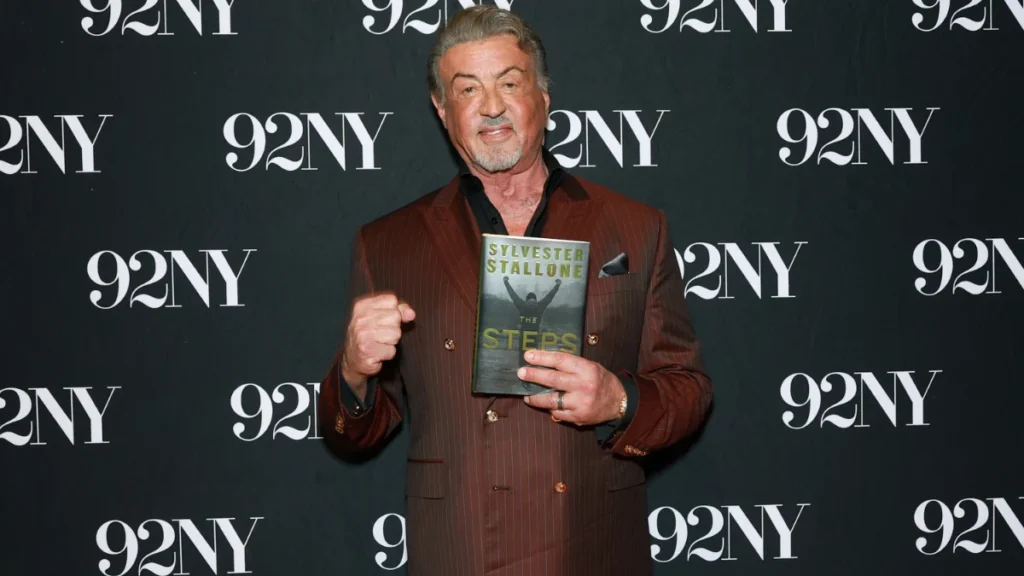

Hollywood history is replete with legendary on-set clashes, personality conflicts, and creative differences that have occasionally boiled over into physical altercations. Among the most enduring and frequently discussed feuds in modern cinema is the decades-long animosity between Sylvester Stallone and Richard Gere. While rumors regarding the origins of their mutual antipathy have circulated within entertainment circles for decades, definitive clarity has finally emerged. In his newly released memoir, The Steps, which hit bookshelves on September 29, Sylvester Stallone provides a detailed, firsthand account of the bizarre and volatile incidents that triggered a lifelong rivalry with Richard Gere during the pre-production and filming of their 1974 breakout feature, The Lords of Flatbush.
The narrative detailed in Stallone’s memoir transports readers back to the gritty, independent filmmaking landscape of the early 1970s. Long before achieving household-name status through iconic franchises such as Rocky, Rambo, and Pretty Woman, both Stallone and Gere were young, ambitious, and fiercely competitive actors striving to establish themselves in the highly demanding New York and Hollywood casting circuits. Their initial encounter, however, was far from the beginning of a beautiful cinematic friendship; instead, it laid the groundwork for an enduring Hollywood feud that would persist for nearly fifty years.
Main Facts of the Altercation
According to Stallone’s account in The Steps, the friction between the two actors began during the audition phase of The Lords of Flatbush, a coming-of-age drama directed by Stephen Verona and Martin Davidson that chronicled the lives of a tight-knit group of working-class Italian-American teenagers in Brooklyn.
During early improvisational workshops and table reads, Stallone noted that he and fellow future superstar Robert De Niro maintained a strong creative rapport. The two actors reportedly engaged in rapid-fire dialogue, attempting to out-improvise and "outtalk" one another in a display of raw talent. However, the dynamic shifted dramatically when Richard Gere entered the collaborative space.
Stallone described an incident during an unscripted rehearsal in which Gere aggressively grabbed his T-shirt and deliberately dug his fingernails into Stallone’s skin. Despite Stallone issuing a verbal warning to cease the physical provocation, Gere repeated the aggressive maneuver during a subsequent take. Pushed to his operational limits, Stallone approached director Stephen Verona to seek permission to handle the situation according to his instincts. When the director inquired about his intended reaction, Stallone bluntly stated that he intended to knock Gere’s teeth out. Verona promptly intervened, pleading with Stallone to maintain his composure.
While physical violence was averted during that specific rehearsal, the underlying tension remained palpable. The ultimate breaking point occurred following a lunch break, setting off a chain of events that would permanently alter the cast of the film and cement a lifelong estrangement between the two performers.
Chronology of Events Surrounding The Lords of Flatbush
To fully understand the context of the Stallone-Gere altercation, it is essential to examine the precise timeline of events surrounding the production of The Lords of Flatbush, which served as a critical stepping stone for several major Hollywood careers.
Early 1974: The Casting and Workshop Phase
During the preliminary casting and improvisational workshops in New York City, a diverse group of emerging actors—including Sylvester Stallone, Robert De Niro, and Richard Gere—were evaluated for roles in the low-budget independent production. It was during these sessions that the initial personality clash between Stallone and Gere manifested, characterized by territorial acting styles and physical boundary violations during improvisation.
Spring 1974: Rehearsals and the Chicken Grease Incident
As production preparations advanced, the tension between Stallone and Gere reached a critical juncture following a lunch break. The two actors were eating inside a motor vehicle when a quantity of chicken grease spilled onto Stallone’s leg. Stallone recalled that he had explicitly cautioned Gere to exercise care with his food prior to the accident. Following the spill, Stallone physically retaliated by elbowing Gere and forcefully dragging him out of the back seat of the car. Director Stephen Verona intervened immediately to defuse the situation, recognizing that the working environment had become untenable.
Spring 1974: Directorial Intervention and Recasting
Faced with irreconcilable differences between two rising actors, director Stephen Verona made an executive decision to remove one of them from the production. Opting to retain Stallone in the role of Stanley Jasinski, Verona dismissed Richard Gere from the cast. Shortly thereafter, Robert De Niro also departed the project to pursue a competing film opportunity—specifically, Francis Ford Coppola’s The Godfather Part II, which would earn De Niro his first Academy Award. To fill the vacant roles, filmmakers brought in Perry King and Henry Winkler, the latter of whom would achieve massive television stardom shortly thereafter as "The Fonz" on Happy Days.
September 29: Publication of The Steps
Decades after the events of 1974, Sylvester Stallone released his autobiographical memoir, The Steps, on September 29. The book brought renewed public attention to the long-rumored conflict, providing the first comprehensive, official confirmation of the specific incidents that birthed the Stallone-Gere feud.
Supporting Data and Context of 1970s Cinema
The cinematic landscape of the 1970s was defined by a gritty realism and the emergence of the "New Hollywood" movement, which prioritized raw, authentic performances over traditional, polished studio glamour. Directors frequently utilized improvisational workshops, Method acting techniques, and intense physical character exploration to extract visceral performances from young, hungry actors.
The Lords of Flatbush, released eventually in 1974 on a modest budget, operated within this intense artistic ecosystem. Independent productions of this scale often lacked the structured HR departments, safety coordinators, and trailer separation common on modern multi-million-dollar studio sets. Consequently, young actors struggling for artistic dominance in cramped environments were more susceptible to interpersonal friction.
Furthermore, the simultaneous involvement of Robert De Niro, Sylvester Stallone, and Richard Gere in the early ecosystem of New York-based independent cinema highlights an extraordinary concentration of generational talent. Each of these actors possessed distinct, formidable screen presences that would eventually redefine American cinema, making the friction between competing alpha personalities almost statistically inevitable.
Official Responses and Industry Perspectives
While Sylvester Stallone has now provided an extensive narrative account of the feud in his memoir, representatives for Richard Gere have historically maintained a measured silence regarding the origins of the animosity. Over the decades, various entertainment journalists and biographers have attempted to query both actors about the legendary on-set dismissal.
Industry analysts and entertainment historians have frequently pointed to the incident as a classic example of incompatible temperaments rather than malicious intent. In interviews spanning decades, Stallone has occasionally alluded to lingering coolness between himself and Gere at public industry events, charity functions, and Hollywood gatherings, noting that a mutual, unspoken acknowledgment of their 1974 clash has persisted throughout their respective careers. While neither actor has engaged in public mudslinging in recent years, the permanence of the anecdote in Hollywood lore underscores how formative early career altercations can shape public perception over a span of fifty years.
Broader Impact and Implications
The public revelation of the Stallone-Gere conflict through The Steps offers broader implications for how audiences and industry observers view the mythos of cinematic greatness. It humanizes legendary performers by demonstrating that even the most celebrated cultural icons experienced awkward, highly combustible beginnings before achieving fame.
For film historians, the anecdote serves as a fascinating "what-if" scenario in casting history. Had Richard Gere remained in The Lords of Flatbush, and had Robert De Niro not departed for The Godfather Part II, the trajectory of American cinema—and the careers of Stallone, Gere, Winkler, and King—might have unfolded in a radically different direction. Instead, a spilled meal of chicken grease and a territorial acting exercise in a parked car catalyzed a reshuffling of the cinematic deck, resulting in iconic roles, lifelong rivalries, and an enduring Hollywood legend that continues to fascinate film enthusiasts to this day.