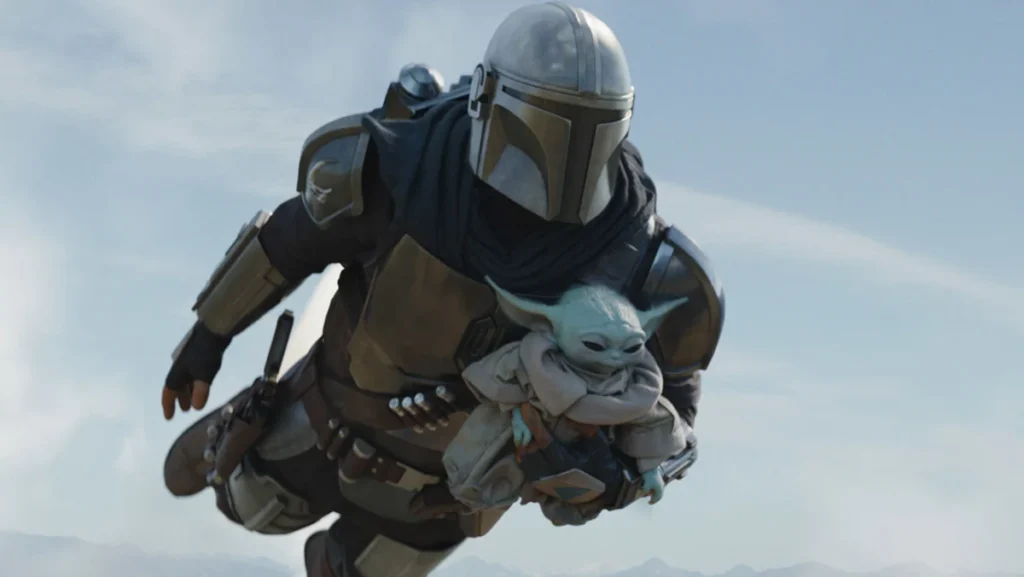

The cinematic journey for Star Wars: The Mandalorian and Grogu has officially commenced, with the highly anticipated Lucasfilm/Disney feature film drawing a domestic four-day Memorial Day holiday weekend gross of $98 million, a figure that includes an $82 million take over the traditional three-day period. This debut, while substantial in the contemporary box office landscape, immediately invites comparisons to past Star Wars theatrical releases, particularly the 2018 standalone film Solo: A Star Wars Story, which opened to $103 million domestically over the same holiday frame, with an $84.4 million three-day haul. The initial performance of The Mandalorian and Grogu sets the stage for critical discussions about the evolving trajectory of the venerable science fiction franchise under Disney’s stewardship and the broader implications for the theatrical distribution of properties born on streaming platforms.
The Genesis and Evolution of the Star Wars Cinematic Universe Under Disney
Disney’s acquisition of Lucasfilm in 2012 for a reported $4.05 billion signaled a monumental shift for the Star Wars franchise, promising a revitalized and expanded cinematic universe. The immediate years following the acquisition saw a rapid succession of new films that aimed to rekindle the magic of the original trilogy while introducing new characters and storylines.
The relaunch began with J.J. Abrams’ Star Wars: The Force Awakens in December 2015, which shattered box office records with an unprecedented $247.9 million domestic opening weekend and went on to gross over $2.068 billion worldwide. This was followed by Gareth Edwards’ Rogue One: A Star Wars Story in 2016, a critically acclaimed standalone film that opened to $155 million domestically and earned over $1.056 billion globally. Rian Johnson’s Star Wars: The Last Jedi (2017) continued the main saga, opening to $220 million domestically and achieving a global total of $1.334 billion, though it proved divisive among fans.
The first significant stumble occurred with Solo: A Star Wars Story in May 2018. Directed by Ron Howard, the film chronicled the early adventures of Han Solo. Its Memorial Day opening of $103 million (four-day) was considered a significant underperformance for a Star Wars film, marking the lowest debut for the franchise since Disney’s acquisition. Solo ultimately limped to a global total of $393 million against a reported production budget exceeding $265 million, resulting in tens of millions in losses for Disney. The studio publicly acknowledged that the franchise was at a "tipping point," grappling with increased fan discontent and a perceived fatigue. The Skywalker Saga concluded with Star Wars: The Rise of Skywalker in December 2019, which opened to $177 million domestically and concluded its run with $1.074 billion worldwide, a respectable but comparatively lower performance than its saga predecessors.
The Phenomenal Rise of The Mandalorian on Disney+
In the wake of Solo‘s theatrical struggles and the mixed reception to the sequel trilogy, Disney pivoted its Star Wars strategy, heavily investing in television series for its nascent streaming service, Disney+. The flagship of this new era was The Mandalorian, created by Jon Favreau and executive produced by Dave Filoni, which debuted alongside Disney+ in November 2019. The series, featuring the titular bounty hunter Din Djarin and the beloved Grogu (affectionately known as "Baby Yoda"), was an immediate critical and commercial success.
The Mandalorian garnered widespread acclaim for its compelling storytelling, stunning visuals, and ability to capture the essence of classic Star Wars while introducing fresh narratives and characters. It became a cultural phenomenon, driving significant subscriber growth for Disney+ and establishing itself as the most-watched original series in the history of the service, accumulating over 1.3 billion hours streamed globally. Its success demonstrated a clear path forward for the franchise, proving that new stories and characters could thrive, particularly when given the space of episodic television. The decision to adapt the popular streaming series into a big-screen feature film for The Mandalorian and Grogu was thus a strategic move by Lucasfilm and Disney to capitalize on its established popularity and leverage its loyal fanbase for a theatrical release.
Analyzing the Box Office Performance of The Mandalorian and Grogu
Star Wars: The Mandalorian and Grogu posted a global opening total of $167 million through Monday, May 25, which includes the aforementioned $98 million domestic haul and an international gross of $63 million through Sunday. This global figure places it just ahead of its reported net production budget of $165 million, excluding substantial marketing costs.
The domestic performance, while falling short of Solo‘s initial four-day gross, carries different implications given the altered theatrical landscape. Disney, known for its conservative mid-weekend estimates, initially projected a $102 million four-day domestic opening on Sunday morning, buoyed by exceptional audience exit scores, including an 89 percent Rotten Tomatoes audience score—the highest for any Disney-era Star Wars film. By Monday morning, this estimate was revised slightly downwards to $100 million before the final numbers settled at $98 million.
The international market continues to be a challenging arena for the sci-fi genre, and The Mandalorian and Grogu‘s $63 million overseas debut reflects this trend. Comparing this to Solo‘s international opening of $65 million, the figures appear quite similar. However, a crucial distinction lies in their respective production budgets: The Mandalorian and Grogu carries a reported net budget of $165 million, whereas Solo cost upwards of $265 million. This substantial difference means that The Mandalorian and Grogu is starting from a more financially sustainable position, even if its overall gross mirrors Solo‘s initial global trajectory ($168 million). The true test for The Mandalorian and Grogu will be its ability to demonstrate stronger legs at the box office, avoiding the precipitous drop that plagued Solo in its second weekend.
The Post-Pandemic Box Office Landscape
The COVID-19 pandemic irrevocably altered the theatrical exhibition industry, and the "new normal" for box office performance dictates a re-evaluation of what constitutes a successful opening. In this transformed environment, a $98 million four-day opening is generally considered a strong performance and is celebrated across the industry.
To put The Mandalorian and Grogu‘s performance into perspective:
- It ranks as the fourth-best Memorial Day debut in the post-COVID era, signaling a healthy return for the holiday weekend.
- It surpasses last year’s Mission: Impossible – Dead Reckoning Part One, which opened to $79 million over Memorial Day weekend, demonstrating competitive strength in a crowded period.
- It highlights the sheer scale of pre-pandemic blockbusters like 2015’s Star Wars: The Force Awakens, whose $257 million three-day opening now seems almost unfathomable, underscoring the shift in audience habits and market dynamics.
This year, only one film has managed to cross the $100 million domestic opening threshold: Universal and Illumination’s The Super Mario Galaxy Movie, which debuted to an impressive $131.7 million. That animated feature has gone on to become a bona fide blockbuster, nearing $980 million in global ticket sales. Other recent successes like Project Hail Mary ($80.5 million opening, $675 million+ global) and Lionsgate’s Michael Jackson biopic Michael ($97 million domestic opening, approaching $800 million global) share a common characteristic: they are PG-13 films with broad appeal, effectively drawing in diverse audiences, including Gen Z and families. Jon Favreau’s The Mandalorian and Grogu, also a PG-13 film, possesses similar potential for sustained playability and a long theatrical run, aligning with these recent trends.
Disney’s Broader Ecosystem Strategy
Disney’s strategy for The Mandalorian and Grogu extends far beyond its immediate box office receipts. The studio emphasizes that the film’s origins on the small screen position it as a unique proposition, distinct from the saga films or standalone features tied to established Star Wars characters like Han Solo. It introduces characters who have already cultivated a massive following through Disney+, allowing the film to leverage an existing, passionate fanbase.
Crucially, Disney views The Mandalorian and Grogu as a key driver of value across its expansive ecosystem. This includes:
- Disney+ Engagement: The film is expected to further boost viewership and engagement for The Mandalorian series on the streaming platform, potentially drawing new subscribers or reactivating lapsed ones. The show’s 1.3 billion streaming hours underscore its immense value to the service.
- Consumer Products: The popularity of Din Djarin and Grogu has translated into a highly lucrative consumer products line, from toys and apparel to collectibles. The film’s release is designed to invigorate this segment, leading to increased merchandise sales.
- Theme Park Integration: Disney’s theme parks are directly benefiting from the film. A new Mandalorian and Grogu mission debuted within the Millennium Falcon: Smugglers Run attraction at Star Wars: Galaxy’s Edge concurrently with the film’s release, marking a first-ever day-and-date integration of this kind for the company.
- Gaming Partnerships: A major integration with the popular video game Fortnite further extends the franchise’s reach into the gaming community, creating another touchpoint for audience engagement.
This multi-faceted approach suggests that even if The Mandalorian and Grogu‘s theatrical performance doesn’t match the record-breaking numbers of earlier Disney Star Wars films, its overall contribution to the Disney enterprise is significant and strategically valuable.
Implications for the Future of the Star Wars Franchise
The performance of The Mandalorian and Grogu carries significant implications for the future direction of the Star Wars franchise and Disney’s overall content strategy. It serves as a litmus test for adapting successful streaming series to the big screen, a model that could be replicated for other popular Disney+ properties.
All eyes will now be on the film’s second-weekend drop. A strong hold would indicate positive word-of-mouth and sustained audience interest, validating Disney’s strategy. A steep decline, however, would raise further questions about the theatrical viability of streaming-born properties and the capacity of the Star Wars brand to draw audiences consistently to cinemas outside of core saga entries.
Looking ahead, the next major theatrical release for the franchise, Shawn Levy’s Star Wars: Starfighter, starring Ryan Gosling, is anticipated next year. This film, positioned as the first Star Wars movie led by a major contemporary movie star, will face immense pressure to deliver, as it represents a return to a more traditional blockbuster model, distinct from The Mandalorian and Grogu‘s streaming origins. Its performance will offer another crucial data point in understanding audience appetite for diverse Star Wars narratives on the big screen. The success of The Mandalorian and Grogu in leveraging its streaming popularity and broad PG-13 appeal could provide a template for future Star Wars films, particularly as Lucasfilm seeks to balance its rich legacy with innovative storytelling and diversified content delivery across all platforms.