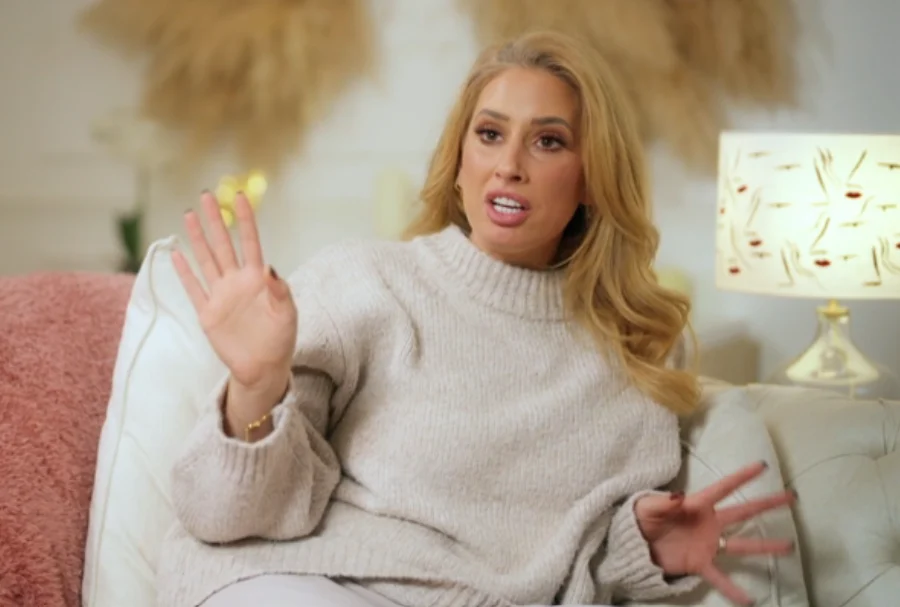

Television personality and social media influencer Stacey Solomon has publicly denounced the persistent intrusion of paparazzi into her private life, labeling the behavior "outrageous" and arguing that the current level of surveillance directed at her and her family should be legally classified as stalking. The 37-year-old star, who rose to prominence following her appearance on ITV’s The X Factor in 2009, has become increasingly vocal about the boundary between public interest and private harassment.
The debate surrounding the rights of celebrities versus the reach of the press has reached a boiling point for Solomon, who currently balances a high-profile television career with the demands of raising a large family at her residence, colloquially known as "Pickle Cottage." Her comments come at a time when her personal life is under renewed scrutiny, particularly following the launch of her BBC fly-on-the-wall reality series, Stacey and Joe, which began airing in 2025.
A Chronology of Fame and Privacy Struggles
Stacey Solomon’s trajectory from a reality show contestant to a household name is well-documented. After finding fame in 2009, she transitioned into a successful career as a presenter and television personality, notably serving as a regular panellist on Loose Women. Her relationship with Joe Swash, which began in 2016 following their initial meeting on the set of I’m a Celebrity… Get Me Out of Here! in 2010, has become a central pillar of her public brand.
The couple married in 2022, creating a blended family that has become a fixture of both their social media output and their recent BBC programming. The couple shares three children—Rex (born 2019), Rose (born 2021), and Belle (born 2023)—while also co-parenting children from previous relationships: Zach and Leighton for Solomon, and Harry for Swash.

The transition from social media documentation—where Solomon holds significant control over her image—to the traditional press environment has created friction. While Solomon acknowledges the "unwritten understanding" that being a public figure entails a certain level of media interest when in public spaces, she asserts that the line is frequently crossed. Specifically, she cites instances of photographers stationing themselves outside her private home and documenting family events that hold no genuine public interest.
The Reality Television Dynamic and Public Reception
The launch of Stacey and Joe on the BBC in 2025 offered viewers an intimate look at the couple’s life, including the challenges of parenting and the complexities of adult relationships. However, the show has sparked a polarized reaction. By choosing to broadcast candid moments, such as couples counselling sessions and documentation of Joe Swash’s struggles with his ADHD diagnosis, Solomon and Swash have opened themselves to critique regarding how much of their personal vulnerability should be shared.
Critics argue that by inviting cameras into their home for a broadcast series, the couple has effectively blurred the lines of privacy, making it more difficult to demand distance from the press. Conversely, supporters point out that there is a fundamental difference between a controlled, professional production—where the participants retain editorial input—and the unconsented, invasive tactics employed by independent paparazzi.
The Legal and Ethical Landscape of Media Intrusion
The core of Solomon’s grievance centers on the concept of "harassment." In the United Kingdom, while the press operates under the oversight of the Independent Press Standards Organisation (IPSO), the legal threshold for stalking and harassment is complex when applied to public figures.
Under the Protection from Harassment Act 1997, a person must not pursue a course of conduct which amounts to harassment of another. Proving that photographic surveillance constitutes criminal harassment is notoriously difficult, as the media frequently relies on the defense of "freedom of expression" and the "public interest" exception. However, legal experts suggest that the definition of "public interest" is narrowing. Increasingly, courts are looking at whether the information being published provides a legitimate contribution to a debate of general importance, or if it merely serves to satisfy public curiosity.
Solomon’s assertion that the behavior "should be illegal" reflects a growing sentiment among high-profile individuals who feel that the digital age has emboldened photographers, leading to an environment where the "stalking" of celebrities is treated as a routine aspect of the industry rather than a violation of human rights.
Supporting Data and Industry Trends
Data from media monitoring organizations suggest that the market for "candid" celebrity photography remains robust, fueled by the demand from online tabloids and social media aggregators. Despite the rise of direct-to-fan communication—where celebrities like Solomon control their own narrative through Instagram and TikTok—the demand for "exclusive" paparazzi shots has not diminished.
A 2024 industry report on media consumption indicated that while traditional print readership is declining, digital engagement with "lifestyle" and "celebrity" content is at an all-time high. This puts pressure on photographers to capture increasingly private moments, as these images command higher prices from outlets looking to drive click-through traffic. This economic incentive structure is precisely what Solomon identifies as the driver of the "outrageous" behavior she experiences.
The Impact on Digital Strategy and Family Safety
Solomon has indicated that the persistent invasion of her privacy is forcing her to reconsider her digital footprint. For an influencer whose career is built on the authenticity of her home life, this represents a significant professional dilemma. If she curtails her output to protect her family, she risks losing the engagement that fuels her brand; if she continues, she risks providing a "roadmap" for those who wish to locate and photograph her family.
"The safety of my family comes before absolutely everything," Solomon stated, signaling a potential shift toward a more guarded approach to her public persona. She has hinted that she is prepared to take further action if the behavior does not cease, which could range from seeking legal injunctions to simply withdrawing from public-facing media engagements.

Broader Implications for Celebrity Culture
The case of Stacey Solomon is symptomatic of a larger shift in celebrity culture. For decades, the trade-off for fame was a loss of privacy. However, in an era where celebrities can bypass traditional media through their own platforms, they are increasingly questioning the necessity of the "paparazzi bargain."
If more public figures follow Solomon’s lead in challenging the status quo, the industry may see a rise in legal challenges centered on the right to privacy versus the right to report. The outcome of such disputes could reshape the landscape of the tabloid industry, forcing outlets to adopt more stringent codes of conduct regarding the documentation of children and the surveillance of private residences.
For now, the tension remains palpable. As Stacey and Joe returns to BBC One on November 10, the spotlight remains firmly on the couple. While they continue to provide content for their viewers, Solomon’s call to action serves as a reminder that even those who voluntarily enter the public eye are entitled to boundaries. Whether or not those boundaries can be effectively enforced remains a question for both the legal system and the ethics of the modern press.
As she navigates the complexities of modern fame, Solomon’s stance is clear: the right to a private family life is not forfeited simply because one is a television star. Her determination to "stick up for herself" suggests that the coming year may see a more aggressive defense of personal privacy from those who have historically been considered "fair game" by the media. The evolution of this situation will likely be watched closely by legal experts, public relations professionals, and the wider public alike.