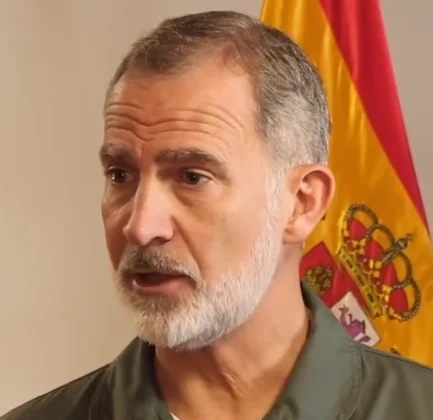

In the wake of one of the most catastrophic rail disasters in modern Spanish history, King Felipe VI has officially declared two days of national mourning, honoring the victims of a high-speed train collision that claimed dozens of lives and left hundreds injured. The tragedy unfolded on the morning of October 28, when a stationary high-speed passenger train was struck from behind by another service on the critical rail corridor connecting Madrid to Seville. As rescue operations transitioned into solemn recovery efforts, the nation came to a standstill, with flags lowered to half-mast across all official buildings and naval vessels under royal decree.
The catastrophic accident occurred just before 9:00 a.m. local time near the municipality of Urda in the province of Toledo. According to preliminary data released by transport authorities, an Iryo high-speed train operating the route between Madrid and Seville had come to a halt on the tracks. Shortly thereafter, a RENFE-operated high-speed service, also traveling from the capital toward Seville, collided violently with the rear carriage of the stationary Iryo formation. The impact force proved immense, resulting in immediate structural devastation to the rear cars of the first train and the front of the oncoming locomotive.
Passenger manifests underscore the sheer scale of the potential danger: the Iryo service was carrying 147 passengers, while the RENFE train was transporting 397 individuals. Within moments of the collision, local emergency services, civil protection units, and medical personnel were mobilized from across the region to manage the unfolding crisis.
Chronology of the Tragedy
The sequence of events on October 28 began in the early morning hours, following standard operational timetables for Spain’s high-speed rail network, known globally for its extensive infrastructure and punctuality standards.
At approximately 8:30 a.m., operational reports noted traffic disruptions along the Madrid-Seville high-speed corridor, prompting several trains to slow down or halt temporarily.
By 8:54 a.m., signaling and traffic management systems had granted clearance for the RENFE train to proceed along the section near Urda. Moments later, the train collided with the stationary Iryo formation.
At 9:15 a.m., the first emergency response units—including firefighters, rural guards, and regional medical helicopters—arrived at the remote site in Toledo province. Triage areas were established immediately adjacent to the tracks to treat the wounded.
By midday, initial casualty figures were confirmed by regional emergency coordinators, establishing a death toll that would rise to at least 68 fatalities, alongside dozens of severe injuries requiring urgent hospital transport.
By mid-afternoon, King Felipe VI, who was engaged in an official public appearance elsewhere in the country when the news broke, halted his schedule to address the nation. Expressing profound grief, the monarch extended his deepest condolences to the families of the deceased and praised the tireless efforts of emergency workers and medical volunteers.
As dusk fell on October 28, long queues formed outside regional hospitals and mobile donation units as citizens responded to urgent appeals for blood. Meanwhile, national authorities began the arduous task of securing the wreckage for forensic investigators.
Supporting Data and Context of Spain’s High-Speed Rail Network
Spain boasts the largest high-speed rail network in Europe—commonly referred to as the AVE network and complemented by open-access operators like Iryo and Ouigo—and is second only to China globally in terms of total high-speed track kilometers. Inaugurated in 1992 for the Seville Expo, the Madrid-Seville corridor holds historical significance as the backbone of Spain’s modern transport infrastructure.
While the network maintains an exceptionally high safety record, the October 28 collision near Urda stands as a grim reminder of the vulnerabilities inherent in high-density rail operations. High-speed rail travel relies on sophisticated signaling systems, such as the European Rail Traffic Management System (ERTMS), designed to prevent trains from occupying the same block section of track. Investigators from Spain’s Railway Accident Investigation Commission (CEAH) face the complex challenge of determining how two high-capacity passenger trains were permitted onto the same segment of track despite preceding traffic stoppages.
Official Responses and Political Fallout
As rescue and recovery operations proceeded, political and administrative friction surfaced regarding accountability. Spain’s Minister of Transport and Sustainable Mobility, Óscar Puente, faced immediate public and political scrutiny following preliminary remarks that appeared to attribute the collision primarily to human error. Opposition figures and transport unions criticized the premature attribution of fault before comprehensive technical data, black box recordings, and signaling logs could be thoroughly analyzed.
Transport ministry officials later clarified that a full, transparent investigation would be conducted, examining every variable—from automated signaling commands and manual overrides to communication protocols between central dispatchers and train drivers. Independent rail safety experts have emphasized that modern accidents rarely stem from a single point of failure, pointing instead to potential cascading errors involving automated systems, human communication, and operational oversight during traffic congestion.
International Condolences
The tragedy resonated globally, drawing swift expressions of solidarity from international leaders and European monarchies. King Haakon VIII of Norway dispatched an official message of condolence to King Felipe VI, conveying profound sorrow on behalf of the Norwegian people. Similar messages of support arrived from the Grand Duke of Luxembourg and other European heads of state, underscoring the deep diplomatic ties and shared European grief over the loss of life.
Broader Impact and Economic Implications
The collision has triggered immediate nationwide introspection regarding the safety, maintenance, and technological redundancy of Spain’s rail corridors. The Madrid-Seville line was temporarily suspended between major junctions, causing significant disruptions to national travel and freight logistics. Transport economists predict that the temporary closure and subsequent safety audits will impact passenger confidence and necessitate a review of operational protocols across all high-speed operators in Spain.
Furthermore, the psychological toll on the survivors, first responders, and the wider community in Toledo and Andalusia remains profound. Local authorities have deployed specialized psychological support teams to assist families searching for missing relatives and to counsel emergency personnel exposed to the severe trauma of the crash site.
As the period of national mourning extends through October 31, Spain remains united in grief. The focus now shifts toward identifying all victims, providing long-term medical and financial support to the survivors, and awaiting the preliminary findings of an investigation that will shape the future safety standards of European high-speed rail.