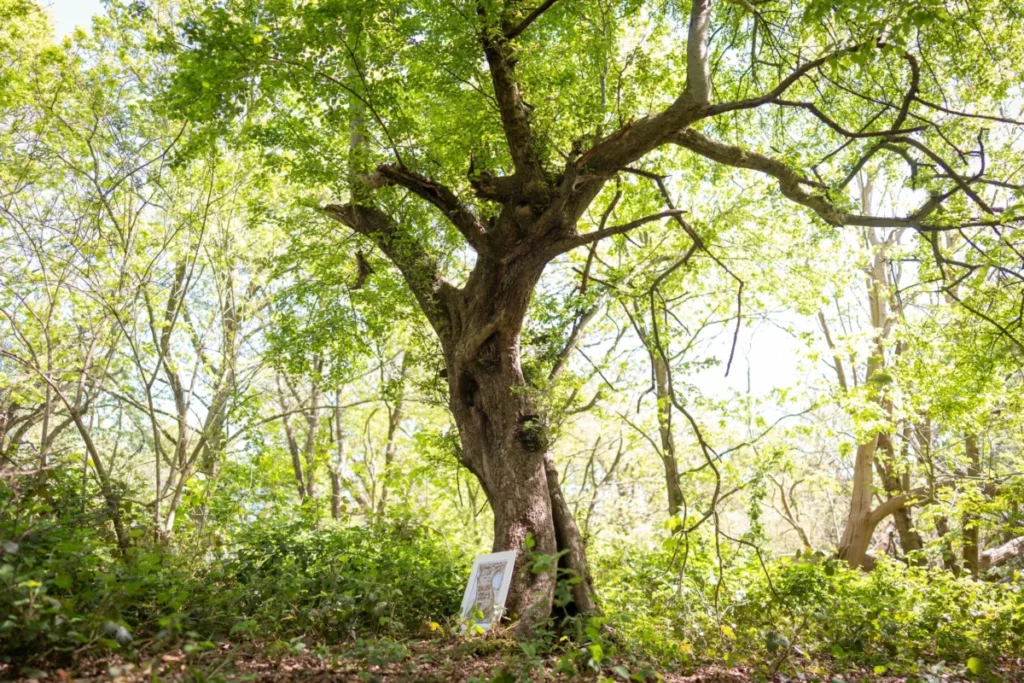

A remarkable discovery has illuminated the enduring connection between cherished children’s literature and the natural world, as an over 300-year-old crab apple tree, believed to be the direct inspiration for Crabapple Cottage in Jill Barklem’s iconic Brambly Hedge series, has been identified within the historic expanse of Epping Forest. This venerable tree, standing as a living testament to Barklem’s meticulous observations and artistic vision, was officially pictured by the Press Association on Wednesday, bringing to light a tangible link to the whimsical world that has captivated millions of readers globally.
The Revelation of a Literary Landmark
The distinctive crab apple tree, with its gnarled branches and ancient form, holds a unique place within Epping Forest, known to be the only documented pollarded tree of its species within the vast woodland. It stands gracefully near Barn Hoppitt and Warren Pond, an area long recognised as a favoured walking and sketching haunt for the celebrated illustrator and author, Jill Barklem, during her lifetime. Barklem, who passed away in 2017 at the age of 66, crafted the intricate world of Brambly Hedge with an extraordinary eye for detail, drawing heavily from the natural beauty and vibrant ecosystems of Epping Forest. The revelation of this specific tree provides an unprecedented insight into the genesis of one of her most beloved settings.
Confirmation of the tree’s significance came directly from Barklem’s own family. Her son, Peter, and daughter, Lizzie, visited the site this week, undertaking an emotional pilgrimage to the heart of their mother’s creative wellspring. Upon surveying the tree and its surrounding landscape, they unequivocally confirmed that its distinctive shape, picturesque setting, and the broader topographical features perfectly matched their mother’s initial inspiration for the enchanting Crabapple Cottage, home to the industrious Mr. and Mrs. Apple in the Brambly Hedge narratives.
Lizzie Barklem articulated the profound impact of the discovery, stating, "Our mother spent countless hours exploring Epping Forest, sketchbook in hand. Seeing this tree, and the landscape around it, it’s easy to recognise how it found its way into Brambly Hedge. It’s incredibly moving to see that the real-life inspiration is still here, thriving as part of this very special and protected ancient woodland, and it’s testament to the accuracy of her drawings that, nearly 50 years on, we are still able to identify that very tree." Her words underscore not only the artist’s dedication to realism but also the remarkable longevity and resilience of the natural elements that fueled her imagination.
A Glimpse into Jill Barklem’s Creative Process

Jill Barklem’s Brambly Hedge series, first published in 1980, quickly ascended to international acclaim, selling over seven million copies worldwide. The seasonal books – Spring Story, Summer Story, Autumn Story, and Winter Story – along with subsequent titles, depict the idyllic lives of a community of mice living in various natural dwellings within the English countryside. Each illustration is a masterpiece of intricate detail, reflecting Barklem’s meticulous research and dedication to botanical and zoological accuracy. It is widely understood that Barklem meticulously observed the flora and fauna of the English countryside, particularly Epping Forest, to imbue her stories with authenticity and charm.
The discovery of the crab apple tree provides a rare, tangible link to this creative process. Barklem was known for her dedication to sketching and painting directly from nature, often spending hours immersed in the forest, capturing the nuances of light, texture, and form. The identification of this specific tree highlights her practice of grounding her fantastical world in observable reality, transforming ordinary natural features into iconic literary landmarks. Crabapple Cottage, with its welcoming doors and windows nestled within the trunk of an ancient tree, symbolises the cosy, harmonious existence of the mice, a sanctuary deeply rooted in the protective embrace of nature.
Epping Forest: An Ancient Woodland’s Enduring Legacy
Epping Forest, where this inspiring tree resides, is far more than just a picturesque woodland; it is a significant ancient woodland and a vital green lung for London. Spanning approximately 2,400 hectares (nearly 6,000 acres), it stretches from Manor Park in East London to Epping in Essex. The forest is managed by the City of London Corporation and holds several crucial environmental designations, including a Special Area of Conservation (SAC) and a Site of Special Scientific Interest (SSSI), underscoring its ecological importance. Its history dates back thousands of years, with evidence of human activity from the Stone Age, and it has been a Royal Forest since at least the 12th century.
The specific tree identified is a pollarded crab apple. Pollarding is a traditional method of tree management that involves pruning the upper branches of a tree, which promotes a dense head of foliage and branches. Historically, this technique was used to harvest timber or fodder without killing the tree, allowing it to regrow repeatedly. For a crab apple tree to have been pollarded and to survive for over 300 years is a testament to both the tree’s resilience and the long-standing management practices within Epping Forest. Pollarding not only extends the life of a tree but also creates unique habitats within its hollows and crevices, supporting a rich diversity of insects, birds, and other wildlife, perfectly fitting the miniature world depicted in Brambly Hedge. The longevity of this specific tree, standing for three centuries, means it would have been a mature, perhaps even ancient, specimen when Jill Barklem first encountered it, making its visual impact all the more profound.
Chronology of Inspiration and Legacy
The timeline surrounding Jill Barklem’s life and the Brambly Hedge series provides a useful context for this discovery:

- Pre-1980s: Jill Barklem dedicates countless hours to observing and sketching in Epping Forest and other natural settings, laying the groundwork for her detailed illustrations and narratives. It is during this period that she would have encountered the ancient crab apple tree.
- 1980: The initial four seasonal Brambly Hedge books are published, introducing the world to the enchanting mice and their natural homes, including Crabapple Cottage. The books quickly achieve widespread popularity.
- Subsequent Years: Barklem continues to expand the Brambly Hedge universe with additional titles, further cementing its place in children’s literature. The series goes on to sell over seven million copies.
- 2017: Jill Barklem passes away at the age of 66, leaving behind a cherished literary legacy.
- October (Last Year): A Brambly Hedge-themed trail is launched in Epping Forest, featuring sculptures of characters like Mr. and Mrs. Apple, further solidifying the forest’s connection to Barklem’s work and inviting new generations to explore its inspiring landscapes.
- This Week (Wednesday): The 300-year-old pollarded crab apple tree, the direct inspiration for Crabapple Cottage, is identified and officially documented by the Press Association, with subsequent confirmation from Barklem’s children.
This chronology highlights the enduring power of Barklem’s vision and the continuous recognition of Epping Forest as a central muse for her work.
Official Responses and Broader Implications
Caroline Haines, chairwoman of the City of London Corporation’s Epping Forest and Commons Committee, expressed the organisation’s pride in the discovery. "As custodians of Epping Forest, we are immensely proud that such a cherished part of children’s literary heritage can be traced to a living tree within the forest," she stated. "Jill Barklem captured the spirit of this landscape so beautifully, drawing inspiration from the woodland she knew and loved." Her comments underscore the dual value of Epping Forest: as a vital ecological site and as a source of cultural and artistic inspiration.
The identification of this tree has several broader implications. Firstly, it strengthens the already robust cultural heritage associated with Epping Forest, drawing in visitors who are not only nature enthusiasts but also literary pilgrims. This adds another layer to the forest’s appeal, potentially boosting visitor numbers to the recently launched Brambly Hedge trail and encouraging a deeper appreciation for the ancient woodland’s unique features.
Secondly, the discovery serves as a powerful reminder of the importance of preserving ancient trees and natural habitats. The 300-year lifespan of the crab apple tree highlights the long-term benefits of conservation efforts. These ancient trees are not merely static elements of the landscape; they are dynamic ecosystems in themselves, providing homes for countless species and serving as living archives of history and culture. Their protection ensures that future generations can continue to be inspired, just as Barklem was.
Finally, the story reaffirms the profound impact that natural environments have on human creativity. For many artists and writers, landscapes are not just backdrops but active participants in their imaginative processes. The direct link between this specific tree and the beloved Crabapple Cottage exemplifies how deep observation of nature can translate into timeless art, fostering a sense of wonder and connection in readers of all ages. It encourages a renewed appreciation for the often-overlooked details of the natural world that surround us, revealing the magic hidden within the ordinary.
The enduring popularity of Brambly Hedge is a testament to Jill Barklem’s ability to create a world that feels both fantastical and deeply real. The stories resonate with themes of community, the changing seasons, and the simple joys of life lived in harmony with nature. By linking these narratives back to a tangible, living part of Epping Forest, the discovery of the Crabapple Cottage inspiration reinforces the authenticity and timelessness of Barklem’s artistic legacy. It offers a rare opportunity for fans to physically connect with the source of her creativity, transforming a beloved fictional dwelling into a real-world landmark worthy of pilgrimage and protection. This discovery ensures that the spirit of Brambly Hedge will continue to thrive, rooted firmly in the ancient, inspiring heart of Epping Forest.