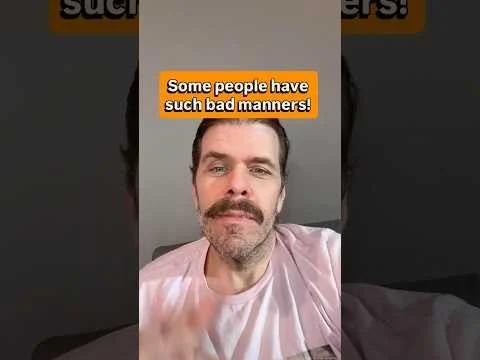

The recent public commentary by entertainment personality Perez Hilton, circulating widely across digital platforms, has once again brought to the forefront a pervasive societal concern: the perceived decline in fundamental courtesy, mindfulness, and professionalism. While Hilton’s characteristic directness in a video titled "Some People Have Such Bad Manners!" might be seen as a sensationalized call-out, it reflects a growing sentiment across various demographics that the basic tenets of social interaction and professional conduct are eroding, with tangible implications for individuals, workplaces, and the broader social fabric.
The Contemporary Discourse on Civility
The video, which highlights the importance of what Hilton terms "courtesy, mindfulness, and professionalism," serves as a potent microcosm of a larger cultural conversation. Public figures, often acting as conduits for collective frustrations, frequently articulate sentiments that resonate deeply with their audiences. In this instance, Hilton’s critique, though delivered in a personal style, taps into a shared experience of encountering perceived rudeness, thoughtlessness, or a lack of decorum in everyday life. This discourse is not new, but it has intensified in an era characterized by rapid technological advancement, shifting social norms, and increasing polarization.
Sociologists and communication experts suggest that discussions about "bad manners" often emerge during periods of significant social change. As traditional hierarchies and communication channels evolve, so too do the unspoken rules governing interaction. The current era, marked by digital omnipresence and a blurring of personal and professional boundaries, presents unique challenges to maintaining consistent standards of civility. The very act of a public figure calling attention to this issue underscores its relevance and the public’s appetite for addressing it.
Defining the Modern Landscape of Incivility
Incivility, in its broadest sense, refers to low-intensity deviant behaviors with ambiguous intent to harm. It often manifests as rudeness, disrespect, or a lack of consideration for others. Unlike overt aggression, incivility can be subtle, making it difficult to confront directly, yet its cumulative effects can be profoundly damaging. Examples range from interrupting conversations and failing to acknowledge others to more insidious behaviors like passive-aggressive communication or chronic lateness without apology.
The concept of "mindfulness" in this context refers to a conscious awareness of one’s actions and their impact on others, implying a deliberate effort to be considerate and present. "Professionalism" extends this to the workplace and public sphere, encompassing ethical conduct, accountability, and a commitment to upholding standards of respect and competence. The convergence of these three elements – courtesy, mindfulness, and professionalism – forms the bedrock of harmonious social and working environments. When they are absent, friction increases, trust diminishes, and overall well-being suffers.
Historical Evolution of Etiquette and Social Norms
The emphasis on manners and etiquette is deeply embedded in human history, evolving with civilizations and cultures. From ancient philosophical treatises on virtuous conduct to medieval chivalric codes and Renaissance courtly graces, societies have consistently sought to codify acceptable behavior. The 18th and 19th centuries, in particular, saw a proliferation of etiquette guides, reflecting a concerted effort to cultivate refinement and order in an increasingly complex social landscape. Figures like Lord Chesterfield and Emily Post became synonymous with the instruction of proper decorum, emphasizing politeness, self-control, and consideration for others as cornerstones of a civilized society.
The 20th century witnessed significant shifts. While basic politeness remained valued, the rigidity of Victorian etiquette began to wane with the rise of modernism, individualism, and social movements challenging established norms. Post-World War II, there was a greater emphasis on authenticity and less on formalistic rituals. However, the core principles of respect and empathy largely persisted. The contemporary concern, as highlighted by discussions like Hilton’s, suggests a more fundamental breakdown, moving beyond mere shifts in formal etiquette to a perceived erosion of underlying respect and consideration.
The Digital Age: A Double-Edged Sword for Civility
The advent of the internet and social media platforms has profoundly reshaped human interaction, presenting both opportunities and significant challenges to civility. The anonymity afforded by online spaces can embolden individuals to express sentiments they might otherwise suppress in face-to-face interactions. This phenomenon, often termed the "online disinhibition effect," contributes to aggressive language, cyberbullying, and a general decline in respectful discourse. Echo chambers, where individuals are primarily exposed to like-minded views, further exacerbate this by reinforcing existing biases and making constructive disagreement more difficult.
Moreover, the sheer speed and volume of digital communication can lead to a lack of mindfulness. Quick replies, abbreviated language, and the absence of non-verbal cues often result in misunderstandings or perceived slights. The blurred lines between personal and professional online identities also mean that inappropriate behavior in one sphere can easily bleed into another, impacting reputation and relationships. While digital platforms offer unprecedented connectivity, they also necessitate a conscious effort to translate traditional norms of courtesy into a new, rapidly evolving medium.
The rise of remote work, accelerated by global events, has added another layer of complexity. While offering flexibility, it has also reduced spontaneous, informal interactions that often foster rapport and understanding. Misinterpretations of tone in emails or chat messages, the challenge of managing virtual meeting etiquette, and the difficulty in discerning non-verbal cues in a video call environment can all contribute to a sense of disconnect and, at times, perceived incivility.
The Tangible Costs: Economic and Psychological Impacts of Incivility
The consequences of declining courtesy, mindfulness, and professionalism are not merely aesthetic; they carry significant economic and psychological costs across various sectors.
Workplace Incivility:
Research consistently demonstrates the detrimental effects of incivility in professional environments. Studies by organizations like the Harvard Business Review and Christine Porath, a professor at Georgetown University, indicate that employees who experience incivility report:
- Decreased Productivity: Up to 50% intentionally decrease their effort.
- Reduced Quality of Work: Over 38% intentionally decrease the quality of their work.
- Loss of Time: Employees spend significant time avoiding uncivil colleagues or ruminating on negative interactions.
- Lower Morale and Engagement: Witnessing or experiencing incivility saps enthusiasm and commitment.
- Increased Turnover: A substantial percentage of employees (around 12%) leave their jobs due to uncivil treatment, leading to high recruitment and training costs for employers.
- Customer Service Deterioration: Employees who are treated uncivilly are less likely to provide excellent customer service, leading to lost business and reputational damage for companies. A study by Accenture revealed that more than half of consumers have switched companies due to poor customer service experiences, often stemming from frontline staff burnout or disrespect.
- Impaired Creativity and Collaboration: Fear of being disrespected or dismissed stifles innovation and teamwork.
The aggregate cost of workplace incivility to businesses is estimated to be billions of dollars annually, encompassing productivity losses, increased healthcare costs due to stress, and the expense of employee turnover.
Societal Impact:
Beyond the workplace, a general decline in civility erodes trust in public institutions, exacerbates social divisions, and impairs the functioning of democratic processes. In public discourse, the prevalence of aggressive rhetoric and personal attacks over constructive debate leads to polarization and makes consensus-building increasingly difficult. This can manifest in political gridlock, diminished public faith in governance, and an overall sense of societal fragmentation.
Psychological and Health Consequences:
For individuals, exposure to incivility is a significant stressor. It can lead to increased anxiety, depression, and burnout. Chronic exposure to rude behavior has been linked to higher blood pressure, weakened immune systems, and other stress-related health issues. The constant vigilance required to navigate potentially disrespectful interactions can be emotionally exhausting, diminishing one’s overall quality of life and contributing to feelings of isolation. The sense of being disregarded or disrespected can also chip away at self-esteem and foster a cynical outlook on human interaction.
Expert Perspectives and Calls for Action
Experts across various fields have long warned about the dangers of widespread incivility. Psychologists emphasize the human need for belonging and respect, noting that incivility directly undermines these fundamental requirements. Dr. Robert Sutton, a professor of organizational behavior at Stanford University, has extensively documented the impact of "no-jerk rules" in organizations, arguing that cultivating a respectful environment is not just morally right but economically advantageous. He highlights that rude behavior is contagious and can quickly poison an entire organizational culture.
Sociologists, such as those at the Pew Research Center, have observed trends in public opinion indicating a growing concern about the state of civility. Surveys frequently show that a majority of citizens believe incivility is a major problem, contributing to a sense of social malaise. There’s a perceived gap between the ideals of a polite society and the reality of daily interactions.
Educational leaders and ethicists also point to the role of education in fostering civility. They advocate for renewed emphasis on character education, empathy training, and critical thinking skills from an early age. These foundational elements are seen as crucial for developing individuals who can navigate complex social landscapes with respect and consideration.
Fostering a Culture of Respect: Pathways Forward
Addressing the perceived decline in courtesy, mindfulness, and professionalism requires a multi-faceted approach involving individuals, organizations, and educational institutions.
Corporate and Organizational Initiatives: Many progressive companies are now actively implementing strategies to combat workplace incivility. These include:
- Clear Codes of Conduct: Establishing explicit expectations for respectful behavior and providing training on what constitutes appropriate interaction.
- Leadership by Example: Leaders modeling courteous and mindful behavior, setting the tone for the entire organization.
- Conflict Resolution Training: Equipping employees with skills to address disagreements constructively and respectfully.
- Feedback Mechanisms: Creating safe channels for reporting incivility and ensuring that concerns are addressed promptly and fairly.
- Emphasis on Emotional Intelligence: Promoting self-awareness, empathy, and social skills as core competencies for all employees.
Educational Reform: Educational systems play a crucial role in cultivating future generations of civil citizens. This involves:
- Civics Education: Re-emphasizing the importance of community, civic duty, and respectful participation in public life.
- Social-Emotional Learning (SEL): Integrating programs that teach empathy, self-regulation, and responsible decision-making from kindergarten through higher education.
- Digital Citizenship: Educating students on responsible and respectful online behavior.
Individual Responsibility and Mindfulness: Ultimately, the onus also falls on each individual to cultivate personal mindfulness and extend courtesy to others. This involves:
- Self-Reflection: Regularly assessing one’s own communication style and impact on others.
- Active Listening: Giving full attention to others during conversations, both in-person and online.
- Practicing Empathy: Attempting to understand perspectives different from one’s own.
- Setting Boundaries: Respectfully asserting one’s own needs and boundaries while respecting those of others.
- Leading by Example: Demonstrating the behavior one wishes to see in others, recognizing that civility is contagious.
Public awareness campaigns, often facilitated by media figures like Perez Hilton, can also play a role in initiating broader conversations and prompting individuals to reflect on their own conduct. While the medium may be informal, the message resonates because it touches upon a widely acknowledged societal challenge.
Conclusion: Rebuilding the Social Fabric
The sentiment expressed in the viral video—that "some people have such bad manners"—is more than a casual observation; it reflects a deep-seated concern about the erosion of foundational social virtues. Courtesy, mindfulness, and professionalism are not mere niceties but essential components of a functional, harmonious, and productive society. Their decline impacts economic output, mental well-being, and the very fabric of community.
As the world continues to navigate rapid technological and social changes, the conscious effort to cultivate and uphold these values becomes ever more critical. From boardrooms to classrooms, and from digital forums to daily interactions, a renewed commitment to respectful engagement is imperative. The conversation sparked by public figures, however informal, serves as a powerful reminder that the responsibility to foster a more civil and considerate world rests with all of us, demanding collective attention and concerted action to rebuild the social trust and mutual respect upon which healthy societies thrive.