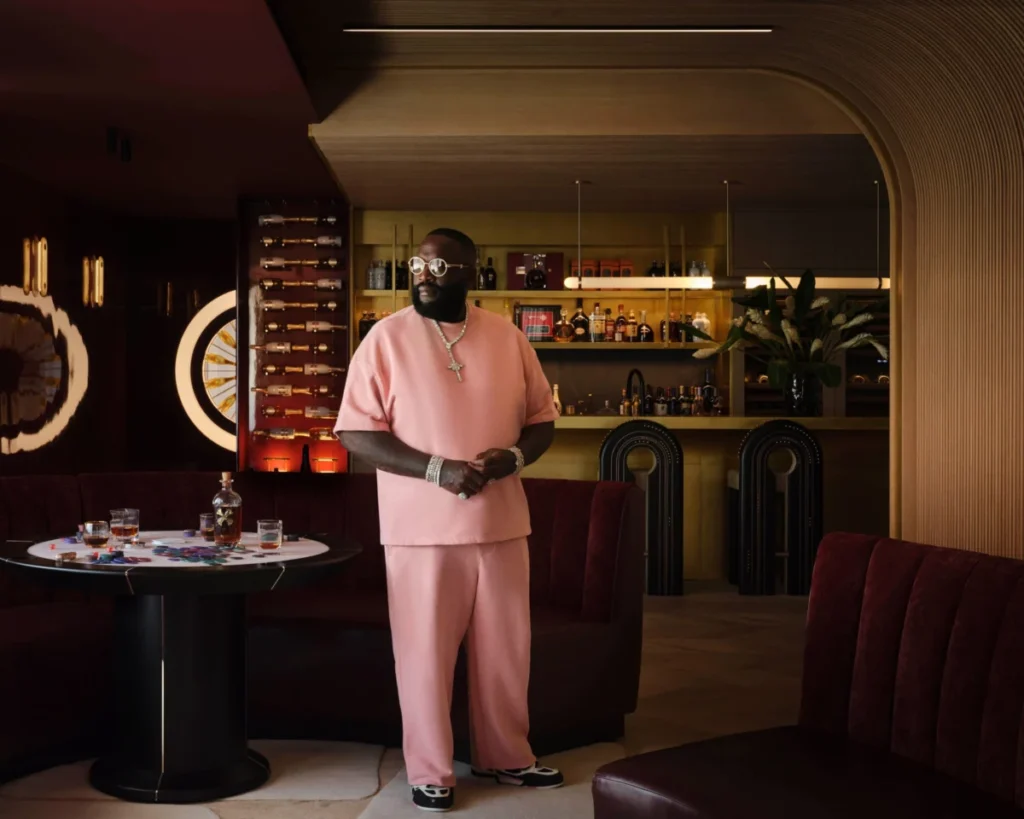

Rick Ross, the multi-platinum rapper and entrepreneur widely known as "The Boss," has officially unveiled his meticulously renovated 15,000-square-foot mansion on Miami Beach’s exclusive Star Island, a project defined by its staggering use of 35 tons of imported marble and a design philosophy described as "elegance with audacity." The completion of the estate marks a significant milestone in the career of William Leonard Roberts II, who has spent decades building a business empire that spans music, real estate, and various franchises. Collaborating with interior designer Kai Williamson of Studio 7 Design Group and renowned builder Manny Angelo Varas of MV Group USA, Ross has transformed the property into a futuristic yet tranquil sanctuary that serves as both a private residence and a testament to his "everyday I’m hustlin’" ethos.

The estate, situated in one of the most secure and affluent enclaves in the United States, places Ross among a neighborhood of global icons, including Gloria Estefan. The renovation process, which spanned approximately two years, involved gutting much of the existing structure to accommodate Ross’s specific vision for high-end luxury and technological integration. From the custom-designed pool featuring a massive art mosaic to the specialized climate management systems, the property represents the pinnacle of contemporary Miami architecture and interior design.

The Chronology of a Dream: From Carol City to Star Island
To understand the scale and significance of the Star Island estate, one must look back at Ross’s upbringing in Carol City, Florida. The rapper often reflects on his childhood in a modest three-bedroom, two-bathroom home, which he describes as a point of pride within that community. However, a pivotal moment occurred in his youth when that home was destroyed by a fire. Ross recalls returning from school in the fifth grade to find his belongings, including a hard-earned Nintendo collection and his bicycle, gone.

During the subsequent rebuilding of his childhood home, Ross’s mother introduced him to the concept of central air conditioning—a luxury that left a lasting impression on the future mogul. "Son, that’s when you hit the button, and the whole house get cold," he recalls her saying. This early exposure to the transformative power of home improvements and the psychological impact of losing his possessions fueled a lifelong ambition to curate an environment of absolute comfort and security. The Star Island mansion is the ultimate culmination of that journey, representing a transition from the "hustle" of the streets to the refined luxury of a global executive.

The timing of the unveiling coincides with a busy period for Ross, including the publication of his memoir, Renaissance of a Boss, and the announcement of his upcoming album, Set in Stone. For Ross, the house is not merely a place to live but a physical manifestation of his brand’s evolution and his personal success.

Architectural Ambition: 35 Tons of Marble and the "Power Circle"
The defining feature of the home’s interior is the extensive use of marble. Approximately 35 tons of the stone were utilized throughout the residence, most notably in the grand foyer and the primary suite. While the house was largely gutted, Ross insisted on retaining and enhancing the original grand staircase. The structure was widened and clad in premium marble, anchored by a custom chandelier from the Preciosa Group. Ross noted that the entrance is designed to immediately shift the "vibe" of any visitor, requiring that "negative energy" be left at the door.

In the Great Room, the design team focused on creating what Ross calls the "Power Circle." This space is dominated by a curved custom couch designed to facilitate high-level business discussions. Ross joked with his designer that the room is reserved for deals worth "$100 million and up." The furniture in this area includes a coffee table by John Pomp Studios, an armchair from Carlyle Collective, a side table by Mark Grattan, and lighting fixtures from Apparatus and Bomma Lighting.

The primary suite continues this theme of opulence. The primary bathroom is encased in rare emerald marble, a choice Ross approved with his signature "too easy" confidence. Above his burgundy bed hangs a significant piece of art: a glass-painted panel by Solomon Adufah, depicting a woman partially obscured by blooming flowers. This blend of bold colors and expensive materials reinforces the "audacious" half of the design mandate.

Custom Artistry and Technological Integration
One of the most visually striking elements of the estate is the outdoor swimming pool. Ross personally spearheaded the concept for a pool mosaic, eventually discovering Israeli artist Shira Barzilay (known as Koketit) on Instagram. After a direct message exchange to verify each other’s identities, the two collaborated on a stunning mosaic featuring two faces that look up from the bottom of the pool. This artistic choice reflects Ross’s hands-on approach to the project; while he relied on Williamson for professional guidance, he remained the primary driver of the home’s creative direction.

Beyond the aesthetics, the home is a marvel of modern engineering. Manny Angelo Varas, often referred to as the "Billionaire Builder," oversaw the technical aspects of the construction. The estate features a sophisticated climate management system that monitors and adjusts temperature, humidity, and air quality in real-time. This ensures that the massive amounts of marble and high-end artwork are preserved in an optimal environment, regardless of Miami’s tropical climate.

Varas noted that during the two-year construction period, Ross maintained a high level of engagement with the workforce, often bringing in food trucks to provide meals for the more than 100 craftsmen on-site daily. This gesture reflects Ross’s leadership style and his respect for the labor required to build a "dream house."

The Extended Portfolio: Private Jets and Vintage Arcades
The Star Island estate is only one component of Ross’s broader real estate and luxury asset portfolio. Nearby in the Miami area, Ross maintains a massive airplane hangar that serves multiple purposes. It houses his private jet, branded with the Rick Ross logo, as well as an extensive collection of roughly 15 luxury and vintage vehicles.

In a poignant nod to his childhood loss, the hangar also contains a vast collection of vintage arcade games. Having lost his original Nintendo games in the Carol City fire, Ross has spent his adulthood reclaiming that part of his youth on a grander scale. The hangar also features a gym designed around a Louis Vuitton punching bag, and a wood-paneled sauna with a "starry" ceiling inspired by the interior of a Rolls-Royce Phantom. Ross noted that hitting the LV bag "feels like being the biggest boss on the block."

Broader Impact and Real Estate Analysis
The completion of Rick Ross’s Star Island home occurs amidst a historic boom in the Miami luxury real estate market. Star Island, a man-made island in Biscayne Bay, has seen property values skyrocket as high-net-worth individuals from the tech and finance sectors migrate to Florida. By investing heavily in a bespoke renovation of this scale, Ross is not only securing a personal sanctuary but also significantly increasing the asset value of a property in one of the world’s most desirable zip codes.

From a cultural perspective, the project highlights the increasing intersection between hip-hop royalty and architectural prestige. In previous decades, celebrity homes were often characterized by "McMansion" aesthetics—large but lacking in architectural depth. Ross’s collaboration with high-end designers like Kai Williamson and artists like Shira Barzilay signals a shift toward curated, gallery-quality residential spaces.

The "elegance with audacity" approach serves as a blueprint for modern luxury: it respects traditional markers of wealth (marble, grand staircases, exclusive locations) while embracing the bold, personalized flair of the contemporary mogul. As Ross himself stated, even as "the biggest boss in the game," he finds it necessary to take deep breaths and appreciate the sunrise over the Atlantic, a view he now enjoys from a terrace that was years in the making.

Conclusion: The Legacy of the Boss
The Star Island mansion is more than a residence; it is a symbol of resilience and the ultimate realization of the American Dream through the lens of hip-hop culture. For Rick Ross, the 35 tons of marble and the custom waterfalls are the spoils of a lifetime of "hustling." As he settles into the property, watching cruise ships pass from his custom lounge chairs, the estate stands as a permanent fixture in the Miami skyline—a testament to what can be achieved when a clear vision meets the resources of a global superstar. The house is a "different vibe," indeed—one where the negative energy is left at the door, and the sunrise is always worth waking up for.