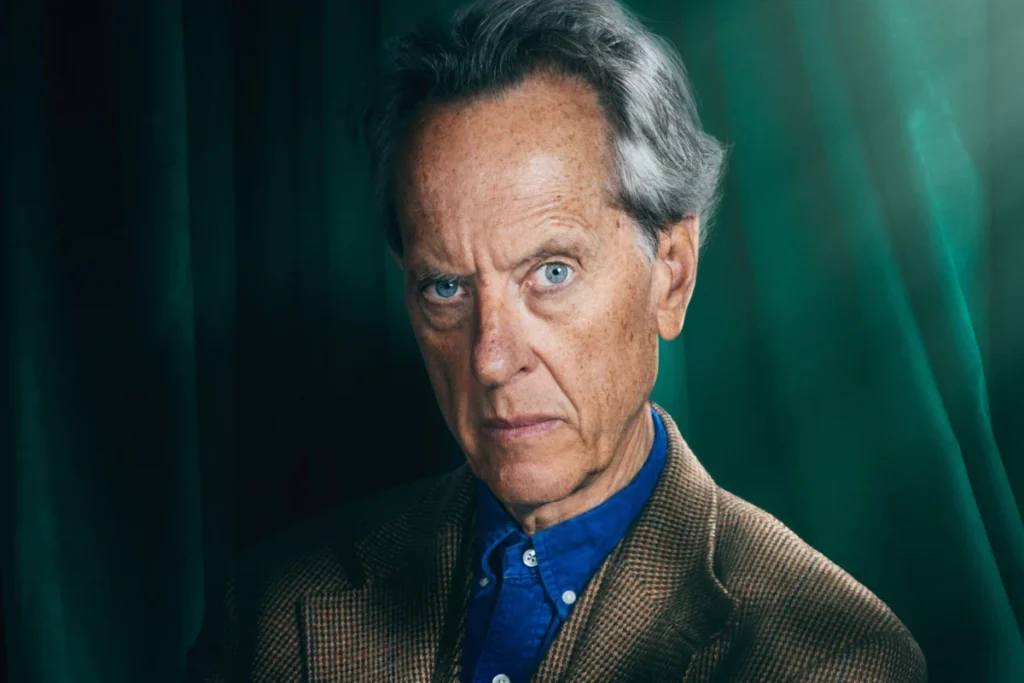

The tension within the Scottish castle has reached a fever pitch as the remaining contestants prepare to decide the fate of actor Richard E. Grant, who finds himself at the center of a mounting controversy following a series of tactical blunders and social gameplay maneuvers. Following a cliffhanger that left viewers and fellow competitors on edge, Thursday’s episode is set to reveal whether the veteran actor will be banished from the game or if he can successfully deflect the growing accusations of treachery.
A Chronology of Chaos
The drama began during the season premiere, when Richard E. Grant, in a move that has been described by participants as both "chaotic" and "baffling," seemingly confessed his role as a Traitor to his fellow celebrities mere minutes after the game commenced. While many contestants initially dismissed the statement as a performative joke, the ensuing days have seen suspicion harden into a formal movement to remove him from the competition.
The suspicion reached a critical threshold during the most recent round-table discussion, where former Coronation Street actress Julie Hesmondhalgh confronted Grant directly. "I’ve come in here tonight with the intention of voting for you, Richard," she stated, citing his initial admission and subsequent behavior as evidence of his duplicitous nature. Hesmondhalgh argued that the group’s collective hesitation to vote him out risked making them appear as the "most idiotic group of faithfuls" in the history of the franchise.
The divide within the castle is stark. On one side, those like Hesmondhalgh are convinced of his guilt, while others, including comedian Joanne McNally, have rallied to his defense. McNally posits that Grant’s initial "confession" was so brazen that it could only be interpreted as a deflective joke, suggesting that those pushing for his departure are merely using him as a "fall guy" or a decoy to distract from their own gameplay. Meanwhile, high-profile figures such as actress Miranda Hart and mathematician Hannah Fry have noted subtle, yet consistent, shifts in Grant’s demeanor—a behavioral change they claim occurred immediately after host Claudia Winkleman finalized the selection of the Traitors.
The Impact of Recent Murders
The game’s intensity has been compounded by the recent "murder" of journalist Amol Rajan. Rajan, who was eliminated from the game by the collective action of Traitors Jama and Grant, has since spoken about the psychological toll of participating in such a high-pressure environment.
Reflecting on his departure during an appearance on The One Show, Rajan described the experience as a "bubble" that effectively isolates participants from the outside world. "It’s absolutely horrible. It was horrible at the time," Rajan admitted. "Just so people know when you are on The Traitors, it is your world. It’s not like a game; you are hundreds of miles from your family, you don’t have your phone, it’s so intense. As you walk into that chapel, you are absolutely terrified."

Rajan’s departure marks a significant turning point in the series. His exit was part of a broader sequence of events that saw comedian James Acaster recruited into the ranks of the Traitors, further shifting the power dynamic within the castle. The recruitment of Acaster has added a layer of strategic complexity to the Traitors’ operations, as they attempt to balance their secret objectives with the necessity of maintaining a low profile among the Faithful.
Strategic Implications and Gameplay Dynamics
The format of The Traitors relies heavily on the psychological interplay between the "Traitors"—who are tasked with eliminating the "Faithful" and remaining undetected—and the Faithful, who must identify and banish the Traitors before the game concludes.
Data from previous seasons of the franchise suggests that early, vocal accusations often lead to "banishment cascades." When one player is identified as a potential target, the herd mentality often forces the remaining contestants to fall in line, regardless of whether they have concrete evidence. In the case of Grant, the "chaos" he injected into the game early on has created a vacuum of information. If he is a Traitor, his initial admission was a profound tactical error. If he is a Faithful, his decision to joke about being a Traitor has inadvertently made him the most vulnerable person in the castle.
Mathematically, the odds are currently stacked against the Faithful. With the recent murder of Rajan and the recruitment of a new Traitor, the group is navigating a period of high turnover. The upcoming challenge is critical, as it serves as a mechanism for the remaining Faithful—specifically those at risk, such as Hannah Fry and Jerry Hall—to earn a "shield." This shield provides immunity from the next murder, potentially forcing the Traitors to recalibrate their strategy.
The Psychological Cost of the Castle
The production environment of The Traitors is specifically designed to amplify these stresses. By stripping contestants of their personal devices and isolating them within the Scottish Highlands, the show forces a rapid acceleration of social bonding and suspicion.
Experts in game theory often note that in high-stakes social deduction games, the "loudest" players are rarely the ones controlling the narrative. Instead, the real power often lies with the players who can influence the group’s consensus without drawing attention to themselves. Grant’s situation is a textbook example of the "spotlight effect" in social psychology, where the subject believes their behavior is being scrutinized more heavily than it actually is, leading to an over-correction that only serves to draw more scrutiny.
Amol Rajan’s retrospective analysis of the game suggests that if he were to enter the competition again, he would change his approach toward the "lord of chaos," Grant. "I would definitely do it differently," Rajan noted, emphasizing that the intense, claustrophobic environment makes it difficult to maintain a clear perspective on who is playing a character and who is playing the game.

Looking Ahead: The Thursday Broadcast
As Thursday’s episode approaches, the stakes could not be higher. The group must decide whether to banish Grant, a move that would either rid them of a major antagonist or result in the loss of a valuable, albeit erratic, ally.
If Grant is banished and revealed to be a Faithful, the group will have suffered a significant blow to their collective credibility, likely emboldening the remaining Traitors to act with greater impunity. If he is revealed to be a Traitor, the victory will serve as a massive boost to the morale of the Faithful, though it may also lead to a dangerous sense of complacency.
The episode, airing at 8pm on BBC One, is expected to provide definitive answers to the questions that have dominated the conversation among viewers. With the inclusion of new developments regarding the next potential murder victims—Fry and Hall—the narrative trajectory of the show remains unpredictable.
Contextualizing the Phenomenon
The success of The Celebrity Traitors speaks to the broader cultural appetite for "reality-based suspense." By casting high-profile individuals—actors, comedians, journalists, and intellectuals—the producers have created a social experiment that explores how power and deception function in a high-stakes setting.
The inclusion of individuals like Richard E. Grant, known for his distinct persona and dramatic flair, brings an inherent theatricality to the show that resonates with audiences. However, the game remains grounded in the fundamental principles of distrust and deduction. As the season progresses, the audience is provided with a unique vantage point—knowing the identities of the Traitors—which creates a "dramatic irony" that heightens the tension of every scene.
As the series continues, the primary challenge for the remaining participants will be the ability to distinguish between genuine intuition and the noise of social manipulation. Whether Grant survives the vote or exits the castle, the episode will undoubtedly serve as a masterclass in the perils of game-show strategy, where one offhand comment can be the difference between a grand prize and an ignominious exit. The coming hours will reveal whether the "chaos" was a fatal error or a calculated risk that, for a moment, held the entire castle captive.