
A routine inquiry regarding the President’s travel schedule and physical well-being devolved into a highly contentious confrontation on Thursday in Maryland, as President Donald Trump launched a series of personal criticisms against a Reuters correspondent. The incident, which occurred just days before critical midterm elections, has reignited long-standing debates regarding the decorum of the executive office and the nature of the relationship between the administration and the press corps.
The exchange began when Reuters journalist Jacob Bogage approached the President to ask about the sudden cancellation of a planned campaign rally in Kansas. With the political climate intensifying as the midterm elections approach, the question was framed as an inquiry into the President’s stamina and the physical demands of a rigorous, multi-state travel schedule. Rather than addressing the logistics of the campaign trail or the state of the Republican ticket in the Midwest, the President shifted the focus of the discussion toward the reporter’s personal appearance.
Chronology of the Confrontation
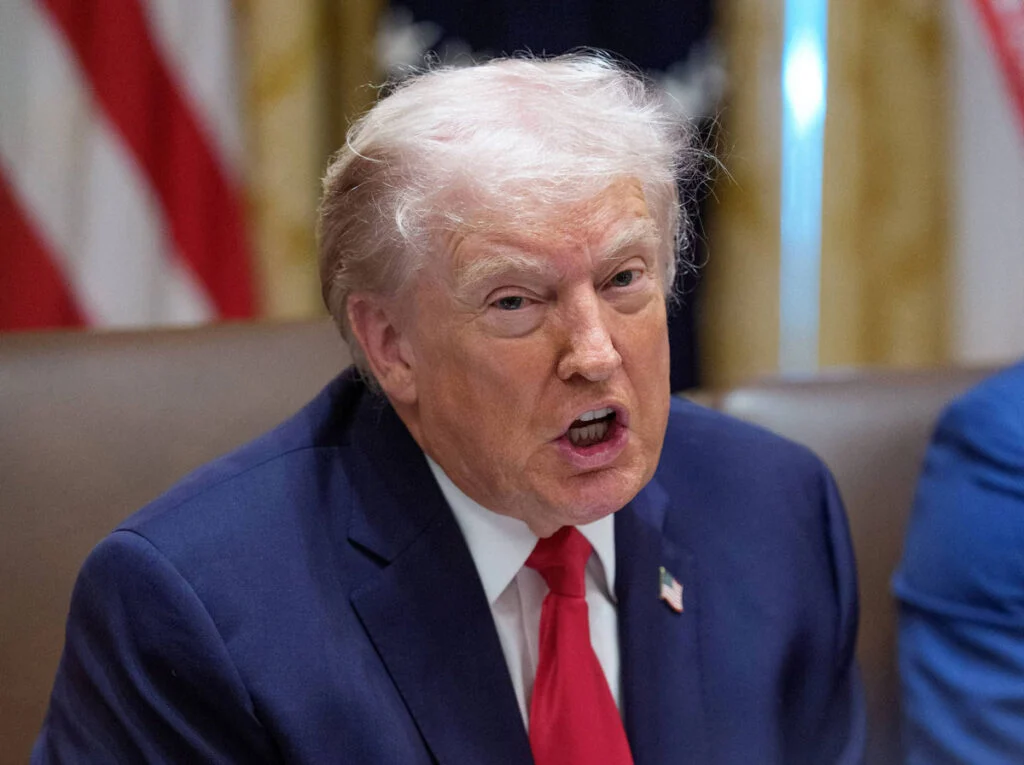
The sequence of events unfolded rapidly during an outdoor media availability. When asked if the cancellation of the Kansas event was due to fatigue or health concerns, President Trump immediately signaled his displeasure with the line of questioning. "Oh, you’re sick to ask that question," the President responded, before demanding that Bogage identify his media affiliation. Upon being informed that the journalist represented Reuters, the President briefly disparaged the outlet before pivoting to a direct attack on Bogage.
"Look at this guy. He’s way out of shape," the President remarked, drawing audible reactions from those present. As the interaction continued, the President asserted that he felt "perfect," subsequently telling the reporter, "You are disgusting. Put yourself in shape. You look like hell."
This verbal altercation follows a series of recent adjustments to the President’s campaign itinerary. While the White House initially provided limited transparency regarding the Kansas cancellation, claiming that Senator Roger Marshall was performing sufficiently well in polling to negate the need for a presidential visit, the administration performed an about-face the following day. On Friday, officials confirmed that the President had rescheduled in-person appearances in both Kansas and Iowa, effectively neutralizing the premise that he would be absent from the region.
The Role of the White House Communications Apparatus
The tension of the event was compounded by the subsequent actions of the White House’s official digital communications team. Rather than distancing the administration from the President’s comments, the "Rapid Response 47" account—a verified outlet for the executive branch’s digital messaging—amplified the confrontation on the social media platform X.
The official account posted a series of screenshots taken from past online videos featuring Bogage, including clips related to food tasting. The content was accompanied by the caption "Sloppy!" The decision to utilize an official government-affiliated channel to publicly mock a journalist represents a significant escalation in the administration’s posture toward the media. Political analysts have noted that this move suggests a deliberate strategy to personalize grievances and engage in "trench warfare" with reporters, rather than relying on traditional press office protocols to manage institutional relationships.
Contextualizing Political Tensions and Media Relations
The relationship between the Trump administration and the press has been characterized by frequent volatility throughout the current term. This incident is not an isolated case but rather a continuation of a pattern in which the President utilizes ad hominem attacks as a rhetorical device to deflect from substantive policy inquiries.

From a historical perspective, the modern presidency has traditionally operated under the assumption that the Chief Executive is immune to the pressures of day-to-day partisan mudslinging. However, the current administration has consistently bypassed traditional norms, treating media inquiries as adversarial encounters. For the press corps, the challenge lies in balancing the necessity of holding the executive accountable with the risks of becoming the focal point of the news cycle themselves.
Data and Electoral Implications
As the midterm elections approach, the political stakes remain high. Data from various non-partisan polling outlets suggests that the Republican party is attempting to maintain momentum in several key swing states. The President’s travel schedule is, by necessity, a key component of the Republican strategy to mobilize the base.
When the President cancels a rally, it is often interpreted by political observers as either a strategic reallocation of resources or a sign of internal volatility. By focusing on the reporter’s appearance, the President effectively drew attention away from the campaign strategy in Kansas and Iowa, potentially complicating the narrative the Republican National Committee (RNC) wishes to project.
Furthermore, the public nature of these attacks has drawn criticism from press advocacy groups. While the administration frames these interactions as "punching back" against an biased media establishment, critics argue that such rhetoric undermines the First Amendment protections essential to a functional democracy. The fact that the White House staff actively participated in the ridicule of a reporter suggests that the administration is comfortable with, and perhaps encouraged by, this aggressive stance.
Broader Institutional Impact
The implications of this confrontation extend beyond a single news cycle. Observers within the Washington press corps have expressed concern that the normalization of personal insults could lead to a chilling effect on reporting. When a journalist faces public humiliation from the highest office in the land for asking a question about health or scheduling, the implicit threat is that other reporters might refrain from asking tough, necessary questions in the future.
Moreover, the incident raises questions about the President’s own health, a topic that is traditionally handled through official medical briefings rather than defensive, retaliatory remarks. By reacting with intense hostility to a simple question about his travel schedule, the President has arguably created more speculation than a standard, diplomatic response would have generated.
Conclusion
The events of Thursday afternoon serve as a stark illustration of the current political environment in Washington, D.C. As the nation moves closer to the midterms, the intersection of aggressive campaign rhetoric and the digital amplification of personal attacks continues to reshape the landscape of political communication. Whether this strategy serves to energize the base or alienate moderate voters remains a subject of ongoing analysis.
The President’s decision to personally target a journalist from a major news wire service like Reuters, and the subsequent endorsement of that behavior by the White House communications team, signifies a definitive shift in how the executive branch interacts with the media. As the campaign trail continues to heat up, the question remains whether these confrontations will remain a peripheral distraction or become a defining feature of the political discourse leading up to election day.
For the public, the incident underscores a fundamental divide: one side sees a leader who refuses to be intimidated by a critical press, while the other sees a degradation of the decorum and accountability required of the most powerful office in the world. As the events in Kansas and Iowa proceed as scheduled, the focus will likely return to the ballot box, though the memory of this confrontation will undoubtedly persist as a case study in the modern, polarized relationship between the President and the press.