
The annual phenomenon of celebrity Halloween has once again transcended simple costume parties, evolving into a high-stakes arena of social media engagement, professional prosthetic artistry, and pop-culture commentary. As October 31, 2026, drew to a close, the digital landscape was saturated with elaborate recreations that saw global icons investing significant resources—ranging from professional-grade special effects to authentic memorabilia—to dominate the trending lists. This year, the focus shifted from traditional horror tropes toward nostalgic tributes and biting social satire, reflecting a broader trend in celebrity culture where public figures use the holiday as a platform for branding, humor, and self-referential irony.

The Evolution of the Celebrity Halloween Spectacle
Historically, Halloween within the entertainment industry was an informal affair. However, the rise of Instagram and TikTok has shifted the gravity of the holiday. Data from social media analytics firms suggest that engagement on "celebrity costume reveal" posts typically spikes by over 400% in the 48-hour period surrounding Halloween, compared to standard lifestyle content. For stars like Heidi Klum, who has turned her annual October 31st party into a global media event, the holiday is no longer just a festive night—it is an exercise in brand management and creative expression. The 2026 season saw a notable shift toward high-concept, multi-person ensembles and an emphasis on "niche" pop culture references that require a deep knowledge of current memes or historical moments to fully appreciate.
Chronology of the 2026 Spooky Season
The lead-up to Halloween 2026 began in mid-October, with the first wave of costume reveals occurring around October 25. By October 28, the "teaser" phase of the season was in full effect, with stars sharing snippets of prosthetic applications or costume fittings. The climax occurred between the evening of October 30 and the early hours of November 1, as major galas and private parties—such as the one hosted by reality star Olivia Attwood—provided the stage for the most elaborate displays.
Early in the week, social media was treated to nostalgic nods. Paris Hilton’s homage to the early 2000s, specifically her recreation of Britney Spears’ iconic look from the "I’m a Slave 4 U" music video, served as a primary example of the current industry fascination with Y2K aesthetics. This was followed by a more domestic, family-oriented turn as Hilton also adopted the persona of Morticia Addams, demonstrating the duality of modern celebrity costume curation: the desire for "high-glam" relevance paired with "relatable" family branding.
High-Concept Transformations: The Art of the Costume
While some celebrities opted for simple, recognizable outfits, others pushed the boundaries of aesthetic transformation. Heidi Klum, widely considered the unofficial matriarch of Halloween, celebrated the 25th anniversary of her legendary New York City party with a performance piece that prioritized shock value over traditional character dressing. By arriving as a colossal, bloodied severed hand—accompanied by a tactical vehicle and actors in hazardous material suits—Klum underscored the professionalization of the holiday. Such costumes require months of planning, collaboration with world-class makeup artists, and considerable financial investment, effectively turning the red carpet into a runway for avant-garde design.

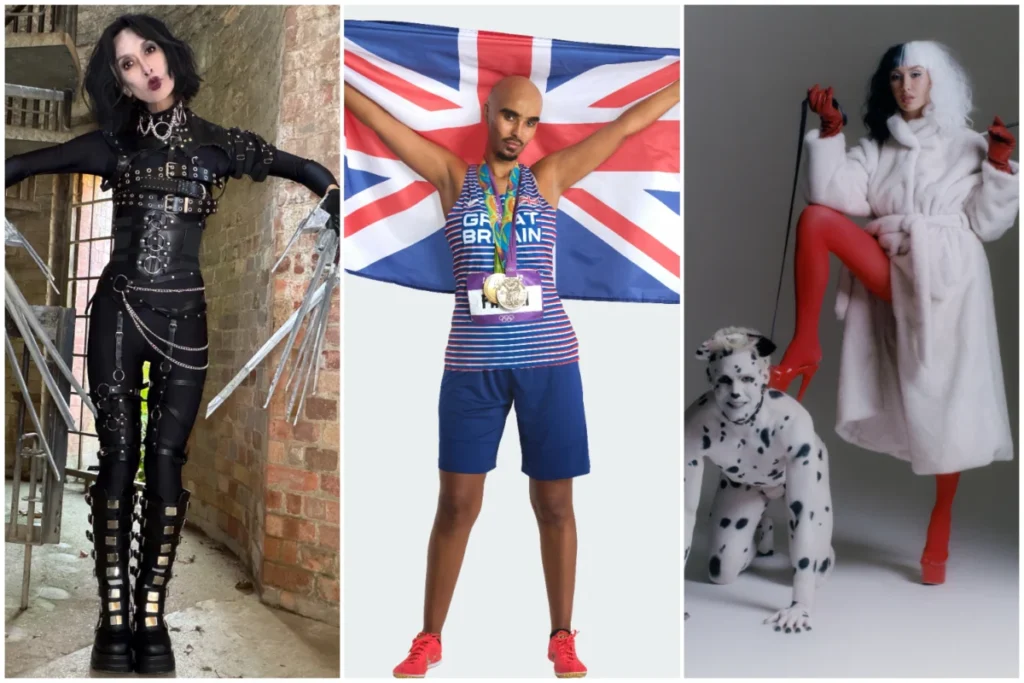
Similarly, Myleene Klass’s take on the titular character from Tim Burton’s Edward Scissorhands demonstrated a commitment to period-accurate cinematic recreation. The costume, which required intricate detailing of the iconic blade-fingered gloves and the character’s signature melancholic makeup, highlighted a growing trend of "cinematic cosplay" among celebrities, where the goal is to disappear entirely into a fictional persona.
Pop Culture Commentary and Social Satire
Perhaps the most significant development in the 2026 landscape was the use of costumes as vehicles for social commentary. Lily Allen’s decision to dress as a Ticketmaster seating plan was a calculated move that resonated with millions of fans worldwide who have struggled with the logistics of concert ticketing. By transforming herself into a tangible representation of a frustrating digital experience, Allen tapped into a vein of collective cultural exhaustion. This choice moved beyond vanity, positioning the celebrity as an active participant in the digital discourse surrounding the music industry’s infrastructure.

Maya Jama’s transformation into Sir Mo Farah offered a different, albeit equally effective, approach. By utilizing the Olympic legend’s actual equipment—including his personal medals and official Team GB kit—Jama elevated her costume from a parody to a collaborative tribute. Her public acknowledgement of Farah’s contribution to the look serves as a reminder of the unique access celebrities enjoy, allowing them to leverage personal networks to secure props that would be inaccessible to the general public.
Nostalgia and the Noughties Revival
The influence of the early 2000s remained a dominant theme throughout the season. Rochelle and Marvin Humes’ decision to recreate the Kelly Rowland and Nelly "Dilemma" music video was a masterclass in millennial nostalgia. By meticulously replicating the styling, color palettes, and even the specific body language of the original 2002 video, the couple successfully engaged a specific demographic of fans. This type of costume strategy is highly effective in driving social media interaction, as it encourages followers to share their own memories of the era, thereby increasing the reach of the original post.

Trisha Paytas’s homage to High School Musical’s Troy Bolton further emphasized this trend. By choosing a character that is synonymous with mid-2000s Disney success, Paytas utilized the emotional resonance of a formative teen movie to capture the attention of a wide, multi-generational audience.
The Broader Impact on Public Perception
The professionalization of Halloween in the celebrity sphere has clear implications for the broader public. As these stars continue to set the bar higher, the expectations for individual Halloween celebrations follow suit. The industry, from costume retailers to independent makeup artists, experiences a significant economic boost during this period, fueled by the "aspirational" nature of celebrity social media.

However, there is also a secondary impact on how audiences perceive their favorite stars. The willingness to look "unrecognizable," as seen in the cases of Myleene Klass or the gruesome prosthetics employed by Heidi Klum, humanizes the celebrity while simultaneously reinforcing their status as a "performer." When Kim Kardashian chose to dress as her daughter, North West, she engaged in a form of self-referential humor that plays into the current fascination with her family’s private life. These choices are rarely accidental; they are calibrated efforts to maintain public interest during a time of year when traditional press cycles often slow down.
Analysis of the "Party Economy"
The events of October 2026 also highlighted the "party economy" that has sprung up around Halloween. Events hosted by figures like Olivia Attwood, which feature curated guest lists and high-end production design, have become essential networking opportunities. These gatherings are no longer just social events; they are media opportunities where the primary currency is the "viral moment."

When guests attend these parties, they are essentially providing free content for their own platforms, creating a feedback loop of images and videos that sustain public interest for days after the actual event. The costumes are the catalyst for this engagement. A well-executed look acts as a signal of taste, humor, or artistic appreciation, which in turn influences the celebrity’s personal brand for the coming year.
Conclusion: The Future of Celebrity Halloween
As we look toward future iterations of the holiday, it is clear that the bar has been set exceptionally high. The 2026 Halloween season demonstrated that for the modern celebrity, the holiday is a sophisticated convergence of fashion, satire, nostalgia, and personal branding. Whether through the high-budget theatrics of a veteran like Heidi Klum or the pointed social critique of an artist like Lily Allen, the celebrity Halloween costume has evolved from a simple party accessory into a definitive marker of contemporary culture.

The success of these costumes lies in their ability to bridge the gap between the inaccessible world of fame and the shared, relatable experiences of the public. By leaning into nostalgia, satire, and cinematic excellence, celebrities have successfully ensured that Halloween remains one of the most vital—and most watched—periods in the entertainment calendar. As technology continues to improve, particularly in the realms of prosthetic design and social media marketing, one can only anticipate that the 2027 season will bring even more ambitious and boundary-pushing displays of creativity.