
Since King Frederik X ascended to the Danish throne, the country’s monarchy has undergone a subtle yet striking visual evolution, spearheaded largely by Queen Mary. Over the past two and a half years, Queen Mary has systematically redefined the regal image of Europe’s oldest reigning royal house. Rather than relying solely on the heavy, traditional diamond-and-gemstone suites historically associated with Danish coronations and state banquets, the Queen has introduced an array of delicate, highly unusual bandeau-style tiaras. Each piece carries a centuries-old narrative, connecting her contemporary tenure with the pioneering women who shaped the Danish crown long before her.
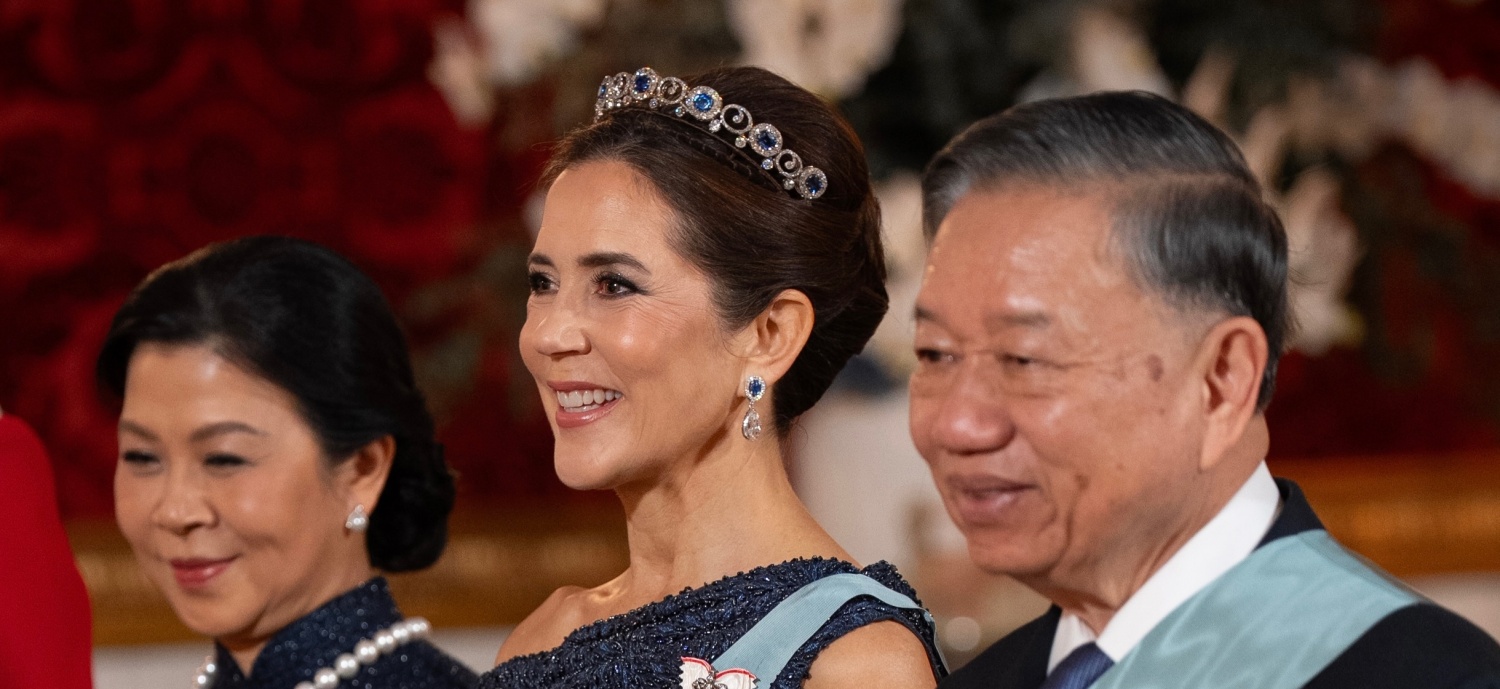
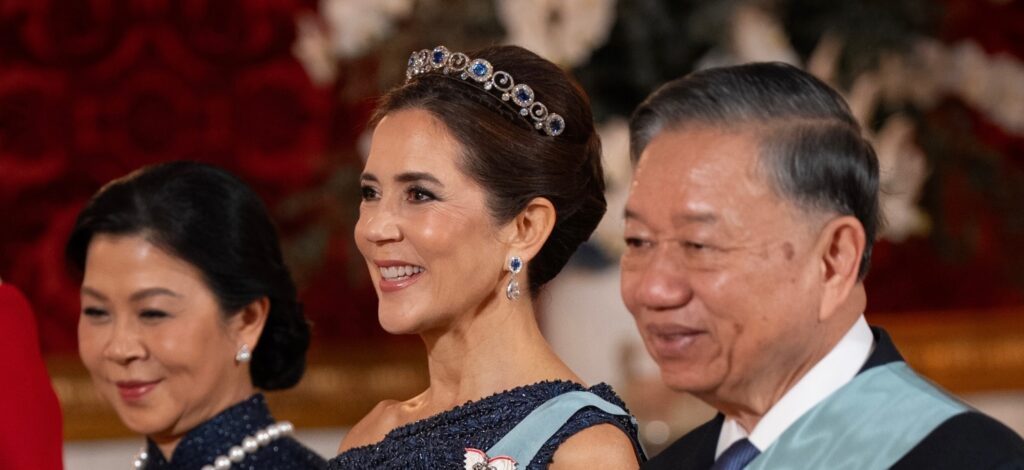
The most recent addition to this growing collection made its debut during a glittering state banquet in Copenhagen, where Queen Mary and King Frederik hosted the President and First Lady of Vietnam. The piece in question—a magnificent sapphire and diamond bandeau—had remained hidden behind palace walls for decades, virtually unseen by the public. Its reemergence underscores a deliberate strategy: blending historical reclamation with modern styling to project an approachable, dynamic, and historically grounded monarchy fit for the twenty-first century.
A Diplomatic Stage and the Vietnamese State Banquet
The decision to debut the sapphire and diamond bandeau at the state banquet for the Vietnamese presidential couple was far from coincidental. State visits serve as premier diplomatic showcases, providing monarchs with a global platform to signal cultural openness, international partnership, and national identity through sartorial choices.
By selecting a tiara with deep European historical roots to welcome leaders from Southeast Asia, the Danish court subtly communicated continuity and respect. Observers noted that the minimalist, headband-style diadem offered a lighter, less imposing silhouette than traditional towering tiaras, allowing for a more personal and modern engagement with visiting dignitaries. This philosophy of modern accessibility has become a hallmark of Queen Mary’s tenure, reflecting broader societal shifts away from overt ostentation toward understated elegance and historical storytelling.
The Tragic and Tumultuous History of the Sapphire Bandeau
To understand the weight of Queen Mary’s recent choice, one must trace the turbulent lineage of the sapphire and diamond bandeau. The jewel’s history is inextricably linked to the twilight of the Russian Empire and the shifting geopolitical landscape of early twentieth-century Europe.
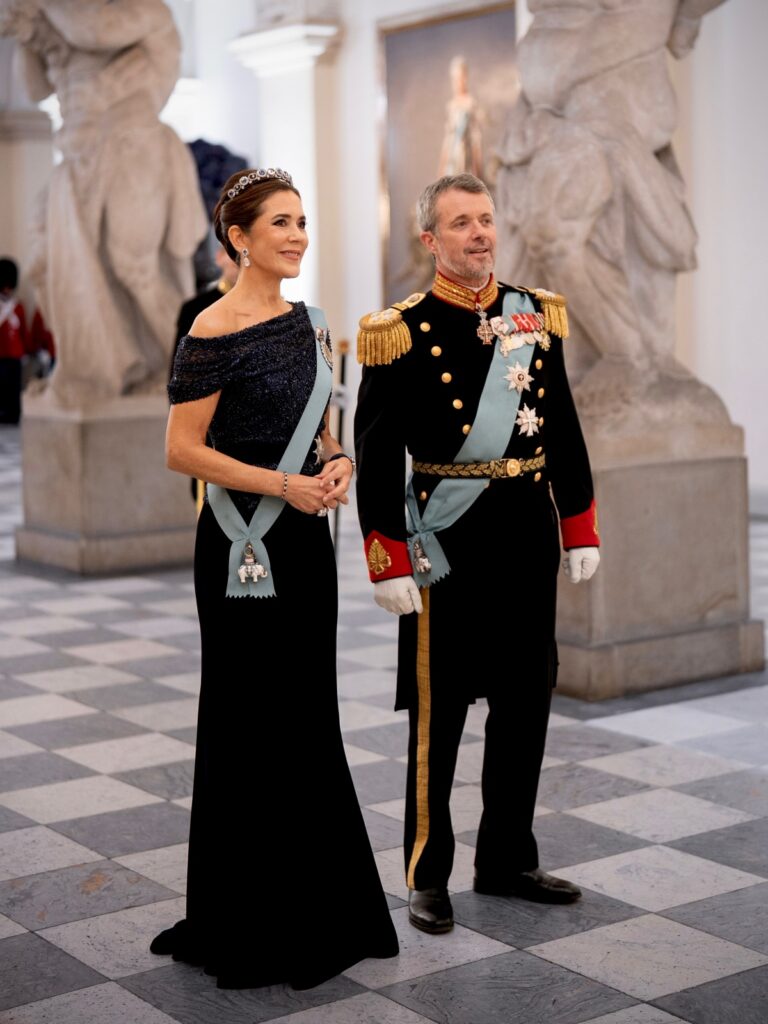
The tiara originated as a grand royal wedding gift in 1898, presented to Princess Alexandrine of Mecklenburg-Schwerin upon her marriage to Prince Christian of Denmark, who would later reign as King Christian X. Alexandrine served as Queen Consort of Denmark from 1912 until 1947, a period encompassing both World Wars and the dissolution of the Dano-Icelandic Act of Union in 1944, which made her the final Queen of Iceland.
The wedding gifts, however, arrived under unusual circumstances. While the marriage ceremony took place in Cannes, France, the physical gifts—including the sapphire and diamond suite sent by Tsar Nicholas II and Tsarina Alexandra of Russia—were shipped directly to Copenhagen. Less than two decades after gifting these sparkling jewels to their Danish cousin, the last Russian monarchs and their five children were executed during the Russian Revolution of 1917, imbuing the tiara with a poignant historical gravity.
Following Queen Alexandrine’s tenure, the sapphires were passed to Princess Caroline Mathilde, wife of Prince Knud. For a time, Prince Knud and Princess Caroline Mathilde stood close to the throne until a constitutional amendment regarding royal succession altered the line of inheritance, eventually passing rights to the descendants of King Frederik IX. Consequently, the sapphires drifted out of the active royal collection, only to resurface at auction in 2024—just months after King Frederik X and Queen Mary ascended the throne. Their acquisition and return to the active royal vault mark a triumphant restoration of a lost royal heirloom.
A Chronology of Modernization: The 2024 and 2025 Tiara Debuts
Queen Mary’s curation of the Danish royal jewelry box has followed a deliberate timeline since the royal accession, marked by three major archival revivals:
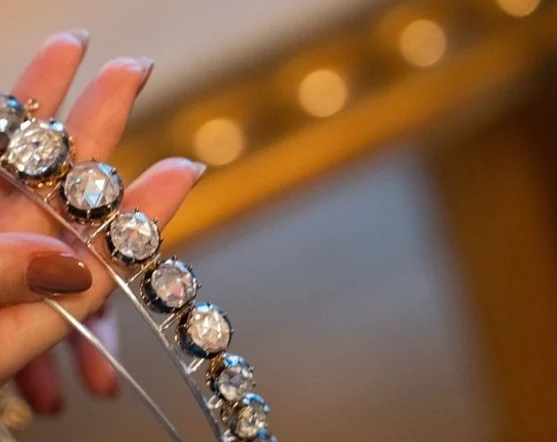
- The 2024 Diamond Bandeau: Shortly after King Frederik’s accession, it was revealed that Queen Mary had commissioned a brand-new bandeau tiara crafted from rose-cut diamonds originally belonging to Queen Louisa, who wore them in various configurations during the 1840s. Mirroring popular modern European styles—such as those favored by Queen Máxima of the Netherlands—this flexible piece demonstrated Mary’s willingness to repurpose historic stones into contemporary silhouettes. Behind-the-scenes footage even teased a spring-form base capable of elevating the gems above the hairline.
- The 2025 Pompeii Lava Cameo Tiara: During a state visit and banquet in Finland, Queen Mary stunned royal watchers by wearing a golden bandeau set with ancient lava cameos collected from Pompeii and Rome. Originally acquired by Queen Caroline Amalie during her Grand Tour of Italy between 1819 and 1821 with King Christian VIII, these stones had spent more than 150 years in obscurity. Paired with a patterned black dress in Helsinki, the look offered a diplomatic nod of solidarity while celebrating 19th-century archaeology.
- The 2026 Sapphire and Diamond Bandeau: Unveiled during the Vietnamese state visit, this Russian-gifted diadem completed a trilogy of lightweight, historically dense bandeau tiaras introduced under Mary’s watch.
Balancing Tradition and Reform: Strategic Implications
The introduction of these lighter, narrative-driven tiaras represents more than a stylistic preference; it is a calculated public relations and institutional strategy. Traditional royal jewels—such as the Danish Emerald Parure, which is constitutionally restricted to the reigning queen consort and cannot leave the country, or the monumental Pearl Poire tiara—carry immense symbolic weight but can also project an image of untouchable distance.
By contrast, the bandeau tiaras chosen by Queen Mary offer a softer aesthetic. They require less architectural scaffolding, allow for greater personal mobility during high-stress diplomatic events, and—most importantly—function as educational vessels. Every time Queen Mary selects a piece of forgotten or repurposed jewelry, royal historians and media outlets unpack the stories of the women who wore them before: Queen Alexandrine, Queen Caroline Amalie, and Queen Louisa.

This approach aligns with a broader trend across European monarchies to democratize royal collections, making history accessible to the public while reinforcing the institution’s enduring relevance. Palace insiders and cultural analysts have noted that Queen Mary’s jewelry rotations successfully bridge the gap between institutional permanence and modern feminist historical awareness.
As King Frederik and Queen Mary continue their reign, observers anticipate further surprises from the royal vaults. Whether through the adaptation of dormant heirlooms or the continued championing of lightweight, discreet diadems, Queen Mary has firmly established that modernization and deep-seated royal tradition are not mutually exclusive, but rather the twin pillars of a resilient contemporary monarchy.