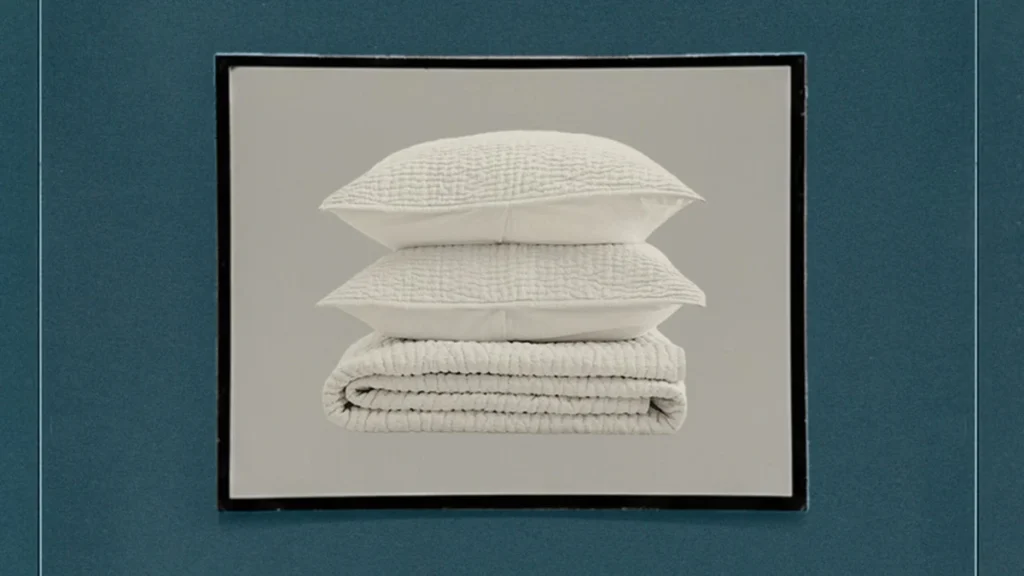

Since its inception in 2018, the direct-to-consumer retailer Quince has maintained a disruptive presence in the home goods and apparel market. By leveraging a manufacturing-to-consumer model that bypasses traditional wholesale intermediaries, the brand has successfully captured a significant share of the home textile sector. As consumers increasingly scrutinize the quality-to-price ratio of household essentials, the brand has faced persistent inquiries regarding whether its aggressive pricing structure—often significantly lower than legacy luxury retailers—is sustainable or indicative of compromised material integrity. To address these market questions, analysts and design professionals have begun conducting long-term performance tests on the company’s extensive catalog, with recent evaluations focusing on the newly released European Linen Cotton Stitch Quilt Set.
Historical Context and Market Strategy
Quince entered the digital marketplace with a focus on "luxury for less," utilizing a supply chain strategy known as "factory-direct." By shipping products directly from manufacturers to the end-user, the company eliminates the markups associated with retail storefronts, distribution centers, and high-end marketing campaigns. This model has been central to its rapid growth over the past six years.
In the bedding category, which remains the company’s highest-performing segment, Quince has previously gained market traction with its bamboo and linen sheet sets. These products have consistently appeared in industry benchmarks for their high tensile strength and fiber quality, often comparing favorably to traditional retailers that command prices double or triple that of the Quince counterparts. The introduction of the European Linen Cotton Stitch Quilt Set represents a strategic expansion into the "trans-seasonal" bedding market—a segment that has seen a 12% year-over-year increase in consumer interest as households look for versatile, layerable items that address shifting climate patterns.
Technical Specifications and Material Composition
The European Linen Cotton Stitch Quilt Set is designed with a specific focus on weight distribution and heat regulation. The product utilizes a blend of linen and cotton, a combination historically preferred for its balance of breathability and durability. The fill, measured at 200 grams per square meter (gsm), serves as a critical design choice for urban dwellers living in climate-controlled environments.
In standard textile manufacturing, a 200 gsm weight is classified as a lightweight thermal option, providing insulation without the moisture retention often associated with polyester or high-density synthetic fills. The construction features a pick-stitching technique—a decorative and functional sewing method that anchors the outer layers to the internal batting, preventing the fill from shifting or clumping during use. From an engineering standpoint, this stitching is vital for longevity, as it ensures the integrity of the quilt remains consistent even after multiple cycles in high-heat commercial laundry equipment.
Chronology of Product Testing
The evaluation process for this specific set spanned several weeks of real-world use to determine durability and aesthetic consistency.
- Week 1: Initial inspection involved unboxing and surface analysis. Observations noted the lightweight nature of the product, which is intended to address the needs of consumers in small-space or radiator-heated housing. During the initial setup, a minor quality control issue was identified: isolated instances of pulled threads were observed along the border stitching.
- Week 2: The product was introduced to a high-frequency usage environment to test for fiber fatigue and structural stability. The quilt maintained a consistent "flat" profile, a feature attributed to the low-loft construction.
- Week 3: A "stress test" was conducted using industrial-grade, high-heat laundry facilities. Unlike many natural fiber blends that tend to shrink or fray under aggressive drying temperatures, the Quince quilt demonstrated structural resilience, retaining its dimensions and tactile softness.
Consumer Impact and Design Analysis
The design philosophy behind the European Linen Cotton Stitch Quilt Set appears to be centered on the concept of "low-maintenance luxury." In modern interior design, there is a marked preference for textiles that offer a polished aesthetic without requiring the labor-intensive care associated with higher-end, complex weaves. The quilt’s ability to mask fabric wrinkles—a common pain point in natural linen products—positions it as a functional solution for high-traffic bedrooms.

The inclusion of coordinating shams in the set serves as a strategic value-add. For the average consumer, matching secondary bedding components can often lead to "aesthetic fragmentation," where the overall room presentation appears disjointed. By offering a unified package, the brand simplifies the styling process, which aligns with current trends in minimalist interior design.
Broader Economic Implications of the Direct-to-Consumer Model
The success of the Quince model has broader implications for the textile industry. As traditional department stores struggle with inventory bloat and the costs of physical retail, brands like Quince are proving that transparency in supply chain costs can build significant brand equity. By openly detailing the composition and sourcing of their products, the company has effectively shifted the consumer expectation regarding what constitutes a "fair price" for home textiles.
However, the rapid scaling of such companies is not without challenges. Rapid expansion often tests the consistency of quality control departments. The observed pulled threads in the initial assessment suggest that while the material quality is high, the final assembly and finishing processes at the manufacturing level remain areas where the company must maintain strict oversight to ensure consistent product standards.
Comparative Market Position
When compared to legacy brands that occupy the $300 to $500 price bracket for similar linen-cotton blends, the $190 price point for the Quince set creates a significant barrier to entry for competitors. The data suggests that Quince is capturing a "middle-tier" consumer—someone who desires the aesthetic of high-end, boutique hotel bedding but is unwilling to pay a luxury markup for a seasonal item.
Market analysts suggest that the quilt market is currently saturated with synthetic options that do not provide the same level of thermoregulation as the linen-cotton blend offered here. By positioning this product as a direct, affordable alternative to premium European-made textiles, Quince is effectively targeting the "conscious consumer" who prioritizes value without sacrificing the tactile experience of natural fibers.
Final Evaluation
The Quince European Linen Cotton Stitch Quilt Set presents a compelling case for the viability of the direct-to-consumer model in the home textile sector. Its performance, characterized by durability under stress and a design that prioritizes ease of use, suggests that the product is engineered for longevity. While minor finishing inconsistencies were noted, the overall value proposition remains strong.
For the modern consumer, the product serves as an efficient solution for bedroom styling that balances the need for aesthetic appeal with the practical constraints of urban living. As the brand continues to expand its footprint, the ongoing challenge will be to scale its operations while maintaining the rigorous quality control necessary to uphold its reputation for high-quality, accessible home goods. For those seeking a balance of comfort, material quality, and affordability, the current market data indicates that this quilt set is a stable and recommended investment.